
Transform ordinary stories into extraordinary ones with our proven 7-step method. Join thousands of storytellers on their journey to mastery.

 Introduction: Sometime ago, Francess wrote to me and I was very intrigued by her work. I asked whether she'd like to be interviewed and she agreed. It has taken some time but better late than never. Therefore, without further ado, I have great pleasure in introducing to you, Francess Raymundo ...
Aneeta: Francess, let’s start this interview with a little about you. Please tell me where did you grow up, what was it like, where do you live now and what do you do for a living?
Francess: I was born and raised here in Manila. I didn’t actually have a very happy childhood but I spent nursery to Senior high in a great convent school managed by French nuns [ St Paul of Chartres nuns] which is a part of my personal history that has been of great help where emotional maturity is concerned. I still live in Manila but I do plan to migrate and start a new life abroad. I’m almost thirty. I am a teacher. I teach English for tertiary level. I also teach primary and advanced level piano and violin for Yamaha, Inc. . I’m a writer and I own a small publishing company. BSugarBooks Brown Sugar Publishing Philippines,Ltd. Formerly known as Solaenum Publishing Manila.
Aneeta: I understand you’re teaching English at a college. Would you like to expand on this, please?
Francess: I teach English for tertiary level here, always by invitation. I don’t apply for teaching positions. I always get invited to be part of the academic institutions in my CV, so far. Being a teacher, runs in my family. Both sides [ Mama and Papa] mostly teachers, doctors, bankers and lawyers. Being a teacher equates to financial security. An individual, who is a teacher, will always have a job and money to put food on ones table. Both of my post-grad [ Master’s] degrees fall under the English language~ as a category which falls under the realm of the Arts and the Humanities [ academic discourse ] and my chosen field where mastery of teaching is concerned. English was my first language, not Filipino~ the working language in the Philippines.
Aneeta: What made you go into writing in the first place?
Francess: My grandfather[ my Ma’s father] exposed me to Literature at a very young age. My grandparents [ Mother side] loved literature. It started with a poem by Longfellow which my grandpapa asked me to memorize and ” Lady Claire” which my grandmama asked me to memorize. For family gatherings.
My grandpapa’s elder sister was a librarian and we had all these books at home while I was growing up. I read these books and [ again ] the nuns were the ones who trained me and directed me towards the aim of becoming a good writer. I was part of the official school organ and literary journals for all of my universities (actual College days and post-grad days) and schools ( Grade school, high school, and preppie College days) I write in English, mostly. Writing keeps me “sane”, tranquil/calm and centered, actually.
Aneeta: You’ve told me that you’re a poet; what inspires your poetry?
Francess: When I was in my teens and early 20s, I wrote free verse inspired by philosophical tenets and religion. Love, of course. At present, I try to write poems for performance and poetry reading. De Saussure’s performance theory. I sort of bungled up my first poetry reading/ performance ‘stint’ at Singapore’s Wordfeast 2004 which is why I’m toiling to improve my poetry for the odd chance of another chance to read my poetry for an audience.
Aneeta: Would you care to share a poem of yours here?
Yes.
It all started in a child’s game
of Chinese garter.
TenTwentyThirty
405060
SeventyEightyNinety
One Hundred.
There.
There’s the question.
How to be the perfect Asian wife.
Let him be Tarzan
you, Jane.
Belong to him.
Be faithful.
Be obedient.
Cook, clean and sew
with grace and dignity.
Be the mother of his children.
Do as you are told.
Do not forget where he
pierced you.
5 strings. 5 knots. 5 in place.
Proper,
and more.
For what you had thought.
one thin but very long
thread of yarn.
There.
There’s your hundred.
“Husband, I am barren.”
There.
There’s the normal response.
His fists will take away
that perfect score.
How many of these approaches
can the perfect Asian wife meet?
As much as she can
until she remembers.
“I can’t cut the strings
but I can pull them.
From where he pierced me as his A”.
Asian and
A perfect hundred.
There.
There’s that husband.
Today is truly over day.
Today is enough! day.
She’s still sewing.
Sewing, sewing, sewing
thin threads
grade A needles.
” My body though barren
is still the most important
house to keep
as
perfect.”
Estimation of estate;
Value,
pegged always
at one real
One Hundred.
Aneeta: You’re also into Music – what kind?
Francess: I’m a trained classical pianist and violinist. I recently finished an AB degree in Musical composition and arrangement. I like all kinds of music, except for Rap, Electronic fushion [ noise pollution, what with the usage of really wierd and disturbing sounds, such as chainsaws and car engines etc.] and hard-core heavy metal. I’m a good performer when it comes to my instruments but I’m very shy. My public performances are actually not that ” public” because they are always by invitation only. I’m not the type who desires and craves for applause and standing ovations. Performing is how I pray. I’m a Roman Catholic, by the way.
Aneeta: You say you have a signature style of writing – what is it?
Francess: Clean and tidy ( I look up to Malachi Whitaker, a little known British lady writer and a Filipina writer, Freda Jayme.) I also use a lot of local color when I write, which is not to say that I am writing off my ethnicity. I aspire to continue tradition, Filipino Tradition. The Philippines is a very beautiful country which is increasingly forgetting its roots and becoming very Westernized. I think I’m a bit of an idealist. A return to the old. Because the old can be new. Like writing about farmers, fishermen, boatmen, and days before the Internet, Nokia, and satellite cable television.
Aneeta: As you know, this website caters for storytellers. What advice would you give them?
Francess: You can’t write, if you don’t read. So writers must read a whole lot, learning from the masters. Travel always helps because travel broadens your horizon. And only write about the things you know or have experienced. Even Lord of the Rings can be read in the light of how Tolkien was merely fictionalizing the events of WWI and WWII.
Get published, even if means that you have to publish your own. Our F. Sionil Jose has been the one who inspired me to publish my own and to become a publisher in order to help other writers get published and for these budding writers to achieve actualization when it comes to the their dreams.
Aneeta: Francess, this is all I have to ask. Is there anything you’d like to add?
Francess: Yes. I finally came out with that long wished for collection of short stories. I will send you a copy. 1 for you and 1 for your site’s contest. Apologies that I can’t be so “generous” because it did take me 7 years to finish the collection. The book’s title is ” Eight Stories”
Aneeta: Francess, thank you.
Francess: You’re very welcome, Aneeta. And thank you so much for this lovely exchange and opportunity. God bless you.
This piece may NOT be freely reprinted. Please contact editor @ howtotellagreatstory.com for reprint rights.
Click here to return to the index of interviews on 'Blow Your Own Trumpet!'
 Introduction I received an email from Regina Kuan sometime ago telling me about the upcoming Singapore International Story Tellers Festival. She asked me to list the people I'd like to interview and frankly, I'd like to interview everyone! Still, Nury was one of the first I asked for an interview. He agreed to my request and without further ado, I have great pleasure in introducing to you, Nury Vittachi ...
Aneeta: Nury, thank you for agreeing to this interview.
Nury: The honour is all mine, fair maiden. Let the battle commence.
Aneeta: Usually, I like to ask people to start by telling a little about where they grew up, their youth and so on. But with you, your name alone is a point of conversation. I’ve read, on your website, http://www.misterjam.com, that your full name is Nuryana Samjam Perera de Lacey Vittachi. Now, for the benefit of my readers, do please explain this derivation.
Nury: It’s a legal requirement for South Asians to have long difficult names.
I wanted to be called Bob.
My Arabic first name, Nuryana, was given to me at birth by a Javanese holy man my parents followed. Unfortunately, I think he must have been having an off day. It is a female name so I was on the girls’ register at every school I ever attended. My mother won’t let me change it so I may have to change sex.
Samjam is my Chinese name. It may sound interesting, but it is not very poetic. It means “Third Bus-stop” and refers to where I used to live.
Perera is a European name which became our family surname after our island (called Ceylon) was colonized by the Portuguese.
De Lacey is a French-Irish name which I acquired through marriage. My wife is the last of her family line which is why we had to join her surname to mine after marriage.
Vittachi is a Sinhalese name, and was our family name before Ceylonwas colonized. It was revived by my father, who did not want to have a Portuguese name.
So now I have a long name and cannot be arrested by the South Asian Long Name Police. However, I still wish I was called Bob.
In real life, most people just call me “Mister Jam” or “Hey you”.
Aneeta: I’ve watched you on the May Lee Show – the segment on People and Places. You’re giving her a tour of Hong Kong. Clearly, you know the island well. Have you lived inHong Kong all your life?
Nury: I arrived inHong Kong 20 years ago with just nine US dollars in my pocket. Now, two decades later, I owe Hong Kong Bank more than 200,000 US dollars. Yes. I’ve made it!
How did I get here?
When I was born in Sri Lanka in 1958, war broke out. I don’t think the two incidents are connected. But I still feel guilty about it.
In the early 1960s, we had to leave Sri Lankain a hurry, encouraged by men with guns, because of something my father wrote. It thought this was way cool.
We first went to Malaysia and then to UK. In my 20s I came back to Asia.
So that’s why these days I live in Hong Kong with my three children (or four if you count my wife).
Aneeta: Forgive me for saying this but from your Arabic-Chinese-Portuguese-French-Irish-Sinhalese full name, there just be a story in there somewhere! Have you tapped into this aspect of your life in writing and publishing your 13 books so far?
Nury: My name just shows that we are all mixed-up kids these days. And cultural mixing has been a theme of many of my books.
Aneeta: Of the 13 books, can you please choose three of your favourite, describe them and tell me why you chose to write them.
Nury: Actually, I’ve probably written at least 30 books, if you count all the children’s books and non-fiction ones, and have three more in the pipeline.
My best known book is The Feng Shui Detective, which is part of a novel series, now five books long. In it, our heroes travel aroundAsia/st1:place> and solve crimes using a mixture of ancient wisdom, intuition and logic.
The books are about Mr Wong, from China
Mr Wong can’t understand Joyce at all, which baffles him because they are both speaking English, aren’t they?
Eventually he works out that the English word for Yes is “whatever”.
And he works out that the English word for No is “yeah right”.

Dead Eric Gets a Virus is a book about a boy who downloads his brain into a super-computer. The experiment kills him, but his brain is alive in the computer memory. So he inserts a wireless internet chip into his corpse’s neck and brings it back to life. So he goes back to school, and lives a perfectly normal life—except for the fact that he is dead.
Twilight in the Land of Nowhen is a story based on Einstein’s theory of relativity. A boy finds that he is living three seconds ahead of everyone else. To understand why, he needs to learn how time works—and only Einstein can explain that.
Aneeta: I know that you’re very involved with the Asian Literary Review. Can you please explain what this Asian Literary Review is all about?
Nury: The ALR is a journal of Asian writing.
Asian culture will be the world’s leading source of entertainment – books, movies, music and other arts — within 20 years. Decisions on what is successful in this sector are made by consumers, not business people. Already more than 60 per cent of the world’s consumers are Asian, and that proportion is set to grow. The takeover is inevitable and unstoppable.
I started the Asian Literary Review to highlight the work of Asian writers and poets. I’m fed up with the imbalance. Why should all our culture come from Disney?
I’ve also helped set up literary prizes to encourage us all to write.
I am chair of the judges of the Australia-Asia Literary Award which gives out more than 100,000 US dollars for the best story each year. And I even started an award for unpublished works, called the Man Asian Literary Prize.
If you won’t write a piece to help me in my mission, at least write one for the money!
Aneeta: I know that you have attended many festivals, namely the Ubud Literary Festival and also now, the
Singapore International Story Tellers Festival in August. Why do you think it is important for authors to attend such festivals?
Nury: For most authors, writing can be a lonely job—you hide away for months to produce a book. So festivals are a good way to meet your readers.
But these days I decline most invitations to go to festivals: I just go to a few every year. These days I write a daily blog on my website so I can interact with readers all the time.
But I like to visit festivals occasionally. The hosts are always charming. Next time I am going to insist that they address me throughout the visit as “Bob”.
Aneeta: Why not start here, Bob? As you know, this website caters for storytellers. What advice would you give those who are keen on venturing into this vocation?
Nury: Don’t try to make a living as a writer. Go and do a proper job. No, seriously. Be a reporter or a teacher or a broadcaster. Write for fun in your spare time instead. Writing literature is a terrible career, especially here inAsia. Unless you have a rich family member who is going to support you while you write, you need to get a job that supplies you with your daily bowl of rice, and then you need to do your writing on the side.
Also, your parents and friends will shake their heads in dismay if you decide to make something creative your life – writing, painting, music, art.
But that doesn’t mean you shouldn’t write or do creative things. You definitely should.
But having followed the careers of lots of creative people, I have learned that very few of them—maybe one in a thousand—have enough energy and drive to make a good career by going straight into their art.
The other 999 are better off doing a safe job that gives them some sort of security, and then gradually developing their creative projects until they have grown to a healthy enough state. Then they can quit their day jobs.
Aneeta: Nury, this is all I have to ask. Is there anything you’d like to add?
Nury: Yes. You free for dinner tonight?
Aneeta: Hmmm…
This piece may NOT be freely reprinted. Please contact editor @ howtotellagreatstory.com for reprint rights.
Click here to return to the index of interviews on 'Blow Your Own Trumpet!'
 Introduction: I received an email from Regina Kuan sometime ago telling me about the upcoming Singapore International Story Tellers Festival. She asked me to list the people I'd like to interview and frankly, I'd like to interview everyone! One of the people I chose is Rosemarie Somaiah and as you read her story, I'm sure you'll agree that it's very inspiring. Without further ado, I have great pleasure in introducing to you, Rosemarie Somaiah ...
Aneeta: Rosemarie, thank you for agreeing to this interview.
Rosemarie: It’s a pleasure to be here, Aneeta. I have read some really interesting interviews on this website discussing storytelling in a variety of forms, including oral storytelling and storytelling in text.
Aneeta: Please give me some information about you – where were you born, where did you grow up? What do you do for a living and where do you live now?
Rosemarie: I was born in India and grew up there. India is a land of such incredible diversity, that anything you say about India could possibly be true of about a million people and possibly completely untrue of about 9 million people. So, though my childhood was unique in some ways, it was considered fairly standard for the people that I grew up with, in that particular time and place.
I now live in Singapore. My partners and I run Asian Storytelling Network (‘ASN’), Singapore’s first professional storytelling company. We perform and run courses in storytelling for anyone from three to a hundred and three! These courses relate to storytelling as an art form for performance, as well as a tool for a variety of applications ranging from reading, writing and literacy, community issues, presentation skills and leadership. In addition, I write and am always open to collaboration with other artists in new and exciting ways.
Aneeta: When did you first venture into storytelling and why?
Rosemarie: For some reason, people have often assumed I was a teacher of some sort, even before I went into teaching or training. When I first arrived in Singapore over 25 years ago there was a break in my professional life and, while I revelled in the time with family and children – in fact, my present career developed out of that experience – I tried to keep involved in voluntary work within the community. One organisation that I have been involved with for a long time is the Society forReading and Literacy (‘SRL’), a voluntary society. In 1999, Kiran Shah and Sheila Wee had begun The Storyteller’s Circle (‘STC’) to promote the traditional art of oral storytelling and brought it under the wing of the SRL. I was working with Sheila in another educational enrichment centre at the time and, she seemed to think I was a storyteller and urged me to attend the monthly meetings. When other commitments made it difficult for Kiran and Sheila to continue to lead the Storytellers’ Circle, I took over the responsibility. The STC continues to meet regularly and is the nurturing ground for many who are new to oral storytelling. Members of the SRL come from all walks of life and there are some who turn up just to listen.
Later, Sheila and Kiran invited me to join them as a partner in Asian Storytelling Network, the business they had started. We are very happy to have a pool of friends and storytellers that we can draw on to tell the stories. Check out www.asianstorytellingnetwork.com
In Feb 2006, together with many of these friends, we started the Storytelling Association (Singapore), another voluntary organisation, to cater to the growing number of professional storytellers in Singapore.
The annual Asian Congress of Storytellers organised by the National Book Development Council of Singapore, at which I have been a regular volunteer and participant has, over the years been a major factor in the growth of storytelling inSingapore. The Congress has brought wonderful storytellers from around the world to the region. Apart from Sheila and Kiran, those that have been an inspiration to me are Cathy Spagnoli, Margaret Read Macdonald, Anne Pellowski, Jeeva Raghunath, Gerald Fierst, Richard Martin, Diane Ferlatte, Cassandra Wye, Fran Stallings, Diane de la Casas and others. Later, this festival grew into the Singapore International Storytelling Festival and we are looking forward to an exciting line-up this year as well.
Aneeta: Now, your repertoire as a storyteller is pretty impressive from performing in schools, over the radio and even in the MRT. Of all these experiences, which one has been the most memorable and why?
Rosemarie: It is difficult to choose just one day or event as the most memorable as the life of a storyteller in Singapore can be very varied. We work with all ages and the audiences that we perform to can range from small groups of adults, in intimate settings, to over 1,200 students at assembly shows in schools. Our workshops and training sessions can range from short ‘taster’ sessions to term-based in-curriculum training. Each situation has its unique challenges. While generally we prefer smaller, more cohesive groups, there can be occasions when things go well and you have a large audience responding with complete engagement to a story simply told with no fanfare.
My work started out of my experiences with my own family and children, so I am quite comfortable with toddlers, children, teenagers and adults. I need them all in equal measure to keep me grounded. There is, of course, a particular delight when a child, racing down a corridor in a housing estate or school, wheels around suddenly to throw you a bright smile and wave in greeting, “Aunty Rose!”
However, I remember leading one very participative public session with kids early in my storytelling career, when I was retelling the traditional story ‘We’re Going on A Bear Hunt’. We were just coming to the climax of the story, entering the bear’s cave, when a little 4-year-old, very slender and small-made, came up to me and piped up loudly, “Don’t worry, Aunty Rose. I’ve shot the bear!” I looked at him in surprise – (there was to be no killing in the story!) – and whispered in an aside, “No, you haven’t!” But he reassured me one more time, loud and clear, “Don’t worry, I’ve shot the bear! You’re safe now.” Well, there was nothing to be done about it, so I picked him up, put him on my shoulders and the second half of the story had to morph very quickly into a victory parade for our little hero. However, from that time on, I learned to prepare ahead for these kinds of surprises.
Another truly memorable event was my trip to Karjat – a small village near Mumbai, inIndiain March this year. I was to train teachers and social workers, and perform to children of the village. There were concerns about language. I speak very little Hindi and absolutely no Marathi. It was also a time when there was a resurgence of local pride and some resistance to foreigners. But I was willing to try to break these barriers to communication. In vary halting Hindi, which I have never had to use before, I explained to the children that had I been fortunate enough to be with them longer I would certainly have tried to tell at least one story in Hindi, but for this event, my stories would be in English. I requested their help and understanding. Then I began to tell the stories. The response was deeply moving. Not only did they listen, the children retold the same stories I had told, in Hindi and Marathi. The teachers and social workers explained to me that with so many varied interpretations, there could be no doubt that the children had understood the stories and were more than ready to start telling their own stories.
Aneeta: I understand that you’re also a published writer. Please give me a description of the books that you’ve had published.
Rosemarie: My initial writing was triggered off by oral storytelling projects that I had been involved in and it was commissioned work. There has been both fiction and non-fiction, traditional stories and newly created ones. For example, while I was conducting regular sessions at the Children’s Discovery Gallery at the Singapore History Museum, I was asked to write a short script for children based an episode in the Ramayana. That was followed by a set of stories based on every-day objects in the handling collection of the museum. I told these stories that I had created regularly to groups of school children. A few other scripts for the museum and schools followed, together with one that resulted in a commemorative comic book with a short history of the museum. Then, since ASN was telling folktales from the region to promote racial harmony, Asiapac Books approached me for ‘Gateway to Singapore Culture.’
Another set of books that I have been involved with are ‘Colours of Harmony’ (2005) and ‘Colours of Love’ (2006) and ‘A Giving Heart’ (2007) published by the Inter-Religious Harmony Circle, supported by the Ministry of Community Development, Youth and Sports (‘MYCS’), to promote racial and religious harmony.
When Tuttle Publishing was looking for writers for their popular series of folk tales from Asia, I had a ready collection for ‘Indian Children’s Favourite Stories,’ which came out in 2006. I continue to write regularly and generally have one story or another on the back burner!
Aneeta: What do you think is the importance of storytelling today?
Rosemarie: I believe that good storytelling nurtures the human spirit and will remain important despite all the technological marvels that we can create. In fact, I believe that traditional folktales were the original ‘freeware’, long before the Internet. We take great joy in seeing our students bloom. So, it is an affirmation of our efforts when our students, queried on their confidence in telling stories to their peers say, “Oh! The trainers are very good. They allow us to tell in our ways, and that makes us very confident.”
Aneeta: As you know, this website caters for storytellers. What advice would you give to those who would like to venture into storytelling?
Rosemarie: I am always hesitant to offer advice. However I believe that like any art form, storytelling is about passion, dedication and commitment. All artists are works in progress and we might be on different places on the same path, so our perspectives from where we stand might be different. In the oral tradition, we respect our sources, because the stories are often shared so generously with the intention that the wisdom is passed down through the generations. The stories speak of those who followed the rules as well as those who didn’t and the reasons why. I think it is important to take the time to learn the traditions of storytelling. I consider myself fortunate to be able to make a living out of my passion, as storytelling, to me, is really about being true to yourself. Respect, refine and rejoice in the art, the heart and the craft.
Aneeta: Rosemarie, how can my readers reach you if they so wish?
Rosemarie: Readers who wish to get in touch can email
In Singapore, some of my books, including ‘Indian Children’s Favourite Stories’, are available in Borders. The latter is also available online on www.amazon.com
Aneeta: Rosemarie, this is all I have to ask. Is there anything you’d like to add?
Rosemarie: We have several festivals and conferences in Singapore that deal with storytelling. It would be wonderful to meet your readers at any one of these. Do come up and say Hi!
Aneeta: Rosemarie, thank you.
Rosemarie: You’re welcome, Aneeta.
This piece may NOT be freely reprinted. Please contact editor @ howtotellagreatstory.com for reprint rights.
Click here to return to the index of interviews on 'Blow Your Own Trumpet!'
 Introduction: Di Bates wrote to me several weeks ago to place an announcement in the 'Tell Everyone About ...' section of my newsletter. I continued corresponding with her and when she asked if she could be interviewed, I was more than happy to oblige. She has a very interesting personal history and one of the few people I know who can boast about having had more than 80 books published. Without further ado, I have great pleasure in introducing to you, Di Bates ...
Aneeta: Di, thank you for writing to me and saying that you’d like to be interviewed.
Di: Thanks for agreeing to the interview!
Aneeta: I’ve read some of the stories about your early childhood on your website, http://www.enterprisingwords.com/ . For the benefit of my readers, I’d appreciate it if you could share with us parts of that story – for instance, tell me where you were born, where you went to school and college.
Di: Born inSydney, Australia, I was raised on a farm where I worked hard with my sister raising chickens, pigs and goats while our father drove trucks interstate. When I was 11 my hitherto unknown half-brother arrived from theUK and helped us manage the farm for a while before arguing with our father and disappearing. We were told he’d been killed, but he turned up years later, a great surprise, as you can imagine! In my third year of high school, I was fortunate in winning a scholarship: this enabled me to finish my final two years. I was then awarded a teachers’ college scholarship and thus became the first person in my working-class family to go on to tertiary studies.
Aneeta: I read about how you did not try to write well for a long time after other students in the two-teacher school you went to thought you’d copied the story you’d written about your ideal home. This, then, begs the question: what is the best way to encourage children to write and tell stories?
Di: There is no rhyme or reason why a person becomes a storyteller: I was never read to or encouraged to read. I was deeply unhappy as a child – my father was an abusive man – so I had a rich fantasy life wherein I imagined I was adopted and had a ‘real’ family elsewhere. I was always creating fantasy worlds in my mind and on paper where I was happy and wanted. Other authors I know tell of being read to when they were young and having parents who told them family stories. I think in the end it depends on the child as to whether or not they will write and tell stories, but no doubt it helps to have access to books and to adults who help to stimulate the imagination.
Aneeta: Now I know that you are an author of over 100 books now. My question is, when did you first become a published author? What was the book about?
Di: I was approaching my thirtieth birthday when I realised I hadn’t achieved much in my life, so I resolved that I would write a book. Fortunately I had been seconded as a teacher to a state-wide children’s magazine so I’d become interested in writing for children. Prior to that, I had written stage plays for students I taught, so that’s really where I’d started. I wrote my first book while living in an isolated property on a mountain. I had met a girl who was ‘shared’ by her parents: for half of each year she lived on this mountain with her father who was an actor; for the other six months she lived in the city with her mother. I was intrigued by her lifestyle and so wrote my version. This book, Terri, was published by Penguin Books as one of Australia’s first Puffin novels for children.
Aneeta: With over a hundred books, it’s impossible for me to list them all. Therefore, I shall ask you to tell me about three of your favourite ones.
Di: I have three as yet unpublished books which I favour. In the Dog-House is a picture book text which has domestic violence as its theme, although there is no violence per se in it. To my knowledge there has never been a picture book published on this subject. Recently I despatched my first verse novel, a junior book titled Nobody’s Boy, to a publisher. It is told from the point of view of a boy who is fostered, and is based on my experience of being a foster mother. Finally, there is Aussie Kid Heroes, a non-fiction book which will be published in 2009 (Interactive Publications). For decades I have been passionate about the achievements of children, fifteen years and under, who have performed remarkable feats – written books, saved lives, been national ambassadors, inventors, explorers, and so on. I have actually compiled six books on this theme. Aussie Kid Heroes was accepted by the 33rd publisher to whom I submitted it. I expect kids will love this book as much as I do, and hopefully they will demand more. I have stories from children from all countries of the world: kids whose stories demand to be told!
Aneeta: Tell me about your latest book, Crossing the Line (Ford Street). What is it about?
Di: Sophie, the book’s protagonist, has a history of abandonment, having been orphaned and fostered time and again. At the start of the story she is entering independent accommodation with two other teenagers. Privately, she cuts herself when there is stress in her life, though she does not reveal this to her doctor. He, however, becomes concerned about her and admits her to a hospital where she comes under the care of a psychiatrist with whom she forms a strong attachment. This doctor crosses the patient-therapist line, but so too does Sophie who becomes obsessed with her, even to the point of stalking. In writing this book I have drawn on my own experiences. As a teenager I self-harmed. I have also had stints in hospital as a patient with bipolar disorder.
Aneeta: There is one aspect of your Writers Career Consultancy that I would like to focus on which is Publishing Truths. Can you please share three home truths about the publishing industry?
Di: In a writing module I offer to new children’s writers through my website www.enterprisingwords.com I reveal a number of publishing statistics which give some idea of how difficult it is to break into the industry. Here are a few:
I offer these truths to show how important it is for writers to be aware that it is not a matter of just writing a manuscript: you need to be absolutely single-minded. And professional. And persistent.
Aneeta: I was intrigued by one of your your industry ambitions – to redress the lack of rights for children inAustralia. I studied in Australia for a few years and as far as I remember, Australian children seemed to have it pretty good. So, I’m curious, what rights are you looking at specifically?
Di: Australia still has no national charter of rights for children, nothing that legally standardises how adults shall treat children and what rights a child has in relation to the law. This allows abusive parents to move their children around the country at whim. Even within the state where I live – NSW – the departmental body responsible for the care of abused children is so under-resourced that child deaths can and do occur, even when there have been multiple notifications of abuse from concerned adults – doctors, relatives, teachers, neighbours. Yes, superficially children appear to do well in our ‘civilised’ country, but under the surface they are vulnerable. The law needs to be changed, resources need to be greatly increased.
Aneeta: I understand you also run a website and an online magazine called Buzz Words – http://www.buzzwordsmagazine.com. Tell me a little about your aim in setting up this website and ezine.
Di: As an author who lives regionally, I am geographically isolated from publishers and most other writers. To help me keep in touch with what is happening in my industry I began in June 2006 compiling Buzz Words (The Latest Buzz on Children’s Books), a fortnighly online magazine which now attracts hundreds of subscribers, mostly writers, authors, editors, librarians and publishers. Buzz Words is as up-to-date as I can make it, with writing for children markets, competitions, opportunities, festivals, workshops, interviews, book reviews, industry information and so on – 50 pages delivered on the 1st and 15th of every month. There is also a bimonthly book review supplement, Books Buzz. In the past 12 months we have reviewed over 700 children’s books, more probably than any other review magazine in Australia.
Aneeta: As you know this website caters for storytellers. What advice would you give those who’d like to venture into storytelling?
Di: To succeed in any industry, is to first of all open yourself up for failure, so you need to be courageous. You will never get it 100% right the first time, if ever, but through trying you will learn. Start small and start with supportive people around you. Keep practising, keep presenting. I was once very timid about speaking in public. I joined a speaking club and was a spectacular failure on my first attempt. However, my colleagues were kind and encouraging. Now, years later and with many speeches behind me, I have no fear when I address audiences of hundreds. On my office wall is a reminder which I hope helps your storyteller friends and colleagues: associate with the kind of people you want to become. Immerse yourself in storytelling. Persist. You will succeed!
Aneeta: Di, thank you.
This piece may NOT be freely reprinted. Please contact editor @ howtotellagreatstory.com for reprint rights.
Click here to return to the index of interviews on 'Blow Your Own Trumpet!'
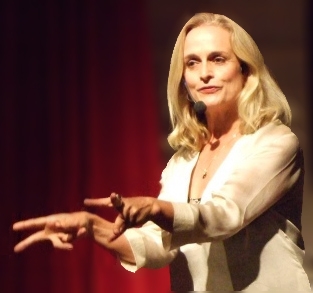 Introduction: In my previous newsletter, I asked my subscribers if they, or anyone they knew, would like to be interviewed for this column. Denise was one of the people who responded. I enjoyed reading her story and I am sure that you will too. Without further ado, I have great pleasure in introducing to you, Denise Bertrand ...
Aneeta: Denise, thank you for writing to me and suggesting this interview.
Denise: I have enjoyed your newsletter for about the last eight months. You provide generous insights and you give a lot of support to individual creativity. I look forward to your newsletter. Thank you for giving me this opportunity to blow my horn.
Aneeta: Thank you so much for that comment. I do try my best with this newsletter. Denise, please tell me a little about yourself – where were you born, where did you grow up, what do you do for a living and where do you live now?
Denise: I grew up in a small town in Ontario Canada called Amherstburg. There were only 5000 people in the town until it joined in with other townships, then the population came to like, 8000. It was a friendly (and still is) town where in I as a teenager in particular seemed to want to get to know everyone. I have always had an outgoing nature. I knew from an early age that I had a gift in working with children. After my education I opened a School of Drama for 4-10 year olds called A.S.T.A.R. – After School Theatre Arts and Recreation. I was the director, organizer, teacher and writer of the scripts that were produced for the children to perform. I stayed with this dream for eight years. I then sold it and went on to do some “soul searching” in a yoga ashram in Sicily Italy, of all places. That indeed is another story. After my return within a couple of years I opened up A.S.T.A.R Gallery for Performance Art on the west coast of Canada on a small island called Salt Spring. I now was prepared to broaden my vision, my teaching, to include adults.
Within two years of opening the Gallery, I was a little restless and ‘broke’ if the truth be told so I answered an add in a newspaper (which I never believed I would get a job from). I strongly believe in word of mouth marketing. Anyhow this job was for a speech and drama teacher in Singapore. I didn’t even know a country called Singapore existed! Well I got the job, moved through culture shock – of being in Asia– remember I am basically a small town Canadian girl. However within a short period of time unfortunately the company that brought me into Singapore had financial difficulties, so I was forced to sink or swim. I chose to swim, created my own business, called Articulating Drama! I have never really looked back.
Now I am here on yet another island, Phuket Thailand trying to bring my methodology of teaching to local children and adults.
Aneeta: I admire your courage! I understand that you’re a teacher. If I may ask, what do you teach?
Denise: I consider myself a freelance educator. I teach what I call ‘the art of communication’ workshops, courses, and programs for children, adults and the corporate sector. Some of my workshops are Articulating English through Drama; Speak with Power and Passion, Storytelling with Power and Passion for Executives; Discover your Story Telling Talent; Poetry Appreciation; Read and Tell; to name a few. Schools local, government and private,, associations, corporations hire me to conduct these workshops.
Participants no matter the age learn; creative expression; memory and listening skills; emotional intelligence; vocal variety, spontaneity; leadership skills and so much more.
Aneeta: When I read the email you sent me, I got the impression that you had lived in Singapore for some time and then Thailand. Have you been in this part of the world for a long time? Do you like it here?
Denise: I arrived in Singapore in January 1999. It is only in the last year that I have taken up residence in Phuket Thailand. I still have companies that hire me in Singapore and abroad, even though I am now spending more and more time in Phuket.
I love Asia for its abundance of variety whether that be food, people, places to go and cultural differences. I love the weather too, although that doesn’t change a whole lot when you are near the equator.
Aneeta: Yep! The tropical weather is the same: rain or shine. When did you start storytelling and when did you turn professional?
Denise: Hmmm seems like I have always been telling stories…they used to take the form of poetry and actually I still pen poems. From the age of eighteen to twenty one, in my hometown I collaborated with a café and organized poetry and storytellers to give readings on an ongoing basis. I myself ‘performed’ my poetry from time to time. Poetry in my mind are short stories…so I hope that counts. I think these early explorations of my words being articulated in front of an audience, planted the seed in my heart to becoming a professional storyteller.
I have always been telling stories to children I teach. Many of those stories developed into drama scripts and were performed by the students.
I mentioned earlier when I opened ASTAR Gallery for Performance Art on Salt Spring Island BC, this is when I started becoming a professional storyteller. I again organized events where in poets, storytellers, actors, musicians could present their works in a professional setting. Even though I owned, operated and was the host for the ‘cushy event’ series (you had to bring your own pillow to sit on – thus cushy) I also would tell stories.
Within about six months of landing in SingaporeI found out about a small group of people who would meet once a month, and tell stories. This was the early days of the Storytellers Circle of Singapore. I gave and found support within the small community of tellers. Slowly my talent to tell stories was recognized and I have been hired to tell stories. Storytelling as of yet, is not a full time profession for me, but one I hope as I age (gracefully I trust) I can become more and more a teller of tales. I think the older we get the better teller we become anyhow.
Aneeta: Which aspect of storytelling do you enjoy the most?
Denise: I enjoy the audience reactions. I enjoy the journey I take while telling. I enjoy the surprises that happen with me when telling. I love painting pictures with words. I enjoy stimulating the ‘meme’ in each person who is listening. There is a neologism called ‘meme’ which states that the ability to tell a story is a non-genetic skill, i.e., you don’t inherit it from your parents as you might do a prowess in sport or music. It is a skill that is passed on by imitation rather than anything biological. Thus, anyone can tell a story. I like to think my telling inspires others to tell, so that this wonderful oral tradition continues its elegant trail.
Aneeta: I understand that you’ll be part of the 1st Annual Phuket Fringe Festival. Can you please tell me a little about this festival?
Denise: Yes, the Festival will be held from Oct 4-13, 2008 at the Playhouse Theatre in Patong Phuket.
The Director of the festival, David Shrubsole wants to create a sustainable platform for performing artists in Phuket. The Fringe is a way to generate awareness and interest in the performing arts in Phuket. Phuket is mostly known for its spas, restaurants, beaches, normal holiday “stuff”. The festival aims to be a great contributor to the local community and a wonderful exchange of creative talent from both Phuket and around the country. The performing arts of Thailand is an area that is known to be one of the fastest growing industries and Phuket is certainly no exception. There will be dancers, musicians, actors, storytellers, fashion designers, all expressing their talents on different nights. The talent pool here is a mixture of cultures all giving support to each other’s expressive medium. We firmly believe that with the commitment and enthusiasm here in Phuket that The Phuket Fringe Festival will soon be regarded as a highlight to the islands calendar year.
Aneeta: As you know, this website caters for storytellers. What advice would you give those who would like to become storytellers?
Denise: First you have to have passion if you want to tell stories. There is a mental discipline needed to develop to tell a good story. One has to have time and commitment to shaping a story.
You must find some kind of personal meaning in the story to motivate you to tell it. There are a lot of stories that are too moralistic, or have predictable endings. For me, I would rather write my own stories with twists and turns and mysterious elements so that I can capture my audience throughout the tale. Although I do tell others stories I carefully chose which ones I tell, especially to children. I avoid telling stories with lots of violence. I see storytelling as a ‘vocal film’. There are no academy awards for oral storytelling, but the award you do get is satisfaction that you were heard and that those who were listening were activating their imaginations. Just think of all the mental pictures that are generated when an oral storyteller tells! All that ‘meme’!
Aneeta: Denise, this is all I have to ask. Is there anything you’d like to add?
Denise: Yes my website will go live on my birthday September 29. I turn 50 and am proud and excited that life in some ways has just begun. Keep me in view www.denisebertrand.com
Aneeta: I will certainly keep that date in mind. Denise, thank you.
Denise: Thank you once again for allowing me the space in your newsletter to communicate a little of my story.
This piece may NOT be freely reprinted. Please contact editor @ howtotellagreatstory.com for reprint rights.
Click here to return to the index of interviews on 'Blow Your Own Trumpet!'
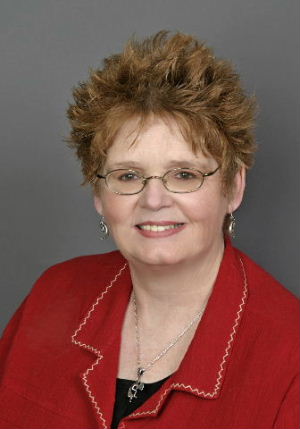 Introduction
Aneeta: Katy, thank you for writing to me to request an interview.
Katy: I’m the one to thank you for giving me the opportunity to share my life experiences that drew me into the wonderful world of storytelling.
Aneeta: You’re most welcome. Let’s start with a little about you. Please tell me where you were born, where did you grow up, what do you do for a living and where do you live now?
Katy: I was born in Ypsilanti, Michigan (United States) and was raised in the countryside outside of Washington, Pennsylvania. My bicycle was my best friend because that was my transportation to visiting friends – riding up and down those rolling hills! After graduating from high school I went to college for a year and also studied Fortran (I’m giving away my age). In the late 1960’s and early 1970’s, my husband and children travelled around the world doing research for the Smithsonian Tropical Institute. It was during this time that my life was touched by people of many cultures and adventures that would eventually be my treasure box of memories for storytelling.
In 1983 I moved to Colorado and began working at Colorado State University. In 1985 I enrolled at CSU with a major in Anthropology. When I graduated in 1989 I moved up into the mountains and began working at the Estes Park Area Historical Museum. That is where I discovered the joy of storytelling and the importance of not only TELLING stories but helping others to share their stories too.
In 1992 I created my business KATY’S TALES and began to travel with my stories. I call myself a Story Teller, Story Teacher, Story Collector and a Story Time Radio host.
Aneeta: On your website, http://www.katystales.com, there is a statement: Katy Little takes you to a place in time … will spark a memory to help people share their own story. I am curious about this: can you describe how you will help them spark a memory. And why are their memories so important in storytelling?
Katy: I discovered that when I told my own stories of childhood experiences with my parents, grandparents, aunts, uncles, cousins the audience would be nodding their heads in acknowledgement of understanding. They would even shed some tears of feelings that were brought to their minds they had not thought of for many years. My stories of living in the country, learning to entertain myself, having tea time and playing in a button box, lessons learned from bad choices, lessons learned from good choices, Friday nights at the roller rink, etc., helped to “spark” some memory in their life. After I tell my stories is when I am honoured with their stories. Their voices are heard and their stories are shared.
So many times we are in too much of a hurry to listen to our parents, grandparents, aunts, uncles, brothers and sisters when they tell us a story. That is why I feel that I am privileged to listen to their stories. It is important for all of us to have the opportunity to share our stories with others. I’ve told a story about my grandma Erma and me dancing around the table to the music on the radio of Don McNeill and the Breakfast Club. When I finished the story a gentlemen in the audience said, “I can sing the song for you if you would like.” That is why “sparking a memory” in others is important. Their memories give them the opportunity to share their story with others.
Aneeta: For the benefit of my readers, can you please explain some of the methods and techniques you use for storytelling.
Katy: When I teach a workshop or class I talk a lot about the importance of connecting with your audience. The importance of using eye contact, facial expressions that are correct with the emotion of the words you are saying, the importance of the silent pause, the raised eyebrow, the step forward or backward. Those are some of the outward techniques that I feel are important for storytellers – to find their comfort zone of stage presence.
The most important thing for me is to find the stories you love to tell so that each time you tell them they are told with the same passion as the time told! I never tell a story the same way but I always tell the story with the same passion and emotion. I tell people the importance of looking at Fables to tell. They help me to write and tell a personal story from the lessons learned from the Fables.
I love telling Native American tales and multicultural myths and legends. Many of my stories are stories collected while I was travelling around the world. One thing that I feel is very important when telling Native American tales is the importance of getting permission and to understand the importance of when to tell certain stories and to understand and respect the telling of the tale.
One other point I like to pass on is: Practice! Practice! Practice! Why? Because when you step up in front of your audience you can take a breath, set your feet, look out into the audience and begin your story with confidence and passion. And, of course, HAVE FUN!
Aneeta: You clearly have lots of programs worked out to help storytellers. Can you please explain them here?
Katy: My “Westward Ho!” program was designed from a time when I helped to design and develop a History Camp for youth in Estes Park, Colorado. We wanted the “history keeper’s” to experience life in the late 1800’s on a working ranch in Estes Park. The stories we told were about the people who came to the EstesValley and started a life in the Rocky Mountains and the Indians in the area. That is how I put together this Colorado history program for schools but now tell them to groups of all ages. I use it for workshops at storytelling conferences, educational conferences and for business organizations to tell stories of fortitude and accepting challenges in life.
Another program “Nostalgic Stories to Touch the Senses” was designed for Life Long Learning classes I taught at Aims Community College and Colorado State University. These are a collection of my own personal stories of how people touched my life in many ways. This was a way to talk about gratitude. What began as classes and workshops for the older student has become a wonderful program for younger students. Once again, I always leave time at the end of my show for the audience to share their stories. If I am in a classroom I have the student come to the front of the room and tell their story. For younger people I set down in a chair beside them. For an older audience I go out to stand or be next to them (I usually take a microphone with me) as they share their stories.
“Weaving Stories from Around the World” are stories of my travels around the world about the people, places and experiences I had as a mother, wife, field assistant, travel planner and explorer. This is a very hands on type of storytelling program that I bring artifacts, cloth, jewelry, pottery, linen and carvings that relate to the stories of how I brought these items into my life and how the people of many cultures taught me the beautiful truth that mostly, we are all alike and want the same things in life – to be able to respect our differences and learn from one another. This is a program that I tell to preschooler’s as well as adults. Of course, the program for preschooler’s is only about 25 minutes long but they sure love the musical instruments and the stories of monkeys’ and lizards!
All my programs are designed in chapters. I do this so that if I am asked to tell to a group for 20 minutes I can pick something appropriate for that time frame as well as story theme. I feel that making sure that I time my stories before I appear for a program is most important. I always keep an eye on my audience and try to have stories that might be more appropriate if I’ve been misguided about the type of audience in attendance.
Aneeta: I have asked some of my previous storytellers to share one of their stories with my readers and most of them have been more than happy to do so. I would like to ask the same of you: would you care to share one of your stories here?
Katy: I’d like to share my “signature story” – A Day in the Life With Grandma Erma”.
A Day in the Life With Grandma Erma
The sun’s rays flashed across Kathleen’s face. As she lay in bed, her eyes began to open. She stretched from her four-years-old head to her four-years-old toes. Then she did what she did every time she woke up – she brought one of her long blond hair ringlets up under her nose, secured it by wrapping her index finger over her nose and stuck her thumb into her mouth to suck.
She heard sounds from downstairs, the sounds of Grandma Erma and Papa Roy. Kathleen rolled out of bed, gathered her “blankie” into her arm, and walked out of the bedroom, down the carpeted steps, through the carpeted living room and through the carpeted dining room.
Kathleen came to the large kitchen door. She gently pushed the large, swinging door open into the kitchen. There at the kitchen sink stood Grandma Erma. Papa Roy sat at the kitchen table eating his breakfast. On the floor beside Papa Roy was his dog, Duchess.
“Good Morning, Kathleen” they both said to her. She climbed up onto a chair next to Papa Roy. Grandma Erma brought over toast with butter and strawberry jam. Papa placed an empty bowl in front of her. She watched as he picked up the box of Rice Crispies and poured the cereal into her bowl. Then he picked up a pitcher of cold, fresh milk. Together, they leaned their ears close to the bowl as he poured the milk into the bowl of cereal. Suddenly, they smiled as they heard SNAP! CRACKLE!POP! They both laughed at the wonderful sound of the “talking cereal”.
Papa Roy finished his breakfast and said he had to go to work. He gave his dog, Duchess, a pat on her head. He gave Kathleen a pat on her head. He gave Grandma Erma a kiss on her cheek and told her he would see all of them in the evening and left for work.
Then, Grandma Erma did what she did every morning – she stood at the sink, took out her false teeth, put them in a cup, filled the cup with water and placed the cup on the window sill. That is where her teeth stayed for the day, unless company came knocking on the door or she went to the store.
Grandma Erma walked to the table and sat down with Kathleen. They talked about the chores they would have to do before they could play. They had beds to make, dirty clothes to gather up and throw down the laundry shoot, the sweeping of the carpets and the washing of the breakfast dishes!
When the chores were finished, Kathleen said, “Whew! That is a lot of work for a little girl.” Grandma smiled and said, “You’re right! Let’s go out to the chicken coop and feed and talk to the chickens.” Kathleen loved to feed and talk to the chickens so she took hold of Grandma Erma’s hand and they walked out the back door of the house, down the cement steps and out through the backyard to the chicken pen. The chickens scurried out of the hen house when they heard Grandma Erma call, “Pucka! Lucka! Tucka! Tooey!” Grandma Erma always had funny sayings that put warm feelings in Kathleen’s heart and a smile on her face.
Grandma led the ay into the chicken coop. Two rows of hen boxes where the chickens roosted and laid their eggs lined both sides of the walls. Kathleen waited for Grandma Erma to raise the chicken out of the nest and then she reached into the nest and carefully pulled out the eggs. She placed them into the basket that Grandma Erma had in her hand.
Kathleen looked at Grandma Erma and said, “Boy! This sure is a messy job.”
“I know it is” grandma said, “but the eggs will sure taste good for breakfast in the morning!” They both smiled and left the chicken coop and went back to the house. When they got to the kitchen, they washed off the eggs and put them into the grey egg crock and Grandma Erma put the filled crock into the ice box.
Kathleen loved to help Grandma Erma but she did not like to clean up the mess.
“Remember Kathleen, Grandma Erma said, “When someone asks you to help clean up you should keep warm feelings in your heart and a smile on your face.”
“But grandma” said Kathleen, “that isn’t easy for a four year old!”
(Remember that I told you that Grandma Erma had taken out her false teeth and so whenever she said a word with a “p” in it, she sort of sputtered and spit. Kathleen thought all Grandmas’ talked that way!)
Grandma Erma chuckled and said: “HIP! HYPE! HOPE! GETA PIECE OF PIE! WHAT KIND OF PIE?
HUCKLEBERRY PIE! HIP! HYPE! HOPE!
That put a smile on Kathleen’s face and warm feelings in her heart! Grandma Erma walked over to the kitchen sink, picked up the cup that held her false teeth and placed the teeth into her mouth.
“Come on now, Kathleen, it’s time to get supper started for Papa Roy.
“HIP! HYPE! HOPE! GETA PIECE OF PIE! WHAT KIND OF PIE?
HUCKLEBERRY PIE! HIP! HYPE! HOPE!
Aneeta: Thank you very much for this. I know that you have a slot in a Radio show. Please explain to my readers what your show is about?
Katy: I’m so glad you asked about Story Time Radio. In 2003 I had submitted a proposal and an audition tape to KRFC, 88.9 FM for a storytelling program. I’ve always enjoyed listening to radio and have listened to Garrison Keeler for years. Once again, I thought that if I had a radio show I would have a “stage” to share my stories as well as bringing other storytellers to share their tales with the community.
Eventually, KRFC joined the global community and people from around the world can stream the WEB. Excuse me, I get ahead of myself!
In June of 2004 I hosted and produced the first Story Time Radio program. The show is airs weekly on Sunday at6:30 to 7:00 p.m.(Mountain Standard Time). I began with choosing themes for each week and telling stories myself. Then I began to ask for people to join me and they would share there stories. I tried to give them the opportunity to choose the theme and ask them to have about 18 minutes worth of stories to tell. The rest of the time was spent with conversation and tips on storytelling.
Eventually, I needed to ask another storyteller to host the program one week a month so I was able to travel with my storytelling programs and workshops. Bailey Phelps, a tribal member of the Cherokee Nation, is a master storyteller, musician and author engages his audiences with colourful images and old fashioned fun through his stories.
In September 2008, Story Time Radio started two new segments of storytelling programs. The 1stSunday of each month is “Speaking of History” with me and Gail Khasawneh as hosts. Gail and I bring stories, historical phrases and songs together to share the folklore and life experiences of pioneers inColorado. We perform reader’s radio theatre with Primary Sources of those people who came before us. (We also perform these programs throughout the area.)
The 2nd Sunday of each month is “Sandbox Stories” with host Katie Cassis and her Sandbox Story Theatre Company. Sandbox Stories will air on the 2nd Sunday of each month at6:30 p.m. Katie invites children from the ages of 6 to 13 to submit their stories, poetry or thoughts. Then the theatre company members perform the chosen stories.
The 3rd Sunday of each month I alternate with Bailey Phelps with stories to delight children of all ages.
The 4th Sunday of each month Story Time Radio presents the syndicated program “Tell Us a Tale” with Peter Jones. Peter offers his storytelling program to community radio stations around the world. He and his storytelling troupe bring music and story together in such fine fashion.
Aneeta: Katy, as you know, this website caters for storytellers. What advice would you give those who wish to venture into storytelling?
Katy: I would suggest that a person wanting to venture into storytelling should attend as many storytelling events as possible. By listening to other storytellers it will help to find the storyteller inside you. Read books about the “business” of storytelling. Yes, it is a business. Form a business plan. Don’t hesitate to “test the waters” by volunteering your storytelling at schools and retirement residence. You will want to find the age of people that YOU are comfortable with. Find a storytelling guild in or near your community where you can discuss being a storyteller as well as practice telling your stories in a “safe” environment. Usually, these groups will give you feedback, if you ask for it, help you with techniques and talk about the importance of knowing how to find stories.
Aneeta: Katy, this is all I have to ask. Is there anything you’d like to add?
Katy: I would just like to add that I feel my mission as a storyteller is to assist other storytellers in finding stages to perform their programs. I would love to hear from other storytellers so we can discuss the opportunity of being on STORY TIME RADIO. Most of all I would like to begin a directory of storytellers who produce/host radio shows. There is so much we could learn and share from one another. To reach me, email
Aneeta: Katy, thank you.
Katy: Thank you Aneeta and I leave you with “Let your life take flight through story!”
This piece may NOT be freely reprinted. Please contact editor @ howtotellagreatstory.com for reprint rights.
Click here to return to the index of interviews on 'Blow Your Own Trumpet!'
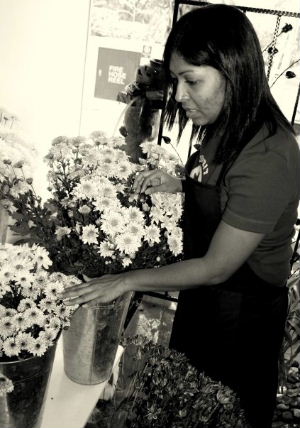 Introduction: Last month, someone I knew passed away. I needed to send a wreath and looked around for a florist. I chanced upon Brenda's shop and decided to buy one from her. From that date, I have been in touch with Brenda. I asked her if she would be interested in being interviewed for this column. We both wondered how storytelling would feature in her work. I shall leave it to you to read her answers below to find out. Without further ado, I have great pleasure in introducing you to Brenda James ...
Aneeta: Brenda, thank you for agreeing to this interview.
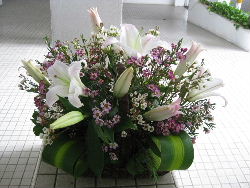
Brenda: Hello Aneeta. Thank you for visiting us at Nook and for the opportunity to be featured here.
Aneeta: Let’s start with a little about you. Where were you born? Where did you grow up and where do you live now? What did you do for a living before starting your new business venture?
Brenda: Right, I am proud to say that I am a product of the charming town (well city actually) that tin built,Ipoh. Born, lived and outgrew much of my awkward, gawky years there before going away to study in the UK. Then, I relocated to Kuala Lumpur.
These days I work primarily with flowers but before my bold foray into blooms, bud and things related, I worked for many years in the heady and exciting world of brand and corporate communications.

Aneeta: Let’s now talk a little about Nook Flowers. Tell me all about it. How did you come to start this business? Why flowers?
Brenda: Floral fetish? (That would have made a more interesting story admittedly). Truth be told, flowers have long been a hidden passion. Whenever opportunity arose to work with them, I volunteered, mostly for friends and for fun and for free, I hasten to add.
After many years in branding, the stirring feeling of wanderlust (for want of a better term) just kept getting stronger and after 6 years I made the decision to take my savings and open the doors to what materialised into Nook Flowers, my little floral bastion.
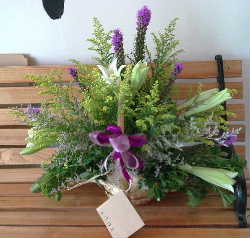
Aneeta: I’m curious, why the name ‘Nook’?
Brenda: It wasn’t the first name on the rather short list. My sister and I were seated at our dining table and after going back and forth on the pro and cons and appropriateness of some of the names on the list – we decided we were not satisfied with any of them. It finally dawned on us to call it ‘nook’ because when the idea to go into our own business came about, we kept saying, “we should open a nook of our own”.
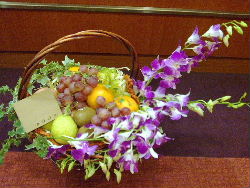
Aneeta: Does storytelling in any way feature in your work? If so, how?
Brenda: I like this question. In my previous career, I worked on a lot of events and many of these events were built around themes that were conceptualised to tell a story, be it a campaign or a product, each event had its own story. This time around, with Nook we support many a story too – brides comes to us with concepts for a fairytale wedding, or a classical shindig or a chic modern do and with lush flowers and our unconventional ideas we help to complete this tale in an aesthetically pleasing way. What we do is specialised and niche but it plays a vital role in the final and complete look of the story.
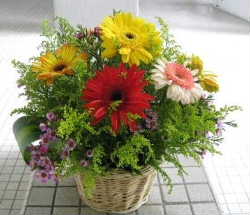
Aneeta: From experience, I know that when I write a story/tale, there is sometimes a more interesting story behind the story itself. My question, therefore, is this: when you prepare for a project for some clients, have there been interesting stories about how you came to be involved in the project in the first place? If so, can you share these stories with us, please?
Brenda: Nook Flowers has been lucky. For a boutique that’s only 6 months old, all our events so far have been through referrals. I’d like to think that its a result of many people or organisations that are happy enough with our standards and product offerings that they’ve gone on to share news of our existence with others.
Having said that, when a client comes to us with an event or wedding, I always like to start off with a chat and from that chat I am able to glean enough details that would help me come up with ideas that are distinctive and crafted to represent the look and feel of the event perfectly. While I may have a hundred different ideas of my own, it’s important to listen to what the client wants and from there develop a concept that work in synergy with their needs.
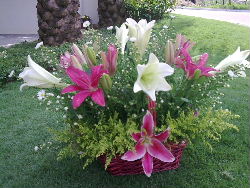
Aneeta: As you know, this website caters for storytellers. What advice would you give those who would like to venture into this field?
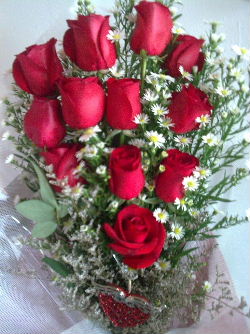
Brenda: With flowers, one is limited only by one’s creativity. There is no right or wrong look and it’s amazing what can be done with them. For example, even the most mundane of containers can be used as a base for some amazing creations. Take an old rusty kettle and make an arrangement that tells a story of how you went for a walk in the countryside and came back with a bunch of wild flowers growing on the river bank. Or take a glass box fill it smooth rocks, cover it with just enough water and float dendrobium orchids on them for an oh-so-in the moment-urban chic look. Not to sound clichéd but just think out of the box. In itself a flower is nature’s masterpiece, with such a ‘tool’ at your disposal how can you not create something wonderful.
Aneeta: Brenda, this is all I have to ask. Is there anything you’d like to add?
Brenda: Well, if I may, I’d like to add that we have a website and from here, people have an idea of the kind of work we do. Here’s the address: http://www.nookflowers.com
Aneeta: Brenda, thank you.
Brenda: Absolute pleasure and thank you for having me on your wonderful site.
This piece may NOT be freely reprinted. Please contact editor @ howtotellagreatstory.com for reprint rights.
Click here to return to the index of interviews on 'Blow Your Own Trumpet!'
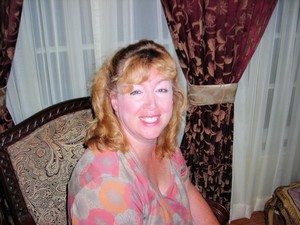 Introduction: Tamera wrote to me recently to tell me about her first novel, The Pond, and also request that I interview her. I was very pleased to oblige and without further ado, I have great pleasure in introducing you to Tamera Lawrence ...
Aneeta: Tamera, thank you for writing to me with a request to be interviewed.
Tamera: Thank you for having me.
Aneeta: O.K., let’s start with your story. Tell me a little about you: where were you born and what was your youth and childhood like? Where do you live now? What do you do for a living?
Tamera: I was born in Norristown Pennsylvania and grew up in Collegeville. As a child, I always had my nose in a book. I loved to act out stories with my Barbie dolls. I always had a vivid imagination and would often daydream in class, making up stories in my head. I married young and had six children, five sons and one daughter. Over the years, much of my time was spent helping my husband run his business, a landscape and excavating business. I am now writing five days a week and continue to grow as a writer.
Aneeta: I know, from the webpage you directed me to, http://outskirtspress.com/webpage.php?ISBN=9781432724740, that you have six children. Can you tell me what life in the house is like with six children?
Tamera: I have two adult children, two teenagers and two elementary school children. It is not always easy to juggle it all. The wash can easily pile up as quickly as the refrigerator can be empty. We can go through a gallon of milk every two days. But life is fun. I have always enjoyed being a mom. My kids are proud of my first book and I recently had my first book signing at a Barnes and Noble. It went so well that I was asked to return to the store in December. Thank God, I finally got that girl! She is a big help to me and what a surprise, she also loves to read and write!
Aneeta: When you say, ‘Thank God, I finally got that girl’, you remind me so much of an aunt of mine – she had six sons. No daughters! Let’s talk about your book, The Pond. Please provide a description and also tell me where my readers can buy it.
Tamera: The first chapter of The Pond is based on a true story that my mother had told to me. I put my own spin on it and added a tale as to why the tragedy could have happened. It is a current day mystery/thriller set in Kimberton, Pennsylvania. When Michael Adams and his family move back to his family mansion, unexplained happenings occur. Was the death of Carl Weber and accident or was there something more sinister going on? Although it has a paranormal atmosphere, it also is about a family discovering it past and all the secrets that go with it. My web address is http://Outskirtspress.com/ThePond.
The book is also for sale in some bookstores and/or can be ordered by customer service in most Barnes and Noble bookstores and/or Borders.
Aneeta: I know that this is your first novel. How did you learn the craft of writing? Did you attend a course or are you self-taught? What is the most important aspect of storytelling when writing a novel?
Tamera: I have always loved to write, but it wasn’t until several years ago, I took it upon myself to learn the craft of writing. I took on line writing courses through Writer’s Digest School and worked one on one with a well-known author, who took the time to mentor me with a different book. I think the most important aspect of storytelling is to entertain. I want to be able to hook a reader right from the beginning and pull them all the way through the book. The nicest thing I hear about my book is when my readers say that they loved it, especially the ending and they squirmed a bit.
Aneeta: What about the process of getting the book published? Was there any interesting story about your journey to becoming a published author, which you can share with us?
Tamera: I didn’t know when I started out writing, just how hard it is to get published and the competition involved. Good publishing houses already have their prize writers, who write them more books. There is a 99% rejection rate for new writers. As a first time author, it is hard to get your foot in the door and even get past hello. I had an agent hold one of my other manuscripts for almost two years before returning it to me. It was really frustrating. I have learned to be patient and get over rejection letters. A writer needs to develop a tough skin and keep working at your dreams. My biggest thrill was when recently I was at my local Borders bookstore, searching for one of my favourite author Dean Koontz’s books and there beneath his manuscripts sat my book The Pond for sale. That was a dream come true.
Aneeta: You also say that you’re working on your next novel. Are we allowed to ask what this is about?
Tamera: My next novel, Before I Wake, is also a thriller. It is about a woman, whose husband wants her dead and will stop at nothing to make it happen. It is a life and death battle right from the beginning that ends in a climatic moment of triumph.
Aneeta: As you know, this website caters for storytellers. What advice would you give those who would like to become storytellers?
Tamera: I would say to storytellers, to tell their tales, to write every day and make your dreams happen. There are so many options out there for writers, if you take the time to research your avenues. The Internet is a great tool to use.
Aneeta: Tamera, this is all I have to ask. Is there anything you’d like to add?
Tamera: If anyone reads The Pond please take a moment and write a review on Amazon.com or Barnes and Noble.com .You can also e-mail me on my website.
Aneeta: Tamera, thank you.
Tamera: Thank you, Aneeta and God bless!
This piece may NOT be freely reprinted. Please contact editor @ howtotellagreatstory.com for reprint rights.
Click here to return to the index of interviews on 'Blow Your Own Trumpet!'
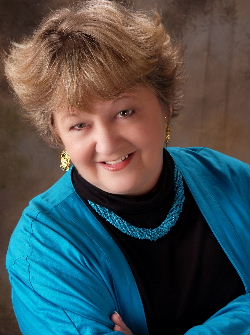 Introduction: Martha wrote to me sometime last week. She asked for assistance with marketing one of her books. I was more than happy to oblige since her description of the book says that there are elements of storytelling in it. I was not wrong as her story is very interesting. Without further ado, I have great pleasure in introducing you to Martha Cheves ...
Aneeta: Martha, thank you for writing to me about marketing your book. Let’s start with a little about you. Tell me where you were born, where you grew up, what you do for a living and really, anything at all you’d like to share about your life with my readers.
Martha: I was born at Emory Hospital in Georgia and grew up mostly in Georgia. My father loved to travel. Before any of us were born he joined the Army, served his term, joined the Navy, served his term and then joined the Merchant Marines and served his term. After the kids started coming he had to slow down some. He and mom had us in pairs, sort of. My oldest brother was born in Georgia then they moved to California. I had another brother born there but he didn’t survive. They moved back to Georgia and 8 years after my 1st brother was born they had me. Again we moved but this time to Utah. About 1 ½ years after my birth, my younger brother was born in Utah. Back to Georgia. Eight years after my birth came my 1st sister. Born in Georgia. Yes, we moved again back to Utah and 11 months after my sister came my youngest sister. And back to Georgia to stay. Dad always kept our house in Georgia, knowing that we would be back in a couple of years. I inherited his love for travel and have moved from GA to Texas, South Carolina, Florida, and to where I am now, North Carolina. This is where I plan to stay. I’ve been here almost 14 years and love it.
I work for a commercial heating, air and plumbing company and I can actually say that I love my job. The work varies daily and I’m pretty much on my own. It’s one of those special jobs where as long as you do your work, no one stands over you. The people I work for are very family oriented and wonderful to work for. A lot of my “Food Testers” are my co-workers. I’ll make up a dish, bring it in and they rate it to see if it’s worthy of the cookbook. And when we have our office Christmas lunch, my list of things to make is usually longer than most.
Aneeta: I know that you’ve written a cookbook. Please describe this book for me.
Martha: Stir, Laugh, Repeat was originally to be a cookbook for my 3 children. My oldest daughter, Leslie, told me one day that if I did nothing else in my life would I please write down my recipe for Banana Pudding. I had no recipe on paper; it was all in my head. My mom made it without a recipe and that’s the way I learned. So, I made my Banana Pudding and measured as I went and finally had it on paper. That’s when I decided to put it in the computer and add other recipes that I knew my kids loved. Like most baby boomers, my mom was a stay at home mom. I wasn’t and didn’t have time to really teach my kids to cook. By the time I made it home from work, cooked dinner, homework done, baths, laundry, kitchen cleaned up, etc. There was no time to teach cooking. So I started writing every recipe I could think and enter them into my cookbook. When working up these dishes I would keep in mind that one of my kids liked one ingredient but another one didn’t. That led me to my suggestions for ingredient changes with each recipe.
One Thanksgiving my youngest daughter, Marcia, told me she couldn’t bring deviled eggs to dinner because she couldn’t peel the egg without tearing them up. That was something I just assumed everyone knew how to do. But after thinking about it, when did I have time to teach her something that simple. That’s when I decided to add tips to my book.
Aneeta: In your email to me, you said that it is a ‘cookbook with stories about recipes’. Can you expand on this, please?
Martha: As I worked up a recipe I would remember things from my past pertaining to cooking. Some are mistakes I made while working up the dish and some are just funny stories related to the recipe or dish. We all have these stories locked in our memories. “How did you like liver the first time you were forced to eat it?”, “what did you do the first time you ate squash?” “Have you ever been told that you couldn’t leave the table until you cleaned your plate?” “Have you ever baked a cake that had to be held together with toothpicks?” “Did you forget to take the tooth picks out?” The memories go on and on. We all have memories like these and as each incident was happening, it wasn’t funny. But tell the story now and see if you don’t laugh. And these memories are what help make us human.
Aneeta: Can you share one of these stories here, please?
Martha: This story is about my oldest, Shane. One Thanksgiving he and his 2 sisters decided to have dinner at his place. Remember, all 3 were unmarried at the time and most of their meals came from fast food “stores.” They called me to tell me I wouldn’t have to cook but would I please bring the dressing and gravy. Hello, I make my dressing and gravy from the drippings of the turkey. So, not to offend them, I bought a turkey, cooked it, made my dressing and gravy but didn’t take the actual turkey to dinner. I was to be there at 1:00 to eat. Well, I didn’t eat breakfast so I could fill up on all of the good dishes we “normally” have for Thanksgiving so I was starving. I walked into the kitchen and saw a table full of desserts. Cheese cake, apple pie, cakes of all types. I started looking for the turkey. It was in the oven. My daughter had bought a smoked turkey from Sams Club and forgot to thaw it out so she put it in the oven around 11:00 to hopefully unfreeze and warm. It was still frozen at 1:00. I saw 2 cans of green beans, a can of cream of mushroom soup and French fried onions on the counter. “Mom, can you make the green bean casserole?” It turned out that that was the only veggie for dinner. The rolls were still waiting to be cooked but couldn’t be put in the oven because the turkey was taking up that space. Plus, the kids had asked what dessert their dad would like to have. He said chocolate pie. My son said he could make that. Here’s what he did. He took an uncooked pie shell, poured a can of chocolate pudding into it, covered it with cool whip and baked it. Boy did he have a mess! They have all learned a lot since then but still need my cookbook.
I bet this little story reminded you of something funny that’s happened to you. If so, my stories are working.
Aneeta: Yep! You certainly did! You have mentioned your journey to publication on your website – http://www.marthaskitchenkorner.com
What was your biggest challenge and how did you overcome this challenge?
Martha: My biggest challenge is time. Like I said, I created my book for the kids. While working up new recipes I decided I needed people to test them. I started taking new dishes over to one of my friends. When she wasn’t home I would take them to another friend to taste. Before long I ended up with about 25 “Food Testers.” My best friend, Dusty, was also my proof-reader. I’m a terrible speller. As she read the recipes, most of which she had tasted, my stories and tips, she told me I needed to publish. She writes poetry and has had her work published so she knew a little about what I needed to do. So I went to the internet looking for someone to send my book to. I mentioned I can’t spell, well I’m not an expert in computers either. I found a publisher but had no idea as to how to contact them. I gave her their name and she promised to see what she could do. The next day I received a phone call from the publisher. She called them! Told them about my book and they wanted a manuscript in 3 weeks. I rushed around, finished it and sent it to them. I waited and waited with no response. About a month later there was a special delivery package for me. I just knew it was my manuscript and a rejection letter.
NO! It was an acceptance letter and contract! I read everything over, had Dusty read and finally an attorney read the contract. Needless to say, I ended up signing and sending it back. That’s when the waiting really started. I received notes suggesting changes.. that took weeks. I received suggestions for the covers.. that took weeks. I had drafts to review again.. that took weeks. I had approvals of this and approvals of that… that took weeks. Finally, after one year I had a release date. So time has been my biggest challenge.
Aneeta: As you know, this website caters for storytellers. What advice would you give those who choose storytelling as their vocation?
Martha: If you are choosing stories as your vocation, include some humour. I love to read and usually read mysteries but even with all of the murder and suspense, I enjoy those with a little chuckle included the most.
Aneeta: Martha, this is all I have to ask. Is there anything you’d like to add?
Martha: I’ve had at least 3 book signings a month since my book release and this schedule will continue through Christmas. Book signings are great and a lot of fun but sooner or later you run out of your local market. The internet is probably the best place to expand your market. Whether you are or have written a book or just one story, be persistent when trying to become noticed, be creative with your marketing and don’t give up. I’m not. I’m working on my 2nd cookbook right now Stir, Laugh, Repeat… Again and my publisher is waiting on me to finish it soon.
Aneeta: Martha, thank you.
This piece may NOT be freely reprinted. Please contact editor @ howtotellagreatstory.com for reprint rights.
Click here to return to the index of interviews on 'Blow Your Own Trumpet!'
Page 14 of 22