
Transform ordinary stories into extraordinary ones with our proven 7-step method. Join thousands of storytellers on their journey to mastery.

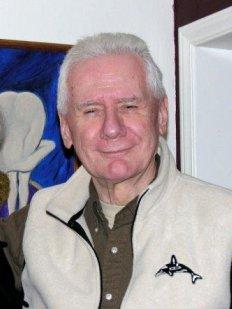 Introduction: George wrote to me about a week ago saying he'd like to be interviewed. When he told me he'd moved from America to Japan to live, I was pretty sure he'd be a person with an interesting story to tell. I was not wrong and I hope that, like me, you'll find his story interesting. Without further ado, have great pleasure in introducing you to George Polley ...
Aneeta: George, thank you for writing to me.
George: Thank you for responding, Aneeta.
Aneeta: Let’s start with something personal – where were you born? Where did you grow up? What do you do for a living and where to do you live now?
George: I was born in Santa Barbara, California. My parents moved to Tacoma, Washington, where my father was from, and I spent my first seven years there before we moved to Seattle, Washington, where I lived until I went to college in Oregon. After completing my undergraduate degree (B.A. in sociology and anthropology), I spent a year at the University of Washington working on a Master's Degree in anthropology, but dropped out to attend seminary in Berkeley, California in 1960, completing an M.Div. in 1963. After three years as a pastor in Illinois, I entered the University of Illinois, where I earned a master's degree in social work. I then spent the next 41 years as a mental health professional in California, Minnesota and lastly in Washington State, retiring at the end of 2007.
From the late 1960s on, I also began my writing career. So, as you can see, I've been fairly busy, and still am, as I am a full time writer, spending four to six hours a day writing.
My wife, Aiko, and I moved to Sapporo, Japan at the end of March 2008 to fulfill her dream of returning home after I retired. We are both enjoying life here in this beautiful city on the north island, where we celebrated our 29th wedding anniversary the 23rd of last month.
Aneeta: Congratulations! The document you sent to me shows an impressive career as a writer. I've also read a little more about your work on your website, http://www.geogepolleyauthor.com. Please tell me a little of the kind of work you’ve had published thus far.
George: I began with writing a couple of articles for a Baptist religious journal called Foundations, an article for a mental health journal, and a couple of articles about writing that were published in The South Dakota Review, which also published one of my short stories, called Jonah's Birth. In 1974 while working on a short story, I began writing poetry because my typewriter broke. Seems like a silly reason, but it isn't because handwriting takes so long that I am always running ahead of myself. So while my typewriter was being repaired I wrote some poems. Friends liked them and I began getting published, a wonderful incentive to continue. I still write poetry on a regular basis, such as the following poem, which author Barbara Becker-Holstein has called "A beautiful and painful poem."
Sound of sorrow
There is a sound, and it is heartbreaking.
It is the sound of a mother wailing
the loss of a child. It doesn’t matter how
her child was lost; what matters is that
her child is dead.
Do you hear it? It is there, rising and falling
in ululating rhythms like a wind
wailing through walls, windows and trees,
tearing your heart with its agony.
You don’t want to hear it, but you must. It is insistent.
Listen closely. For nine long months she carried and nurtured
her child, labored and then gave birth. And now her child is gone,
taken from her. It doesn’t matter how.
The pain is the same no matter how her child died.
What matters is that her pain, expressed, is heard.
Hear it. Take it in until her wail becomes yours
and changes your heart. Hear it, so that each time
you decide to start a war, or take a life in war, or want
to take a life for any reason, you hear that heartbreaking
sound ululating in your ears and it stops you.
Listen. Can you hear the sound, rising and falling
like a wild wind wailing through city streets and
battlefields? Quiet, now. Listen carefully. Her wailing
calls, demanding your attention.
Listen.
—Sapporo, 10 February, 2009.
The poem was inspired by a comment in Khaled Hosseini's The Kite Runner: “It is a heartbreaking sound, Amir jan, the wailing of a mother.”
I'm continuing to write and publish poems, one of which is due for publication in the London-based Graffiti, which is published by the GreenSpirit organization. But my main work is with fiction.
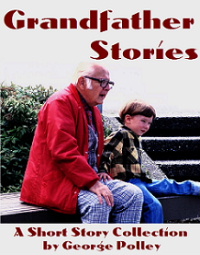
Over the years I've had several short stories published, and have one, The Storm, which is scheduled for publication in the UK magazine The View From Here in an up-coming issue. And I have two new books out, Grandfather Stories and The Old Man and The Monkey, published by Abbott ePublishing, of Manchester, New Hampshire, which I am very excited about. Both are set here on the island of Hokkaido, the first in our neighbourhood, and the second in a tiny village several hours north of Sapporo. I'm currently working on a novel about Mexico City, where I lived for a short period in 1973-74, and on a long short story about an invisible rabbit that lives across from us on the driving range of the local golf center.
Aneeta: That poem is very soulful. Thank you. As you’ve said, you now live in Japan. Has this transition from America to Japan been difficult or easy? Why?
George: It's been both. When we moved into our condominium, we had to have it upgraded, with new windows, new wallcover, and so on. Then we had to get health insurance, get plugged into health care, and find our way around on the bus and subway system. Aiko hadn't lived in Japan for nearly 29 years, and never had lived in Sapporo; plus, she had to squire me around, since I neither speak nor read Japanese, which was a tremendous pressure on her. For me, it has been less so, especially since I've been able to connect with physicians who speak excellent English, and who are also excellent physicians. What I've missed the most is sitting down for coffee with old friends. Having Skype on my computer has helped tremendously, because we're able to connect via videophone, and also with my four children and most of my ten grandchildren, all of whom live in the U.S.
Aneeta: Since your career as a writer has been so varied, I would like to know, what particular aspect of writing did you find difficult and how did you overcome it?
George: Mainly learning how to write a good story. I devoured interviews with well-known writers about the craft of writing fiction. I read every copy of the Paris Review I could lay my hands on, and read their interviews. I read their work avidly: Kazantzakis, Henry Miller, Durrell, Jorge Amado, Donoso, Llosa, Endo, Updike, Fuentes, Poe and lots of others. Today I read Hosseini, J. K. Rowling and Haruki Murakami, among others.
When living in Minneapolis, Minnesota, I joined a writer's workshop, and gave poetry readings, both wonderful ways to get feedback. I also write a blog (as Jorge "Toasty" Tostada), which gives me the opportunity to write commentary, short articles, essays, and an occasional review. You'll find it at www.tostadaspeaks.blogspot.com.
Aneeta: As you know, this website is catered towards storytellers. What advice would you give to those who would like to venture into storytelling?
George:
(1) Read lots of stories so that stories be come second nature to you.
(2) Read your excellent article, 'How to Tell a Great Story'. Wish I'd had something like that years ago; would have saved me a lot of time.
(3) Listen to the stories people tell about themselves. I have a credo that I follow: "Every person is important, and every person has a story. Listen, find the story and tell it."
(4) Don't question where your stories come from; when they arrive, welcome them. The Old Man and The Monkey came to me in a dream about a big snow monkey; the story about the invisible rabbit just popped into my head; Grandfather Stories came from an encounter with some teenage boys here in Sapporo, having a big raven fly over my head with a loud and raucous Caw, and watching a news story about a deer that had fallen through the ice and struggled to get out.
One of the most helpful things to me was something I learned in graduate school, and that was how to do "process recording", which was paying close attention to the process of what went on in an interview: what participants said, the flow of conversation, who said what, etc. Then tie it to story. One of my most successful stories, Requiem for Blue told the story of an old ex-convict in his words, using a technique that I'd learned from Mario Vargas Llosa.
Aneeta: Thank you for sharing so much, George. This is all I have to ask. Is there anything you’d like to add?
 |
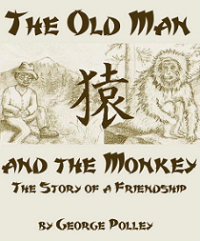 |
George: My two books, Grandfather Stories and The Old Man and The Monkey are available from Abbott ePublishing, at www.abbottepub.com, and are available in pdf. and Mobipocket formats. They've both had wonderful response from readers, who really enjoy them. The Old Man and The Monkey is illustrated with drawings by Aurora, Colorado artist Calisse Weidner. They are both books of my heart.
Aneeta: George, thank you.
George: You are most welcome, Aneeta. I have to confess that I did smile when you asked me to write a little about my work; isn't that like asking a food editor to write a little bit about food? In either case, you're likely to end up with an hour's worth :).
Aneeta: Well, this is a column called 'Blow Your Trumpet!' after all!
This piece may NOT be freely reprinted. Please contact editor @ howtotellagreatstory.com for reprint rights.
Click here to return to the index of interviews on 'Blow Your Own Trumpet!'
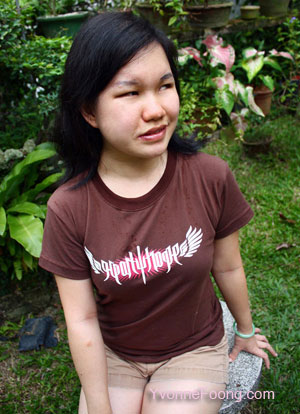 Introduction: Last week at 'Readings' (a local get-together of people interested in the Arts), I got a chance to meet a person I have been wanting to for years. I first heard about Yvonne when she started her campaign to raise money to undergo surgery in the US. I have been following her progress via her website and her story has been an inspiration. Each time I listen to and read about her story, I feel humbled and my problems certainly pale in comparison. I am deeply honoured to have been given this chance to interview her and I hope that you will enjoy reading what she has to say. If you feel so inclined to give her assistance, please do so (see below for details), please do so. I am sure she will benefit from any assistance you give. Without further ado, I have great pleasure in introducing you to Yvonne Foong ...
Aneeta: Yvonne, thank you for agreeing to this interview.
Yvonne: You are welcome, Aneeta. I'm glad to have met you, finally.
Aneeta: Yvonne, before we explore the medical aspects of your story, I will ask you to share a little of your story first. For instance, where were you born, where did you grow up, what do you do for a living now and any information you wish to share.
Yvonne: I was born in Petaling Jaya and raised in Subang Jaya. That says I'm well-integrated in the middle class community since a very young age. As a child, I did classical ballet, figure skating, and karate. I played squash and bowling leisurely. I also learned the piano and joined the school choir.
I wrote a column for The YellowPost over one and a half years until it stopped publishing. Then I wrote a column for The Malay Mail over a month. I tried my hands on feature writing and contributed occasionally to other publications.
I find writing in Malaysia constricting and not as effective for advocacy as I'd hoped, so I am looking into other avenues, such as the possibility of hosting my own talkshow since I like to talk about things I believe in. Just trying to do what I can by looking at my own personality traits. That's quite a stretch, but you never know! As they say in Malay, hidup menjadi-jadi.
Right now, I'm studying for a Bachelor of Science in Psychology. I'm focusing more on studies, fundraising, and creating more awareness for Neurofibromatosis, a lot of people have no idea of how difficult it is to raise a child with Neurofibromatosis, many ask how much does it cost to raise a child? And that's exactly why I want to get more involved in fundraising.
Aneeta: Now, let’s explore your medical situation. I know, from reading your book, I’m Not Sick, Just a Little Unwell, that your medical history is long and complicated. What I will ask from you is this: please explain what your condition is and what your situation is, right now.
Yvonne: I was diagnosed with Neurofibromatosis Type 2 at 16. But the very first symptoms became apparent when I lost hearing in the right year at 13. Gradually, I lost the use of both my legs, kept falling down for no reason, until my parents had to place me on a wheelchair three years later to see the doctor. Until then, nobody could guess why my bodily functions kept failing. An MRI revealed many tumours in my brain and along the spinal cord. I've since undergone one spine and four brain surgeries. The first two surgeries were performed at KL's Genera lHospital, and the next three at LA's House Clinic. Thankfully, I've regained the use of my legs, but became deaf in both ears from tumour growths. I'm now hearing with the Auditory Brainstem Implant - something like the Cochlear Implant, but modified for NF patients.
My most recent surgery in November 2008 involved a tumour affecting an optic nerve. I was born with an under-developed left eye, so doctors wanted to preserve my only vision left by removing the tumour surgically. But during surgery, they found the tumour attached to my optic nerve. Removing it this way would mean we need to sacrifice the nerve. Doing so would make me blind. I can't go blind, since I'm already deaf. I can hear with the ABI, but it will take a lifetime to train for speech discrimination. So doctors left the tumour intact, but removed surrounding bones to reduce pressure to the nerve and buy us some time.
Meanwhile, I have to raise enough funds for radiosurgery by March 2009. This is the second part of the treatment. It works to kill the tumour, preserve eyesight, and possibly improving it. The amount needed is RM94,000.00.
Aneeta: You have very active website/blog - http://www.yvonnefoong.com – I’m fascinated by one comment on your latest entry – ‘People always ask why I prefer to get treated in the U.S.. Can’t it be done in Malaysia?” In your book, you’ve talked about how uncaring some members of the medical profession are here. Has it been that bad, really? Would you care to elaborate on this point?
Yvonne: I wrote my book at 18. Being less exposed, I could only describe what I experienced and could see. Looking back, I think I can understand how these doctors come to have such poor behaviour: when we have students with average grades getting into medical school, knowing they'd be given priority anyway, these students will not put in as much effort as they should into honing skills, knowing that someone will make sure they get to stay in school. Whereas students with good grades being denied a place in medical school, in favour of peers who faired worse, have to work very hard to at least afford private education in medicine. And these students will come out into the workforce with a sense of entitlement. These are the doctors who see patients in our public and private hospitals.
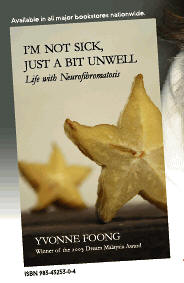
Aneeta: Let’s look now at your book, I’m Not Sick, Just a Little Unwell. Tell me what it is about, how you came to publish it and what has the response been? If my readers wanted to buy this book, how would they do so?
Yvonne: This book was really a way to look back at my own life so far, write about it, and get the story out of me. In schools, we are taught to write about 'us' and hardly about 'I'. So despite going through surgeries and facing so much trouble, I barely thought much about it all, forging ahead everyday.
I started writing my book in January 2005 and ended the first draft in March. My need to raise funds for surgery came up only in November that year. Together with friends, we kickstarted Heart4Hope - a t-shirt fundraising project. As we worked on raising funds, John Ling edited the book. After some rounds of rewriting and adding chapters, the book finally got released in August 2006. Money made from the sale of books added to the funds we raised for my Auditory Brainstem Implant.
Today, people may think that my book is all about fundraising. After I get the funds, they would stop buying, until my next surgery comes around. Of course, I do appreciate that my book has become another fundraising avenue, but I also hope it would be seen for what it is.
You can find the first edition in all MPH, Popular, Borders, and Kinokuniya bookstores nationwide. There will soon be a new edition by MPH Publishing to raise funds for my next surgery.
I can also deliver orders internationally and receive payments through PayPal. Just send me an email at yvonnefmn(at)gmail(dot)com
Aneeta: Let’s look now at the t-shirts. Tell me about them? Again, if my readers wanted to buy this, how would they do so?
Yvonne: We discovered that my Malaysian surgeon at one time, could not entirely remove a hearing nerve tumour back in 2003. He got half of it out, but left me with facial paralysis. He suggested we use radiation for killing the rest of that tumour. But a U.S. doctor who was an expert in treating this tumour advised against the use of radiation on it saying that doing so rarely worked in the setting of my genetic disorder. That was Dr. Rick Friedman who eventually removed that tumour surgically for free. There were no side effects, no further paralysis. He did a clean job!
The following year, we discovered another tumour of the same kind growing and affecting hearing in the other ear. But St. Vincent Medical Center, the hospital where Dr. Friedman and other associates of House Clinic perform surgeries, could no longer cover the cost. On top of that, I needed to pay for the Auditory Brainstem Implant worth USD30,000.00
I've already experienced two major surgeries in Malaysia and still continue to visit local hospitals for periodic check-ups. They really pale in comparison to the sort of treatment I get from House Clinic, where Dr. Friedman is. House Clinic and SVMC helps me stand tall. They don't say, "You are here on charity, you sleep in third class wards". No, they showed me what hospitality and healthcare really stand for. Having experienced such grace, I insisted to go back to House Clinic, under the care of Dr. Friedman and his associates, and obtain the Auditory Brainstem Implant.
Together with my friends, we designed, produced, and sold Heart4Hope t-shirts. The campaign attracted media attention. People around Malaysia bought, so did supporters abroad. Others donated in a lump-sum. This project turned me into a public speaker. It built my confidence and helped me discover who I want to be.
We managed to raise USD58,600 to remove an Acoustic Neuroma and to purchase an Auditory Brainstem Implant that year.
Heart4Hipe is still going strong today. It continues to raise funds for my everyday healthcare. Since I am uninsured, I need to pay everything out of pocket, even in Malaysia.
Right now, we are selling a newly designed t-shirt called the Heart4Hope Ambigram to save vision in my right eye, which happens to be my only sight left. The other eye was underdeveloped.
There are pictures of the t-shirt at my website www.yvonnefoong.com Send me an email to place an order and I'd post the tees to your doorstep.
Aneeta: In addition to all this, I understand that if people would like to donate directly to a fund set up to help you, they can. How do they do this?
Yvonne: They can do so by writing a cheque out to 'Rockwills Trustee Berhad - Yvonne Foong NF Trust'. Be sure to write all of that sentence. Then send it to:
Alfin Majid
Wisma Rockwills
No. 62 Jalan 1/31A,
Off Jalan Klang Lama,
58200 Kuala Lumpur
If you write your name and address behind, Rockwills will send you a receipt too.
Malaysians have the convenience of direct bank deposit.
Account no. 5142-3580-5099
Bank: Malayan Banking Berhad
Account Name: Rockwills Trustee Berhad – Yvonne Foong NF Trust
Rockwills’ Company Reg. No: 708932-T
For those who would like to send a donation via PayPal, please send an email to yvonnefmn(at)gmail(dot)com.
For all other details, please visit my website, http://www.yvonnefoong.com
Aneeta: Yvonne, in writing your book, I’m sure you had to use some of the elements of storytelling. What advice would you give those who would like to venture into storytelling?
Yvonne: Well, there are schools that teach us how to structure paragraphs, organize sentences, and develop the plot. But what helped me get started was passion to live and be alive. We can be so excited about the events of today that we want to tell and share it with others by writing. That's how it was when I wrote the book. And that's how it is writing my blog at http://www.yvonnefoong.com. I usually do not think too far. Just read what I like to read, write whatever that concerns me, and the story develops.
I think that's the ultimate issue we have to face in Malaysia. The culture here is too constricting, people are not expressing enough, and when we do, we do it rigidly. Our lives are very structured indeed!
Aneeta: Yvonne, this is all I have to ask. Is there anything you’d like to add?
Yvonne: I've been asked many times when my next book will be out. Well I tried, but it's difficult. I prefer to write about things other than myself these days. Things I observe and see, issues that I want to advocate, and the people around me. Perhaps it's all part of human developmental process. I've been through the initial stages of developing a self-identity, by looking back at my life and see it as a story. Doing so resulted in my book, "I'm not sick, just a bit unwell - Life with Neurofibromatosis". Now that I've achieved that, I move on, and look beyond the self. Maybe next time, I'd write books about my view on social issues. But nah, don't think others would pay for that!
Aneeta: Yvonne, you’d be surprised! You’re an inspiration to us all and I thank you very much for sharing your story here.
Yvonne: You are most welcome!
This piece may NOT be freely reprinted. Please contact editor @ howtotellagreatstory.com for reprint rights.
Click here to return to the index of interviews on 'Blow Your Own Trumpet!'
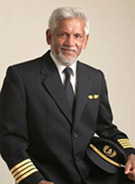 Introduction: Late last year, I met Elmo at a LitBlogger session organised by MPH bookstores. Since then, we've struck up a friendship and I've been reading his books. What I realised about Elmo is that he has a deep love for his country and this comes through in his writing. Last week, I asked him if he'd like to be interviewed and he agreed. Without further ado, I have great pleasure in introducing you to Elmo Jayawardena ...
Aneeta: Elmo, thank you for agreeing to this interview.
Elmo: It is my pleasure, anytime to work with you
Aneeta: Let’s start with something about you. Can you tell me where you were born, where you grew up, what you do for a living and where you live now?
Elmo: I was born in Sri Lanka, a small town called Moratuwa. That is where I grew up and that is where my permanent home is. I have been an aviator all my adult life, flew big jets for SIA and retired in 2007 and now I train pilots for Sri Lankan Airlines. My main occupation in life is working with the poor through a humanitarian organisation I founded AFLAC International http://www.aflacinetrnational.com - that would say it all.
Aneeta: I already know about your writing career. However, for the benefit of my readers, can you let us all know how you first ventured into writing/storytelling?
Elmo: I wrote a lot to the news papers from my young days. I never spoke a word of English till I was 17. Of course we studied English. Then I thought I will write a book. To write a book you need thoughts and an acceptable way to express them. I am a self taught writer and very proud of it for what comes out from me is pure me.
Aneeta: Let’s start with the book I’m most familiar with, Sam’s Story. Please tell us about it.
Elmo: Sam Story was a story I did not have to create. Sam worked for me, a very poor retarded boy who showed me a different meaning to life. Sam’s Story is about the poverty of Sri Lanka and the war that has killed more than 60,000 people – the book is a lesson in life – that is how I see it. Penguin India is putting out a new Sam’s Story in April and a movie is almost completed in Sri Lanka. Sam’s Story won the Gratiaen award for the best book in 2001.
I also wrote an self-published a collection of short stories called Rainbows in Braille. This book was short-listed for the Singapore Literary Prize in 2008.
Aneeta: From your website, http://www.samsstory.per.sg , I read the about your other book, The Last Kingdom of Sinhalay. Please, do tell me a little about this book.
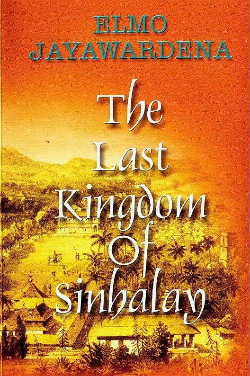
Elmo: The Last Kingdom of Sinhalay is 850 pages and 10 long years of hard work and it tells the story of 19th century Sri Lanka and how the colonial powers brutally erased a land and its people. This book won the State Literary Award in Sri Lanka 2005 for the best book
Aneeta: After having written all your books, what, in your opinion, is the most important aspect of storytelling?
Elmo: Write for the love of writing – a lot of people have a story to tell and they can write. But they ask two sad questions: "Who will read my book?" and "Who will publish my book?" That stops people from writing. The trick is to write – no matter who reads and who publishes it. It It is better to try and fail than fail not to try at all.
Aneeta: Thank you. That is certainly good advice. As you know, this website caters for storytellers. What advice would you give to people who would like to become storytellers? Elmo: Use what talent you posses, the woods would be very silent if no birds sang there except those that sing best.
Aneeta: Elmo, this is all I have to ask. Is there anything you’d like to add?
Elmo: Please give my email
Aneeta: Elmo, thank you.
Elmo: Thank you so much Aneeta – I do not say this to flatter but people like you bring so much to the literary world for which I am ever grateful.
Aneeta: Elmo, you’re most welcome.
This piece may NOT be freely reprinted. Please contact editor @ howtotellagreatstory.com for reprint rights.
Click here to return to the index of interviews on 'Blow Your Own Trumpet!'
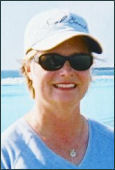 Introduction: I was introduced to Nadine's work by Frederiko Aguilar. I hopped over to Nadine's website and one of the things which caught my attention was the energy that seemed to emanate from her words. Her story, when I finally read it, is really inspiring and I hope you will enjoy it as much as I did. Without further ado, I have great pleasure in introducing you to Nadine Laman ...
Aneeta: Nadine, thank you for agreeing to this interview.
Nadine: Oh, it is my pleasure, Aneeta. Thank you for inviting me. This is the first interview since the third book of my trilogy was published. Good timing.
Aneeta: Let’s start with a little about you: where were your born, where did you grow up, what was your youth like, what do you do for a living and where do you live now?
Nadine: I was born in the Los Angeles, California, area commonly called the foothills. So even though I write about the beach, I lived inland in the city. Part of the time I lived in the high desert near Edward’s Air Force Base, which is the West Coast landing site for NASA’s Space Shuttles. The other part of the time I lived in the city in a bit of a rough neighbourhood. I come from a large extended family who are very loving and affectionate, which is a marvellous backdrop for childhood.
There was and still is quite a bit of racial tension in Los Angeles and that had a big impact on me. My mother was colour blind when it came to people, so the riots made little sense to me. I try to bring out some of that philosophy in my stories. Mostly I state the obvious when it comes to social issues and spend most of my storytelling time focused on the characters. Good stories are full of drama triggered by the characters’ personalities. I use a lot of humour, often at the character’s expense, to entertain my readers.
I’ve lived in several US states, but now I’m living in Arizona. I’m very much a city girl and love it best when I’m living in a large city. I went to University for a social work degree and specialized in child abuse investigations and teaching developmentally delayed adults – not at the same time, of course.
Aneeta: Am I correct in saying that you have had three books published: Kathryn’s Beach, High Tide, Storm Surge? If so, can you please describe each book?
Nadine: Yes, this is a short story that grew into a trilogy. What happens in the series is Kathryn has been broken by a tragedy and through the story’s progression she finds her strength again with the help of her friends. In Kathryn’s Beach, Kathryn comes home to face the situation she ran from, only to learn that she had not been the failure she had feared. In High Tide, almost nothing (or should I say, no one) is as it first appears to be, which challenges Kathryn’s beliefs of what is real. It was fun developing the characters around Kathryn to give her growth a stage to play out the drama of her romance and to give her sure footing to move into the next story. Storm Surge is her biggest challenge and she meets it head on. I’m really proud of how Kathryn grew and the messages in the telling of her story.
A lot of readers think that the trilogy is a fictionalized autobiography, which it isn’t, but it is a realist sampling of life. People die, fail and succeed, do stupid things, worry, laugh – the whole gamut of life happenings. Mostly I am proud of how entertaining my audience finds my stories.
Aneeta: Amongst all the interviews you’ve given, the ones that intrigued me the most, I suppose, were the ones with the blogger whose blog title is, Grumpy Old Bookman. He does sing your praises and says that you’re one who ‘does your own thing’. What are you doing on your own? Why? And, has it been effective?
Nadine: Britain’s Michael Allen, Grumpy, is someone I admire, so for him to say complimentary things about me simply leaves me awestruck and humbled. What I think he meant was that I don’t follow the usual methods of doing things; from actual storytelling to anything related to publication. But I really do employ the standard literary devices common to storytelling.
There are set patterns or mores of how to do things in this industry, which I guess I don’t strictly follow. It isn’t a rebellion, it is simply that I see things differently from the masses. For example, I’m an Indie writer now, which I love. It allows me to lower the price of my books and select the best quality of printing I can find. The print shop is here in Phoenix. I’ve met the people who print my books, and I like that personal connection. I’ll ship books anywhere in the world. I autograph every book. And I answer every fan email. My books are available only directly from me, at my website, www.NadineLamanBooks.com. Maybe that is a little different from most writers?
My writing is about storytelling, not about publication or the publishing industry. Technically I’m an author because I’m published, but I refer to myself as a writer because that is what I do – I tell stories in written form. I think I would have liked being a storyteller when it was done live in a small group setting – maybe by a fireplace.
Yes, I do think that it has been effective for me. What I do might not work for anyone else, but I’m much better at being myself with my audience than some industry generated look-alike. I get complimented often about my easy, uncomplicated writing style. I’m very shy, so being able to connect with my audience of readers is not only important, but a miracle
Aneeta: Obviously, your work involves a whole lot of storytelling. What element of storytelling do you use most and why?
Nadine: Literary elements of style are paramount in good story telling. Mastering them is part of the craft. I like telling stories in first person, present tense. I think that is more personal and authentic (not to say anyone else is inauthentic). I let my characters share themselves with the reader on an intimate level.
I start every story in the middle of a conversation, because that is life. We walk into each other’s lives mid-way and learn who they are from there. I’m not in any rush to get the story told. I like to let the characters breathe. I like to write as if the reader and I are sitting around talking together. I really want to connect with readers in a way that they feel I have told them a good story and they find it satisfying.
Aneeta: As you know, this website caters for storytellers. What advice would you give those who are would-be storytellers?
Nadine: My advice is always, tell your story to your audience. The pleasure is in the storytelling. Hear the words aloud as you write them, so they have life in them. Tell a good story, don’t chase the market. Be honest with your readers. Allow your characters to come alive, make your setting real, and like a good actor – ‘deliver’ every line until the end.
I advise against revisions until the first draft of the story is completely written. Then in rewrites it is like telling the story again, it is always enhanced (and in our family, lots of new ‘facts’ are added) at each retelling. That is how storytellers are, they keep adding and changing things until they get a story that wows their audience. In the oral tradition, storytelling served many functions, but the one I’m after is to entertain.
Aneeta: Nadine, this is all I have to ask. Is there anything else you’d like to add?
Nadine: I’ve been told that my writing is an acquired taste, and I suppose that might be part of what Michael means. But I think it is important to find one’s own voice as a writer. My voice is influenced by the fact that I have dyslexia and didn’t learn to read (something simple for most people) until I was 12 or 13 years old. From that handicap, I learned to make up my own stories. So as unlikely as it is for someone who was functionally illiterate, I became a storyteller. The point is, not to let anything stop you from telling great stories or reaching your potential in any area of life.
One thing I often end my newsletters with is this: I believe in you. You can do this marvellous thing. Write your best story.
Thanks for inviting me, Aneeta. This was really enjoyable.
This piece may NOT be freely reprinted. Please contact editor @ howtotellagreatstory.com for reprint rights.
Click here to return to the index of interviews on 'Blow Your Own Trumpet!'
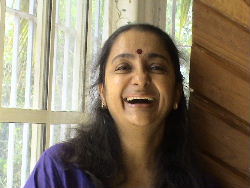 Introduction: Some two weeks ago, I received a long email from Chandrika. She explained her work and the moment I read the words 'Adi Sankara' and 'The Life of Krishna' I knew I wanted to interview her. I was a little worried she would back out from the interview and I am so glad she did not. I am sure that, like me, you'll be as fascinated reading all she has to say. Without further ado, I have great pleasure in introducing you to Chandrika ...
Aneeta: Chandrika, I am very happy you wrote to me and agreed to this interview. Thank you and welcome.
Chandrika: Thank you so much, Aneeta. I was told about your website by a dear friend of mine, Marguerite Theophil, herself a great story teller, author of a book of stories, entitled Turtle Tales and a personal life coach who heals through stories. A very interesting person! When I started going through your web site, I was overwhelmed by the sheer volume of work that has gone into this project and am so glad to contribute in any way I can to its popularity
Aneeta: Such lovely comments! Thanks. Let’s start with something about you. Where were you born, where did you grow up, what do you do for a living and where do you live now?
Chandrika: While I was born in Chennai and had my primary school education there, I have ever since shifted to Mumbai and have lived in this city for the past 40 years! I have travelled little and see myself as a banyan tree, for I grow such deep roots that even transplanting myself for a few days is often disturbing, if not traumatic. As I look back at my career graph I see it as one that has taken all kinds of twists and turns, with a new persona emerging at each turn of the road. However, one thing has been constant - I think I was and will always be a learner!
But, I stared my professional career as a teacher, after completing my post graduation in English Literature from the University of Bombay. Initially I taught in colleges around the city. At the same time I also began writing articles – for periodicals and newspapers on issues related to education and children. Soon, however, I tired of the educational set up, (academic teaching can often become very rigid and strait jacketed, with the syllabus quite outmoded and uninspiring and the students straining at the leash to do more challenging things) and I wanted to reinvent myself.
And so, to a post-graduate degree in Literature, I added a diploma in child psychology and another degree in education and looked around for an opportunity to interact with very small children. I found just what I wanted, when, quite by accident, I met Mr. Sanjeev Gujral, founder of Erehwon, (‘nowhere’ spelt backwards) an organization that specialized in Creative Thinking. I joined him, and as part of his research team, we worked though modules that could be presented in schools to develop the thinking skills of children. Of course our work was hugely influenced by Edward De Bono’s Lateral Thinking methodology, as well as the work of Alex Osborn, Tony Buzan and Roger Von Oech. But I had a feeling that there was little in these authors to appeal specifically to Indian children. And so, along with looking for ways to create material for our kids, I also began work on the Story Module, which was called Thinking through Stories.
Armed with this, I went to primary schools to experiment with young children all between the ages of eight and ten. With them, I explored Upside Down Stories, Inside Out Stories, Back to Front stories, Question Stories – actually every kind of story we could think of! And unleashed so much imaginative energy that it could have put a Shakespeare to shame! That, by the way, was the beginning of my love affair with stories. Later, even after I quit Erehwon and ventured out on my own, I continued conducting workshops for children on Creativity. All of this found an outlet in my first book, published by Don Bosco’s Communication Centre Tej Prasarini. The book entitled Exercises in Education to Creativity was written as a resource manual to help educators develop the creative skills of participants in both a formal and a non-formal environment. The book contained seventy-three exercises as well as fifty worksheets as tools that could unleash the creative potential of students.
But most process work with children is a long-term investment. And there had to be a space where we could be in touch outside of the formal dimensions of a school environment. At just this time, my daughter who was six, was at a loss for good reading material. The two things combined in my head and lo! Nurture, a periodical for little ones emerged.
It was a magazine that started out as a quarterly and went on to becoming a monthly. It spoke to children through stories. We had a theme for each month, and we had our mascots (animals mostly) who told stories woven loosely around the theme. So we had a mixed breed dog called Pucho who told readers curious facts about their world, we had a giraffe, Sooj Bhooj who narrated fables, we had monkeys called Gadbad Gotala who asked them ridiculous riddles and so on and so forth. Our stories were culled from various sources, from Red Indian folklore to Tenali Raman tales; from narratives of Indian culture to childhood incidents of great men and women. We promoted through Nurture, among other things, a love of the English language, a sensitivity to the environment, an awe at the world in which we live, a desire to learn and grow, every day. In a nutshell, we promoted, what Sanjeev Gujral had coined in Erehwon, the wondermental rights of all beings. It was when I wound up Nurture after seven long years of being editor, writer, publisher, distributor that I realized it was time to reinvent myself. I had to peep around the next corner to see what was in store for me!
Aneeta: I like that term, 'wondermental rights of all beings'. In your first email to me, you wrote about a project that started some three years ago which involves the translation of ‘our great spiritual texts found in regional languages into English’. Please explain what this involved and how it all happened and the title of your published book.
Chandrika: Once I closed down Nurture, a series of events that can only be described as miraculous took place, catapulting me to a different phase in my life altogether. For a while, towards the last days of the magazine, I had been compelled by forces I cannot even explain, to put down the many wonderful stories of Krishna I had read and been told about. I wrote fervently, although, at that point there was neither a publisher nor even a concept of a book in my mind. I did a lot of reading on not only the well known tales of this very paradoxical God, but also on the traditions of Krishna thought and literature in our culture. The result was a rather exhaustive manuscript. Armed with it, I went to a well-known publishing house, Vakils, Feffer, Simon and Sons, that was already bringing out books on Indian culture. There I was taken to Mr. Arun Mehta, the director of Vakils, who politely declined to publish a book on Krishna. He said a book had already been commissioned and would soon be out.
But he did ask me if I would be interested in taking up a translation of a Gujarati text, Atma Siddhi by a well-known Jain saint, Srimad Rajchandraji. Interestingly, Srimad Rajchandraji was Mahatma Gandhi’s guru and one he looked up to reverentially. I was completely flummoxed. Besides my work on Krishna, I was not very spiritually inclined. I was marginally conversant with Hindu thought, (although I was a Hindu by birth) but knew nothing whatsoever of Jainism. To make matters worse, I had no more than a nodding acquaintance with Gujarati. My ignorance was overwhelming, but such was Mr. Mehta’s persuasive powers that I found myself agreeing to take up the project. And thus began my voyage of discovery. I learnt about Srimadji, his inclusive philosophy, his compassionate attitude, his acceptance of divergent beliefs and his persuasive powers as a thinker and teacher. I was intrigued. Together with a close Gujarati friend and armed with a translation of the work in Hindi, a language I know quite well, I stepped into completely untraversed territory. And what a lot of learning there was to do!
The text, Atma Siddhi, (relatively unknown outside the Jain community) is a dialogue between a master and his pupil on the journey of the soul. It is written in the form of quatrains, with the student asking the questions and the master responding with his answers. What I loved about the book was its innate simplicity and directness in tackling issues that are generally considered esoteric and complex. Explaining the journey of the soul through six simple steps, Srimadji states, (i) The soul exists (ii) The soul is eternal (iii) The soul is the doer of karma (iv) There is liberation from the bondage of karma (vi) There are methods by which we can all be liberated. Through his explanation, the guru helps demystify concepts like karma and dharma, birth and rebirth, the jeevatma (all souls) and the paramatma (God). All throughout, Srimadji first adopts the role of the student and then, the teacher. Illustrating his ideas with examples, images and logic, he guides the student from a point where he begins as a confused bundle of desires and attachments to a position where he is a reflection of a Perfect Consciousness, luminous, radiant and eternal. And as the student’s doubts are cleared and confusions resolved, we realize, that, in reality, we too are students and we too can be enriched and enlightened.
My contribution to the profound work of Srimadji was the use of the story. I first translated his verse into English; then gave it a prose commentary. To this I added an illustrative story or two. So at the end of 143 verses, there were at least 143 stories in my translation. The stories were drawn from a plethora of sources, sometimes from Bhagwan Mahavira’s life, sometimes from the Buddhisht koan, sometimes from the Puranic lore of Hinduism, sometimes from Sufi sources. Each little story could be read independently or in the context of the verse. And both ways, they contributed immeasurably to the understanding of Srimadji’s ideas.
I would like to illustrate what I am saying through an extract. This is a verse that describes the enlightened soul.
Verse 110:
Forgoing a bias for particular schools of thought,
Just following the true guru’s direction,
Right belief can certainly be sought,
Without prejudice or discrimination.
The Critical Essence:
The guru warns of the problems associated with those whose minds are just not ready for spiritual thought. He insists that the mind must first be prepared before the spirit can be attended to. And to do that it must first be freed of conditioned beliefs and preconceived notions, of prejudices and biases. Unless the mind is open to ideas, and is prepared for adventure, no discovery can take place. A thinker had once said, “An idea is dangerous, if it is the only one you have”. That is because a single idea will lead to dogma, dogma to rigidity, and rigidity will stem growth.
A fervent Christian met another who said he had just been converted to Christianity. The Christian decided to test the believer’s knowledge. “You say you have been converted to Christ. Now, tell me, what country was He born in?” “I don’t know.” “What was His age when He died?” “I don’t know.” “How many sermons did He preach?” “I don’t know.” The Christian was peeved. “For someone who says he is a Christian, you certainly know very little about Christ,” he scolded. To which the convert replied, “Yes, it seems I know very little. But this much I know…a year ago I was a drunkard, I was in debt, my family was falling apart. Now I have given up drinks, I have a job, and a happy home. All this Christ has done. This much I know of Him.” And one may add, is there need to know more?
For often we believe that to know religion is to be aware of the scriptures, to rote learn texts, to perform rituals. That is why, the true masters were always wary of religion. One such master was asked, “Why, sir, isn’t religion the best thing that humanity has?” “Yes, the best and the worst”. “Why the worst?” asked the confused devotee. “The worst, because people pick up enough religion to hate, but not enough to love.”
That is what society has done to religion. By making it a list of unbending rules and regulations, of do’s and don’ts, they have made it narrow, confined, inhuman. It is time to open the windows of the mind, to let thoughts move around it. To let ideas play. Only then can salvation be in sight.
But the book is not only a translation of the verses. To this we have added chapters on the Life of Srimadji, his influence on Gandhiji, his other literary works, his contemporaries, all great souls from Raman Maharishi to Sri Aurobindo, and finally a glossary, wherein I explain at length, concepts that are basic to Hindu and Jain thought.
Aneeta: I have always been interested in the story of Adi Shankara’s life. I will admit, I’m a little behind in understanding his work, however. I would, therefore, be very interested to know a little more about your next venture, which is a translation of his Bhaja Govidam.
Chandrika: Once I was through with Atma Siddhi, I told Mr. Mehta that there was another text that could benefit from a contemporary translation – Adi Sankara’s Bhaja Govindam. It is well known that Sankara strode the world of philosophy like a colossus. Equally well known to students of philosophy is his contribution to Hindu thought in the form of the theory of Vishishta Advaita. But now I learnt so much more…
Born at a time (probably the eighth century) when the Hindu people were riven by factionalism and conflicts and when Hindu thought was obscured by occultism and ritual practices, Sankara brought both clarity and cohesion to the community. He challenged those who sought to divide the community as well as the Buddhists of his day. His contributions extended from explaining complex Sanskrit texts with the help of commentaries to the establishment of centres all over India. Through debate and dialogue, through his hymns and writings, throughout his arduous wanderings in India, which he traversed on foot, not merely once but several times, he re-established dharma or righteousness as the core of life. Reading about him made me realize just how truly mammoth a figure he was in the philosophical landscape of India.
While Sankara’s writings are extensive and exhaustive, Bhaja Govindam is by far the best known of his works. This is firstly because of the lyrical simplicity of the verses. It is also because of the concrete and clear illustrations given to abstract, often abstruse ideas and concepts. Through the thirty-one stanzas, Sankara highlights man’s obstacles in his journey of life, (greed, lust, anger and delusion) and the concrete steps needed to overcome them. At the end of the road, beckoning man forward is the perfect life, one of constant awareness and joy.
In this translation, as in Atma Siddhi, we have used story to illustrate ideas. Let me give you an example…
Verse 4:
The water droplets, on the lotus leaf are poised tremulously,
Like life, that is insecure, filled with uncertainty.
Understand that it is consumed by disease and arrogance,
The whole of existence is riddled with grievance.
The Essence:
The irony of existence is that man lives as if certain of his immortality, when, in reality, he is not even aware of what the next moment will bring. All things on earth are born to die, all things wither and fade away, all is uncertainty. The only permanence is change. Poised on the very edge of the precipice called life, there is no guarantee about anything at all. What is worse, man is besieged by enemies both from without and within. Age and time attack him relentlessly from outside and disease, selfishness and arrogance corrupt him from within. Yet, so caught up is he in the passing parade of sensual gratification that he grasps at each delight as if it were permanent. And therefore ends each experience in dismay and despair. Despite all the lessons life teaches him, despite being repeatedly warned about the transitory nature of all things, man is still filled with pompous self-importance, with conceit and complacence.
The Ramayana is replete with stories that illustrate such ideas. It was the eve of Rama’s coronation. All of Ayodhya was a-bustle with excitement and effervescence. People everywhere lit lamps, burst firecrackers, made artistic patterns with coloured powder and decorated their homes with flowers and incense sticks. At the palace, there was a flurry of activity. One of the royal keepers, went up to the jewel encased box and reverentially took out the gleaming crown from its case and placed it on a shelf. In the lamp light, the gem encrusted diadem, glittered and glowed in radiant colours. Nearby, on the floor stood a pair of wooden sandals, Rama’s favourite footwear. Suddenly, the crown looked at the sandals and burst into tinkling laughter. It giggled, “Ah! Poor thing! What a plight yours is! Forever biting the dust, always ignored and treated badly. I, however will be polished and caressed and will sit with pride on the very head of the king - monarch of all I see! Wouldn’t you want to exchange places with me?” The sandals smiled humbly. “I know what my position is. But I do my work well, for I protect the royal feet from all that could hurt and harm. I wish for nothing more. I am content...” Saying this the sandals sighed happily. The crown shook its sparkling head in disdain.
Who could have predicted the irony of the subsequent events? For, Rama was not crowned king. Instead the very next morning he was exiled to the forests for fourteen years. So, he never actually got to wear the crown. Even Bharata, Rama’s brother, who was nominated in his place, refused to wear it. Wrapped and kept away, no-one bothered to look at it, as all it brought back were bitter memories. A while later, Bharata went to meet Rama in the forest, to persuade him to return. Of course he failed in his efforts, for Rama would never go back on what he considered was a promise. However Bharata finally insisted, “Brother, give me something that I can take back...something that represents you…” Strangely, that symbol happened to be Rama’s sandals. Carrying it reverentially on his head, Bharata placed it with the utmost veneration on Rama’s throne. Impossible as it sounds it was from that seat of honour that the humble sandal ruled, for the next fourteen years. Above it, in a forgotten cupboard languished the conceited crown.
For, as Sankara succinctly points out, fame and glory, as well as sorrow and sufferings are all but momentary events in this passage called life. To attach importance to either position or pelf is indeed to be completely misguided about the truth of existence. But what is the truth of existence? If all things are meant to fade away, and all things die, what significance does life have anyway? As a nihilist philosopher once said, “Why bother, when birth and death are merely points and life is not a straight line?” But it is precisely to avoid this kind of cynicism that Sankara issues his warning. “Invest your energies, where they will be best used”, he says. “Turn to the inner world, where the Self resides, now. Tomorrow may just be too late.” We can ignore that warning only at our own peril.
Reading his words, one would hardly believe that this was a text written in the eighth century, so contemporary does it sound! And although he spoke many centuries ago, Adi Sankara’s theme, which centres around the conflicts that man faces between the material and the spiritual and the balance he must retain between sensual indulgence and soul satiation, is modern indeed!
As in the previous book we have, here as well included chapters on The Life of Adi Sankara, (a miracle in itself), a brief look at some of his literary works, his philosophical contribution as well as a very special chapter on The Relevance of Bhaja Govindam, today!
Aneeta: And last of all, you tell me you’re working on The Life of Krishna. I know that story as well but I’ll never tire of hearing it again. So, please, tell me a little more of what this project is about.
Chandrika: By now, three years after I had been given my first assignment by Vakils, I was deeply immersed in spiritual reading and thought. In fact I took to philosophy like a duck to water! And just as my second book saw the light of day, Mr. Mehta asked me, quite out of the blue, whether I would be willing to take on his next project – The Life of Krishna! I was stumped! Wasn’t someone already doing it? I was told that due to some irreconcilable differences they were having with the original author, they now wondered whether I would be up to taking on the assignment. “Would I be up to it? Didn’t they know that that was what I had always wanted to do?” And to imagine this had happened just when I had for three years been reading and understanding the scriptures! Not that I was even now well versed! But I had already taken my baby steps! And I was overwhelmed by the miracle of it all! I was reminded so much of T.S. Eliot’s lines,
“We shall not cease from exploration, and the end of all our exploring will be to arrive where we started and know the place for the first time.”
And so for the past one and a half years this is the project I have been working on. Of all the gods in the Hindu pantheon, perhaps, Krishna is the most complex. This is because no matter what you say to describe him, the exact opposite is also true. He is a lovable imp but he is also a thief who steals butter and makes young girls cry. He is a wonderful lover to Radha and yet, he drops her and walks away to Mathura without a backward glance. Worse, he takes on wives at will, marrying all who ask for his hand! He is a courageous warrior yet he flees as Mathura is attacked. He is a great friend to the Pandavas and yet, he does not lift a finger as they are deprived of their rightful share of property. He is the exponent of The Gita, the highest spiritual text and yet, he lies, cheats and connives in order to win the battle of the Mahabharat. How does one reconcile these opposites? How make sense of a God who does everything that is so apparently ungodly? The book tries to unravel this “riddle, wrapped in a mystery, inside an enigma.” And I am doing this, not merely through the diverse traditions of Krishna lore that have sprung up all over India, I am doing this by dipping profusely into the poetry, the compelling, heart-wrenching songs written and sung about him, from Surdas to Tulsidas from Tukaram to Mirabai, from Vidyapati to Chandidas, from Jayadeva to the great muslim poet, Rasakhan.
But what started off as a single story on Krishna, from his exquisite birth to his tragic, lonely departure, suddenly started assuming gigantic proportions. And so, at the end of a year, I was armed with not a 200 page book that was originally commissioned but a humongous 500 page gargantuan manuscript. Now, as I sifted through the material, I realized I had matter for at least three books - one on Krishna, the second on The Mahabharat and the third on The Temples, Legends, Devotees and Songs about Krishna.
And so, briefly speaking, Krishna has taken over my life. And will continue to be an indispensable part of it for a very long time…
Aneeta: Clearly, your work involves many aspects of storytelling. What element of storytelling do you think is most important?
Chandrika: This is such a difficult question. Because while I love telling stories, creating stories and reading stories, stories are really magical creations. Often I have wondered what makes a story work, what makes it fail, and what makes it pedestrian and I have groped towards some probable answers.
Like E.M. Forster, whose Aspects of the Novel is a must read for anyone who wishes to understand the nuts and bolts of story writing, I believe that a story needs to have a judicious mixture of Setting, Plot, Theme, Character, Climax and Denouement. Which one gains preponderance depends on the kind of story being told. A story may just capture a moment in time, freeze a point in space, or expose just one aspect of a character, but unless situation and character and theme blend, it will not grip. One cannot just put in the ingredients and hope to have a tasty dish. Judicious blending is of the utmost importance.
My second guru to story writing is Aristotle. In his Poetics, another must read for storywriters, he speaks of the inevitability of the story. By this he means that each character, each situation has within it, the seeds of its own growth and expression. That seed he calls ‘inevitability’. It is the nature, the grain of the story or character. And we cannot write anything that goes against that grain. Place a particular character in a situation and he will be propelled by his nature to behave in a certain manner. Create a particular situation and it will be pushed towards a conclusion, by its very circumstances. Often, writers impose an external character or action called ‘deus ex machina’ to resolve conflicts and that is so unfortunate for the story then lacks conviction.
The third factor I always stress is style, the ability to write evocatively. Language is a jealous mistress. It is also a cruel taskmaster. You cannot pick up a pen and become a writer. You have to work hard and in a disciplined manner at it. Indeed, hard work is often almost half the battle won. There are writers who write a certain number of words every day, even if they have to tear it all up, for the process itself is a regulative mechanism. But to write well, ah! That is sometimes a skill, sometimes God who moves through your words. The other day, I read an article where the writer talks of fingers tapping at the keyboard as “hungry hens pecking at grains”. Another described rain as “exclamation marks of delight!” Isn’t that wonderful? To be able to come up with such language is, at least for me, as important as telling a story. For ‘how’ a story is told is as important as ‘what’ a story is about. To be able to do this, there is only one key – read, read read. Especially poetry. Unless you learn to make love to language, seduce phrases and words, be a painter, musician and carpenter, words will not resonate within. And if it will not, you will be a wordsmith, a pen pusher, a keyboard tapper, but a writer? Probably not!
Aneeta: As you know, this website caters for storytellers. What advice would you give those who would like to become storytellers?
Chandrika: First and foremost, I would certainly not deem myself superior enough to start doling out advice. But this I would certainly tell them to do - to subscribe to your website! The plethora of articles there are almost a tutorial on good writing! What else have I to say? Read as much as is possible. Write all the time, about anything and everything, revise what you write and be open to criticism, for there is a hell of a lot you will receive of that! But use it all, to improve, because writing is always a journey, a work in progress, never a destination! And like all good things, it is full of pain and trouble as well, sometimes so much of it, that I wonder what makes us put ourselves through it. But if you really want to know what being a writer means, you have to read this wonderfully honest expression by the poet Bukowski. He has said it all and better than I could ever say it. Hence I quote him verbatim….
So you want to be a writer?
Charles Bukowski
Listen, if it doesn’t come bursting out of you
in spite of everything, don’t do it.
unless it comes unasked out of your heart and your mind
and your mouth and your gut, don’t do it.
if you have to sit for hours staring at your computer screen
or hunched over your typewriter searching for words,
don’t do it.
if you’re doing it for money or fame, don’t do it.
if you’re doing it because you want women in your bed,
don’t do it.
if you have to sit there and rewrite it again and again,
don’t do it.
if it’s hard work just thinking about doing it,
don’t do it.
if you’re trying to write like somebody else,
forget about it.
if you have to wait for it to roar out of you, then wait patiently.
if it never does roar out of you, do something else.
if you first have to read it to your wife or your girlfriend or your boyfriend
or your parents or to anybody at all, you’re not ready.
don’t be like so many writers, don’t be like so many thousands of
people who call themselves writers, don’t be dull and boring and
pretentious, don’t be consumed with self- love.
the libraries of the world have yawned themselves to sleep over your kind.
don’t add to that. don’t do it.
unless it comes out of your soul like a rocket,
unless being still would drive you to madness
Or suicide or murder, don’t do it.
unless the sun inside you is burning your gut, don’t do it.
when it is truly time, and if you have been chosen,
it will do it by itself and it will keep on doing it
until you die or it dies in you.
there is no other way. and there never was.
Aneeta: Chandrika, this is all I have to ask. Is there anything you’d like to add?
Chandrika: Haven’t I already said enough? But one thing I must conclude with…if only I had the kind of help that is available through web sites like yours, for writers today, probably I would not have started writing seriously so late in life! I would probably have had the confidence and the courage to begin earlier!
Aneeta: Thank you. It's not perfect but I try ...
This piece may NOT be freely reprinted. Please contact editor @ howtotellagreatstory.com for reprint rights.
Click here to return to the index of interviews on 'Blow Your Own Trumpet!'
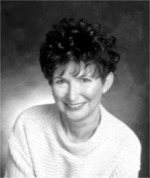 Introduction: After I completed the interview with Nadine Laman, she suggested I contact Rita. Her exact comments were as follows: She writes a number of genre, but what really got my attention was her series for children and parents (and teachers) about bullying. With that in mind, I visited Rita's site and was impressed with her work. I have really enjoyed reading about Rita's books and I'm sure, you will too. So, without further ado, I have great pleasure in introducing you to Rita Toews ...
Aneeta: Rita, thank you for agreeing to this interview.
Rita: My pleasure! It’s always fun to do an interview. As I answered your questions I found myself discovering new ways to look at my work.
Aneeta: As usual, let me start by asking you to tell me a little about yourself – where were you born? Where did you grow up? What do you do for a living and where do you live now?
Rita: I was born in New Westminster, British Columbia, Canada. My father worked in the oil fields so during my school years we traveled the country. I had 6 grade one teachers! Since we moved so often books became my best friends. As a child I read all the Bobbsey Twins books, the Nancy Drew and even the Hardy Boys.
As an adult I worked in a law firm for many years so I got to see the darker side of human nature. I’ve used some of the observations I made during those years in my books.
I’ve been retired for several years and live in Winnipeg, Manitoba, Canada, with my husband and two cats. It seems most writers have cats.
Aneeta: When did you first start storytelling and writing? And, why?
Rita: Our family moved a lot when I was young so I didn’t have many friends. To amuse my two younger brothers and myself I would spin “yarns” but never wrote them down. Then in my early twenties I decided I wanted to be a writer. That ambition died after the first chapter was written, but I did follow through with my dream later in life.
Aneeta: You are clearly and author of quite a few books and ebooks. I’d like to ask you to pick three of your favourites and describe them to me, please.
Rita: Wow! That’s hard to do - I’ve written books in so many genres and for so many age groups.
In my young children’s books my favorite would be The Bully: A Discussion and Activity Story. I like this book because it incorporates so many reasons for placing words on paper: storytelling, increasing knowledge, and the passing of information to others. Although it’s a book that tackles a serious issue, it also offers entertainment for the child by giving him or her the option of coloring the pictures.
In the books meant for adults that are available electronically, my favorite would be The Centurion. As the name suggests it takes place during the time of the Roman Empire. Mr. Domokos, my co-author, spent many months in Rome doing research for the book so everything about Rome during that period is factual. It’s a fascinating glimpse into the city and the people who populated both Rome and Jerusalem during that time. The Centurion won the highest award for e-books in the historical fiction genre.
For books in print, my favorite is Body Traffic. This book is set in my hometown so it didn’t take much research although I did tour Canada’s virology lab so I could accurately write the scenes that were set inside the facility. My years as a legal secretary came in handy for this book since many of the characters are from the underbelly of society. Body Traffic was short-listed for a very prestigious Canadian writing award.
Aneeta: Congratulations! One of the things which fascinated me about your work is this emphasis on bullying. Indeed, you even have a whole website dedicated to the book you wrote about it: http://www.thebullybook.com . Please explain a little more about this.
Rita: Bullying is a serious problem that can destroy a person for their entire lifetime. It has probably been around since the dawn of man and will continue long after I am gone, but I hope my book can make a difference for those children who read it. To date the book is used in schools throughout Canada and in many of the States in the U.S. It has been shipped to Australia, Tasmania and England.
What makes The Bully so unique is that it engages all three areas that generally converge during a bullying situation: the children involved in the event, the school and the children’s parents or caregivers. The book is meant to start in the classroom with the teacher doing a unit on bullying. The book can then go home with the children for “homework” where the message about bullying reaches the caregiver.
Many parents do not understand what bullying is and, more importantly, what it isn’t. A one time event, as unpleasant as it is for the child on the receiving end, is not bullying. Bullying is a systematic aggressive action repeated several times with the intent to scare or shame a child. I strongly encourage parents to work with the school to resolve a bullying issue. Personally confronting the bully or the bully’s parents generally escalates the problem, or the bully becomes sneakier in the attacks.
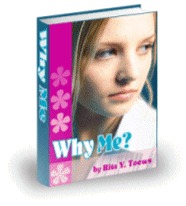
My electronic book - Why Me? - addresses bullying issues for teen girls.
Aneeta: Which element of storytelling is most important in your work?
Rita: What a good question! After thinking about it, I realize my answer depends on which age level the work addresses, and the genre of the novel.
For the children’s books the most important element is probably be the characters. Children relate more to the characters of a story then to the setting or the backstory.
When it comes to the novels - again the elements of storytelling vary with the genre. For our historical fiction, The Centurion, the setting of the story essentially becomes one of the minor characters! I hadn’t really thought of it that way before.
Our novel, Prometheus, has a social message to share. The setting is Nepal - exotic yes - but the crucial element is the plot. It has to be very strong to carry the message.
When I considered Body Traffic I realized the characters carried the burden of the storytelling. They had to be firmly drawn and believable to make the story enjoyable.
Of course all elements of storytelling are important, but each genre or age level will relate more fully to specific elements as they read.
Aneeta: As you know, this website caters for storytellers. What advice would you give those who would like to venture into storytelling?
Rita: I think we all know how to do storytelling since it comes into play as we interact with each other - even in conversation. For those who want to become more proficient in the art, I would suggest that they read, read, read. Even a bad book can teach you something about storytelling. What made the book a chore to read? The plot? The setting? The characters? If you study the composition of the book you will learn what NOT to do when you set out to tell a story. Each of use will approach our storytelling from our own strengths, but we can build on our strengths with reading.
Aneeta: Rita, this is all I have to ask. Is there anything you’d like to add?
Rita: I don’t think so. You’ve asked excellent questions.
Aneeta: Thank you.
Rita: You are very welcome. Thank you for asking for the interview.
This piece may NOT be freely reprinted. Please contact editor @ howtotellagreatstory.com for reprint rights.
Click here to return to the index of interviews on 'Blow Your Own Trumpet!'
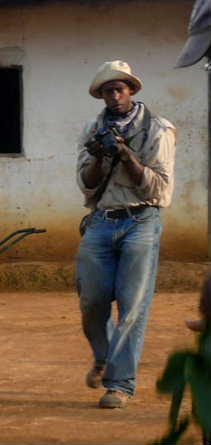 Introduction: For some time now, I've been receiving emails from Patrick. I visited his site many times but never asked if he'd like to be interviewed ... until now. It has been very interesting reading his story. Without further ado, I have great pleasure in introducing you to Patrick Gorham Lanfia Toure...
Aneeta: Patrick, thank you for agreeing to this interview. Let’s start with you. Tell me a little about where you were born, where you grew up, what do you do for a living and where do you live now?
Patrick: I do tech support for Time Inc. I am also the director of the Non Governmental Organization and research team AfricaWrites.
I was born in Greensboro, NC. I grew up in a small rural town south of Raleigh, NC called Garner. Currently, I live in New Jersey and also in Kankan, Guinea of West Africa.
Aneeta: When did you first venture into storytelling/writing and why?
Patrick: I have always been interested in storytelling but only recently over the past 5 years have I been able to really get back into writing. Growing up, I was glued to the Encyclopedia Britannica. Whenever possible, I read stories from different books and magazines about people and places in distant countries. Eventually, learning about other cultures and places intrigued me to the point of writing about my own life experiences.
Aneeta: You have sent me the link to this website, Africa Writes: http://www.africawrites.com. Please explain what this site is all about? What is your mission and purpose of having this website?
Patrick: : The mission of AfricaWrites is the research, documentation and preservation of African culture. To do this, my colleagues and I set out several years ago to accurately research and preserve the sounds and images of each African ethnic group. Through this work we hope that the descendants of those living today will know the beauty and wealth of Africa’s many cultures.
By having the AfricaWrites website online we are able to showcase the beauty of African culture to the world. Afterall, if National Geographic can do it, why can't we? 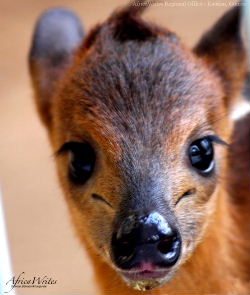
Aneeta: I must say that security assistant you have featured on your site, ‘Dot’ has got the most beautiful eyes! You say that your aim is to the complete and total redefinition of African history. Give me one example of this. What was ‘erroneous’ about the history as we know it that it needs redefining?
Patrick: We discovered Dot in a small town called, "Tokounou". Dot is an African deer from the southern savannah forest region of Guinea, West Africa. He is only a few months old so he's still pretty small but he gets along well with visitors and the office staff. Dot is a joy to have around.
African history as we know it today is largely an afterthought with a stigma. In the US and Europe for example, African historical practices of traditional medicine, spirituality and ancestor worship such as Voduun and others are often scorned. They are called witchcraft and pagan traditions while non-African traditions like Kabbalah, Chinese homeopathic medicine, Feng Shue, Chi manipulation, or Yoga are celebrated.
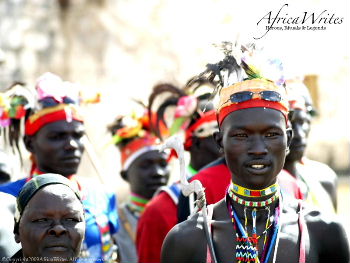
Likewise, there is an entrenched popular belief that Africans contributed nothing to the foundation of civilization. These erroneous assumptions are not only hurtful but they are wrong. In Timbuktu and elsewhere in Africa there were wide ranging African achievements in the fields of medicine, literature and engineering, which have been largely ignored or disregarded in favor of sensationalized stereotypes. There are the examples of ancient scientific know-how and mastery of the mighty Donzo (traditional hunters of Guinea), the astronomical prowess of the Dogon, the engineering skill of Cushite builders, the military genius of Almamy Samory Toure who fought and defeated the French consistently on battlefields across Guinea and Mali. There are also the examples the many martial arts created by Africans such as the Konye Soli, Hiowoulan, Sibi N'Golon and many others without name or historical footnote in any US or European high school classroom.
There is the African genius Imhotep, Prime Minister to King Djoser of ancient Kemet (Egypt), who designed and built the first pyramid of Kemet between 2630-2611 B.C. Imhotep laid the foundations of modern, method based, medical observation and treatment of physical ailments but is not regarded by historians today as the father of modern medicine. Instead, the later Greek doctor, Hippocrates, who (however skilled) lived nearly 2,300 years later and is given the false distinction as the original father of modern medical practice. One need not be an expert in math to know who came first to understand how and why Imhotep and others have been historically sidelined due to their African origins. What is called for is balance, fairness and greater recognition and understanding of African history and it's importance to world history as part of a larger whole.
Whether by chance or by choice, people are sometimes called to serve a greater good. It is my choice to lead AfricaWrites on this mission of rediscovery/redefinition of African culture and history. It is our chance as citizens of the world to not accept the outdated, narrow minded colonial definitions that cheapen and diminish us all.
Aneeta: I know, from your email to me that you’ve just completed a recent trip to Sudan. Please share the highlights of your trip.
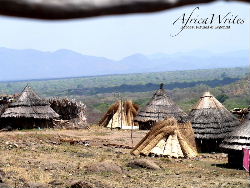
Patrick: The Sudan expedition was difficult but very rewarding. One thing certain, it is very, very hot in Sudan. People are generally very friendly and we had little trouble moving about to the different locations that we visited. I would have to say that the documentation of the Baranga was the highlight of the trip. Before witnessing the Baranga ritual, a village elder explained the ritual and told stories of great warriors of the past. Moments later, when the Baranga was actually demonstrated, I was completely surprised by the traditional uniforms, skill, complexity of the techniques shown. Plus, setting was really beautiful. It was an incredible shoot!
Aneeta: Clearly, many elements of storytelling feature in your work. What aspect of storytelling would you say is the most important one you use?
Patrick: I've never considered myself a storyteller but I try my best to represent the stories and history of the legendary traditional figures that we work with. My job is to string together the various elements and narrate passages in ways that highlight each story. Depending on the type of stories we are telling, characters, points of view and plots are the most important elements in our storytelling.
Aneeta: What advice would you give those who would like to take up storytelling?
Patrick: Keep dreaming and keep writing.
Aneeta: Patrick, this is all I have to ask. Is there anything you’d like to add?
Patrick: I would like to thank you for interviewing me and also thank all visitors to your wonderful site.
Aneeta: Patrick, you're most welcome. And, thank you.
Patrick: And thanks again for the opportunity.
This piece may NOT be freely reprinted. Please contact editor @ howtotellagreatstory.com for reprint rights.
Click here to return to the index of interviews on 'Blow Your Own Trumpet!'
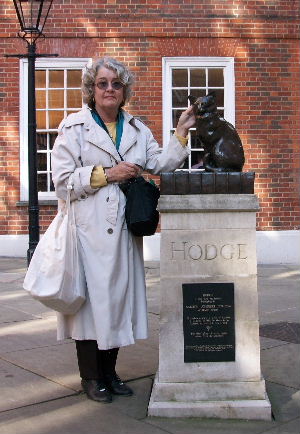 In Karen's words: Here's a picture taken recently when I was in London. The place is Gough Square, site of Dr Samuel Johnson's house, which has been restored and runs as a small museum about that great man of words and letters, the father of the first real dictionary in the English language. The statue depicts one of Dr Johnson's cats, Hodge, remembered for his fondness for oysters. There is a bronze oyster shell on the plinth by his feet, and people--especially writers--often put a shiny coin in it for luck.
Introduction
Rita Toews wrote to me to me last week to say that Karen Treanor had read the interview with her and wanted to know if I'd be interested in Karen's work. I visited her website and I was very impressed with what I read. I will leave you to read the interview below and become equally impressed. Without further ado, I have great pleasure in introducing you to Karen Treanor ...
Aneeta: Karen, thank you for agreeing to this interview.
Karen: Thank you for the invitation, Aneeta.
Aneeta: Let’s start with something about you. Please tell me a little about your life thus far – where were you born, where did you grow up, what do you do for a living and where do you live now? Karen: I spent my first 18 years in a small town, Boxford, just north of Boston, Massachusetts. I went to Boston University, worked for a few years for a couple of newspapers, got married, had two little girls and then my husband saw a small classified advertisement that said the Peace Corps was recruiting experienced tradesmen. They knew most of the people who’d be suitable would be married men, and were trialling the idea of sending families into the field. My husband, Gene, was recruited to re-open and revitalise the National Joinery (Woodworking shop) in the Kingdom of Swaziland, and I tagged along as what they called a “Non-matrix Spouse”. That meant nobody had asked for my skills particularly, but I was expected to find something to do. I worked on several projects, including “Swazicraft”, which was an export company designed to help local people market their handcraft overseas; also the national magazine “Swaziland Today” and on a literacy project, which is how I got into book publishing for children. I also had a son while we were there.
We later spent five years in Lesotho, another small southern African kingdom, and then settled in Western Australia, where we’ve been ever since. I live in the Hills area above Perth, the world’s most remote capital city, which was named “The City of Lights” by John Glenn on his first orbital flight in 1962. People put their porch and garden lights on so the city would be a bright spot in the vast darkness of the Indian Ocean as the astronaut flew through the night.
Aneeta: On your website, (http://www.bandicoot-books.com/bio.html), it is stated that you have been writing about animals since you were six. This is a very interesting comment to make. Why animals?
Karen: My mother, a registered nurse, was interested in all small creatures, and was often the recipient of injured or ill baby birds. We always had pets: dogs, cats, canaries, a few chickens, and a turtle. She was also a voracious reader and encouraged me to read early by giving me one or another of the Thornton W Burgess nature story books every birthday or Christmas.
Aneeta: For the benefit of my readers, can you please explain, what are bandicoots? Why did you choose them for the name of your series of books – Scoot, Scoot Bandicoot?
Karen: Bandicoots are a family of small marsupials native to Australia. There are a few species in New Guinea as well. The name is what the English settlers gave them, because they resembled a species of rat they knew in India, called pandikokku in the Telugu language.
The taxonomic name for the Southern Brown Bandicoot is ‘isoodon obsulus’, ‘the little fat creature with equal-sized teeth’. But the name I like best is ‘quenda’, which is the Nyungar language word, and is the name of my publishing company. The Nyungar people lived in this area long before Europeans settled here.
The first book in the series was Scoot, Scoot, Bandicoot®, which is the tagline all the adult animals use to tell the little bandicoots Bounce and Pounce to run along. I then trademarked the phrase and used it as the supertitle for the subsequent books in the series.
Aneeta: I understand that you have 4 books in this series: Bounce’s Sore Tummy, Scoot, Scoot, Bandicoot, The Big Red Bucket, Pounce’s Special Friend. Can you please describe each one?
Karen: The original story was Scoot, Scoot, Bandicoot. This details the problems Bounce and his sister Pounce have when they are trying, with the best of intentions, to help their grandfather, who has a sore back. One disaster follows another until they finally ask Mom what the problem is and are then able to find a genuine solution.
Book 2, The Big Red Bucket, has Bounce following his nose into trouble, something he does fairly often. In search of food, he falls into the scrap bucket and can’t get out. Book 3 Pounce’s Special Friend, was written at the request of several librarians and teachers, who wanted me to do a ‘stranger danger’ story. I was not keen to do this, as it’s a very delicate balancing act to handle such a topic for five to eight year olds.
But with the help of a woman police constable from the Perth Police Cyber-predator Team, I think the book worked out well. Pounce, the girl bandicoot, is the main character in that story. The most important point in the book, I think, is “If someone doesn’t want to come home and meet Mum, it’s probably not the sort of friend you want to have.” Book 4 is the story of Bounce and his bottomless stomach again—this time he eats something he shouldn’t and the result is nearly fatal.
This book allows the teacher or parent to introduce several topics for deeper discussion, including the concept of illness, hospitalisation and death, as well as reinforcing the idea that when Mom says “don’t eat strange things” she should be listened to. All four of the books have a moral which the adult reader can use as a basis for further discussion if they wish to. Book 5 is in production at the moment. The Scoot, Scoot, Bandicoots® in Where’s Our Dad? shows different families with different structures, and deals with the not uncommon problem of the absentee father.
Aneeta: Most publishers I know have story upon story about how difficult it is in the publishing industry. I would like to focus on the positive aspects of this venture. Do you have a happy story about your experience as a publisher that you can share with us?
Karen: It’s a chain of happy stories, really. Several times a year I visit schools or libraries and give talks to children about books. We talk about how they are made, from the initial idea to the final product, why they are important, and I try to reinforce the idea that reading is the best skill anyone will ever learn.
The single stand-out happy story would be this one: Several years ago I was invited to speak to the second graders at the EllenbrookPrimary School in Western Australia. The children were a lively and interested group, and I read the third book, Pounce’s Special Friend, in draft to them. All I had were the ‘roughs’ from the artist, and two or three finished colour illustrations, but the children got the idea. They made suggestions and comments, which were helpful to me as the publisher. When I went back to the school two months later to show them the published book, they showed me the book they themselves had written and produced at the school, a very polished presentation called “The Clever Little Head Louse”. Their teacher told me they’d requested to do this special project, and had come up with the ideas themselves, the story line, and the illustrations. I was so impressed I suggested to the teacher that they should investigate producing multiple copies and sharing them with other schools in the area.
Aneeta: That is a really good story. I can only imagine your sense of satisfaction. Thank you. Clearly, your work will involve many elements of storytelling. Which aspect of storytelling do you use the most in your work?
Karen: That’s a hard question. I like a bit of humour in a story, so all these books have some of that. I’ve made up several words with the suffix ‘–coot’ and children seem to enjoy that:” “Scaredy-coot” and “rudey-coot”, for instance.
I think stories for little ones should end on a high note, so all four books have a happy ending, even if there’s some scary business prior to that. For young readers, repetitive, cadenced phases seem to be something they enjoy—that’s what led to the original catch-cry “Scoot, scoot, bandicoot”. I was delighted to head a young mother using that to her three year old in a local shop recently. I think a story should give you information you didn’t have before you read it whenever possible—that’s why in the back of each bandicoot book there are several pages of ‘real life’ information, for those children who want to know more.
Aneeta: As you know, this website caters to storytellers. What advice would you give those who would like to venture into storytelling?
Karen: The most important thing is for the story teller to want to share her story. If you don’t feel the story you have to tell is important, why would anyone else feel that way? One of the main drivers behind my stories is my determination to make people more aware of the southern brown bandicoots that live around our towns and suburbs. They are useful, friendly little animals, and they should not be chased and killed because they are mistaken for rats.
Aneeta: Karen, this is all I have to ask. Is there anything you’d like to add?
Karen: I’d encourage your readers to visit the website, www.bandicoot-books.com, and look at some of the photos and read some of the bandicoot diary stories about the real live bandicoots that visit my yard and home. We have credit facilities for people wishing to buy the books. And if people would like to see my amateur video footage of bandicoots, check out my Cootspal site on YouTube. Here's one of them:
{youtube}ip9zpV7CF5M{/youtube}
Aneeta: Karen, thank you.
Karen: Thank you, Aneeta.
This piece may NOT be freely reprinted. Please contact editor @ howtotellagreatstory.com for reprint rights.
Click here to return to the index of interviews on 'Blow Your Own Trumpet!'
 Introduction: Again, Nadine Laman introduced me to June Austin and her work. I visited June's website and when I read about the subject matter of her book, I know I wanted to interview her. Without further ado, I have great pleasure in introducing you to June Austin ...
Aneeta: June, thank you for agreeing to this interview.
June: Thank you for asking me! It nice to talk to you and hopefully your readers will find what I have to say interesting.
Aneeta: Let’s start with something about you. Tell me, please, where were you born, where did you grow up, what do you do for a living and where do you live now?
June: I was born in a small town just south of London (England) in June 1965. My parents couldn’t decide what to call me, so they named me after the month in which I was born. My named turned out to be quite appropriate given my love of words, and I am often mistakenly called Jane, after my more famous namesake. There are connections between Jane Austen and the village of Box Hill, in Surrey, where I now live, as the setting for the picnic scene in Emma. Several other famous authors are also connected to this area. I live in hope that I may one day join them.
I have done quite a few different jobs over the years – secretarial, general retail, but currently work as a housekeeper in a nursing home. At the moment I am also working on a casual basis as an exam invigilator at a nearby school. It is a nice contrast to work with young people during the week and the older folk at the weekends. Both are very worthwhile jobs, helping those who have helped to shape my own generation and the new up and coming one, who one day will be paying my pension! In addition to my paid work, I also act as Editor of the village newsletter, a job which is immensely satisfying, and helps me hone my writing skills in a slightly different way.
Aneeta: Since it's now June, I assume your birthday must be sometime now. Let me, therefore, wish you, "Happy Birthday!" I understand, from your website, http://juneaustin.co.uk, that you have travelled to more than 26 countries. Please tell me which three countries were your favourite and why.
June: I have never been a city person, preferring to get off the beaten track, away from the crowds and the tourists. I love wild and rugged places, where you can explore by foot, savouring the atmosphere and the wildlife. I am fascinated by islands and would one day like to live on one – islanders are a special breed, a bit like me, independent and good at multi tasking. There is also definately something about being near water, especially the sea – I can spend hours just listening to the waves. People think I am mad travelling to places like this, in the middle of nowhere when I can’t even swim!
Generally speaking, the further north I go the more I prefer it. Out of all the countries I have been to, my favourites I would have to say are Iceland, Finland and Canada, because of the wonderful outdoor lifestyle and the ruggedness of the terrain. I have been to Iceland five times now and hope to go back next year, funds permitting. Canada I have been to twice – once in 1990 when I visited the Rockies and Newfoundland and Labrador. This is a part of the country which is seldom seen by visitors. Given my fascination with Icelandic history, I wanted to visit the national heritage site of L’anse aux meadows where the evidence suggests, the Vikings landed in around 1000 AD – this may well be the site of the famous Vinland, as detailed in the Vinland Saga, where the Vikings landed and formed a settlement 500 years before Columbus.
My second visit to Canada was in 1994, when I stayed on Vancouver Island for a week watching and studying killer whales, and then spent a week in the city of Vancouver itself. I would love to go back some time. Vancouver is one of the few cities I enjoyed, as it has this amazing backdrop, surrounded by mountains and sea with an abundance of wildlife almost on the doorstep.
I have also travelled a lot within the UK – to various offshore islands, such as Shetland, Orkney and the Isles of Scilly, for the walking and the bird life. My favourite place is the island of Lundy in the Bristol Channel. The island has a long and tempestuous history and is famous for its natural beauty and wildlife, as Britain’s first marine nature reserve. I first discovered the island in 1995 and have been going back ever since. My next visit in July of this year will be my 27th.
Aneeta: I read, also, that you have an interest in astrology. Why astrology and how has it helped you in your work now.
June: A lot of people think that astrology is nothing more than the horoscopes that you read in the newspapers, but this is really just scratching the surface. Properly used, in the hands of a professional astrologer (which one of my best friends is, whom I have studied with for a number of years), it is a fantastic tool for personal growth which helps us to understand the different parts of ourselves.
I would not say that it has directly affected my work, but it has made me much more aware of the subtle energies of the different planets and how to work with them and understand the different forces within my life.
Aneeta: I understand that you have a book, Genesis of Man. Please describe this book for me.
June: The publishing industry loves to categorise things so that they can understand how to market different types of work and know where to place books within retail outlets – my book is one of those that cannot be categorised, as it falls into many different genres - mind, body and spirit, religion and/or alternative history. The phrase I use to describe it is spiritual history, because that is what the book is about – the history of our planet, or to be more accurate, the history of humanity, written from a spiritual perspective.
I didn’t set out to write a book, it just seemed to creep up on me. After my mother died at the end of 1999 (I can’t believe it is almost 10 years), I decided to take a year out in order to train as a crystal therapist. This is a type of complimentary therapy that involves working with crystals in order to affect healing.
About halfway through the course, we were asked to write a thesis on a crystal related subject to be presented to the rest of the group. I chose crystal skulls as my subject, as I was (and still am) guardian of several of these fascinating objects. As I started to write, I found that the more research I did on skulls, the more links I found with other areas of interest, until it became clear that this was to be book, linking all these different subjects together. I never did end up practising as a crystal therapist, and looking back, I now believe that the only reason I ever did that course was in order to write this book.
Little by little, I began to piece the links together, managing to draw in several other topics, such as Atlantis, the Cathars and Gnosticism, as well as the origins of Earth’s two oldest civilisations - Mesopotamia and Egypt, with a particular emphasis on the Amarna period. This is marked by the reign of Akhenaten, the so-called heretic Pharaoh, and the boy king Tutankhamun.
As part of my research I undertook two evening courses via LondonUniversity in order to further my knowledge – one on human evolution and one on the archaeology of Mesopotamia and ancient Egypt. Given the books esoteric slant, I felt that this was necessary in order to for it to seem more credible, so that my work would be taken more seriously.
There are many books on the lost continent of Atlantis, but little information on the origins of the Atlantean people. I discovered that Atlantis, along with earth’s oldest civilisations of Egypt, Mesopotamia, Mexico, China and Peru all had one thing in common - there were colonies of the earlier continent of Lemuria, sometimes referred to as Mu, meaning motherland. Where though had the Lemurians come from?
A clue can be found in the fact that all of these early peoples believed that gods came from another planet and gave them the information that was necessary to form their civilisations. This planet is clearly shown on cylinder seals and other objects from ancient Mesopotamia, and is sometimes referred to as Nibiru. It seems likely that this is the missing Planet X. These were the same beings who founded the Lemurian Empire and many of the ancient mystery schools, including many of the beliefs that later evolved into the religion that we know as Christianity, which had more in common with modern spirituality than with the religion that we see today.
Not surprisingly, the book took five years to complete. It was and continues to be a fascinating journey, as you can no doubt imagine.
Aneeta: Yes, I can imagine. I too have an interest in this and you put into words what I've thought but never dared to voice: that the missing Planet X might quite likely be Nibiru. Am I correct in saying that you self-published Genesis of Man? If so, why did you choose to self-publish this book and what has the experience been like so far?
June: You are correct in that I did indeed choose to self publish, as more and more authors are these days. In today’s climate it is incredibly difficult for an unknown author to secure a publishing contract, and even if you do, there is still no guarantee that your work will be published.
I went through the usual round of submissions to agents and publishers, but with little success. I had some very encouraging feedback from some of them, but most of them said that the work was too esoteric for their lists, so I began to look at self publishing.
There are two different ways of self publishing, the traditional way, which I call short print run, and print on demand. Short print run is where you have a set print of anything up to several thousand copies. You do everything yourself, from commissioning the printer, to doing the internal lay out, to designing the cover. With print on demand there is no set print run, it is exactly as the name suggests, that the books are stored as a digital file by the printer and copies are printed literally on demand, in small batches or as single copies as and when the orders come in. Print costs are a little higher, but the main advantage is that it removes the need for inventory, so you do not have to store huge amounts of books; you also know that any books that are printed have already been sold, minimising the risk of returns. It has then worked very well for me. The whole process is overseen by a print on demand publisher, who manage the ordering and fulfilment process for you, taking a small percentage of royalties in return.
The self publisher has to continually market their work in order to raise awareness. Among other things I have done talks for various groups and festivals, book signings and radio appearances. It is nice to sell books direct to the public, as you can get more direct feedback and also earn more money, but the majority of books are still sold through book shops.
Most print on demand companies sell books only on a firm sale basis, but my publisher managed to persuade the wholesaler to accept my book on a sale or return basis making it much attractive to retailers. Largely because of this, and my own hard work at telephoning retailers, I managed to get the book into almost a third of Waterstones stores (the largest book chain in the UK), where it continues to sell in slow but steady numbers.
Aneeta: Clearly, there are several aspects of storytelling in your work. Please explain what is the most important element you use and why?
June: It is difficult to pick out particular elements, as the book covers so many different topics, from the prehistory of Atlantis and Lemuria through to the present day. I did not write to a particular plan, and so re-arranged the information as I went along, into different sections and chapters forming a time line, in chronological sequence.
The one theme that runs through the entire book is the idea that we as human beings have both a light and a dark side (sometimes known as the shadow). The light is the side that we present to the outside world, but the dark is the hidden side of us – where we hide our deepest fears and loathings about the world and about who we are. This is the angry, destructive side that lashes out, often at the most inopportune moments. It contains the aspects of ourselves that we wish to deny and suppress, sides that to many can seem frightening and shameful.
The darkness is though an important aspect of who we are, that cannot be suppressed, as sooner or later it always finds its way out. It has often been said, that change is the only constant in the universe. For current to flow in an electrical circuit, there must a potential difference. This difference is created by a positive and negative charges; the greater the difference between these two, greater the current that will flow. So it is with life. Darkness and light are simply two aspects of the same coin that enable change and transformation to take place. Without change there would be no evolution or progress. It makes us who we are. The trick is to welcome the darkness and work with it in order to foster this change and to help us realise our true potential.
Aneeta: As you know, this website caters for storytellers. What advice would you give those who would like to become storytellers?
June: There is really only one piece of advice that I can give – write your story as truthfully and as honestly as you can in a language that others can relate to and understand.
Aneeta: June, this is all I have to ask. Is there anything you’d like to add?
June: Only to say once again, thank you for inviting me for this interview and how much I have enjoyed it. I hope it has been of interest. If anyone is interested enough to obtain a copy of my book (ISBN 978-07552-02362), it can be ordered through most book stores in Britain and North America and the usual online retailers. I also sell signed copies via my own website at www.juneaustin.co.uk, where you will find a variety of different articles relating to the book. Click on Genesis of Man and then ordering information, where there are links to the various different retail outlets.
This piece may NOT be freely reprinted. Please contact editor @ howtotellagreatstory.com for reprint rights.
Click here to return to the index of interviews on 'Blow Your Own Trumpet!'
Page 16 of 22