
Transform ordinary stories into extraordinary ones with our proven 7-step method. Join thousands of storytellers on their journey to mastery.

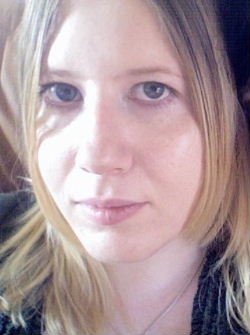 Introduction: After the interview with June Austin was published, she suggested I contact Bronwen. I am glad she made the suggestion and I'm even happier I followed up on it. It is not just her name that's interesting, her story is equally interesting. Without further ado, I have great pleasure in introducing you to Bronwen Winter Phoenix ...
Aneeta: Bronwen, thank you for agreeing to this interview.
Bronwen: Well thank you for asking me! I’m always looking for new ways to promote my books and you have a great website – it’s always good to encourage others to get into writing because not everybody has the confidence to do it at first.
Aneeta: Let’s start with your name. It’s very unique. Were you given such unique names or did you choose them?
Bronwen: Shh! Okay, okay, not everyone knows about my name. The thing is, when I first went into journalism, there was another journalist with – exactly – the same name as me. I used to open the paper and everyone would congratulate me on my centre page spread and it wasn’t my work. I wanted to change my name anyway, and the publishing contract for Escaping Dreams sort of speeded along the process a bit. I have no regrets, I love my name now. And what was it before? I’m not telling, hah!
Aneeta: Tell me a little more about you. Where were you born, what was your youth like, what do you do for a living and where do you live now?
Bronwen: I was born in Fife, Scotland, in a ‘city’ that used to be the capital. There’s dispute over if it’s a city now, but it has a large Glen and Palace ruins as well as a beautiful Abbey, and it’s only around 20 minutes’ drive from the real capital (Edinburgh) so that’s always good!
Growing up, I was an only child so I sort of have that ‘internal dialogue’ thing going on. I was always very creative and art and English were always my best subjects. But no matter what I did, I never really felt like I fit in with anybody else at school – especially in high school I’d used to float from group to group and still not really feeling part of it.
I left school at quite a young age, because of some ‘bad stuff’ that happened – let’s not go into that – but I did suffer an eating disorder and had quite a low period in my life for a while. I started working for financial services for a while, and only came out of that when my long-term boyfriend of 5 years broke up with me. That was a kind of wake-up call, so I quit my job and enrolled in college the same day, was the first one to sit A-levels from February - June (everyone else had started around August) and then went on to study journalism in Edinburgh right after.
In-between that time, I travelled a bit – namely Japan, where I went for almost a whole month on my own, and for a 19-year-old girl, that might be seen as a bit odd but it was an amazing experience, one I don’t regret.
Since then I’ve worked for a couple of publications and also do some odd freelancing work. I left my last job at a local newspaper to move to Glasgow where I live now and I’m currently working on my third novel, an Edinburgh crime thriller entitled ‘Grassmarket Blood’.
Aneeta: On your website, http://www.bronwenwinterphoenix.com, you mention that you’re 23 years old. That’s very young for someone who’s had two books already published! This certainly begs the question, when did you start writing and why?
Bronwen: I’ve always been writing, from a young age. I don’t know what made me start, but I never wanted to stop; I could be absorbed for hours at a time. I used to read a lot too, especially horror. When I was about 10 I read ‘Goosebumps’, but gave up after a couple because they weren’t scary enough. Then I went on to the ‘Point Horror’ series, but those weren’t really any better, so by the time I was say, 11, I’d moved right on to Stephen King. I suppose I fell in love with his writing, and I wished I could be half as successful as him.
I started my first novel when I was around 13 but when it got to say, 50,000 words or so it all got a bit complicated. I started Escaping Dreams after that, and the whole time I was at college I didn’t really work on it, only finishing when I graduated, so it sort of ‘germinated’ for a while I guess.
Aneeta: You mention that you write from your dreams. What does this mean and how does it work?
Bronwen: I write from dreams, and those are pretty powerful. That’s probably one of the main reasons I write; because they are really vivid, graphic in detail, sometimes even quite disturbing and they can play out like movies. They aren’t like normal dreams – I have those too – because they seem somehow more... real.
With Escaping Dreams, it was a series of very powerful dreams that helped shaped the book, while for Nightswallow, it was just the one dream. I’ve also dreamt up a whole novel in itself, but that’s a Victorian-period horror which I might attempt after I’m done with what I’m working on right now.
My second book, Nightswallow was perhaps one of the most disturbing and powerful dreams I’ve had, because I woke up dead and felt nothing but this terrible coldness in my heart. It was like there was nothing else there, I was just completely numb, close up against a cold wall, eyes wide open, and I knew what it was like to be dead. And then the feelings came back to me and I experienced what it was like to be (the character) Night, her fears, her emotions, her struggle. So the first part of the book was a dream, which kind of propelled me forward to write the rest, and the whole time I was writing it I went sort of into her headspace, like I was in another world entirely.
Aneeta: I understand that you are a published author of 2 books, Escaping Dreams and Nightswallow. Please describe both these books.
Bronwen: Escaping Dreams is fantasy/horror and is based in the world of Orenia. I didn’t actually intend for it to be a fantasy novel at first, but it was also sort of set in the future and the scenes I wanted and the setting that seemed to materialise all just seemed to fit better in fantasy than in reality.
The main character, Xanther Aerts, is agoraphobic but in a milder form, where he only leaves his apartment at night. He’s at a very low point in his life when he sees a burning building on fire and hears someone inside and makes the choice to go in and save her. After that, he wakes up in hospital, goes to see her, falls asleep at her bedside and wakes up and it’s morning – so for the first time in a long time he’s in a strange place, the sun is shining and he’s with her and suddenly he doesn’t feel all these problems anymore. And from there the journey is just getting started, the girl (Beth) is actually from another world and there’s plenty more colourful characters, elements of horror and action and adventure along the way.
Nightswallow is perhaps a darker story, a supernatural horror - although I try to find beauty in the most unexpected places in all my writing and I think that shows. Night is a former travel journalist who sees something very unusual on what should have been a deserted beach in Thailand. But she’s kind of facing her own demons at the same time, and when she takes something with her she’s followed back and well, murdered. But that’s the back-story. The story actually starts when she wakes up dead in her London apartment, and the other bits of the story are sort of intertwined. Night is perhaps a lost soul, and she meets some pretty powerful spirits that all have a hand in helping her along the way. Eventually she has to face her killer and stop him from destroying all that she loved in her life.
Aneeta: From your website, you also state that you’re a journalist. Tell me, does this vocation help much in your writing?
Bronwen: Not really, because journalism is a completely different writing style. When I first studied journalism I had to learn everything from the start again, because writing news is nothing at all like writing fiction. Looking back, I’m not sure if it’s helped any to have two different styles – maybe it has, but I’m finding fiction is more of my calling than just straight journalism. And I’m not sure I’ve the ‘heart’ for hard news, either.
Aneeta: Am I right in saying that your books are published by a ‘traditional’ publisher, Pegasus? If so, can you explain what was the most challenging part of finding a publisher and how did you overcome any problems you might have encountered?
Bronwen: Yes, with Escaping Dreams I sent my sample chapters and synopsis, and I was totally prepared for how hard it is to actually get published. I got plenty of rejections – some were very nice, others not, and some were like ‘this is a very interesting story, but unfortunately it’s not for us at this time’ and that’s what you have to remember – publishers have to reject thousands of manuscripts all the time and yours is no different, you just have to keep on trying. It’s not even been a year since Escaping Dreams was released – it was out on June 25.
As for Nightswallow, I saw that YWO (YouWriteOn) were doing this offer where they publish a certain amount of books – for free – and 10% of the publishing profits go to Sightsavers International. And I thought, you know, why not? I was already a member of YouWriteOn, funded my Arts Council England, and I really admire what they do to help other writers, and it was also a quick way to get Nightswallow out there quite fast after my first book. I didn’t even send it to any other publishers (apart from Pegasus, who said they’d have to review the situation in the summer due to their financial situation), and I don’t really regret that, although for my next book, ‘Grassmarket Blood’ I do have quite high hopes and it’d be nice for one of the bigger guns to take it on.
Aneeta: As you know, this website caters for storytellers. What advice would you give to those people who’d like to start storytelling?
Bronwen: Go for it! Write with your heart, and maybe try to write a little every day – it doesn’t matter how much; it’s quality as opposed to quantity, and just take every criticism gracefully, learn from it and never, ever give up! If you get knocked down, just get right up and you’ll come back stronger.
Aneeta: Bronwen, this is all I have to ask. Is there anything you’d like to add?
Bronwen: Yes, to anyone reading - please do check out my website, www.bronwenwinterphoenix.com for more information on myself and my books. I’ve been doing book signings recently, so there’s update on those and all sorts of other bits and pieces.
Aneeta: Bronwen, thank you.
Bronwen: It was a pleasure, Aneeta.
This piece may NOT be freely reprinted. Please contact editor @ howtotellagreatstory.com for reprint rights.
Click here to return to the index of interviews on 'Blow Your Own Trumpet!'
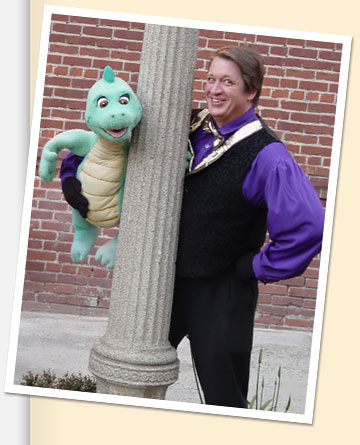 Introduction: People from the organising team of the Singapore International Storytelling Festival asked if I would interview some of their storytellers. I agreed and I'm glad I did. This is the first interview with some of the storytellers. Without further ado, I have great pleasure in introducing you to Randell McGee ...
Aneeta: Randel, thank you for agreeing to this interview.
Randel: I appreciate this opportunity to share with you and your readers!
Aneeta: Let’s start with you. Please tell me a little of your story – where were you born, where did you grow up, what do you do for a living and where do you live now?
Randel:My early years were rather nomadic. I was born in Middletown, Ohio, in the central-eastern part of the USA. My family moved west, first to Utah, then on to Oregon on the West Coast. During my teenage years my family settled in the Seattle, Washington area. I was a volunteer minister for the Church of Jesus Christ of Latter-Day Saints (commonly called Mormons - see www.mormon.org ) in Holland and Belgium for 2 years.
After my missionary service, I returned to the States and went to BrighamYoungUniversity in Utah. While attending BYU I became involved in their Children's Theater programs. I fell in love with one of the student directors and she has been directing me ever since! We have lived the last 29 years in Hanford, California, a small community in the farmlands of central California. My wife Marsha and I have five children and four granddaughters.
Except for an 18 month period when I was a church custodian, I have been a professional performer and storyteller my entire adult life. I am celebrating 30 years as a professional ventriloquist this year. What a thrill it is to make this trip to Singapore one of the highlights of this special anniversary year!
Aneeta: How did you get into storytelling and why?
Randel:I remember trying to tell stories and jokes to my friends and cousins as a young child in Ohio and Oregon. I guess I had some innate desire to be listened to AND to entertain. I have always been fascinated by language and its power to convey meaning, feelings, ideas, and wonder. There is a marvellous feeling of connection and communication when a teller and a listener are involved in a story together. I really enjoy storytelling for those spiritually fulfilling moments.
Aneeta: It is stated that your portrayal of Hans Christian Anderson gives life and personality to a familiar name and you add new insight to some age-old favourites. Can you give an example of how you give a new insight into an old tale?
Randel: H. C., as his friends called him, was a lively teller, full of ad-libs and sound effects that added drama to his stories.(He was also a very well-known playwright in his day.) He could not quite convey that spontaneity in his writing of the stories, but did as he told the tales to friends and guests. After much research and some personal interpretation, I have added some of that spontaneity and drama, back into the written tales.
I also exercise some “poetic license” with some of his famous stories that have less than happy endings, which many do. For example: His tale of “The Little Mermaid” does not end as “happily ever after” as the Disney version would have us believe. In the original story the Little Mermaid (who is never named anything but the Little Mermaid) never has her love returned by the Prince she has saved. He marries another. Rather than cause him harm to satisfy the demands of the Sea Witch, the Mermaid sacrifices her life. This self-less act ensures that one day she will rise with an immortal soul after many, many years. My “spin” to the story is that the Mermaid's wait for immortality is shortened each time her spirit passes by a child who is being good and kind, which Andersen alludes to in his story. I feel that emphasizing this positive, participative element keeps the original intent of the author while making the tale more acceptable, i.e. less tragic, to modern audiences.
As a side note: I added the H.C. performances to my repertoire in the mid-90's. I was looking for other ways to share my storytelling talents. I could make elaborate paper craft designs and items as I told stories, much to the delight and intrigue of my audiences. One day I discovered a book called “The Amazing Papercuttings of Hans Christian Andersen” by Beth Brust and I was spell-bound! I learned that the world-famous storyteller also made paper craft designs as he told stories. I started researching Andersen's life and stories and soon developed a program portraying him, his stories, AND papercuttings.
Aneeta: On your website, http://www.mcgeeproductions.com, you mention that the other part of your comedic duo is your puppet-pal, Groark. Tell me about Groark, please. Why a dragon?
Randel: Why not a dragon? :-) Dragons are fantasy creatures that could have any kind of personality and are usually depicted as intelligent and capable of speech. Every culture around the world has dragon tales.
I began my performing career as a puppeteer, working with all sorts of puppets – rod, shadow, muppet-style, etc. I had the idea one day of a character/ side-kick that would be a dragon. I made a few quick sketches and later that day showed the sketches to my wife Marsha. A few days later I returned home from my work as church custodian to find Marsha busily at work making a large dragon puppet for me.
I originally had thought of having a horn inside the dragon to make it squeak, but when I saw Marsha's creation I knew it had to have a voice. The first name that came to me as I picked it up was “Groark!” I thought that was a sound that a dragon would make. I knew a little about ventriloquism, so I started practicing this as I cleaned floors at the church where I worked. I soon started hiring myself out to do birthday parties, then libraries. Next came schools and special events. A funny story or two and an original song have always been parts of my act with Groark.
I have found that Groark has an amazingly fun and endearing personality. His character has grown and developed a lot over the last 30 years. Groark and I have performed all over the USA and Asia (Singapore, Japan on 5 different occasions, and Korea). We are the stars of 2 video series on character education for children and have 2 music CDs. He is like one of the family. My grand daughters love Groark and that has brought a new spark to his personality.
Aneeta: I understand that you will be part of the Singapore International Storytelling Festival this year. Have you been to Singapore before? Are you looking forward to it and why?
Randel: This will be my second visit to Singapore for the SISF and the Asian Congress of Storytellers. I was invited to attend in 2005 which was H.C. Andersen's Bicentennial Anniversary. I believe that outside of Denmark, Andersen's homeland, no other country did as much to celebrate Andersen's life and legacy as did Singapore in 2005.
During that trip I also brought Groark to assist me with a workshop and for a special children's performance. I thoroughly enjoyed my first visit to Singapore! It is a lovely, modern city! I appreciate its friendly people and safe society. The foods were wonderful! The audiences were very receptive. Of course I look forward to returning!
Aneeta: As you know, this website caters to storytellers. What advice would you give those who would like to venture into storytelling?
Randel: Look for any opportunity to share a story with another; practice on your children and family, your students or classmates. Tell to senior centers, youth groups, church gatherings, social clubs, etc.
As you cater to storytellers, I would also like to share with you my new storytelling blog called www.storyteaching.com . This is especially aimed at those who want to use storytelling to enhance their teaching and presentation skills at school, church, corporate presentations, whatever. I would appreciate your input and the ideas of your readers.
Aneeta: Randel, this is all I have to ask. Is there anything you’d like to add?
Randel: I would just like to add that I am the author of a series of “how to” books called “Paper Craft Fun for Holidays” by Enslow Publishers, Inc. America has very diverse cultural influences. The 6 books of the series contain crafts and short stories about the following holidays: Kwanzaa (an African-American holiday), Valentine's Day, Chinese New Year, Day of the Dead (a Mexican holiday to celebrate ancestors), Halloween, and Christmas. I hope to have the Chinese New Year and Christmas books available for sale during my visit to Singapore.
Aneeta: Randel, thank you.
Randel: Thank YOU, Aneeta! I look forward to visiting with you in Singapore. I invite your readers to come up and say hello.
This piece may NOT be freely reprinted. Please contact editor @ howtotellagreatstory.com for reprint rights.
Click here to return to the index of interviews on 'Blow Your Own Trumpet!'
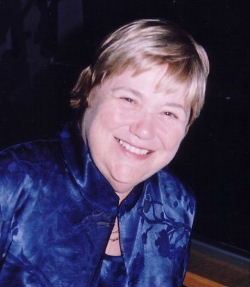 Introduction: Sue sent me a copy of the newsletter from the Australian Guild of Storytellers some time ago. I was very impressed with the layout and contents. I wrote to her to ask if she would like to be interviewed. She agreed and I'm glad. Without further ado, I have great pleasure in introducing you to Sue Alvarez ...
Aneeta: Sue, thank you for agreeing to this interview.
Sue: Thank YOU Aneeta, for giving me this opportunity to feature in your excellent newsletter.
Aneeta: Let’s start with you. Please tell me a little of your story – where were you born, where did you grow up, what do you do for a living and where do you live now?
Sue: I was born in the seaside resort of Margate in the County of Kent, in UK. My birth took place in my Grandmother’s house, as my Mother was terrified of hospitals, much to my father’s dismay I gather! He was all for modern, progressive methods, and my Mother preferred to do things the old fashioned way. I carry their polarities on all things, even today, I must admit.
Having arrived safely into this world, my Mother returned to London, and the year being 1935 this was not such a good move, as war clouds were gathering, even then. In 1940, aged five, I was evacuated (along with 60% of London’s children) to the country away from the bombing raids on London and other significant Ports around Britain. I grew up without seeing my parents for five years, in a tiny village called Seer Green. This village had one shop, one school, one Church, one Chapel, but two Pubs (public Houses, where “the demon drink” was sold!).The elderly couple, who very kindly took me in, were tee totollers, and very anti “the demon drink”.
Life was controlled by school, household duties, Chapel on Sundays, (repeat ad nauseam for five years). But it was SAFE
After the war, I returned to London, where life got more exciting, I’m pleased to say, and in 1956 , life got even more exciting , when I married a handsome, exotic native of Australia, and that’s where I have lived , in Sydney, ever since.
I have had many careers, including being a Drama Teacher, a Community Arts Officer, and Community Services Co-ordinator with Local Government, not to mention being the mother of three, and now Grandmother of four glorious teenage girls. Is being a boastful Grandmother a career option?
Aneeta: Yes! How did you get into storytelling and why?
Sue: How I envy people who say they are born Storytellers! I was brought up to be seen but not heard, so any natural ability to tell stories was repressed. I overcame this restriction in my teenage years by joining a local Drama group, and letting it all out! So I became interested in Storytelling through my experiences first as an Actor, then Drama Teacher.
Aneeta: You are involved, I understand, with The Australian Storytelling Guild. Can you please explain the purpose and aims of this Guild?
Sue:I am the Secretary of the NSW Branch of the Australian Storytelling Guild. Each of the five States has a Guild. Our Guild aims to promote “the many voices of Story” (this is our motto), by supporting, training, and providing opportunities for storytelling performances. A major focus is to recruit new members, both to tell stories and, as audiences, to enjoy listening to stories.
Aneeta: On the website, I am fascinated by this term, Narrative Oral Tradition. Clearly, it’s very much part of the Guild’s work. What does it mean?
Sue: Good Question! In Australia, we have a problem defining exactly, what we as Storytellers actually do for a living because authors, film makers, visual artists, scientists, historians, all claim to be storytellers; e.g. they tell stories through their particular speciality; we use the term “Narrative Oral Tradition” in an attempt to describe more clearly what storytelling, as we know it, is all about; e.g.; standing up in front of an audience, looking at them, opening your mouth, and telling a story that has a beginning, middle and ending, and is a complete entity; we do not READ stories. We use voice and body language, to get the message across. You won’t believe the number of times I am asked by people making enquiries about booking me “What books will you be reading?”
I don’t know if this is peculiar to Australia or not; do you have a similar problem?
Perhaps the term “Narrative Oral Tradition” is a bit over the top, by way of explanation, but it was born of necessity.
Aneeta: I see that you are part of something called ‘The Talespinners’. Can you please explain what this is all about?
Sue: My Storytelling partner, Christine Greenough and I formed the tandem storytelling company “The Talespinners”in 1997. It is great fun working in pairs, and I recommend more Storytellers to consider tandem telling. We also tell individually as part of our shows too, but audiences really enjoy the interaction between us and the Characters we are performing.
Aneeta: As you know, this website caters to storytellers. What advice would you give those who would like to venture into storytelling?
Sue: Join your local Storytelling Guild/Organisation/Club, and get stuck into it (to use a typical Aussie idiom!) You will be warmly welcomed, given much support and encouragement, and you’ll be on your way to being part of an exciting and challenging world.
Aneeta: Sue, this is all I have to ask. Is there anything you’d like to add?
Sue: Only to congratulate you on your commitment and dedication to promoting the art and technique of Storytelling through your very informative newsletters; keep up the good work. Please let all your members know that if they ever come to Sydney to contact us on our website www.storytellersnsw.org.au and we will be pleased to meet and share stories.
Aneeta: Sue, thank you.
Sue: "No worries” Aneeta. (Australian for “my pleasure”)
This piece may NOT be freely reprinted. Please contact editor @ howtotellagreatstory.com for reprint rights.
Click here to return to the index of interviews on 'Blow Your Own Trumpet!'
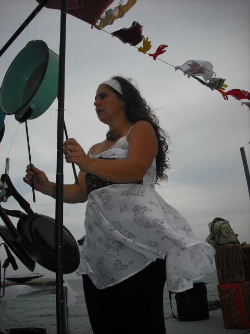 Introduction: Valentina is involved in the upcoming Singapore International Storytelling Festival. I was asked if I would like to interview a few of the storytellers and I agreed. Valentina has an interesting approach to storytelling; you'll have to read the interview to find out what it is. Without further ado, I have great pleasure in introducing you to Valentina Ortiz ...
Aneeta: Valentina, thank you for agreeing to this interview. Let’s start with you. Please tell me a little of your story – where were you born, where did you grow up, what do you do for a living and where do you live now?
Valentina: I was born in México City but before I was one year old I had started my travels. My father was a painter, passionate with his work, so we went with him to his scholarship in France. Thanks to his life I grew up in several European countries and in touch with several languages. I studied in the French school system and this was probably very important for my formation as a story teller as this education really cultivates literature, writing skills and the use of fantasy and freedom of speech.
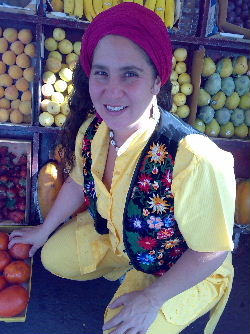
After this I did my university studies and my theatre formation in the United States, at ColumbiaUniversity, in New York, and at several wonderful acting and dance studios in this cultural city.
Then I finally returned to México and plunged into its rich and deeply rooted culture.
Now I work in Mexico City in two areas. I work as a professional salsa musician playing the drums in different bands and I present an experimental music show called Dream Soup, where I make music with objects of our daily life.
Also I work as a story teller giving functions in schools, parties, public meetings, theatres, etc. And I have a Civil Association called Zazanilli, Cuentos Viajeros A.C., dedicated to recuperating stories from the different Mexican communities. With this project I have published 4 books this year, three of stories of under-privileged young women from certain neighbourhoods of Mexico City and one with stories of illiterate mazahua Indian women who have migrated to the city.
Aneeta: How did you get into storytelling and why?
Valentina: I started my personal percussion show and felt the need to communicate with the audience through words besides the music. Therefore I started to combine stories with my music and I got “hooked”. I discovered that storytelling is such a direct way of speaking to the people compared to the abstract side of playing music. Also I realized that, in terms of production, to tell stories is much less complicated than to make music, all you need is your voice, your heart to feel the audience, your imagination to build your stories and a lot of work.
Aneeta: On your website, http://valentinaortiz.com, it is stated as follows: Valentina gives a voice to daily domestic tools, through her pots and pans she expresses every day living of Mexican women. Can you please explain this statement and also explain your other sources of inspiration.
Valentina: I literally give a voice to inanimate objects since, in my show called Dream Soup, I make percussion musical pieces by beating on pots, on stones, on pieces of wood, on bottles...It is a way of telling people two basic things: Any person can express him/herself (whether she is trained in the arts or not) with whatever she/he has handy (you don´t need a fancy instrument). You just need to take the time to listen to what surrounds you.
Also through this show, I try to honour the basic things of life: nourishment, the act of preparing every day food as a major act of generosity and love.
Aneeta: I understand that you will be part of the Singapore International Storytelling Festival this year. I see that you have been to Singapore before and performed at the Formula 1 Race. What was that experience like?
Valentina: Being in Singapore for over a month was a life changing experience for me. I had the opportunity to see ways of living, so different from the Mexican reality and this is always very important in ones life. I met marvellous Singaporean women, story tellers, who taught me many things by sharing their every day living with me.
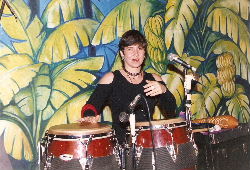
The experience of being at the Formula 1 Race was also a first time for me; I had never been at an automobile race. I played with the Danzonera Band, two different days, for the Formula 1 public. It was a great honour to be at the first night race in history.
I can say watching car races is quite an experience, again I learned that each person has his/her own tastes and passions. In Mexico we say that differences are a great wealth.
Aneeta: As you know, this website caters to storytellers. What advice would you give those who would like to venture into storytelling?
Valentina: Go for it. We all have so much to say.
Listen to every single person that is around you; do not underestimate any encounter in your life.
Read a lot, watch good movies. You must constantly work on the structure of everything that you read or see. It must become an obsession for you: whatever you hear find its structure.
I think the key to being a good story teller is to listen, to listen with a clean slate, to the voice of the people and to their silences, to the streets, to the forests even to the sky.
Aneeta: Valentina, this is all I have to ask. Is there anything you’d like to add?
Valentina:I am looking forward to attending the Singapore International Storytelling Festival; it will be very exiting to exchange stories and knowledge with people from so many different countries.
Also I am very happy that I will be able to take to the festival my new record called Earth Stories. It includes 3 stories I wrote, told in English, accompanied by several original musical pieces that I play on traditional Mexican percussion instruments.
Aneeta: Valentina, thank you.
This piece may NOT be freely reprinted. Please contact editor @ howtotellagreatstory.com for reprint rights.
Click here to return to the index of interviews on 'Blow Your Own Trumpet!'
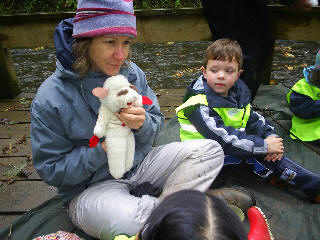 Introduction: Ruth is also involved in the upcoming Singapore International Storytelling Festival. I was asked if I would like to interview a few of the storytellers and I agreed. Without further ado, I have great pleasure in introducing you to Ruth Kirkpatrick ...
Aneeta: Ruth, thank you for agreeing to this interview.
Ruth: My pleasure. I’m thrilled that the media in your part of the world is so interested in Storytelling.
Aneeta: Let’s start with you. Please tell me a little of your story – where were you born, where did you grow up, what do you do for a living and where do you live now?
Ruth: I grew up in the North East of Scotland in a small town. My father came from a farming background, my mother a fishing family. I was not a model pupil at school. I often ask children what they think I was good at in school and they rarely guess correctly-I was good at talking! Unfortunately, my great gift was not valued or channelled. At one point my mother was in despair and couldn’t imagine what I might do beyond school unless it involved talking and ‘acting the goat’ (being silly.) Luckily I have found my niche!
For the last 10 years I have increasingly developed my storytelling and integrated it into my Social work practice. It is wonderful that there has been a lot of interest in this and I am passionate about it’s value. I now successfully run my own business, Stories Allways working all over Scotland and abroad.
I live outside Edinburgh in the Pentland Hills with my husband, 2 daughters and dog. We are very lucky to be surrounded by green woods and looking out on the hills. Perfect inspiration for a storyteller!
Aneeta: How did you get into storytelling and why?
Ruth: It’s always interesting to ask a storyteller this question as there are so many routes into this work. I was working as a Primary Support worker in Edinburgh, trying to help children and families who were struggling in school. I worked with a whole class who were largely affected by loss and trauma. They found listening very difficult so a colleague suggested telling them a traditional story. I did, and the effect was magical. The children listened and an atmosphere of calm and ‘holding’ filled the room. They loved it and stories immediately became central in my work with them.
In recent years I have done more and more performance work and singing too and I do enjoy this now. However, the core of my motivation is always to engage, communicate and inspire people.
Aneeta: I understand that a lot of you promote storytelling as social work tool. Briefly, how does this work?
Ruth: I have found that engaging with young people as a Social Worker can be challenging. Often children can be guarded, depressed and ‘hard to reach’. What do you say to such a child? I have found that telling them a traditional story is a great way to ‘bridge the divide’. It gives you a shared journey and experience. It lets them know that you are willing to talk about difficult issues and that life is not always perfect. Also, it builds your relationship since storytelling is a great ‘glue’.
If you use it in groupwork, you can use the story to introduce and illustrate some issues, and then discuss ‘the story’ rather than the children’s personal experience directly. Therefore the story becomes a ‘third object’ like a puppet would to help communication.
Finally stories are fun and and the plot is always meaningful and engaging, so storytelling can improve skills in listening and talking, and the ordering of information, which in turn can help mental health. One boy in a group who was described as having poor listening skills seemed to listen well during stroies and could answer any questions afterwards. I asked him if he thought he listened well to the stories and he answered “Yes because they are worth listening to!”
Aneeta: I am intrigued by one aspect of your work – storytelling for emotional literacy. What does this term emotional literary mean and how does storytelling help this?
Ruth: Emotional literacy simply means an ability to manage and express yourself emotionally and consider the emotions of others. This can, in turn, help to develop Emotional Intelligence.
Storytelling can help develop this in people as it builds a sense of empathy and understanding and offers a vocabulary for expressing emotions. Many traditional stories tell of the hero making mistakes, being weak, being misled, but then we can hear how things can be redeemed, healed and forgiven. These traditional characters provide powerful hope and role models, especially for Young People.
Aneeta: I understand that you will be part of the Singapore International Storytelling Festival this year. Have you been to Singapore before? Are you looking forward to it and why?
Ruth: I am very much looking forward to coming to Singapore. I have visited twice before in the 1990’s. At this time my sister and her family lived there so I was able to stay for a few weeks and have a good look around. I loved the food most of all and my mouth is watering at the thought of some satay!
It seems that the festival has a wide and varied programme and I am delighted to have something to offer. I hope that I might be able to go to some of the other evens too. It’s always a pleasure to meet and hear storytellers from other places; almost like being refuelled.
Aneeta: As you know, this website caters to storytellers. What advice would you give those who would like to venture into storytelling?
Ruth: Stories are all around us and we are all storytellers. I would recommend listening to other professional storytellers and seeing different styles. There is no one way to be ‘a storyteller’ so try to find your own voice. As one of the great Tradition Bearers in Scotland, Sheila Stewart says, “You have to put 'your' self into the story.”
Also, I think it is important to tell from the heart, rather than the head. Think about the mood you are conveying not just the words you are using.
I often ask children what skills they think you need as a storyteller. One boy suggested to me ‘charisma’. I think this is true.
When you think about telling a story, choose one that you love not one that you think you ‘should’ tell.
Aneeta: Ruth, this is all I have to ask. Is there anything you’d like to add?
Ruth: I hope this gives a flavour of what I’m about and I look forward to meeting people in Singapore.
My CD, 'Bathing in the Sangstream' will be available at the festival or through my website www.storiesallways.co.uk. The CD features stories and songs from a live performance with a Scots choir and another Storyteller, Claire McNicol. This year I hope to publish a pack of stories and complimentary activities for those working on the 'well being' of children. Watch my website for developments.
Aneeta: Ruth, thank you.
This piece may NOT be freely reprinted. Please contact editor @ howtotellagreatstory.com for reprint rights.
Click here to return to the index of interviews on 'Blow Your Own Trumpet!'
 Introduction
For those who have self-published any of their works, one of the most important points of reference is The Self-Publishing Manual. The author of this fantastic manual is none other than Dan Poynter. Dan has written some 116 books. Some have been sold to publishers and most he has published himself. He has also published several other authors. During the past 35 years, Dan has experienced every phase of the writing-publishing business – whether it is as an author, publisher or self-publisher.
Naturally, with his vast experience, he is regarded as an industry leader. Dan has served as vice-president of the Publishers Marketing Association and as president of the Parachute Industry Association, chairman of the board of the US Parachute Association and president of the International Hand Gliding Commission. His base is Santa Barbara.
As is the case for most in Asia and Africa, it is often difficult to meet such eminent speakers in person. However, we, in Malaysia, are about to have the unprecedented honour of hearing Dan speak. He is going to be one of the speakers at the upcoming Malaysian Association of Professional Speakers to be followed by a Book Writing Boot Camp early in April 2005.
In anticipation of the huge turnout, Dan has very kindly agreed to answer a few questions. Without further ado, please, let me introduce Dan Poynter.
Aneeta: Hello Dan. Thank you for agreeing to this interview.
Dan: Aneeta, I am looking forward to this return trip to Malaysia. I made many friends in September 2003 and I am looking forward to honouring them for the books they have published since then.
Aneeta: You know, Dan, when I wrote and published my first book, I was chastised many times for self-publishing it. Personally, I enjoyed the process but for the benefit of our readers and as you have published over 100 books now, can you tell us why you would advise someone to self-publish rather than go to a publisher any day?
Dan: It is nearly impossible to get a publisher today. They seem to be publishing celebrities only. They know that business, sports and film stars have a following or audience. The publishers know they will sell more books when the author has an audience. If you publish yourself, you will make more money, get to press sooner and keep control of your work.
Aneeta: It is my observation, that there is a growing trend amongst many would-be-writers to pay a company to ‘take-care’ of the publishing for them. I have always thought that if you have to pay someone to publish your book for you, you are indulging in vanity publishing. For the benefit of our readers, can you please explain what really is vanity publishing?
Dan: In self-publishing, we sub-contract the printing (we do not own presses), editing, proofreading, cover art, etc. The challenge with the vanity presses is that they have a terrible history of not delivering on the services they promise.
Aneeta: In all your 35 years of writing and publishing, I am sure you have seen many changes. What are the three most significant changes you have observed? Are these changes all for the better or worse and why?
Dan: Offset printing, the computer, the Internet and digital printing. Now you can write, publish and promote your book faster, easier and for less money than ever before.
Aneeta: Is this your first time speaking in Asia? If not, when were you here before and do you see any changes?
Dan: I visited Singapore and Malaysia a year and a half ago. I am looking forward to returning.
I think one of the things that surprised me most was the high level of writing and publishing. Many, many writers are truly eloquent and the books are gorgeous—certainly world class.
Aneeta: I have read the statistics bank on your website and it is really interesting reading. However, I have a specific question that concerns lots of people who self-publish and are based in Asia. When I asked Amazon.com whether I could list my books for sale on their site, I was told that unless I have a publishing company that is registered in North America AND have my books available for shipment from North America, they could not consider my request. What would your advice be to self-publishers, and publishers alike, in Asia who would like their books to be listed on Amazon.com?
Dan: Upload your printed book and eBook to LightningSource. They will inventory them, print the pBook on demand and get them both listed on Amazon.com. See http://www.LightningSource.com.
Aneeta: You have also stated in your Statistics Bank the rates of literacy in the US and just to quote:
One-third of high school graduates never read another book for the rest of their lives. Many do not even graduate from high school.
58% of the US adult population never reads another book after high school.
42% of college graduates never read another book.
80% of US families did not buy or read a book last year.
70% of US adults have not been in a bookstore in the last five years.
57% of new books are not read to completion.
–Jerrold Jenkins. http://www.JenkinsGroup.com
I think that these figures are perhaps no different from the ones in Malaysia! What would you suggest, we, as self-publishers, do to encourage people to read more?
Dan: One-third of all books are sold in the United States. 90-million people are reading books. Books are an efficient way to entertain (fiction) as well as to learn or solve a problem (nonfiction). Books are very common in the U.S.; people naturally look to books for entertainment and information.
Aneeta: Can you please explain why it is important for authors, especially those who are self-publishing their works, to attend writers conferences.?
Dan: This is a challenge for writers because most of us are introverts. But a writer needs to get out of the house to learn from others. A writers conference will accelerate your writing project.
Aneeta: I understand that in line with your trip to Asia, there is a Boot Camp being organised. It’s called The 2005 Write & Publish Mastery 2 day Boot Camp With Dan Poynter . Can you please give us some information about this boot camp and, in particular, answers to the following questions:
Aneeta: Who should attend this Boot Camp?
Dan Aspiring writers, authors and those who are searching for a systematic way to get started on their book and looking for alternatives to getting their book published (the non-traditional way), ie in this case to learn about self-publishing
Aneeta: Where and when is this Boot Camp?
Dan 9-10 April 2005 at Sofitel Resort, JB
Aneeta: What will the participants learn and how will they benefit from this Boot Camp?
Dan On day one, we focus on teaching them the systematic way to get started on writing using my unique writing system called “Write Your Book By-The-Numbers”. I will help them visualise the entire project and guide them through the process. On Day 2, we focus on the publishing aspects, ie – share with them my new book model and the alternative ways to get their books published, on producing the printed and ebooks, on marketing, promoting and distributing their books and those who opt for self-publishing …how to get started. We will leave them with a roadmap on self-publishing
Aneeta:Why are you holding it in Johor Bharu and not Kuala Lumpur?
Dan This event is catered for both Singaporeans and Malaysians
Aneeta:How much are the registration fees for this Boot Camp?
Dan The official fee is RM4750 but early registrants (or during promotion) only pay RM3800 for installment scheme and RM3420 for those who opt for full payment. Plus Malaysians get a travel/room voucher valued at RM500 for the inconveniences of having to go to JB. Singaporeans get free transport by coach. This fee covers all cost for the programme including materials, hotel expenses and accommodation (one night twin share), 2 days boot camp, free copy of my book, pre-boot camp workshop or preparation, post-boot camp e-coaching (3 months) and as part of the coaching, access to our e-mentorship portal with datavault of articles and special reports, my newsletter and be part of our e-group community of independent authors & self-publishers.
Dan Where can one register for this Boot Camp?
For more information, please log on to www.authorworks.biz/greatstory
where they can register online or contact Sherlyn at +603-90596218 or fax: +603-90596248 or email
Aneeta: Thank you. What advice would you give to those who are hesitant about taking that first step in publishing their own books?
Dan: Your book will provide you will a new credibility and a new profit center. Your book will change the direction of your life.
Aneeta: Thank you, Dan. I am sure our readers will find it all useful.
This piece may NOT be freely reprinted. Please contact editor @ howtotellagreatstory.com for reprint rights.
Click here to return to the index of interviews on 'Blow Your Own Trumpet!'
 Introduction: Last year, Debbie Jenkis introduced me to Bill Liao's work. When his book was published and I was looking for people to interview, she suggested I contact Bill and I am very happy I did. His work in interesting, as you will no doubt discover from what you read below. Therefore, without further ado, I have great pleasure in introducing to you, Bill Liao ...
Aneeta: Bill, thank you very much for agreeing to this interview.
Bill: You are most welcome Aneeta, thank you for having me.
Aneeta: Let’s start with a little about you – where were you born, what was your youth like, where do you live and what do you do for a living?
Bill: Well I am from Earth. Was conceived in Taiwan, born in Australia and have lived and worked all over the world most recently in Switzerland. Being an entrepreneur and coach / investor in other entrepreneurs has brought me business success. Being a member of the St Kitts and Nevis Diplomatic Corps has opened many doors for me especially recently in Copenhagen at COP15 where as a philanthropist my experience with the Hunger Project and founding neo.org and weforest.com gave me real insights to what we have to do to save our precious world. Also now I am an Author of Stone Soup - the secret recipe for making something from nothing.
Aneeta: Of the many things you’re involved in, I understand that you’re the co-founder of a social network service called ‘XING’. Can you please explain what this is all about?
Bill: Networking is crucial to business success. When Lars Hinrichs came to me with the XING concept of a social network to assist people do accomplish better business networking on a grand scale, I was immediately hooked. XING quickly grew into a European phenomenon. XING was cash flow positive in 90 days after its inception, which is a pretty good sign that people loved the service and XING went Public in 2006.
Aneeta: The website I was referred to by Deb Jenkins was http://www.stonesoupway.com/. What is Stone Soup Way?
Bill: Success and failure both have lessons to tell yet it is our failures that inform us the most. Stone soup is a philosophy that draws on the many mistakes I have learned from and which gives the reader an actual recipe for successfully starting a business or an NGO literally from nothing. You see I have for years used the Fable of Stone Soup to illustrate how you need everyone to contribute if you want a successful venture and it hit me that this fable was actually an entire paradigm for making successful ventures. If you read Stone Soup and you follow the recipe with integrity I know you can succeed. So much so that I invite readers to find me in their network and pitch their businesses to me for investment and provided they have followed the Stone Soup Philosophy or Way I will be happy to consider any type of business.
Aneeta: Let’s look at some of your philanthropic endeavours. Can you please explain the ones you find most beneficial and fruitful?
Bill: For many years I have been an avid supporter of the Hunger Project www.thp.org which is an excellent organization whose primary method of impact is to empower women in developing regions. Then I became interested in the empowerment of all people and founded neo.org so that people could empower themselves using language and so that people could reward each other’s good deeds. Neo has a virtual currency for people to reward each other and I realized that there were no virtual currencies backed by carbon so neo.org created WeForest.com, which is a charity dedicated to empowering our planet by reforesting 20 Million Square Kilometers by 2020. If we do this we can potentially end climate change within our own life times. Please look at the short film on www.weforest.com/video.php
Aneeta: How does storytelling feature in your work?
Bill: Stone Soup is first and foremost about the power of articulation. You see that there are facts in the world and yet how you perceive those facts governs the actions you take. If you see a dog in front of you and your perception of dogs is that they are friendly then you have no fear and the likely outcome is the dog will be friendly. Put another way perception governs the impact on us of reality and as perception occurs in language and language is mutable so our stories can change how reality is for us. I use story everywhere in my life and Stone Soup demonstrates how anyone can use story to achieve anything they desire provided they act with integrity.
Aneeta: As you know, this website caters for storytellers. What advice would you give to those who would like to venture into storytelling?
Bill: Be interesting. Indeed be curious as you can so you can be interesting. My friend John Lloyd the British producer has a show called QI (Quite Interesting) and he has an entire philosophy of interestingness, which I am convinced is the right thing for any story teller to engage with. Indeed while some people have posited that we live in an attention economy I think we actually live in an interestingness economy and so to a story teller I say be interesting. Use interesting words and keep it punchy and quick and witty and fun.
Aneeta: Bill, this is all I have to ask. Is there anything you’d like to add?
Bill: What I would add is simply this. There are two kinds of stories the ones we tell ourselves in secret in our heads and the ones we tell the world. For the former give it up and throw it away because what you tell yourself about you is useless drivel. Focus on the latter, the stories we tell each other and be a listener listen to your audience even as you speak, listen with your eyes and your heart and you will know if you are being interesting.
Aneeta: Bill, thank you.
Bill: Thank You Aneeta! :-)
This piece may NOT be freely reprinted. Please contact editor @ howtotellagreatstory.com for reprint rights.
Click here to return to the index of interviews on 'Blow Your Own Trumpet!'
 Introduction: Here's the introduction presented to me about Marien: Dance, contemporary puppeteering and music dot nourish his storytelling. Winner of the Audience award at the 2000 Chevilly-Larue Storytelling Awards, he has been part of the practical research laboratory in storytelling since its creation in 2003. On top of carrying out his shows at unconventional venues (dam basins, libraries at night, prisons, hospitals), he organises festivals, open stage evenings and directs storytelling workshops linked to three main themes: improvisation, the body, music. Marien tells in French and English. His work can be found at www.compagnieducercle.fr/marientillet.html (in French). Without further ado, I have great pleasure in introducing you to Marien Tillet ...
Aneeta: Marien, thank you for agreeing to this interview. Let’s start with you. Please tell me a little of your story – where were you born, where did you grow up, what do you do for a living and where do you live now?
Marien: I was born in Paris, I grew up near a medieval town not realising what a privilege it was to get a walk on the walls of a medieval castle between two lessons at school.
I do live very close to Paris now and I am a full time storyteller.
Aneeta: How did you get into storytelling and why?
Marien: I was having a course for being animator for children and there was this teacher, he was a storyteller and he told us the true version of the little red riding hood, not the jolly version but the one in which it is a massacre and absolutely not a happy ending at all! Then I discovered you could tell stories for grown up people. I was already writing stories song then I just jumped in it.
Aneeta: I understand that you carry out your shows at some unconventional venues. Can you please name three of the most unconventional venues you’ve worked at? Why do you choose such venues?
Marien: the most unconventional venue I have been telling story, I do not know how to say that in English : it is a place where they take all the extra water falling on Paris, it is underground, it is a huge place like a gigantic parking. For the occasion they made it empty, it was so smelly. People where wearing special clothes, I was playing with the space, I could be 50 meters up or down of them.
I have been telling stories in a cemetery too. So spooky.
The third place would be in an old castle in the dark for both blind and not blind people. Now you really realises that every single word counts.
I am asked for telling in such places, and I am kind of known to like those challenges.
Aneeta: Your storytelling, it is said, is linked to three main themes: improvisation, the body and music. How do these three themes interact and what happens when they do?
Marien: Improvising actually means being aware of such thing like the body and musicality. Everything is in everything : when you play an instrument you use your body to do that, it means some gestures that you can not deny, it is there. The only point is that all of this must be first for the story.
Aneeta: I understand that you will be part of the Singapore International Storytelling Festival this year. Have you been to Singapore before? Are you looking forward to it and why?
Marien: Never been there before. I am so excited because it always is a challenge for me to tell stories in English because you can not just translate it, it would not work. Then I always rediscover my stories they change when I tell them in English. It is not the same timing at all, nearly not the same style.
In those international festivals it is so interesting to share with the other storytellers because we do not have the same way in storytelling, not the same approach, but we all tell stories anyway.
Aneeta: As you know, this website caters to storytellers. What advice would you give those who would like to venture into storytelling?
Marien: there is question I try to ask to myself when I perform a all show which is often a one hour story, but it fits with little stories too : why am I telling this story ? is there a message in it?
I mean you got to figure out that it is such a responsibility to be in front of an audience and to say something : then what are you going to say?
It is more a question for professional storytellers, but it still is a good one I think.
Sometimes it is good to write yourself a story because that helps in finding your own style and what you want to say. The goings to and fro between folktales and written by yourself stories are right way to find how to put your own writing in folktales and how to put universality in your own stories.
Aneeta: Marien, this is all I have to ask. Is there anything you’d like to add?
Marien: Nope
Aneeta: Marien, thank you.
This piece may NOT be freely reprinted. Please contact editor @ howtotellagreatstory.com for reprint rights.
Click here to return to the index of interviews on 'Blow Your Own Trumpet!'
 Introduction: Some time ago, I signed up to receive a free copy of part of David's latest ebook. I was very fascinated by what he said and took a closer look at his site. I was impressed and wrote to ask if he'd like to be interviewed. I'm glad he did and, therefore, without further ado, I have great pleasure in introducing to you, David Bowman ...
Aneeta: David, thank you for agreeing to this interview.
David: Thanks for the opportunity.
Aneeta: Let’s start with a little information about you. Can you please tell me where you were born, what was your life like growing up, what you do for a living and where you live now?
David: One at a time, please! I was born in California to a nuclear physicist father and an elementary teacher mother. From my dad I learned about thinking logically and about using processes and techniques. From my mom I learned about connecting with people and understanding their needs. Without those two very different skill sets, I doubt I could have become a successful editor.
In my early career, I was a high school writing and communications teacher. I taught for the Bureau of Indian Affairs in a boarding school just off the Navajo reservation. I started a master’s program in Comparative Literature at that time. Eventually, I became a program administrator at the State Department of Education, and I finished the master’s degree program. Somewhere in there, I started editing documents formally, both for my colleagues and for hire.
I left the State and became a program director for multi-state after school tutoring program. At that time, I was also assisting local universities with grant writing and needed an official status so they could pay me. I started Precise Edit. That was 2003. The company has grown since then and has greatly expanded its services. We still work with grant writing, but, as you have probably noticed, we also assist businesses, students, and authors in a wide variety of ways. I see our purpose as helping people communicate in writing, about making the connection between the writer and the reader, and this perspective has opened the door to new business areas, including teaching university courses and writing books on writing.
Your readers may be interested to know that most of our early clients were novelists and short story writers. Some just needed proofreading, especially those whose first language was not English. We saw a lot of problems with subject-verb agreement and pronouns, not to mention the punctuation problems. Some needed advice to guide their revisions. They would come with the question, “How does it sound?” And we would tell them, along with recommendations and a rationale. The client didn’t always agree with us, and that was fine. Even in those cases, through our collaboration, we, the clients and me, would usually come up with something better than what either of us thought individually. In part, that’s what editing is for.
Some writers needed more substantial help, including major revisions and content development to address plot gaps or character motivations. One time, we completely rewrote a nonfiction book from page one. The ideas were good, but the writing had major problems, mainly organization and style. That was a pretty big job, but the client was happy, so we were happy. Every job was different and interesting. In fact, one of the best stories I have ever read was a book we worked on. The author was a super storyteller.
We are still working with some of those early clients. About a fourth of our clients now are authors, with about half of those being novelists or short story writers, and half being nonfiction writers, such as authors of business books or self-help guides. Some are novices; some are on their fourth and fifth books with a few awards behind them. Editing books is probably the most satisfying work I do, and I do most of the work myself. Sure, I’ll pull in the proofreaders, and I’ll discuss the books and potential revisions with other editors, but I do most of the actual revisions, and I do all of the collaboration with the author. The favorite part of my personal library is the shelf with client’s published books.
Starting my own company in a field I love was very satisfying—and challenging. After several years of running Precise Edit, and in response to the challenges of managing its growth, I realized that I needed to get a bit more business savvy with academic knowledge, not just street smarts. I had sworn after getting my master’s in English that I wouldn’t go back to school, but never say never, right? I went back to school for an Executive MBA.
After class one day, I was discussing problems I was having with my freelance editors. I was doing much of the editing work myself, and I had a couple of regular editors, too, but I passed on some to freelancers, mainly university professors in English. I hate to say it, and I don’t mean any offence, but I was spending hours and hours re-doing their work before sending the documents on to clients. They just weren’t meeting my standards for effective writing. A fellow classmate told me that what I really needed was better-trained freelancers. If they weren’t able to work at the level I promised my clients, then I needed to train them.
Well, my freelancers are all over the country. I couldn’t ask them to come to me for training. On the other hand, I could create a training manual that explained what I wanted them to do, how, and why. Following that discussion, I wrote the first version of the Precise Edit Training Manual. Many of my colleagues, classmates, and peers got copies and praised it. Hmm…why not sell it, I thought. That was our first book. People have asked my why it has such a dull name. That’s the reason. I wrote it to train my freelancers. I’m pretty practical.
You can probably tell that I’m enthusiastic about the work we do. I tend to go on a bit. What was the other part of the question? Ah, where I live. Santa Fe, New Mexico. I moved to Santa Fe because the main education offices are here, and I have stayed because it’s beautiful.
Aneeta: I know about you and your work from the information displayed on both your websites: http://www.PreciseEdit.com and http://HostileEditing.com. Before we delve into the websites proper, can you please tell me what prompted you to set up these websites in the first place? Let’s start with PreciseEdit.com. What is the purpose of this website?
David: You’re looking at about the fifth version of the Precise Edit site. I built it for all the regular reasons. Show off our services. Let people know about us as they search for editorial services. Provide resources so people could learn to communicate better. Our clients come to us from everywhere in the world, from Canada to South Africa. The site helps them find us. We also have around 150 website subscribers. I send them some writing info from time to time.
Aneeta: Now, let’s move on to HostileEditing.com. I must say that this is a fabulous name for a website – it’s very eye-catching. What is the purpose of HostileEditing.com.
David: Thanks. I think so, too. HostileEditing.com is different very different from PreciseEdit.com. The term “hostile editing” refers to making revisions to someone’s text for malicious reasons. I first heard the term when developing Wikipedia pages for a client. Hostile editing is rampant on Wikipedia.
We got the domain name thinking we would maybe sell things with snide, off-color phrases about writing. I had visions of coffee cups with the message, “Hey! Ever heard of commas?” We abandoned that idea—it’s too far outside what we really do best, and I didn’t like the tone of the sayings we were passing around. It’s just not me, and I didn’t want that attitude to be associated with Precise Edit. But we did keep the domain name.
Well, the Precise Edit site was getting crowded. All the books had their own page, and I was afraid that people would have to hunt to find them, or not find them at all. Midnight brainstorm—use that domain. www.HostileEditing.com became the online shop for our writing books, as well as a place to recommend other great writing resources. The problem was the name. I had to think pretty hard about how the term “hostile editing” might relate to our writing guides. Then one day, I told another editor, “Look, don’t be so timid when revising. Just do what needs to be done.” That statement gave me the clue I needed. I redefined “hostile editing” to mean a rejection of the fear people have about writing and the artificial and pedantic approach of most writing instruction.
Aneeta: Of course, I came to know about your work from the samples of ebook I downloaded. For the benefit of my readers, can you please describe all your ebooks/resources?
Bang! Writing with Impact
David: Sure. I’m really proud of these resources, so I don’t need much encouragement to talk about them. I’ve already talked quite a bit about the Precise Edit Training Manual. I’ll just add that from a few most critical issues, it has grown to 28 short chapters. Each chapter covers an issue that we commonly address. If people do what’s in this book, they will solve most of their problems with clarity and correctness. I will add one last point. Most of our buyers are outside the U.S. I wasn’t expecting that, but I’m glad people from all parts are benefiting from it.
I can’t talk about 100 Days to Better Writing next. You’ll see why in a moment. I need to talk about Writing Tips for a Year first. Writing Tips is based on a simple concept: send subscribers a new piece of writing instruction every day by e-mail. A new tip, some instructions and advice, and a few samples to help them understand. The content is solid. I tried to make each day’s tip new, useful, and thorough. The daily instruction averages around 180 words, which is far more comprehensive than other services that send out a sentence or two for a few weeks. It’s also a lot more instruction, just by the number of words, than many writing guides you can get in a book store. I spent probably 15 minutes to an hour on each one. They are good. Our first subscribers have already received nearly 300 tips.
These tips don’t deal with issues such as plot and characterization. They deal with organization and clarity and mechanics and understanding your reader. So, while these aren’t necessarily storytelling topics, they are topics that storytellers need to understand.
Ok, now for 100 Days to Better Writing. I pay very close attention to what my clients tell me, whether we are editing their manuscripts or selling them our writing guides. Several of the Writing Tips subscribers mentioned that they wanted all the tips together in one document. It’s a different instructional model than the one-per-day method, but it makes sense for many people. So, the content for 100 Days to Better Writing comes directly from Writing Tips for a Year. I took the content, reorganized it, made some modifications, added a topical index, and there you go—100 Days to Better Writing.
We actually have two volumes out. Each one contains 100 tips and strategies, and each one is just over 60 pages. People can buy them separately or together for a discount. The third and final volume will be about in a couple of months. I think that will be the last book I write for a while.
My question to buyers is how they are using the books: printed out or on screen. We are toying with the idea of selling a printed version. When the third volume comes out, the entire guide will be around 180 pages. This might be too much to use on screen and too much for some people to print. We’re not sure yet, so we’re looking into it, whether there’s a market for a printed version, how much it will cost to bind and ship, etc. We might go the self-publishing route with a print-on-demand publisher to make costs lower and shipping easier. I am a big fan of the self-publishing field. We’ll see.
The last book is Bang! Writing with Impact. This interview is well timed! We just released this book on August 31. We had sold a few advance copies, so we were under a lot of pressure to get it finished and out the door. I told my folks, “It has to be good. No rushing. No skimping.” We took the time we needed to write this book.
Bang! is very different from the other books. It’s not about writing clearly and correctly. Instead, it is a book about choosing words, structuring sentences, and organizing content so that readers will pay attention and respond to what you write. In short, this is a book about storytelling, about using words for an effect. Bang! provides 114 strategies in 18 categories, such as emphasizing specific ideas, emphasizing particular characteristics, defending against counter-arguments, and demonstrating the relationships among ideas. You might think of this book as 114 answers to the question, “Hey, what’s a good way to . . . .” I’m looking forward to getting feedback from buyers on this one.
Aneeta: As you know, this website caters for storytellers. What advice would you give to those who would like to venture into storytelling? In particular, can you please focus on how your services and ebooks will be able to help them?
David: Your question reminds me of a question that many of our first-time, novice clients ask us. “What can I do to be a better writer?” This is going to seem like a pat answer, but the best advice is to read and read and read. I mean, really read. Read good stories and think about what the author is doing and how he or she is doing it. Think about how you know the characters and how they interact. Think about the conflict and themes that tie the story together.
The second bit of advice is similar. Write and write and write. Then think about your writing. Don’t expect a first draft to be any good, and don’t be discouraged if it isn’t. In most cases, it won’t be. That’s expected. So, first write, and then edit. Writing and editing are two very different processes. When you edit, read your own stories like you are reading other writers’ stories. Question everything. This is the point where most writers come to us. The first draft is done, and they want our help to make it great.
Regarding our books, I would recommend both the Training Manual and Bang! for storytellers. One is about clarity and correctness, but the second is about manipulating words for effect, something every storyteller needs to do. Both sets of skills are necessary. The other resources will also be useful, too, but these two are probably the most useful.
And finally about services. We’re editors. We help authors prepare manuscripts that others will want to buy and read. I would be pleased to speak with your readers about their manuscripts.
I’ve already talked quite a bit about what we do for authors. I will say this, though. Not all storytellers are authors. Many storytellers are standing in front of a group of people. They are telling their stories. The same strategies apply. A good story is a good story regardless of the medium. We can help these storytellers, too.
Aneeta: David, this is all I have to ask. Is there anything you’d like to add?
David: Just thanks for this opportunity. That and the fact that I’ve read through nearly all your site. It has a lot of good stuff. I’ll probably send a few of our clients and website visitors your way.
Oh, and one last point. I’ll put in a plug for our writing blog, if you don’t mind. The Precise Edit Blog (another practical name, see?) is the place where I post articles about writing. We cover a lot of topics there, so just about any type of writer should find something useful. The blog address is http://PreciseEdit.wordpress.com. I hope folks will stop by and leave a comment. We really are serious about helping people become better writers.
Aneeta: David, thank you.
David: My pleasure.
This piece may NOT be freely reprinted. Please contact editor @ howtotellagreatstory.com for reprint rights.
Click here to return to the index of interviews on 'Blow Your Own Trumpet!'
Page 17 of 22