
Transform ordinary stories into extraordinary ones with our proven 7-step method. Join thousands of storytellers on their journey to mastery.

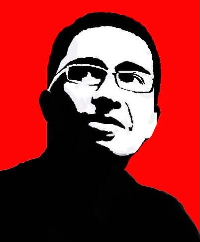 Credit for this photo goes to Irman Noor & Clementino Kulup
Introduction: For a long time now, I've wanted to interview Amir. However, if truth be known, I never had guts to ask him. So, when Tan May Lee offered to refer this matter to him, I jumped at the chance. I've enjoyed reading his answers and am sure you will too. Therefore, without further ado, I have great pleasure in introducing to you, Amir Muhammad ...
Aneeta: Amir, thank you for agreeing to this interview.
Amir: Wassup, bitch?
Aneeta: Let’s start with a little information about you. Where were you born, where did you grow up, what do you do for a living and where do you live now?
Amir: 1972. I am exactly two weeks older than Alyssa Milano. I was born in Kuala Lumpur, grew up in KL, and now live in Petaling Jaya, which is right next to KL. I have my own publishing company, Matahari Books, which has produced about a dozen books in its first 2 years.
Aneeta: I am aware that you’ve written/published several books. Please share with us your three favourite books. Please describe them and give an idea of where my readers will be able to obtain a copy if they so choose.
Amir: Well, I do have a soft spot for Malaysian Politicians Say the Darndest Things (Vol 1) because it was the first thing I published, and remained the highest-selling! It's a simple idea that worked, because our politicians have a knack for saying the oddest things. I also spent a lot of time on New Malaysian Essays 2 as this is a non-fiction platform I want to encourage; I don't actually mind that it doesn't really make money! And I am happy to have encouraged Charlene Rajendran to write Taxi Tales on a Crooked Bridge, as this is the sort of original non-fiction writing that I set up Matahari Books to tackle. All three books are on Amazon.com and in Malaysian bookshops.
Aneeta: Let’s discuss your newest publication, Body2Body. What is this book about?
Amir: It's Malaysia's first queer anthology, and is a compilation of original creative writing on the gays, lesbians, transsexuals and transgendered folks of Malaysia. We even include bisexuals, who might normally just be considered slutty rather than worthy. I'm happy that it came out so well, so kudos to the hard-working editors Pang Khee Teik and Jerome Kugan! It includes some of the best writers in Malaysia, such as Shih-Li Kow and Brian Gomez. But due to its subject-matter, it is only in limited release in Malaysia.
Aneeta: From what I can gather, you’ve got 2 blogs: one called Matahari Books (http://mataharibooks.blogspot.com) and another called Writing by Amir (http://amirmu.blogspot.com). Can you please tell me what the purpose of both these blogs is?
Amir: The first is just a catalogue because I haven't yet had the time to do an official website. The second is for fun. I don't really 'promote' every single thing I do -- that would be vulgar -- but I blog whenever it amuses me.
Aneeta: I understand that you’re also a filmmaker. What films have you been involved in so far?
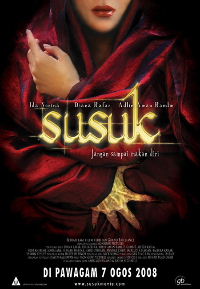
Amir: I have made several documentaries (including one in Indonesia), an experimental movie in Japan, and two fiction films. I also co-directed a lesbian vampire movie called Susuk. Two of my documentaries, The Last Communist and Village People Radio Show, are banned in Malaysia, but the DVDs can be obtained if you are resourceful enough.
Aneeta: When you choose to write or even publish a story, what are the criteria you’re looking for? What elements of storytelling do you focus on when looking at a tale?
Amir: I publish mainly non-fiction (although most entries for Body 2 Body ended up being fiction). I look to be hooked! It's as simple as that. If a writer has the confidence and style to reel me in, I can read a book even if it's about a subject that I had hitherto never been curious about.
Aneeta: As you know, this website caters for storytellers. What advice would you give those who would like to venture into storytelling?
Amir: Keep on truckin'.
Aneeta: Amir, this is all I have to ask. Is there anything you’d like to add?
Amir: Did I mention that I am two weeks older than Alyssa Milano?
Aneeta: Amir, thank you.
Amir: As the Malay kids now say: "No hal."
This piece may NOT be freely reprinted. Please contact editor @ howtotellagreatstory.com for reprint rights.
Click here to return to the index of interviews on 'Blow Your Own Trumpet!'
Introduction: My new columnist, Brenda James, brought to my attention Andrew Baber's books (see below) and I was fascinated. I was determined to interview him and made my request. He agreed and I'm glad, for the story he told in the interview below has been very entertaining to read. Without further ado, I have great pleasure in introducing to you, Andrew Barber ...
Aneeta: Andrew, thank you for agreeing to this interview.
Andrew: Well it is very kind of you to offer me this opportunity – my first ever interview of this type!
Aneeta: Let’s start with something about you: where were you born, where did you grow up, what do you do for a living and where do you live now?
Andrew: This question rather dates me, as I was born in Uganda in the last years of the British Empire! My father was a colonial civil servant and worked as a District Commissioner in a very remote district of Uganda on the border with Sudan. It was all very exotic and we were a very small British administrative cadre surrounded by pastoral farmers and tribesman – the Karamajong and Turkana peoples - who fought tribal wars with spears and shields. Much of this life has now gone, thanks to the spread of automatic rifles and war throughout the region. As I said, it was an ageless, harsh and very simple form of existence centered mostly around cows. Unfortunately I don’t remember anything about it, though the experience is all part of my family lore and photo albums!
After Uganda my family moved around Africa and Australia, where I first went to school. I do have some memories of early school years, though not many. I think I must have one of the worst memories out there. I know some people who can recall incidents from the age of two or three. Mine start around the age of seven, and even then they are pretty flaky. This could be an early sign of Alzheimer’s, though if this is true the onset of memory loss at the age of seven is quite an impressive achievement.
My family finally settled in UK and after two years in Devon we moved to the small county town of Bedford. Here the natives were not particularly warlike and I spent my formative years at school there. My mother has kept my school reports, much to the pleasure of my daughters, as they make brutal reading. I was clearly an idle and not very successful student; my math’s teacher for example describing my efforts as “practically worthless”. On the back of such encouraging comments I actually did quite well and to my, and I’m sure the school’s, surprise I got a place at Cambridge to read History, getting a scholarship along the way. The moral to this story is “every dog has his day” and a brass neck often gets you places that hard work and diligence don’t though if my daughters should ever read this interview - this philosophy of life is not for them!
Otherwise, growing up in a small English town in the 1970s was entertaining. I was somewhat socially hampered by liking John Denver while all around me were into the Stones, Led Zepplin and rather cooler groups. My family football team is Everton and I guess this enthusiasm for lost causes was part of that psyche, though a preference for the underdog may also have been a little self-serving. I have to say that the years have been kinder to the Stones and Led Zepplin than poor old John Denver, suggesting that if in doubt, it’s always good to go cool. I’d turn John Denver off the radio now if I heard him but would certainly listen to the Stones and Led Zep. But the damage is done and my reputation as a social loser remains, as my older brother still makes frequent reference to my nerdy choice in music. Failing to be cool apart, as a teenager I chased, but failed to snare, lots of girls but managed to enjoy myself hugely in the process. It was a good time.
Aneeta: I understand, from your website - http://www.barber-assoc.com/index.html - that you worked in the British Diplomatic Service. While I’m sure there are many stories there, I’m more curious about why you’ve chosen to be based in Malaysia.
Andrew: After Cambridge I joined the British Diplomatic Service. Travel had been part of my earlier life and I fancied the idea of the life of the diplomat, and it proved to be a great career choice. I have to say, and never believe any diplomats who claim otherwise, it is an extremely comfortable and priviledged life. Lots of perks, not a huge amount of stress, high status and not really so much work, unless you end up in a ‘hot spot’ or one of the busier diplomatic missions. It remains a mystery to me, and many others, why I chose to give such a career up at the age of 41. I’d like to say that there was some profound crisis of conscience. In fact, I’d become stale and a little bored and wanted to move on. So I set up my own consultancy company in KL which is everything the Diplomatic Service is not – minimal status, stressful, usually rather uncomfortable and certainly little in the way of priviledge. But, if I was asked to return to the Diplomatic Service (inherently a rather unlikely scenario) I would think long and hard about it and then say “no”, though I’d probably try to squeeze a lunch out of them to discuss the option.
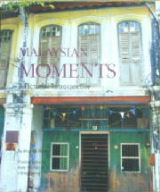
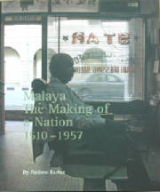
Aneeta: Knowing how business is done in Malaysia, there will certainly be a lunch. The more important question, I think, is where this lunch will take place: at a coffee shop or Carcosa Seri Negara? Now, let’s discuss your books – I know you’ve published 3 and they are Malaysian Moments, Malaya and the Making of a Nation 1510-1957 and Penang under the East India Company 1786-1858. Please describe each one.
 |
 |
 |
Andrew: They are all focused on aspects of Malaysian history. They are designed for the non-academic reader and are hopefully quite light and easy to read. Malaysian Moments is a richly illustrated compilation of stories that have enriched Malaysia’s historic development. Originally written as articles for an expatriate magazine, the book offers sometimes quirky, sometimes amusing, insights. It explores the economic pillars of colonial Malaya, the plantation and tin industries, and Malaysia’s complex and vibrant communal mix. Other chapters explore the arrival of the colonial Portuguese, Dutch and British and some are focused on the often bitter and tragic events of the Second World War.
Malaysian Moments is a light and easy introduction to a rich and complex nation.
Malaya the Making of a Nation 1510-1957 offers an illustrated account of Malaysia’s colonial heritage, looking in depth at the forces, motives and individuals who shaped the colonial period. The book starts with the Portuguese seizure of Malacca from the Malay Sultanate of Malacca and then explores the Dutch and British eras. Finally, it examines the defeat of Britain in the Second World War, the short period of Japanese control and the return of the British. The final chapter explores the complex communal and political considerations leading to Merdeka, or independence, in 1957.
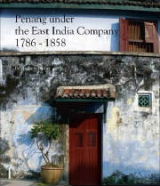
Penang under the East India Company – 1786-1858 is a lavishly illustrated account of the British acquisition of Penang by Captain Francis Light and the history of the settlement under the East India Company. The book outlines the strategic and economic motives behind the settlement; British trickery in its dealings with Penang’s historic suzerain, the Sultan of Kedah, and the subsequent political, communal, economic, architectural and political development of George Town and Penang. The book ends at the point when the East India Company’s interests were assumed by the British Raj following the Indian Mutiny, and looks briefly at the transition period leading to the formation of the Straits Settlements and direct colonial rule from London.
Aneeta: I understand that the proceeds of the sale of this book are channelled into various charities. Can you please explain how this works and how my readers are able to purchase these books from you?
Andrew: The proceeds – or rather profits, as I take off the production costs – go the Lighthouse Children’s Welfare Home. The first book made a lot of money, largely from corporate sponsors. Unfortunately I write rather quicker than my sponsors can get rid of their books (they buy e.g. 100 copies and then have their logo on the back, and thereby make a contribution to the children’s home) so getting sponsorship for the latest book has been a struggle.
Aneeta: Am I correct when I say that these books were self-published? If so, what was the most challenging aspect of self-publishing for you?
Andrew: I have actually found the publishing side of things relatively easy, largely because I have handed over all production, design and print issues to my partner in crime, the wonderful Lileng Wong.
Aneeta: As you know, this website caters to storytellers. I have not yet had a chance to look at your books. I assume that there was an element of storytelling involved in your work. If so, what aspect of storytelling did you have to focus on when writing your books?
Andrew: I try to tell an historically interesting narrative. I guess that is a story. It is not fiction and I try hard to make sure that what I write is accurate – that is the challenge for historians. But I also try to make the account interesting and dig beneath the dry facts to offer an account and an analysis. Some history books are just so boring and so detailed that they lose the reader. Mine, however…
Aneeta: Andrew, this is all I have to ask. Is there anything you’d like to add?
Andrew: Just to say thank you and my best wishes for your splendid web site and your own efforts.
Aneeta: Andrew, thank you very much, once again.
Andrew: Kembali
This piece may NOT be freely reprinted. Please contact editor @ howtotellagreatstory.com for reprint rights.
Click here to return to the index of interviews on 'Blow Your Own Trumpet!'
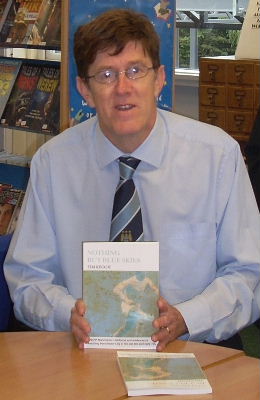 Introduction: Tim is someone I'm very proud to introduce to you because he's one person who bought Bill Keeth's book, Write It Self-Publish It Sell It, and learnt from it. I am sure that you will enjoy his story as much as I did. Without further ado, I have great pleasure in introducing to you, Tim Keogh ...
Aneeta: Tim, thank you for agreeing to this interview.
Tim: It is my pleasure, Aneeta.
Aneeta: Please tell me a little about yourself – where were you born, where did you grow up, what do you do for a living and where do you live now?
Tim: I was born in Middleton, North Manchester. I am the eldest of three brothers all of whom are teachers. I guess you could call it the family business as my dad was a Headteacher and his sister was a teacher of English. I teach French and Spanish and live only a few miles from my childhood home, in Chadderton near Oldham.
Aneeta: How did you first become interested in writing and storytelling?
Tim: It has always been there, really. As an English teacher Dad encouraged us to read and our house was full of books. My grandad was Irish and they say that the Irish are a nation of story tellers! I remember as a child at primary school winning a prize in class for writing about my weekend at the football.
Aneeta: I understand that you have self-published your first book. Please describe it for me.
Tim: In Nothing But Blue Skies I describe a happy childhood and adolescence growing up in North Manchester in the late 1960s and 1970s. The book centres around my devotion to watching Manchester City home and away in this great period. I do not simply churn out match reports but instead describe a series of experiences which inform the reader just what it was like to be a football fan at this time. But the book is not just about football. I describe my schooldays, first love, holidays with friends, and early attempts at trying to meet the opposite sex in the night clubs and discos of a Manchester dominated by the punk rock music scene. I wanted to portray a happy carefree childhood and adolescence- one of nothing but blue skies!
Aneeta: Now, the more interesting aspect of this story is that you used a book, also self-published, by one of my columnists, Bill Keeth, as your manual for self-publishing [Write It Self-Publish It Sell It]. Why did you do this and what aspects of his book did you benefit from the most?
Tim: I was thrilled to see that such a manual existed. You see, as we all know writing can be a lonely business but to know that there are others out there like Bill who have done it all is very reassuring. And the practical help has been absolutely invaluable. In particular the advice about setting up accounts with wholesalers and Amazon and the like. Thanks again Bill Aneeta: Would you self-publish again?
Tim: Yes. I would have no hesitation.
Aneeta: Tim, as you know this website caters for storytellers. What advice would you give those who would like to self-publish?
Tim: Do not be afraid to ask for help. It is out there!
Aneeta: Tim, this is all I have to ask. Is there anything you’d like to add?
Tim: Only, thank you for letting me speak to you. I wish you and your readers “Nothing but blue skies”!
Aneeta: Tim, thank you, once again.
This piece may NOT be freely reprinted. Please contact editor @ howtotellagreatstory.com for reprint rights.
Click here to return to the index of interviews on 'Blow Your Own Trumpet!'
 Introduction: I was introduced to Tom's work by Debbie Jenkins. When his book, 'Blocks', was published, I requested a copy of the book and wrote a review for it. I wanted to interview Tom and asked Debbie to put us in touch. I am so glad he agreed to this interview and I hope that you'll enjoy reading his story as much as I did. Without further ado, I have great pleasure in introducing to you, Tom Evans ...
Aneeta: Tom, thank you for agreeing to the interview.
Tom: and thank you Aneeta for such an erudite review of my new book - much appreciated.
Aneeta: Let’s start with a little information about you. Can you please share some of your history with us? For instance, where were you born, where did you grow up, what do you do for a living and where do you live now.
Tom: What a lovely way to start a conversation. I was born in Manchester in the North West of England. I was the third of seven children with appropriately Irish Catholic parents. I studied Electronics at Uni. After spending 30 years in the hi-tech worlds of broadcasting and the Internet, I ended up writing a book by accident. This led me to walk around London in a bra at night with 15,000 women at night to raise money for the Walk the Walk breast cancer charity. This in turn directly led me to being a full time author and author's mentor. I now live in the lovely Surrey Hills, 30 miles South West of London with the best aid for any writer - two Labradors that need regular walking.
Aneeta: I have had a look at your website, http://www.thebookwright.com, and it gives a comprehensive detail about your work. One aspect of your biography, so aptly called ‘Tomography’, fascinates me: you are a student of both the esoteric and exoteric. Can you please explain what these words mean?
Tom: Sure, the exoteric is that which is known, explainable and suitable for widespread sharing. Science kind of falls into that category. The esoteric refers to things that are hidden and either not understood or misunderstood. One of my aims is to make the esoteric into the exoteric when the time and place is right, with the people are ready.
Aneeta: Now, please describe your books to me.
Tom: I'll answer that in the chronological order that I wrote them.
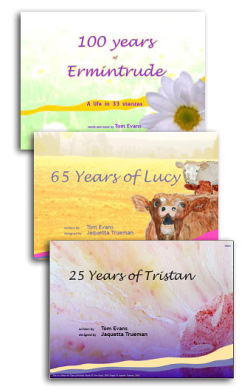
100 Years of Ermintrude came first. I wrote it sort of by accident on a plane flight in one go. It grew from an ebook into an audio book, then a Vook (or video book) and finally a printed trilogy - and the walk in the bra. It's written in 99 stanzas and tells of three interlocking life stories and it can be read in less than half an hour. The point of the book being that, if you let live go by and don't take it by the horns, you will blink and miss it. It will be gone in a flash and you'll have to come back and do it all over again. It was when I learned what channeling was and from there I have learned how to teach it to others. I found out recently that each stanza was presciently less than 140 characters so I Twittered the story and am planning to make it an iPhone app in 2010.
The Spirit of Collaboration was the last summarising chapter of a book of business wisdom I wrote with people on the social networking platform Ecademy. It took me less than a day to write and the whole book was conceived, written and published within three months by Ecademy Press. It's a real testament to the power of the collective wisdom of crowds and how to collaborate on social media platforms.
Wordlube is both a technology demonstrator and a method of market testing before you write and publish a whole book. I took five steps from my writer's workshop that help with writer's block and compiled them into an interactive ebook on the amazing Myebook.com platform. It allows you to mix text, graphics, audio and video into a composite book. The feedback I got convinced me that there was a market for my novel approach and a bigger book on the subject.
The resulting book then took me less than two weeks to write. The publisher found me from a blog I wrote on karma rights management and we went from 1st draft to published book in less than six months. It is based on three years experience of my work with writers that are stuck. In all cases, writer's block turned out to be a life block. Using my new found skills in hypnotherapy, past life regression and future life progression I found I could tackle virtually any block. From the then unblocked state, I then introduce the skills of Whole Brain and Whole Mind Thinking to help my clients tap into unlimited creativity. Blocks is a summation of these principles. It also comes with six guided visualisations that use brain entrainment to get the reader into 'the zone'. The main point to learn from Blocks is to start to love your blocks for the experience and challenge they bring to help you grow and evolve.
Aneeta: Clearly, you are very much into the work of Tony Buzan and Mind Mapping. Why Mind Mapping? What fascinates you about his work? How, do you think, it would help a storyteller?
Tom: Let me paraphrase from Blocks about the power of a Mind Map which I think explains all.
"Where Mind Maps really come into their own is in the area of creativity and especially free-flow brainstorming where previously hidden associations appear like magic.
The left brain is your navigator through life and says to the right brain, “Aha, a map! I like maps, leave this to me, I’ll handle it."
While the left brain is thus kept busy, the right brain seizes the opportunity to sneak under the left’s radar to unleash its full creativity."
I also have recorded a visualisation that embeds the Mind Map in the brain's visual cortex such that anything associated with the map becomes more noticeable. In short, the Mind Mapper becomes luckier.
Aneeta: Tom, as you know, this website caters for storytellers. What advice would you give those who would like to become storytellers?
Tom: First of all, I advise that you add value in your writing. That involves either coming up with something entirely new or adding a new angle to something existing. Secondly, always write with your reader in mind and play with perspective. Finally, it's to make extensive use of metaphor and hypnotic language so you get your message into the heart of your reader and entrance them such they can't put your book down. And, of course, so they can't wait for the sequel.
Aneeta: Tom, this is all I have to ask. Is there anything you’d like to add?
Tom: All I would add is that I love the serendipitous way that we connected and I will treasure every new connection that comes as a result of it. I also wish that we meet in person in the not too distant future.
Aneeta: Let's see ... Tom, thank you.
Tom: And eternal thanks to you Aneeta.
This piece may NOT be freely reprinted. Please contact editor @ howtotellagreatstory.com for reprint rights.
Click here to return to the index of interviews on 'Blow Your Own Trumpet!'
Introduction: I was introduced to Sarah's work by Tom Evans. I looked at Sarah's site and was impressed. Her work is something new and I asked if she's like to be interviewed. She agreed and, without further ado, I have great pleasure in introducing to you, Sarah Lamb ...
Aneeta: Sarah, thank you for agreeing to this interview.
Sarah: It’s my pleasure, thank you for asking me.
Aneeta: Let’s start with something about you. Where were you born? Where did you grow up? What do you do for a living and where do you live now?
Sarah: My real identity is concealed and Sarah Lamb is my writing name. I now live in Kent with my family.
Aneeta: I understand you’ve written a book called, Appreciating Angels. What is it about?
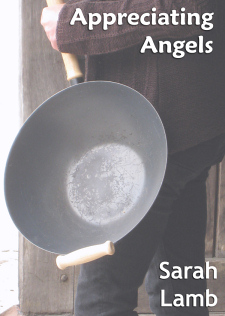
Sarah: Appreciating Angels is an onion of a book with many layers. On the surface the early parts may seem like an account of my young life which involves rape, eating disorders, self harm, alcohol abuse and the reader may think its another “misery lit” but there is a difference between then and now in the book, and the then reflects the past whereas now looks at how ones relationship with other woman develops in that they were often viewed as the mother figure, so the book discusses female relationships from crush, mother figure to lesbianism. Peel of the layer of the surface of the story and its about growing up, its about a girl growing up and how she deals with events, the next layer is the deep spirituality that Sarah has and how she believes that there is no such thing as a negative experience – only a necessary one, that life is 1% what happens to you, 99% how you deal with it, and that we are only here on earth in a physical body for the shortest of times and its a time to learn and grow. I hope the book raises questions, raises awareness amongst women and their relationships with other women and daughters and I hope it is heart-warming and empowering.
Aneeta: I’ve read on your website, http://www.appreciatingangels.com, that you consulted Tom Evans when you wrote your book. What was that experience like?
Sarah: Tom is my Hermit. My guiding light in authordom. Tom is a nice, spiritual man who has an unshakable belief in divine timing and spiritualism, who trusts the universe and understands the souls journey. Tom is utterly inspirational in his passion and encouragement and has been hugely supportive of me and the book.
Aneeta: Again, on your website, you’ve got this thing called, A Hypnagogic Journey. Can you pleased explain what this means?
Sarah: Hypnagogic or hypnopompic hallucinations are visual, tactile, auditory, or other sensory events, usually brief but occasionally prolonged, that occur at the transition from wakefulness to sleep (hypnagogic) or from sleep to wakefulness (hypnopompic). These visual and auditory images are very vivid and may be bizarre or disturbing. In my Hypnagogic journey I discuss the moment of death and take it to how I see the spiritual world. In my next book The Love of Angels, I discuss a character, Terrance in Appreciating Angels. This however is a work of fiction. Before I can tell the story of who Terrance is, I use this visualisation to show at what point his soul is at and what he now needs to do. In his previous life Terrance’s soul was a young boy, who was given no love, sent down the mines and was crushed to death – but as his soul reunites with his soul group he meets the souls who played a part in is life and understood that he learnt a life without love was not good, and that in his next incarnation his soul wanted to love protect and nurture. As he agrees the incarnation his soul group take on new roles to play people that will enter his life at different junctures “for a reason, season or lifetime” to provide experiences that the soul need to grow and develop. This short visualization was something I had on the brink of consciousness which is when our soul may be leaving the human body and be more open to our psychic abilities.
Aneeta: Do elements of storytelling play a huge role in your writing.
Sarah: Indeed. I normally don’t write until everything is fully formed. Even writing fact, it has to be structured for the reader.
Aneeta: As you know, this website caters to storytellers. What advice would you give those who would like to venture into storytelling?
Sarah: See Tom Evans! He will open your heart and clear away the blocks and I highly suggest his courses. He just encourages you to meditate, let go of your conscious mind and just write – whenever I meet anyone that’s worked with him they find they can take themselves into “the zone” with ease and write.
Aneeta: Sarah, this is all I have to ask. Is there anything you’d like to add?
Sarah: Please buy my Book – Appreciating Angels from the website!
Aneeta: Sarah, thank you.
This piece may NOT be freely reprinted. Please contact editor @ howtotellagreatstory.com for reprint rights.
Click here to return to the index of interviews on 'Blow Your Own Trumpet!'
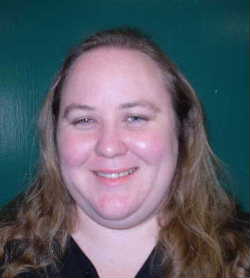 Introduction: I came to know of Hayley's work some time ago. I was very happy to note that she had written and published an ebook; I grabbed the opportunity and asked if she'd like to be interviewed. She agreed to my request and, therefore, without further ado, I have great pleasure in introducing to you, Hayley Hunkin ...
Aneeta: Hayley, thank you for agreeing to this interview.
Hayley: It’s my pleasure.
Aneeta: Let’s start with simple questions like, where were you born? Where did you grow up and what was it like? What do you do live and what do you do for a living?
Hayley: I was born in Sydney, Australia and I still live there. However, I grew up in the western suburbs, where it was HOT! Now, I live right near the coast (in fact, across the road from the water!) and I love it. It’s usually several degrees cooler with the sea breezes. I live near Cronulla beach and it is a lovely place to live. I work two jobs at the moment and I love the variety of doing this. I work as a Training and Compliance Coordinator at the airport and I work as a freelance writer from home too. I love the freedom of writing when and where I want to!
Aneeta: I understand that you’re very involved with a website called Constant Content. Can you please explain what this website is about and what is your involvement in it?
Hayley: Constant Content is a terrific site for freelance writers. You can write articles on whatever topics you think will sell and price the articles at whatever price you want. If you can write unique, quality articles for websites and magazines, you can make a decent income from Constant Content. I have been writing there for over a year and I love it! I generally make between $300 and $800 every month (and that’s part-time!). I can make so much, because the articles sell for $30 to $100, which is higher than many other article sites, such as Associated Content. Because Constant Content markets to the high end of the consumer market for articles, authors can sell articles at much higher prices than you can get elsewhere. Constant Content also accepts authors from all over the world, as long as the English writing is grammatically correct.
One of the other reasons I love writing for Constant Content is the community of other writers. I’m an active participant on the forum and I find it really helpful to read the forum questions and answers often. It feels like a real community and I have made many friends through Constant Content. I sometimes mentor and help out new authors with some proofreading and advice too. It’s fun to be an active member in a community of writers.
Aneeta: I see that you’ve created a website to sell an ebook that explains a little more about Constant Content. Please explain what this website entails and what your purpose is.
Hayley: My website is http://www.expandingcreations.com and I want to use the website to encourage other writers to discover the joys of writing what you want to and to make money by writing articles. There are several sections to the website: free articles about freelance writing, a regular newsletter with author interviews and articles, and, of course, my ebook.
I wrote “Sales Success on Constant Content” because I wanted to share my passion for writing with others. I find that many new authors who can write well in other formats struggle with Constant Content, which has stricter submission guidelines than many other sites. Once you figure out the submission guidelines, you can easily make money on the site, but it can be difficult to get started. Many very good authors have stumbled at first and been banned from the site by making silly mistakes that could easily be avoided. “Sales Success on Constant Content” explores the submission guidelines in detail and includes a submission checklist. It also includes helpful tips and advice to become successful on this unusual freelance writing website and ways to avoid the common errors new authors tend to make. You can buy the ebook on http://www.expandingcreations.com/ebook
Aneeta: Do you use many of the elements of storytelling in your writing? If so, which ones do you use most?
Hayley: I love using alliteration, so I generally use some alliterative phrases in my headings. Every article is like a story in a way, you need an introduction that will engage the reader’s attention from the start and draw the reader into reading the article. I have to structure the article to continue to engage the reader and finally, just like a short story, I finish the article with a conclusion that gives the reader a good ending. Sometimes, I use a fictional character to tell the emotions of the story, and then go back to the typical “narrative” style of the article to describe the facts and figures involved.
Aneeta: As you know, this website caters for storytellers. What advice would you give those who would like to venture into storytelling?
Hayley: Stories are the basis of human communication. We have been telling stories before we could write throughout human history. Never let anyone belittle what you do! It is important to share our stories, whether it is in a more ‘journalistic’ format of writing articles, or writing creative short stories and novels. Welcome to the wonderful world of writing! (I told you I like alliteration.) Aneeta: Hayley, this is all I have to ask. Is there anything you’d like to add?
Hayley: Freelance writing is fun and anyone who loves words can do well writing articles. If you need a break from writing creative short stories or from your other style of storytelling, try writing articles for websites. They need ‘stories’ too!
Aneeta: Hayley, thank you.
Hayley: Thanks for the opportunity to share on your website. I really appreciate it!
This piece may NOT be freely reprinted. Please contact editor @ howtotellagreatstory.com for reprint rights.
Click here to return to the index of interviews on 'Blow Your Own Trumpet!'
 Introduction: I cannot remember how I first came into contact with Chong Sheau Ching. Nevertheless, it has been some years since we first met. Her website, as you'll read, focuses on helping people who work from home. This, of course, is of much interest to me. I was very keen to interview her for a long time but, if you know anything at all about Sheau Ching, she's very busy! Still, I am so pleased she agreed and to my request; therefore, without further ado, I have great pleasure in introducing to you, Chong Sheau Ching ...
Aneeta: Sheau Ching, or C2, as I normally refer to you, thank you for agreeing to this interview. Let’s start with a little about you – tell me where you were born, where you grew up, where you live now and what you do for a living?
Sheau Ching: I was born and bred in Ipoh. I have been living in Kuala Lumpur for the past few years and I am working full-time to build eHomemakers so that one day, I can leave it to a group of dedicated professionals who will take it to another level.
Aneeta: Before we go into the work you do now, I’m interested in the article you used to write, ‘A Job Only Mothers Can Do’. Please tell me what was that about?
Sheau Ching: I quit my high-flying policy planning job with the UN and came back to give birth to my daughter. Then I became a single mom. Instead of going back to international work, I took the difficult decision to stay close to my daughter by not leaving her to a baby sitter while I work outside of the home to earn money. The choices for a mother then was: being a full time housewife to look after my baby or to work full time outside. There was no other choices. I created another choice for myself – working at home. But for 3 years when I freelanced doing writings, copyediting, I didn’t dare to tell anyone except the closest people what I was doing. This is why the article is entitled ‘ A Job Only Mothers Can Do’. Only a mother’s love for her kid could make me stick by the decision to work at home and be seen as a lowly housewife who had nothing to do against a backdrop of past prestigious international work experiences.
Aneeta: OK, let’s talk about eHomemakers. Tell me what it’s about? 
Sheau Ching: We are 13 years old this year, an e-community of teleworkers, homeprenuers and homemakers in South East Asia at www.ehomemakers.net. We also have a pro-poor project, Salaam Wanita, in Malaysia, one of the marketing platform for the eco-basket project is at www.justmarketing.info. We have been advocating working @ home for women (and men) who want to balance work and homelife and go green.
Aneeta: Do you have a lot of assistance running and managing this website?
Sheau Ching: eHomemakers’ webteam runs the website professionally and they all work at home, I just do the partnership and fundraising and send them the information.
Aneeta: I’m sure that you and those on eHomemakers have mutually benefitted from all the work done on eHomemakers. My question is this: what aspect, in particular, of eHomemakers gives you the most satisfaction?
Sheau Ching: The working at home movement has grown, women who work at home are no longer ridiculed and seen as useless. We are seen as forward-looking women who have the best of both worlds – work and home life – by using communication technologies efficiently.
Aneeta: Clearly, since you started eHomemakers, it’s won many accolades. Please pick three that mean more to you than others and explain why.
Sheau Ching: Our being the runner-up for the Gender and ICT Award given by Global Knowledge Partners and other international bodies propelled us to international limelight. Our winning the Pan Asia 2002 and 2003 Award Grant in international competitions affirmed to us that our team was as good as any international teams who work in a physical office. Our winning the MSC Malaysia Ericsson CR Award in 2008 was an affirmation that we have been right all along – using mobile gadjets for the poor was the way to go and our innovations must be very ground-based, always. We will not innovate anything by sitting in an air-conditioned office, dreaming up ideas for other people to use, but to use our observations and output of research to create value-added products, systems or applications for home based people!
Aneeta: As you know, this website caters for storytellers. Has storytelling helped you in your work with eHomemakers?
Sheau Ching: I used to write stories in a newspaper column. It was after we won those awards and the international press started to ask me questions that I realised that I have been creating a story about a single mom helming an e-community with her team to help other moms to create work life balance.
Aneeta: C2, this is all I have to ask. Is there anything else you’d like to add?
Sheau Ching: I hope more women (and men) will join us to advocate this low carbon work option and we have more mutual support in platforms we are building with several partners now. So keep coming to www.ehomemakers.net!!
Aneeta: C2, thank you.
This piece may NOT be freely reprinted. Please contact editor @ howtotellagreatstory.com for reprint rights.
Click here to return to the index of interviews on 'Blow Your Own Trumpet!'
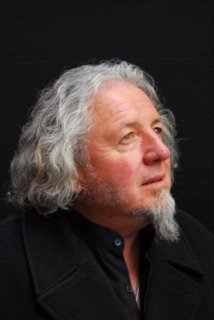 Introduction: Last year, I worked on a manuscript and I am so happy to say that the book is now published. In the process, I got to know a little about Paul and his work. His energy, drive and determination to get this book published impressed me. Without further ado, I have great pleasure in introducing to you, Paul Burr ...
Aneeta: Paul, thank you for agreeing to this interview.
Paul: Thank you Aneeta, first of all, for helping me with the sequencing and logical presentation of my book. I appreciate greatly the advice you gave me. And thank you for inviting me to this interview.
Aneeta: My pleasure. Let’s start with a little about you – tell me where you were born, where you grew up, where you live now and what you do for a living?
Paul : I’m a ‘Geordie’. I was born and raised in North East of England. My favourite childhood memories hail from Tynemouth which is on the coast, as its name implies, at the mouth of the River Tyne. There are beautiful beaches there, a towering castle that has greens and lawns where children run and play. Geordies are very friendly people. It was the perfect place to grow as a child.
I ventured south to London in 1969 where I took a first and second degree in Mathematics and Statistics. Seven years later I joined IBM and developed a career in Sales and Management. After a couple of further transitions in the mid 90’s I chose to become a business coach. I found myself working with top performers in large corporations. Specifically, I researched what they did differently from everyone else. Strangely, it was this research that led me to key questions that would be the catalyst that inspired me to write Learn to Love and Be Loved in Return.
I am still primarily a business coach. I also work with private clients. I use NLP, Time Line TherapyTM and, more recently, metaphysical therapies to help clients live the lives they want to live.
These days I live in a Georgian apartment overlooking the seafront at Hove, in East Sussex, UK. I am a practicing Druid, a member of The Druid Order in London. In hindsight, becoming a Druid was an instrumental part of my journey towards writing my book, Learn to Love and Be Loved in Return. I could not have written it without the wisdom of my companion Druids and our Chief, David Loxley. David was one of two mentors whose input was invaluable. The other was Romilla Ready, Lead Author of NLP for Dummies® and a ‘Relationships Wizard’.
Aneeta: OK, let’s talk about your newest book, Learn to Love and Be Loved in Return; tell me what it’s about?
To buy in the US, from Amazon.com, click here.
To buy Kindle version, click here.
Paul: The book centres around finding Truth. Expressing our Truth or our True Self is after all, I suggest, our purpose in life: to find, get as close to, live and hopefully be our real selves - safe in the wisdom that we know, speak and act out our Truth. We find Truth in ourselves through the relationships we create, especially loving relationships.
When two people come together I found that we only ask 4 questions of one another. And there is a sequence to these questions we answer, whereby we decide if a long term relationship is worth pursuing.
Once the relationship starts and passes the early stages of passion and excitement, I reveal a framework that consists of ‘3 pillars’. The pillars determine whether the relationship will last or not. The first pillar is Love. I discuss what is Love and what is not Love. In addition to Love I explore Trust, Security, Resonance, Purpose and, most of all I focus on, finding Truth.
Truth comes from biblical figure, Ruth, which is pronounced “root” in Ancient Hebrew. For a relationship to achieve its fullest purpose it must be firmly rooted in Truth. This is the first of 7 Stages a relationship can go through. Most couples do not get past Stage 4. It is there that the full spiritual nature of their relationship develops and transcends, in order to pass through the remaining stages.
We, eventually, arrive at a place where we find that the summation of all the relationships we have in life are, in fact, a mirror. A mirror of the relationship we have with ourselves. I devote a chapter to coaching tips and stories so that the reader can nurture the relationship they have with themselves. I help the reader to ‘happen to the world rather than have the world happen to them’.
The book is packed with clients’ ‘Case Stories’ in order to bring the key points to life. I call them stories. All the events happened but I changed the contexts, ages and names to preserve anonymity.
In the final chapter, I compile a sequence of 7 easy-to-use, everyday, self-coaching tools to help the reader in their journey, to achieve all the things they want to give and receive in their relationships and life. Learn to Love and Be Loved in Return is a DIY guide to starting and making a fulfilling relationship last.
Aneeta: What are the three most memorable things about getting this book published?
Paul: I sent some work in progress to Romilla Ready last July. A couple of weeks later I asked Romilla “What do you think?” She replied “As I started to read your book Paul, I found myself saying ‘This is very professional, did Paul write this?’”. “Hoy cheeky!” I replied and we laughed out loudly together.
Romilla kindly offered to approach a publisher on my behalf. Romilla introduced me to Debbie Jenkins and Joe Gregory who run bookshaker.com, a publishing house that focuses on non-fiction. I sent in written answers to a number of questions they asked. I used extracts and examples from the book, where I could, to answer them. A few days later they offered me a contract. Wow! I was offered a contract by the first publisher I had approached. I said to myself “Surely, this is a sign!”
The publishers, Debbie and Joe, have been great. They have gone beyond the call of duty to help me, a newbie, get the book right. The editing-for-print process was a very steep learning curve for me. It is vital to get the logic and the sequence right before you do the proof reading. I didn’t – oops! It is also vital that the cover represents the tone of the book. I say so myself, and everyone I speak to tells me that, the book cover that Debbie and Joe came up with is top class. It exceeded all my expectations. Early on they said “Leave it to us, Paul!” How right they were!
Aneeta: Clearly, you’ve used lots of storytelling techniques. What aspect, in particular, of storytelling have you found most useful?
Paul: The stories told come from clients’ personal detailed histories. In therapy, I use techniques to get clients safely to the heart of the major experiences that have influenced their lives. These experiences are often cathartic. I know how to get clients to dissolve the intense emotions they attach to these experiences. They learn their ‘Truth’ from the significant emotional events in their lives and the repeating patterns that occur as a result.
My stories are not rose-tinted. Although they contain moments of bliss and joy, they describe the types of painful journeys most of us have to take in order to find our Truth. That, I find, is the nature of Life. I write from the heart about events that have happened and can happen to anyone. When I achieve this, the reader is getting the best I can do.
Aneeta: Although its launch date is not until 10th March 2010, Learn to Love and Be Loved in Return has already received accolades. Please pick three that mean more to you than others and explain why.
Paul: David Loxley uses the words:
“This book falls into a gap between too simple and too difficult to understand. If it were either, it would fail in its mission. Paul has put all of his experiences together and created something unique. This book is a DIY guide on how to build in the roots that support what kind of relationship you want and how long you want it to last. And be philosophical and learn when it doesn’t work out that way.
Paul shows us how we can choose freely, to start and sustain a loving relationship, rather than be driven by circumstances to make choices apparently beyond our control.”
David is my Chief, responsible for ‘chiefing’ my consciousness development. That’s what Druidism is all about. And my consciousness development is part of what I choose my life to be all about. Getting the endorsement of my Chief, who is probably the wisest man I have ever met, gives me the inspiration and encouragement to write my second book.
Romilla Ready is a top selling author. Her simple phrase ‘very professional’ meant that an expert in my new role was giving me the thumbs up. That made a huge impact on my self-belief that I could write something of value for the world.
Kelly Scales, Yoga Teacher and Entrepreneur wrote:
“I loved the book - thanks so much for sharing. What did I like? - the combination of case stories and personal experience and insight combined with NLP, Druidism and quotes. The dashboard is a really great tool and I'm still working my way through it. Well done you, I really felt it gave a huge sense of possibility - i.e. start with X and then who knows.... which is so lovely and uplifting for the reader. and for me (and I'm sure many of those who will read it) it was also a call to action …
About time I faced up to and broke my relationship patterns. yep, here goes....!”
Kelly's comments reflect what I want every reader to get out of the book - practical advice and guidance that gets them to commit to moving on in their lives.
Aneeta: As you know, this website caters for storytellers. What advice would you like to give others who would like to venture into storytelling?
Paul: I shall be honest with you Aneeta. When I first spoke to David Loxley about writing the book, he told me “You might have to live this book in order to write it”. Little did I know how profound those words were. When writing the book I attracted both blissful and cathartic relationship experiences which I shall keep privy. This is part of the ‘mojo’ of writing that is impossible to prove but life changing to experience. My clients’ and my own experiences allowed me to write from the heart, hopefully to reach the hearts of readers.
If I found myself writing from my head I stopped, took a break (once for a whole month), until I was ready to start again. If I found myself enjoying a writing session and felt satisfied at the end of it, I knew I was giving my best. If I wasn’t enjoying a session, I would work out what the problem was and fix it, before I carried on.
Aneeta: Paul, this is all I have to ask. Is there anything else you’d like to add?
Paul: David Loxley told me what I needed to know to decide to write the book.
“If you have a book inside of you, your duty is to get it out there. It doesn’t matter how the world responds. It’s the process of writing it that’s important. What the world thinks of it is immaterial. It may get it. It may take 100 years for people to make sense of what you will have lived. It may take 500 years. When the world is ready, it’ll get it.”
At this precise moment, a hundred limiting beliefs I had about myself and my writing capabilities kicked in. They were too late though.
Aneeta: Paul, thank you.
Paul: It’s been a real pleasure. And thank you, Aneeta. I would like to mention that there is a Facebook Group I’ve created. I want members around the world to share their experiences and wisdom about Love and Relationships. It’s found at http://www.facebook.com/Doctapaul?v=feed#!/group.php?gid=284873991120
This piece may NOT be freely reprinted. Please contact editor @ howtotellagreatstory.com for reprint rights.
Click here to return to the index of interviews on 'Blow Your Own Trumpet!'
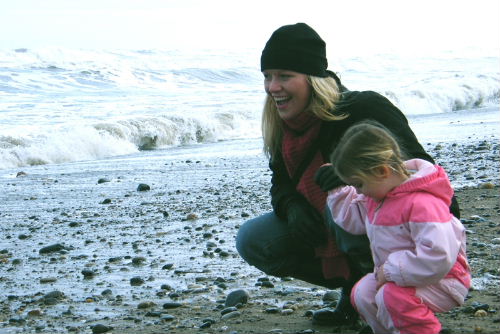 Introduction: Again, I asked Debbie Jenkins for help to interview people. She suggested I contact Alice. I looked at Alice's site and I realised that this was a warm-hearted storyteller I really wanted to interview. I contacted Alice with my request and, without further ado, I have great pleasure in introducing to you, Alice Griffin ...
Aneeta: Alice, thank you for agreeing to this interview.
Alice: Thank you for asking me. It’s truly a privilege to be invited to your wonderful virtual home!
Aneeta: Please tell me a little about yourself – where were you born, where did you grow up, what do you do for a living and where do you live now?
Alice: I was born in the North Yorkshire countryside, England, 34 years ago, but from the age of 8 I lived in a city in the South of England, not far from London. Throughout the years I remained in the city but my love of travel saw me jetting off here and there, always coming back to this base. Eventually I settled with my husband, Scott, our daughter, Isabella, and our dog, Milla. However, two years ago we decided that we needed a longer-term lifestyle change so we gave up our main source of income, sold our family home and packed up to travel around France, Spain and Portugal with a camper and no particular place to go. Isabella was just one when we left.
We had a fabulous time travelling around with no plan, experiencing different ways of life, mixing with inspiring people and certainly for our daughter, the 16 months we were away gave her what we feel was the best start in life. To see her running around freely with dust in her hair, swimming in rivers with Milla alongside, picking olives in Spain, playing with horses in Portugal; it was truly wonderful. But late last summer we decided we needed a little stability and my fond childhood memories eventually brought us back to England, and North Yorkshire.
For 7 months we have enjoyed exploring the rugged coastline and wild moors blanketed in purple heather, but we have quickly realised that life within the four walls of a house and all that goes with it seems unsuitable after our journey, so this summer we have decided to embark on a new adventure. It has always been a dream of ours to explore the English countryside from the inland waterways so in just a few weeks we will be stepping aboard our first boat to do just this.
As a full-time mum and writer I am lucky that I can work from anywhere and I’m certainly excited about penning my second book, Travellers’ Tales, with a view over water.
Aneeta: Before we talk about your book, tell me, please, a little about freelance career – what kind of articles do you write and where are they published?
Alice: I believe that my professional career stemmed from a childhood passion for scribbling about everything I saw and felt in an array of notebooks. In my early twenties I wrote to (and was rejected by) numerous publications until finally I was asked to write a few articles for a local magazine. I jumped at the chance and then took these printed examples with me on a tour of London, posting them with a covering letter into every magazine and newspaper office I could find. I didn’t receive a single reply, but my passion for writing kept driving me until a chance meeting in 2001 led to me landing a job writing for a UK-based tourist guide. I was beside myself with excitement at the opportunity to combine my two huge loves - travel and writing - and spent 2002 travelling worldwide and having the time of my life.
After this experience ended due to personal reasons I worked as a graphic designer and copywriter during the day and continued on my struggle to find freelance work in my free time. It wasn’t until I set off on my family road trip in 2008 that I actually started to secure more regular travel commissions. I have since written for and appeared in Spain magazine, the Spanish Sun Newspaper, Real Travel, Dogs Today and Babyworld. I also write a regular travel column for Mumsense magazine and I’m very excited at my new involvement with US-based travel website, Transitions Abroad.
Sometimes I think I was born with a pen in my hand and a world map tucked under my arm, so to be able to combine these two loves has been wonderful. However, I do also write a regular column for the Women’s pages of a newspaper as well as anything from book and film reviews to articles on green living for various other publications. My interests are varied, but mostly it is writing about my travels which gives me the greatest joy.
Aneeta: I understand, from your website, www.alicegriffin.co.uk, that you’ve written/published a book called Tales from a Travelling Mum. Please describe this book for me.
Alice: Tales from a Travelling Mum is the personal story of the travels I embarked on with my family during the first two years of my daughter’s life. Within its pages I talk about trips to France, Norway, Greece and Spain by plane, train, boat and car as well as the first part of our long-term road trip. I guess you could say it is a travelogue, but running throughout I have tried to include as much practical advice as possible to give other parents not only the ideas, but also useful tips to help them on their own travels with children. I also included stories from four very different travelling mums because I wanted to highlight that travel is open to all and can be adapted to suit your dreams as well as your budget.
Aneeta: Since your book is based on your own travels, can you please share the most memorable experience you’ve had so far?
Alice: I think it would be hard to pinpoint one memorable moment from all my travels, but if I were to pick something from our time travelling as a family then it would have to be our extended stay in a small village in the Andalucian mountains. To be embraced by a community and learn from them in the ways we did, was truly an experience. I still find myself longing for Almendra, a place I talk about in the book, and people who have read my book often mention how much they felt my love for this special place bursting out from the page.
Aneeta: Of all the elements of storytelling, which one did you use the most in your work?
Alice: I would like to think that I concentrate most of my time writing words that paint a scene so that the reader really feels that they are there with me. I want them to taste the food, see the sunset and truly be with me on my journey because this is the kind of writing I personally connect with. But then, to achieve this is an ongoing process I’m sure… but hopefully I’m getting there!
Aneeta: As you know, this website caters for storytellers. What advice would you give those who would like to venture into storytelling?
Alice: I don’t know if I’m really able to give advice, but I would always say that if you have a deep passion to share what you see around you and in your mind, then you really should develop your storytelling. Writing for me is about passion; it’s about not having a choice of whether or not to write, but writing simply because you can’t help it. I think that without this raw passion for the craft you might be disappointed because it takes a lot of hard work, door-slamming and perseverance to turn that passion into the career you dream of.
As for taking your stories from notebooks to a bigger audience, I would try to gently push your words out there by way of a blog or reading to friends and family and entering competitions. It is quite scary to open up your private world, but it is so important to listen to what comes back. Yes storytelling is about writing, but mostly it is about connecting with readers and listeners.
Aneeta: Alice, this is all I have to ask. Is there anything you’d like to add?
Alice: Just thank you for having me, I’ve really enjoyed answering your questions and I hope I haven’t talked too much!
Aneeta: Alice, thank you.
Alice: Thank you.
This piece may NOT be freely reprinted. Please contact editor @ howtotellagreatstory.com for reprint rights.
Click here to return to the index of interviews on 'Blow Your Own Trumpet!'
Page 18 of 22