
Transform ordinary stories into extraordinary ones with our proven 7-step method. Join thousands of storytellers on their journey to mastery.

Introduction Brian wrote to me some time ago saying that he had been a subscriber to the newsletter for a while. I 'hopped' over to his site and was pleasantly surprised by what I read. I decided to ask him if he cared to be interviewed and he agreed. Therefore, without further ado, I have great pleasure in introducing you to Brian Gidda ...
Aneeta: Brian, thank you for writing to me a few days ago and telling me about your work.
Brian: My pleasure, Aneeta. I enjoyed visiting your site recently, and wanted to let you know how much I appreciated the content there.
Aneeta: Let’s start with a little about you. Please tell me where you were born and brought up. What was your childhood and youth like? What do you do for a living and where do you live now?
Brian: Well… I have travelled a little. I was born in a little town on Vancouver Island, Canada called Port Alberni. From there, I lived in several towns in British Columbia, Canada during my childhood and youth. We moved quite often during that period so I never really settled into any kind of a “lifestyle habit” I guess you could say.
Following that period, I ended up settling in California during early adulthood. That was followed by a period of teaching in Reno, Nevada and yet another relocation to Washington State. These days I operate my own small businesses, centring on advertising, offering high end consumer products to the public, and also providing businesses with revenue increasing services.
The constant moving about from place to place did seem discomforting at times, but in the long run I’m grateful as it’s allowed me to experience the richness of a variety of life styles and living conditions.
Aneeta: I know that you have a website: High Roller Toys – Gifts for Men and Women (http://www.highrollertoys.com/index.php). Please explain a little about your business. What does it involve?
Brian: Yes, High Roller Toys is a favourite site of mine – it offers high end consumer products to what you might call “affluent” clients. The products are carefully selected – you likely won’t find them at your local department store, or even most popular online stores.
For example, you can purchase a good quality digital camera and your local department or online store. Many are waterproof – but are they waterproof at 70 feet? With this camera you can take it under the sea… to take photos to a depth of 75 feet. It has a host of other features as well. They’re listed here:
http://www.highrollertoys.com/best-underwater-digital-camera-plus-dv3-p-38.html
Aneeta: Of all the products you feature, please pick three of your favourites and tell me why they are so?
Brian: Three favourites? Hmmm… I like them all, but two more favourites are the marine end tables we offer:

http://www.highrollertoys.com/unique-end-tables-marine-accent-p-33.html.
And I also like the Epson “Memory Maker”. It allows you to store all of your personal documents, photos, music, videos, multimedia and any other digital data. The product has such a high end storage capacity that an enterprising individual could use this product to offer a document storage service to local businesses and corporations if wished. It’s here:

http://www.highrollertoys.com/memory-maker-dvd-duplicator-epson-p-46.html
Aneeta: Brian, I know you told me that you use storytelling as a method for explaining some of the items you have on sale. Can you please share with us one of these stories?
Brian: Yes, one is mentioned above – the end tables. For that copy, the end tables are interwoven into a story relating to viewer’s desire to be known as a person who is admired in their community. We all wish to be admired in our community right?
So this story of the end tables plays to that desire in us. Another story, for the “jade monkey” product, plays to our desire for serenity, peace of mind and tranquillity. That story is here: http://www.highrollertoys.com/stunning-red-jade-thinker-statues-p-30.html
Aneeta: What effect has telling a story had on your sales?
Brian: Story telling has had a positive effect on sales. It is difficult to “marry” story telling with creating copy – but when done well, it unwittingly and seemingly without effort creates the one effect in the reader that all copywriters strive for in their copy.
And what is that? TRUST. That is so powerful. When a reader trusts you, they are open to buying. So story telling can be an ultra effective way of creating sales.
In fact, your readers may not know this, but one of the greatest pieces of copy ever written was a story! One estimate is that it brought in $1 Billion in revenue for its company. The story was the famous “Two Young Men” copy written in the early 1970’s for the Wall Street Journal.
If you’d like a copy of it, the best way to find it is just to Google it. If you’re still stuck, send me an email at
Aneeta: So, Brian, besides the consumer products that you offer, what else do you do?
Brian: The consumer products site is a b to c (business to customer) business. I also operate a b to b (business to business) business. The business to business offering is two-fold. First, we offer a revenue increase service to businesses. Through our proprietary system we evaluate inputs (costs) and outputs (revenue) of the business to eliminate unnecessary costs of doing business as well as identify optimal marketing processes for it’s business products and services so that additional revenue can be generated.
The second way we help businesses is to purchase their unwanted inventory and assets. In this troubling economic climate, many businesses are in dire need of cash so that they can continue business operations. Essentially they gain a welcome cash infusion – as well as eliminate unneeded inventory/assets and their associated costs (warehouse costs, depreciation, etc).
Aneeta: What types of businesses are the best candidates for these services?
Brian: We deal with all types of businesses, although we specialize in electronics type businesses.
Your readers may wish to know that we offer a lucrative affiliate commission program for those who refer businesses to us. The commission is $2000 for each business that signs on for the revenue increase program. For the inventory program the commission will generally also be at least $2000 (except for small inventories where a percentage commission is paid out.)
Aneeta: How do affiliates find businesses who may wish to sign up for these services?
Brian: Each affiliate is free to use their own resources – they may wish to advertise, use ppc, set up websites, etc. to attract suitable businesses.
We also maintain a database of several thousand businesses – complete with contact info – which are prime candidates for these services. We can provide this information to those who wish to pursue this opportunity, and are proficient at contacting businesses (getting by gatekeepers to decision makers, gaining commitments, etc).
Aneeta: How can those who are interested learn more about this opportunity?
Brian: It’s a wonderful opportunity for those who are skilled in this area – just a couple of business signups per month equates to $4000 in commissions – a nice monthly side income!
Feel free to contact me at
Aneeta: As you know, this website caters for storytellers. What advice would you give people who are interested in telling stories?
Brian: The best advice I can offer your readers is to make good friends with your website, http://www.howtotellagreatstory.com.
It contains a wealth of information on how to properly structure stories. And then, ply your trade – practice makes perfect.
The only other thing I can add is that good stories usually have an underlying theme (eg. local boy makes good, homely guy gets beautiful girl, etc) – one way to search out themes, is to simply thumb through Grimm’s fairy tales or some other similar book. Dozens of heartwarming themes can be found by perusing these childhood favorites.
Aneeta: Brian, thank you. This is all I have to ask. Is there anything you’d like to add?
Brian: Yes… if I can be of help to your readers in any way, I’m happy to help – you can contact me at the email address above.
Aneeta: Brian, thank you.
Brian: Thank you, Aneeta. And again, thank you for your site – it’s a wonderful resource for story tellers.
This piece may NOT be freely reprinted. Please contact editor @ howtotellagreatstory.com for reprint rights.
Click here to return to the index of interviews on 'Blow Your Own Trumpet!'
Introduction
Greg bought my ebook, How To Tell A Great Story. When he sent me his story to edit, I was fascinated by the tale and asked if he would like to be interviewed. He agreed and without further ado, I have great pleasure in introducing you to Greg Stromberg ...
Aneeta: Greg, thank you for agreeing to this interview. Greg, let’s start with a little about you. Where were you born, what was your youth and childhood like, where do you live now, what’s your family like and what do you do for a living?
Greg: I was born Feb. 10th, 1948 in Milwaukee, Wisconsin. My father was a blue collar worker and was laid off from his factory job quite often. My mother had to work full time to make ends meet. I learned at a young age when your father doesn’t have steady employment and what happens to self esteem. My father had a severe drinking problem and my mother eventually divorced when I was a senior in high School. I had plans to go to college when I graduated from high school but wasn’t sure I had the money. Fortunately I was able to borrow the money thru a government college school loan program. I started working in sales at a very young age (13 years old) selling YMCA cookies so I could go to summer camp. I worked part-time and full summers all the way thru high school and college. I lived at home with my mother and sister. I know my mother could barely make ends meet each month.
I now live in a small town of 10,000 in Sussex, Wisconsin. I have 3 grown children & all married , 2 boys and a daughter (the youngest), 1 dog, a wonderful wife, now a retired registered nurse who I have been married to 38 years. We have 7 grand children, 3 granddogs and our 8th grandson is on the way, early February 2009.
I currently work for a Japanese owned company called INX International Ink Co. and I am Director Sales National Accounts Metal Decorating. My company supplies all the printing ink that goes on decorated cans like Pepsi, Coke, and Miller/Budweiser labels in the world.
Aneeta: From the emails you send to me, I know that you a product you call a ‘Toobee’. Now, please explain what this is and how my readers can get one if they’re interested.
Greg: I have been dealing with the can industry all my life and started with the largest can company in the world when I graduated from MarquetteUniversity in June, 1970 called Continental Can Company. They manufactured all the soft drink and beer cans inMilwaukee. I worked for Continental Can for 7 1/2 years and then left for an ink manufacturing company called Sun Chemical Division General Printing Ink. My first task was to sell ink to the can companies in Wisconsin which included Schlitz Container, Miller Brewing Container plant, Continental Can Company and American Can Company. It was at Schlitz Container in Oak Creek, Wisconsin on a very cold February evening that I was introduced to a flying can being flown in the Schlitz corporate office. I absolutely fell in love with the toy at first sight and wound up marketing and promoting the toy in Wisconsin. Eventually I wound up buying the patent from the inventor.

Today I sell the Toobee via internet ecommerce only at www.toobee.com with all profits going to my charity project called www.cannedwater4kids.org. I also started a community called the Toobee AirForce,” whose mission is to fly around the world to enforce world peace by bringing people together”. Our motto: “is the success comes in cans and failure comes in cannots”. What is really interesting is that 30 years ago when my oldest son was about 4 years old, he learned to fly the Toobee with me. Believe it or not, today he flies 737’s for Southwest Airlines. I can’t help but think that this flying can called the Toobee got him interested in flying. By the way it is called a Toobee because it is shaped like a tube and flies like a bumble bee which aren’t suppose to fly.
Aneeta: I am aware of the other business (and the story behind it) of your other product, Canned Water for Kids. Can you please explain to me what this is all about?

Greg: I always thought that the can had more value then just protecting liquids or food and I dreamed about how one could leverage the can more and make it more than what it is. Although my father was an alcoholic he did have one positive trait and that is, he was very generous and helped a lot of people. In fact he would tell me about my grandfather in the depression who was a dentist who would fill cavities for free to help those out in need. Maybe I have that gene, and as I got older I felt the need to do something more, make a difference and to give back to my community. I also felt that need with my company and industry. It was something I discussed with the owner Allan Sayers of a trade magazine called the CanMaker for our industry where we talked about social causes. In the summer of 2007 Allan invited a special speaker Neil McCormick from Toronto Canada who consulted to the United Nations about packaging for food. Neil challenged all of us at this summit which was focused on the global markets and future economics. He asked us what we were doing with the metal can to help 3rd world countries. He said that most food spoiled before it even got to the consumers because there was no real packaging. Water was contaminated and as a result people died. In fact 5,000 children die a day due to water borne diseases. To me this was genocide all over again. I was moved. I heard at this summit the many reasons why the can really wasn’t ready for these third world countries. Poor and non existent roads, transportation, infrastructure and economics were just some of the reasons. I thought there was and must be a better way so I decided to make the aluminum beverage can the bill board for this cause. I started a virtual, lean echarity called www.cannedwater4kids.org.
I thought, let’s make people aware of these water issues and sell water in cans in North America. It was our symbol for promoting clean water as a basic need. I also thought we could make the can more of a generating resource by finding advertisers or sponsors who could pay, just like they do for the Olympics or race cars. They could put their name on the side panel of the can. I always like the Neuman’s Own Brand idea and model. I loved what he did for cause marketing. In addition I decided to set up an open source www.cleanwaterexchange.org where all of the people in the world could solve these problems together.
Aneeta: From our recent correspondence, it’s clear that you see storytelling as an important feature of your work. Why is this so?
Greg: Story telling is something you do from your heart and you express in a conversational way. It lets people know that what you are doing and what your purpose is for doing it in a sincere way. When people know what your purpose is, you can find common ground together. This results in helping you learn, create and produce new outcomes or values. Collaboration, dialogue, sharing and helping others is what life is all about. It is a human experience to be shared in an authentic way and open transparent way. When you share & serve openly I do believe the law of attraction takes place and so does synchronicity. Neat things happen and friendships begin.
Aneeta: As you know, this website caters for storytellers. What advice would you give those who would like to venture into storytelling?
Greg: As you know when I first started I was fearful and didn’t have the confidence. I kept writing over and over until I got the process right. For me persistence is a value you need to think about and it will then flow. Suddenly you are in the zone. I think it is very much like a natural very open conversation. Think about the end and what you want the listener to take away. Dream and have a vision. It will happen with a little work and the understanding of someone like Aneeta who teaches from her heart.
Aneeta: Greg, this is all I have to ask. Is there anything you’d like to add?
Greg: Every story or conversation is an opportunity to learn something. If you can walk away and say I just learned something new I never knew about before than I consider that a tremendous success. People have so much to share with others and story telling is a real human value. Listening and reading is a value you give in return.
Aneeta: Greg, thank you.
This piece may NOT be freely reprinted. Please contact editor @ howtotellagreatstory.com for reprint rights. Click here to return to the index of interviews on 'Blow Your Own Trumpet!'
Introduction: About a month ago, Carolena wrote to tell me about her newest project. Intrigued, I hopped over to her site and knew, immediately, i wanted to interview her. As per her suggestion, I also agreed to interview Tadeh Daschi. They have both told such fascinating tales about their lives and the journey to make their project a success. I have no doubt you will enjoy reading their story. Without further ado, I have great pleasure in introducing you to Carolena Sabah and Tadeh Daschi ...
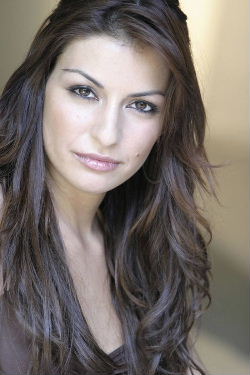
Aneeta: Carolena, I’m delighted that you contacted me to request an interview. Added to that is this opportunity for me to interview Tadeh as well. Thank you.
Carolena: Thank you for the opportunity to share our work with you and the readers of your wonderful website!
Tadeh: And I’m equally delighted. Thank you for providing such a wonderful opportunity.
Aneeta: Please tell me a little about your lives thus far – where were you born, where did you grow up, where do you live now and what do you do for a living?
Carolena: I was born in Iran, although I’m Armenian. I moved to Los Angeles at a young age and it’s where I consider home. Most of my family speaks Russian as well as Armenian and Iranian. During the 1915 Armenian Genocide, my ancestors moved from Armenia to Russia, where my grandmother was born and grew up before moving to Iran. I come from a family of athletes; I myself was in my high school’s swim team. My great uncle was a Boxing Champion in Iran, my mother was in the Olympics in 1964 representing Iran in Shot-put and Discus. She still holds the record in Iran. Recently I heard an interesting story about my grandmother Arsha Lucia (in Armenian her name means- light at the break of dawn). She went to the same high school as the King of Iran’s daughter. At that time Persia was a monarchy. Lucia, my grandmother, won first place in the school’s Track race. The king’s daughter, being angry at coming in second, insulted Lucia calling her a bad Armenian. Lucia in retaliation pushed her to the floor, hit her or something to that affect. Of course she was called in by the head of the school but luckily she didn’t get into too much trouble for it. So, many years later, when the king’s son succeeded the throne, he personally presented Lucia with a medal of honour for her parenting accomplishments and thus honouring my mother Juliet, an Olympian and the travel liaison to the royal family. Even though I grew up without my grandmother around, I feel close to her. We’re both Leo’s and I have the same beauty mark as she did, on the left side of my face – the same kind Marilyn Monroe always wore.
Aneeta: How fascinating! What happened next?
Carolena: During the Iranian Revolution in the early eighties, we were forced to move out of Iran. Travelling is one of my favourite hobbies. I’ve been lucky to have lived in Greece as well for a few years. I travel as much as I can. I just love seeing different places, hearing different languages, ways of life and living, it’s fascinating. In 2000 I travelled to Iran since I didn’t remember much and of course I went to Armenia. I’ve been to France, Switzerland, Italy, Spain, the UK, and India. India was a spiritual journey; I backpacked through Mumbai, Goa, Agra (for the Taj Mahal), Calcutta and Varanasi. So many countries still I want to see. Yes, I wear vagabond shoes. Even as a little kid, when I was 4 years old, I was at a shopping mall in London with my mother and grandmother. I walked off on my own, and got lost, for an hour or so I was lost and eventually got scared and was crying when the security found me, called over the speakers that there is a little boy who is lost. I was mistaken for a boy. But they gave me bubble gum and a balloon, so I was happy. Now I live in Los Angeles, I’m an actress, a producer and a licensed dental hygienist.
Aneeta: I read the material on your website, http://www.myspace.com/tadehdaschi, Tadeh. Still, I’d like you to know, what is your background?
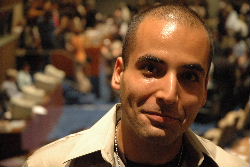
Tadeh: I’m of Armenian descent and was born in Tehran, Iran in 1980, amidst the start of the Iranian revolution. My parents had to flee the country when I was just three weeks old. Like many Persian/Armenians at the time, the closest escape was to Greece. There, we sought refuge until my grandfather, a prominent lawyer in Iran, was able to speed up the process of getting us the proper paperwork needed to travel to our next destination. At just six months old, I boarded a plane and took flight across the seas to reach our final destination… the United States of America.
Since then, I’ve been raised in California, in and around the Los Angeles area where I reside today. I’m now a filmmaker whose prime focus is on narrative films, commercials and music videos. A graduate of Art Center College of Design in Pasadena, California– I’ve gone on to direct several award winning projects which include producing and directing a Public Service Announcement (PSA) for the United Nations Millennium Development Goals campaign, currently in circulation at the gallery of the U.N.
In recent news, my film, ‘The Witch of Portobello’ was announced a winner in the “Experimental Witch” International Film Competition. I will tell you more about it later.
Aside from writing and directing, I often times produce, helm the camera as a cinematographer, edit and also compose the music for my films. In addition, I’m known to sometimes lend my talents in front of the camera as an actor.
Aneeta: Carolena, in your email, you told me that you’re an actress. Have you always wanted to be an actress? Why?
Carolena: I wanted to be many things; an author, a linguist, a pediatrician, an astronomer and physicist. But, I was attracted to acting like a bee is to a flower. There were times when I had to take a break and get away from it, but I never could stay away for too long. Now, I don’t think I’m going anywhere. There are many things I love about it. It’s a great outlet for my emotions and I feel a certain comfort being in predetermined circumstances. Though what fascinates me most is that it delves into the human condition. Let me not leave out the fact that I’m a Leo, actually a double Leo (sun and ascendant) and due to my occasional flamboyant character, I love being center stage. And since my ruling celestial body is the sun, quite occasionally I’m stricken with the delusion that the world revolves around me.
Aneeta: And you, Tadeh. Have you always wanted to be an actor?
Tadeh: No, not at all! It was a happy accident that stemmed from desperation. I started, or should I say, I attempted to make films at the age of 11. As a child, I used to read and write a lot. I’d read books that were considered too ‘advanced’ for my age. But they helped influence and fuel my desire to want to tell stories. It began with writing short stories that later developed into screenwriting after I’d picked up a book by script writing guru, Syd Field, titled ‘Screenplay’.
At 11… this was my bible. Combined with a handheld VHS camcorder that probably now belongs in the Smithsonian, proved to be my match made in heaven. I’d start typing out screenplays to short films and begin shooting immediately after the scripts were done. Unfortunately, I wasn’t blessed with having a handful of professional actors ready and willing to be in an 11 year old’s short film. So the other solution was to round up friends and family. I ended up casting myself in my films because of two factors… a) lack of actors… b) I thought to myself, since I’m writing and directing… who better than someone who already knows the story and characters inside out. Though, if I had a concept of professional casting at that age… the latter explanation would not exist. But so it began, throughout my teens, I’d star in my films and round up the troops for new film adventures.
Nowadays, I choose to focus my attention more from behind the camera. If I do step back in front of the lens, it’s usually for convenience factors or last minute desperation of not finding an actor right for the role.
Aneeta: It is stated on your website, http://www.carolenasabah.com/, that you acted in a film called ‘Don’t Gag Me.’ Would you care to tell me about this tale?
Carolena: Sure, I actually wrote and produced it as well. It all started the day I got fed up waiting for an entire year on another script I had co-written to find financing for. I decided to write a very short film and to just produce it. I wanted to come up with a clever idea, I spent almost two weeks trying to find an interesting story when one day at work, I was cleaning a man’s teeth who was not being very cooperative and the light bulb turned on. In a flash, right then and there, I wrote the entire story in my head. I wrote and polished the screenplay in a couple of days, was in pre-production for one month with a two day shoot, and a very long 9 month post.
I mixed the dental world with that of domination, and the fine line between pain and pleasure. Most people have a very strong fear and are quite nervous in a dental chair, yet others derive a pleasure although that’s not very common. ‘Don’t Gag Me’ is a 10 min. comedy that tells the story of a nervous patient’s fantasy at his dental appointment. He envisions the hygienist as a dominatrix as he tries to cope with his fear. The DVD is available on Amazon.
Aneeta: Let’s talk about your newest project which involves Paulo Coelho’s book, ‘The Witch of Portobello’. Tell me what happened, how you got involved in this and your success thus far. Let’s start with your view of the project, Carolena.
Carolena: I remember it was July 2007, my friend’s birthday. I went to the bookstore and bought ‘The Witch of Portobello’ for him and ‘Eleven Minutes’ for myself. That night as I was reading ‘Eleven Minutes’, I wondered if Paulo Coelho would be on Myspace. I took a look and to my surprise, and what a surprise I must say… he was. Through his blogs and Myspace, I read about ‘The Experimental Witch’ project an international film competition based on his book ‘The Witch of Portobello’. Around that time, Tadeh had released his music video which he shot for the band Visa, for whom I had also, around the same time, modelled for their ‘De Facto’ album cover. Visa’s music is on the soundtrack of our film. I was very impressed with the music video and was sure I wanted Tadeh to direct ‘The Witch of Portobello’ and so the rest is history…
I approached Tadeh around or in August 2007, and on August 24, 2008, on Paulo Coelho’s birthday, he announced the winners and as I’d like to say, of course we were one of the winners.
The project consisted of making a film of the book, ‘The Witch of Portobello’, each chapter made by a different filmmaker. Each chapter is the thoughts and views of the 14 different people who came into contact with Athena on her quest. The book journeys through her life as she searches for herself, for love and truth in religion and spirituality. The project is quite clever. In the final film, all of the characters will stay the same as Athena changes, the actor playing Athena changes. This adds to the idea that every person has a different opinion of her. I play Athena, and we chose the Nabil Alaihi narrator/chapter.
Athena, who later in life became known as The Witch of Portobello, is an orphan born in Transylvania. She was adopted by Lebanese parents, lived in Lebanonin the early part of her life then moved to England where she remained the rest of her life. Athena from a very young age was drawn to God, she was gifted in a way where she would sense things before they occurred or she could sense things about people. She was very religious and would go to church regularly until she became disappointed at the church for their discriminative and judgemental attributes. From that point on, she began her spiritual journey. She didn’t believe even for one second that God was confined to the church so she found other ways to connect to the soul of the world. One way was through dance, dancing. Shortly thereafter she was sent to Dubai through her work at the bank, and she took the advantage to meet with Nabil Alaihi, a Bedouin living in seclusion from society in the deserts of Dubai, to gain wisdom from and find the answers she was looking for. This is the chapter we shot.
Out of 6,000 submissions, there are 14 winners and these 14 films are now being edited into a feature film which is set for release around May of this year. Paulo Coelho had an interview on CNN’s ‘The Spirit of Storytelling’, about his works and the ‘Experimental Witch’ and clips from our film were featured along with the interview.
Aneeta: And you, Tadeh, what is your view of this project?
Tadeh: As Carolena said, in the summer of 2007 we teamed up for the ‘Experimental Witch’ project. I had just finished Directing/Producing the music video ‘Breakout the Violins’, for the band VISA from their album ‘Maktub’. The music video presents an indulgent feast for the eyes while depicting farce, romance, satire, comedy and rock & roll; filled with artistic, sexy, bizarre and outlandish visuals… the tongue (planted firmly) in the cheek. The music video has now gone on to win several awards which include ‘Best Music Video’ at the ARPA International Film Fest ’08 in Los Angeles and recently an Accolade ‘Award of Excellence’, an honour granted to only 15% of entries at the 2008 Accolade TV Awards in La Jolla, Ca.
Carolena and I had a mutual connection through this band. She was to be featured on the cover of the group’s follow up album titled ‘De Facto’. Surprisingly, VISA’s album, ‘Maktub’, is actually a direct reference to Paulo Coelho’s novel, ‘The Alchemist’. It was a word used in the book, which translates into ‘it is written’ or ‘destiny’.
Carolena had seen my music video for the band and felt compelled to approach me at one of VISA’s shows and convince me to team up for the ‘Experimental Witch’, believing I was the right filmmaker to accomplish such a task successfully. At the time, I was familiar with author Paulo Coelho and had read most of his work, but hadn’t yet discovered his latest novel ‘Witch of Portobello’.
Soon after, I picked up my copy of the book and finished it within two days. For the film competition we had to select a chapter that we wanted to film. We both concluded that the chapter titled ‘Nabil Alaihi’ was the best choice for what we wanted to accomplish cinematically.
Pre production lasted several months. Adapting the screenplay, for me, was the hardest part because the book is so internal. Each chapter has its own narrative and is told through a different character’s point of view, like a journal, and their connection to the book’s central character, Athena. Trying to find a way to express someone’s internal dialogue, thoughts and ideas into a visual format by creating scenes and scenarios was definitely a challenge. But that’s what makes it fun and allows the brain’s power of imagination to explore different ideas.
Carolena was set to star as the film’s central character, Athena. Finding the male lead to play Nabil Alaihi proved to be another great challenge. We auditioned many actors, met a lot of great talent… however, we could not seem to find the right person for the role. It’s one of those things that within the first 10 seconds, you can tell whether the actor is meant to play the part. I knew exactly what I wanted, finding it was the hard part.
Then, just one week before shooting was to begin, we got a call from an actor by the name of Bashar Da’as. He seemed hesitant and reserved, stating how he was certain the casting call had already come to a close but yet he felt it was worth a try to make an appointment to come down for an audition. Little did he know of our situation. We immediately had him come down for a read and within a few seconds I knew we’d found our actor. The decision between Carolena and I was unanimous and within an hour he received word that he’d been cast. We were all elated!
Soon after, towards the end of April 2008, principal photography began and lasted for 2 weeks into early May.
Our production crew consisted of six actors along with a production designer, a wardrobe designer and a production assistant. A lot of us wore multiple hats on the project. I directed, adapted the screenplay from the novel, did the cinematography, produced and then in post-production… did the editing and even composed the original music.
Carolena Sabah, who’s the star of the film, produced and executive produced the film as well.
As they say, a lot of our own blood, sweat and tears went into the film.
Also, like every production, we had our share of tribulations. Filming took place at the Imperial Dunes in Imperial Valley that doubled as our location for the Dubai Dessert. We faced temperatures which reached triple digits. No electricity… except for a small generator that would consistently fail on us during the times we needed it the most. Also, we faced winds up to 60-70 miles per hour that ended up blowing away and almost destroying an Arabian-like tent we had constructed for the film. But needles to say… I was part of a great team and we all pulled through to make the best of the situation as we possibly could.
‘The Witch of Portobello’ tells the story of the mysterious Athena (Carolena Sabah) and her quest for truth, love, and spirituality. In her single-minded pursuit for enlightenment and escapism, Athena sets out on a journey with her son in search of Nabil Alaihi (Bashar Da’as), through whom she hopes to find a more inclusive and harmonious understanding of her spiritual longing.
The setting of the chapter drew me in because the desert plays an additional character in the film. Its vastness and isolation much reflects Nabil’s solitude. Nabil is a Bedouin dessert dweller, living in isolation in the sandy dunes of the Dubai Dessert. He’s not only well versed, but in-tune with religious doctrines and rituals of different faiths (sort of like a Middle-Eastern/Bedouin Yoda). He leads a solitary life practicing Arabic calligraphy, cooking and providing shelter for the occasional passer-by and/or tourists.
I also connect with Athena’s quest for individual identity, trying to find her place in the world, an ideal to belong to. Part of why I admire Paulo Coelho’s work is that I view his material as modern day Aesop’s Fables for adults. He’s able to incorporate life’s lessons, philosophies and different ideals mixed with spirituality all in one neat package.
Post-production lasted a little over a month as I tried to piece the puzzle together in editing and composing some original music. The soundtrack to our film also features songs from the band VISA, a Los Angeles based group whose music has been described as an ‘eight-member, world music phenomena’. Front man K’noup makes a cameo in the film alongside Soseh Keshishyan, a prominent singer from the band ‘Element’, who also lends her vocal talents to the film’s score.
We submitted our film and patiently waited for the announcement of the winners that were to be revealed on author Coelho’s birthday, August 24th.
The date finally approached much sooner with all our anticipation and I found out on my own when checking Coelho’s blog to find the list of winners. It was 3 in the morning and I think my scream was heard through several neighboring cities when I saw my name listed next to our submitted chapter amongst the group of winners. I immediately called Carolena, waking her up for the good news. Our combined screams must have covered several more zip codes. Soon, even more screams of joy as I called all those involved, waking them up. Luckily I brought them good news and they had forgiven me for waking them from the confines of their dreamlike state.
It was truly a great feeling to succeed in what we’d set out to accomplish and have all of our hard work and efforts pay off.
I had written the script with the desire to make our selected chapter stand on its own, rather than a small piece in a much larger puzzle. We were able to obtain festival rights from Coelho’s team and are now in the process of showcasing our work at various festivals. In October ’08, we held our Los Angeles premier screening of our winning submission at the ARPA International Film Festival to a full house and a great response from the crowd. The goal for us now is to promote our film and reach out to fans by giving them something in return with our own interpretation of Paulo Coelho’s material.
The winning films will be included and released as part of a full-length feature film in 2009. Also, clips from our film were recently showcased on CNN’s ‘The Spirit of Storytelling’ which featured an interview with the author discussing his work and the ‘Experimental Witch’. We’ve submitted to various film festivals and should be expecting upcoming screenings, just to name a few, at the following events: Beverly Hills Film Fest, Los Angeles Film Fest, Atlanta Film Fest, Ann Arbor Film Fest, New York Film Fest, Seattle True Independent Film Fest.
Aneeta: How exciting. I wish you much luck. Clearly, with your background in writing, producing and acting, you have much experience in the art of storytelling. Which particular aspect of storytelling did you find hardest to master and how did you master it?
Carolena: Master? I’m only a slave to them… but the hardest? Well, producing comes very easy, it’s a lot of work, especially on a limited budget where one has to wear a lot of hats, but I’m good at it. Acting, there’s always more to strive for, to prepare for, to be truthful and believe in the moment of a characters life. I would say writing is probably the hardest, to write a good story, a good script, is not easy.
Tadeh: Storytelling has existed long before our humanity has had language to communicate. It’s an art form that allows us to visualize and see images through the use of imagination whether it’s through spoken word, written form, pictures, paintings, performance etc.
My passion is to tell stories and film is the media I use to export my imagination.
The hardest, for me, is the process that kick starts everything into motion and that’s starting with an idea and writing it down. Coming up with an idea is easy. Expanding on that idea into a well-developed premise and story can be a challenge. There are times when I can sit down and write a screenplay in less than a week and there are times that I’ll be caught staring at the computer screen for hours on end, hit with the spell of writer’s block.
Storytelling is very much dependant upon the storyteller’s reservoir of experiences and the vision through which he/she sees the story taking form and eventually being presented. On the other hand, storytelling can be formulaic. With enough practice, like everything else, it can be easily mastered. But what makes the difference is the visionary lenses through which the storyteller forms the story. It’s the vision of the storyteller that brings uniqueness to the finished product.
Aneeta: This website, as you know, caters for storytellers. What advice would you give to people who would like to venture into storytelling?
Carolena: Well, I don’t feel like I’m in a position to give advice. I think every person must experience on her or his own. I’d say if you have a story to tell, tell it, Welcome!
Tadeh: A story should have substance and the storyteller should have the vision to match the content of the story. You can argue in the same fashion as ‘the chicken or the egg’ paradox… either the ‘story’ comes first then the ‘vision’ of how to present it – or you have a ‘vision’ and then, within it, you try to find the story. That’s where I believe imagination should be a prerequisite for a good storyteller.
As a filmmaker, I believe that an effective director is first and foremost a good storyteller. Art Center College of Design gave me the freedom to discover my personal style and my own unique approach to storytelling. I have a strong passion in my heart towards filmmaking. My first love and main objective in life is to make movies. Everything else is secondary.
I don’t know the exact time when the idea of becoming a director entered my mind but one thing I am sure is, that when I am involved in directing, I feel whole. As if all the tiny pieces of the puzzle in my life fit together. Filmmaking is a transportation business. It takes you from one level of consciousness to another level… hopefully higher. It is not an occupation for the easily daunted. To me it’s been worth the struggles so far, because there’s nothing else I’d rather be doing.
Filmmaking is not a vocation for me, but rather an evocation of my visions and imagination fuelled by the stories that I try to tell.
Aneeta: Carolena, this is all I have to ask. Is there anything else you’d like to add?
Carolena: Yes, I’m anticipating the release of the final film ‘The Witch of Portobello’ and would like everyone’s support in spreading the word and keeping an eye out for ‘The Witch of Portobello’ coming in May 2009.
Aneeta: You certainly have mine. Tadeh?
Tadeh: Yes, I actually would love to mention the greatest influence in my life, whom I have to thank for being where I am today… and that person is my mother. I am a great admirer of her strength, courage and independence. She is also my greatest supporter in a profession that others might disbar as a tough road to success. Then again, what’s success if it doesn’t require hard work along the way? Since my parents’ divorce at age 6 and not having seen my father since, my mother took on a large task playing both roles of mother and father. She was maintaining a full time job along with a full time son. She was capable of doing both flawlessly. If I am to say from whom I have learned something about the nature of creative work, about its depth and everlastingness, it is my mother.
As an only child I grew up nurturing a vivid imagination. At a very young age I skipped the clichéd future plans of wanting to be a doctor, a policeman or anything else of that sort. I knew that my passion was for wanting to tell stories. At an early age, my mother had asked me ‘what would you like to be when you grow up?’ My answer has never dithered: ‘Film director.’ When I knew that this was what I wanted to do, she never resented my future plans. Instead she highly supported my decision and pushed me to follow my dreams. It was always a constant reminder that anything could be achieved as long as you put your mind to it.
Like many mothers, mine never hesitated to try and provide the best for me. I foster a deep friendship with her. She has offered me guidance as a part of helping structure the path for my future. She has demonstrated the acceptance of my choices in wanting to be a filmmaker by respecting, validating, and being tolerant towards my decisions. She has also given me the freedom to be authentic, the freedom to risk, explore and do what is spontaneous and necessary for me to achieve.
Aneeta: Thank you both, very much.
Carolena: Thank you Aneeta!
Tadeh: Thank you for providing such a wonderful opportunity and a creative forum for storytellers to share their stories. It is immensely appreciated.
This piece may NOT be freely reprinted. Please contact editor @ howtotellagreatstory.com for reprint rights.
Click here to return to the index of interviews on 'Blow Your Own Trumpet!'
 Introduction: When I sent out the last newsletter, I asked my subscribers to write to me if they would like be interviewed. Christina was one person who wrote to me and I'm very pleased she did. Her story is inspiring for any storyteller. Without further ado, I have great pleasure in introducing you to Dr. Christina J. John ...
Aneeta: Christina, thank you for writing to me first.
Christina: Oh, thank you for interviewing me. I was just so pleased to find your website.
Aneeta: Christina, you know, having trained and practised as a lawyer, I am always interested in others who have a career in law and choose to write as well. So, please, do tell me a little about yourself. Where were you born and where did you grow up? What do you do for a living and where do you live now? What’s your family like?
Christina: Well, I’m actually not an attorney, I’m a criminologist. I spent most of my adult life either teaching or working in the field of Criminology. One of the reasons why Criminology is such an exciting field is that it is multi-disciplinary. There are a great many types of work going on in the field.
I worked primarily on issues of Corrections and of State Crime. I taught law courses on Supreme Court decisions regarding prisoners’ rights, and wrote three books about state crime. In my first book, I examined the legal systems of the Aztec Indians in sixteenth century Mexico and that of the Spanish who conquered Mexico. I connected the legal system of these two very different societies with the economic system that each imposed on Mexico. This involved a great deal of research and travel in Mexico. It was a life changing experience travelling around Mexico for a year. Everybody should do it.
In my second book, I examined the way in which the state used the “War on Drugs” to expand state power. In this book I discussed the failures of the war on drugs to accomplish its stated goal of eliminating drug use and trafficking. I then wrote about the successes of the war on drugs in allowing the state to expand its power over individuals.
The third book was about the media and the invasion of Panama. I can sum up that book with one story. It took less than an hour for the corporate media in this country to change from calling the event the “invasion of Panama” to calling it “Operation Just Cause” a name that was a piece of blatant propaganda. The lack of questioning of the invasion helped set the ground work for later invasions like that of Iraq.
Aneeta: One aspect of your education fascinates me. For many Asia, going abroad of any form of education is quite the norm. I have hardly seen this in the West, however. On your website, http://www.cjjohns.com, it is stated that you completed your Ph.D. Criminology in Edinburgh. As you seem to be from North America, why did you go so far away?
Christina: At the time, I was working for the Department of Corrections in Michigan as a statistician and researcher while at the same time doing the course work for my doctorate. After three years, it became apparent to me that the last thing government really wanted was accurate evaluation and research on its projects. I just couldn’t see spending the rest of my working career beating my head up against a wall trying to do research for a system that didn’t want it unless it agreed with what it planned to do.
I had friends in the field who said, leave the country, go somewhere else where you’ll get a different perspective. One of the options suggested to me was to go to the Faculty of Law at the University of Edinburgh in Scotland. Again, it was a life changing experience. I cannot recommend travel, especially for writers, too highly.
Not only was the Department of Criminology at the University of Edinburgh entirely different from anything I had ever been in contact with before, it just so happened that Edinburgh has an enormous Theatre and Arts festival every year that fills the city. There is the Edinburgh Festival with the ballet and large-scale performances. But there is also what’s called “The Fringe.” Literally every closet in Edinburgh is a venue for some kind of theatre performance. Small theatre companies from all over the world come to the Edinburgh Festival Fringe every year. I was astounded. I had never been exposed to that much theatre at one time in my life. And, it was new, experimental theatre, not just the same old ten plays done over and over again. I looked around and said: This is what I want to do.
So, after the Festival was over, I found the Edinburgh Playwrights’ Workshops, a group of people who came together and did rehearsed readings of plays that local writers were working on. I wrote a play, had it read, and then went on to have other plays read and produced and finally had my own theatre company. I worked in Edinburgh for years, doing plays and performances. I was hooked.
As the economy got tighter in Scotland and England, it became harder and harder to get Arts Council grants, and I started to have health problems. So finally, my doctor said that I had to choose between my health and the theatre. So I came back to the States and went back into Criminology.
Wow, that was a long answer.
Aneeta: I know, from your email, that you’re interested in all aspects of writing. Please tell me why and when did you start writing?
Christina: I started writing when I was a child. My first work of fiction was about a riddit, commonly known as a rabbit. After that I kept writing, but really only for myself. I didn’t start writing seriously until I moved to Edinburgh and started working with the Playwrights’ workshop.
Aneeta: What about the grant you have from the Georgia Council for the Arts. Please tell me about this. What do you do?
Christina: The Playwrights’ Workshops were the brain child of a Scottish Poet named George Byatt. Now dead, George was a fierce activist for writers. He believed in the integrity of the writers’ vision and opposed the notion that a director could come in and alter and cut the writers’ work. George set up the Playwrights’ Workshops as a place where writers, actors and those interested in the theatre could come together in a non-threatening environment and showcase and work on their writing. The writers worked directly with the actors and a coordinator, who was more of a facilitator than a director. There were no sets and no props, just actors reading. The rest was left up to the imagination of the audience. It was the first time I realized that a good actor can do with your work. It is just extraordinary to watch a good actor work. They can bring things to your writing you never even imagined yourself. That’s another life changing experience.
The Workshops were free and audiences paid only a minimal fee. This made the readings open to all sorts of people, all classes of people, not just to an elite “arts” crowd. Part of the philosophy of the Workshops was that art was for the people, and not the preserve of a certain class. Another part of the philosophy was that art could be transformative and bring about social change.
In the Woodbine Writers’ Workshops, we have maintained that philosophy and opened the workshops to writers of fiction, poems, essays, all forms of writing. And, we are very definitely doing community building, reaching out to all segments of the population and encouraging them to come and write and perform.
Aneeta: Christina, sometimes I ask people I interview to share stories they’ve written. Would you like to share one here?
Christina: Yes, I can. My story is called, ‘Lottie’s Babies’.
Mattie Mae Hollis was a part of our family for over fifty years. During those years, Mama and Mattie Mae helped each other a great many times. I, of course, remember only the most dramatic occasions and most particularly I remember the time Pickering Head had those two dead babies at Sneadlin’s funeral home.
Mattie Mae was the one who phoned mama for help that crisp Autumn day, but the help wasn’t really for her this time. It was for Lottie, Mattie Mae’s best friend.
Mattie Mae was phoning from Mr. George Reed’s gas station about a block from Sneadlin’s Funeral Home. To my consternation, mama hadn’t seen fit to pass on the information that Lottie’s house had burned down that past weekend, and that her twin babies were killed in the fire.
This was the kind of thing mama never told me. She always thought I had a morbid turn of mind, and I suppose she saw herself as not feeding what she and my grandmother deemed my unhealthy and definitely unladylike obsession with all things secret.
Of course, the minute I heard the words “dead” and “babies” and then “funeral home” in the same few sentences, my ears cranked around like those of a cat hearing footsteps in the leaves.
Now, there are a lot of peculiar things about this story. One of them is that Lottie’s two babies were even taken to Sneadlin’s Funeral Home. You see, Sneadlin’s was a white funeral home, and if there was any life function in the 1950s south that was more segregated than religion, it was death.
The only thing I can figure out is that the babies had somehow wound up there because it was an accident, a fire, and somebody got put through to the wrong funeral home. But even so, it seems like somebody would have realized the mistake and phoned a black mortician. It doesn’t make sense.
Mama’s was never any help with this issue. She refused to talk about the incident and when I pressed her, she denied it even happened. “Lydia, this is just something you’ve made up. You were a strange child.”
She always did this to me. It took me over fifty years to work out that mama, Frances Sarah Ward McPherson had a lot of secrets. She didn’t like talking about the past and whenever anything “uncomfortable” came up, her way of dealing with it was to just deny it ever happened.
But, I remember as clearly as I remember the color of theCatawba riverthat Lottie’s two precious babies were left in the cold waxy hands of Pickering Head.
The problem Mattie Mae was phoning about on that crisp autumn day was that Pickering wouldn’t let Lottie look at the bodies. I stood just inside the white swinging door to the breakfast room, my ear pressed to the crack, listened to Mama talk.
Seems, Pickering said he’d already closed the coffins; that the bodies were too badly burned and that Lottie didn’t need to see them. Pickering, of course, being white, thought he knew better than Lottie what she needed. He also probably thought that once this poor black woman was told with some authority by a white man that she didn’t need to see her own dead children, she would go away and let it be.
But Pickering Head didn’t figure on the combination of Mama and Mattie Mae Hollis.
Lottie was broken hearted when she found out she couldn’t see her babies. She walked all the way home to grieve and wait for the funeral, but Mattie Mae was at her house to hear the story.
Now, Mattie Mae Hollis didn’t have much to say on a day-to-day basis, but she was about as determined, when she got her mind set about something, as anybody I’ve ever seen, except my mama.
Mattie Mae and Lottie walked the five miles back to Sneadlin’s Funeral Home and knocked on the screen door to the side porch. They wouldn’t have even thought about knocking on the front door. Pickering Head, the director of the funeral home, opened the glass door to the porch and walked out.
“What ya’ll want?” He asked as he reached the screen door.
“We wants to see the chillin.'” Mattie Mae told him.
Pickering Head opened the door with his left hand and pointed to Lottie with his right. “I already tol’ Lottie, those children are beyond recognizing. Now she’s got no business bothering us and upsetting herself more than she’s already upset by pawing all over them. I got better things to do.”
“She their Mama.” Mattie Mae said, standing firm on her two enormous flat feet.
“Now, ya’ll go on away from here before I call the law.”Pickering said. “I already explained it to you. Now, git.”
Mattie Mae told mama later that he said “Git” like he was talking to a couple of dogs.
Mattie Mae Hollis stood on the side steps of Sneadlin’s Funeral Home, staring at Pickering Head. She did not move one inch.
“When you gon’ send the babies to the church?” She asked.
Pickering gave an exasperated sigh. “Mattie Mae, I’m gonna send the babies to the church when I get the money for doing ‘em and not before.”
Pickering Head closed the screen door to the porch and when he went inside the house, he locked the glass door behind him. He left Mattie Mae and Lottie standing on the steps. Lottie was crying.
Mattie Mae put her arm around Lottie.
“You stay right here.” She said. “I be back. Me and Miss Sarah Ward straighten this out.” Mattie Mae strode across the street towards Reed’s gas station. “Me and Miss Sarah Ward gon’ jerk a knot in Mr. Pickering Head’s tail.” She muttered to herself.
When the phone call from Mattie Mae came, I could see my mama reddening in outrage. “Why that’s ridiculous.” She said. “Absolutely ridiculous. He has no choice but to let Lottie see them if she wants to.”
Mama cast a worried glance in my direction, then said into he telephone. “There’s nobody here Mattie Mae, to stay with Lydia.”
“I’ll go Mama.” I said, perhaps a bit too eagerly under the circumstances. “I don’t mind.”
She shook her head. “I don’t want you at a funeral home. I don’t even like Funeral homes and this thing might be ugly business.”
My eyes widened. Ugly business was just my cup of tea at that age. “Please Mama.” I begged.
“Oh alright.” Mama said exasperated by my eagerness.
“I’m comin’ Mattie Mae. Ya’ll just wait right there.” She put the telephone down.
“Come on Lydia, if you’re coming.” She called.
I raced to find my tennis shoes and then get to the back door so Mama wouldn’t have to wait.
Mama stood there, tying a scarf around her head, looking down at me. “You are the strangest child.” She said, but she was always saying that. I didn’t take it personally. I couldn’t even tell you how many times Mama or my grandmother, Danny mom, said that to me from the time I was about four to the time I left home at 19. Granddaddy Will was the only member of the family who said it with that crooked smile of his, like it was a compliment. But then, Granddaddy Will died with a bullet in his brain which calls his judgement into some question.
By the time Mama drove up to Sneadlin’s Funeral Home in our car, I was sitting forward in the seat with my face almost in the window. I was craning my neck to see what was happening.
“Lydia, sit back in the seat. You could at least try to act like a lady in public instead of a gaping monkey.”
Lottie and Mattie Mae were standing on the wooden steps outside the screened porch of the enormous old house that used to belong to one of the Cobbs before it was turned into a funeral home.
“You stay in the car.” My mama ordered as she got her pocketbook and gloves and started to get out.
“Mama.” I whined. “Let me go with you.”
Mama stopped moving. She raised her eyebrows and her eyes became big as saucers. I knew that look. It could have frozen me in hell. What it meant was stop whatever you are doing instantly. In this case, it was whining. “Stay.” She said.
I knew there was no point in arguing. So, I watched Mama walk across the front lawn, her light navy blue coat trailing behind her, her beige gloves clutched in her tiny hand, to talk with Mattie Mae and poor Lottie, who was still crying.
They were obviously not paying a bit of attention to me, so I rolled down the window to see if I could hear. But, all I could hear was the exchange of women’s voices. Mama’s little frame got straighter and straighter, Mattie Mae and Lottie were gesturing with their hands and every few minutes, Lottie would cover her face with both hands and drag them down her cheeks, sobbing.
All of a sudden, Mama turned and walked up the steps to the door of the screened in porch. She rapped so hard on the door with her little fist, I could see the wood frame moving from across the street.
She waited like a little soldier ready for battle. Nothing. She rapped again. Then, I started to see what Daddy called “the Irish” rising in her. Mama was about to lose her temper.
“Pickering Head.” She shouted out, right there in the front yard of Sneadlin’s Funeral Home. “You come out here. I know you’re in there. You answer the door this minute.”
The glass door to the house opened and out came Pickering Head even more ashen and unctuous than usual.
“Why Miss Sarah Ward.” He said, feigning surprise. “I didn’t know you were out here. You could have just come right on in the front door. It’s always open.”
“The point is not where I could have come in, Pickering. The point is where they could have come in.” Mama’s left arm flew out, pointing behind her at Mattie Mae and Lottie, without taking her eyes off the pitiable Pickering Head. Mattie Mae and Lottie both stood up straighter.
“And the point is that you have to let this woman see her children. And the point is that you don’t slam the door in a woman’s face and tell her to “git” like she was a dog. And the last point, Pickering, is that I’ve known you for a long time, a very long time. I knew you when you still had cotton lint in your hair and were sneaking up behind young women in the mill and pinching their fannies. You have never had and never deserved the least little bit of power or authority or respect. And so you’re just the sort of man to lord your imaginary authority over two women who you think can’t do anything to you. You are not going to call the law on these women. I am going to call the law on you if you don’t open those coffins and let Lottie see her children right this minute while I’m standing here.”
All the time mama had been delivering this breath-taking soliloquy, Pickering Head had been bending and bowing and holding his hands up in front of him and putting the fingertips of both hands on his cheeks in an attempt to somehow appease mama.
Oh, Mama knew Pickering Head, but Pickering Head sure didn’t know my mamma. If he had, he would’a known that after what he had done, trying to appease mama would have been just about like trying to appease Hitler.
Pickering Head grew paler and paler as he realized he was dead meat. He moved backward and held the screened door while Mattie Mae and Lottie and then Mama filed inside. They all went into the house, and the glass door closed behind them.
I couldn’t believe all this was going on and I was sitting in the car.
I sat there trying to weigh the trouble I would be in for disobeying Mama against the chance that she would be so distracted when she came out, she wouldn’t even notice if I weren’t in the car.
Mama, Lottie and Mattie Mae stayed inside Sneadlin’s for what seemed like hours. I slumped down in the seat, keeping my eyeballs just high enough to see out the window. The sun was getting hotter and hotter, and what had been an autumn day, was fast turning into summer. I lifted my thighs off the seat, trying to keep them from sticking to the upholstery.
I knew Mama wasn’t ever going to tell me what was happening inside.
I let my hand stray over onto the door handle and then pushed it down. The sound it made seemed very loud. I wasn’t really going to get out, just open the door for some air. I scanned the front of the funeral home for activity. None. I scanned the street in front of the car and then turned around and scanned the area towards Reed’s fillin’ station. Nobody.
I twisted in the seat and pushed open the door, putting my two tennis shoed feet on the asphalt. Just getting some air. Then, I darted across the enormous lawn and into the azaleas next to the house.
The windows of the old Cobb house were that wavy, old timey glass. Fortunately for my purposes, the windows on the front porch went from floor to ceiling and the ceilings were at least 16 or 18 feet high. I jumped sideways onto the staircase and ran across the porch, flattening myself against the house. God help me if Mama came out the front door.
I peered into one of the windows, trying to do so without being seen. But, it didn’t matter. There was nobody there. Turning, I ran toward the end of the porch and jumped off again into the azaleas. It was then that I saw the back of the old Cobb house, where they had evidently built an addition. It went straight back from the old house, a long low monstrosity of a structure built with cinder blocks and aluminum windows.
I could hear voices now, women’s voices, my mother’s voice. And I could hear crying, wailing like I’d never heard before, even at a funeral. I turned and headed for the car as fast as my crooked polio legs would carry me. I almost dove into the window of the car I was so afraid, but was able to jerk it open and sit down when I suddenly heard the front door of Sneadlin’s slam with a force that might well have shattered all the panes.
I sat up straight to see mama storming down the stairs and across the lawn. I had never seen her look quite so furious. Mattie Mae and Lottie were trailing behind her, looking very much like they had seen a ghost. Lottie was wailing as she walked and Mattie Mae was staring straight in front of her with an expression that to this day I would not even try to describe.
Then, I saw the front door of the house open and an ashen Pickering Head emerge cautiously onto the porch. He held his arms out with his palms open and shrugged his shoulders. “Miss Sarah Ward,” he called. “I’m sure we can work this out. It’s just a mistake. Somebody in the back just made a little mistake.”
Mama stopped dead in her tracks. Her hand was holding her gloves so tightly I could see her knuckles whiten. She stood there for a minute and then she turned around. She marched back up the walk way, circling around Mattie Mae and Lottie. She climbed up the stairs and Pickering Head walked toward her in relief. When she reached him, though, the hand with the gloves in it reared back and she slapped Pickering Head. My Mama, slapped Pickering Head’s pasty face for him right out in public, on the street, in front of Snedlin’s Funeral Home. I couldn’t have been more shocked if she had taken all her clothes off and set her hair on fire.
While Pickering Head stood there with his hand on his cheed, Mama bent down and delicately picked up her beige gloves. Finished, she turned and descended the steps.
When Mama and Mattie Mae and Lottie and I got to our house, I was banished (under protest) to the yard while telephone calls were made and voices were raised and Lottie wailed. Finally, I was allowed to ride along while mama took everybody home. Nobody said a word and I knew that my continued existence on the earth depended on my keeping my own mouth shut.
Mama took Lottie home first and then Mattie Mae. When Mattie Mae got out of the car, mama held up her hand before I could even open my mouth.
“Not one question Lydia, not one. I know you don’t believe this, but there are some things you don’t need to know about.”
I didn’t believe it and I sunk back into the seat in frustration and disappointment. What on earth could there be that you didn’t need to know about. Weren’t she and Daddy always telling me to learn. “Look it up in the dictionary, go look in the encyclopedia.” Wasn’t that the constant refrain of our house. Now, there were things I didn’t need to know about.
Of course, to be fair, my mother knew if she told me, I’d tell everybody else in the known universe that would listen and in a small town like Wilkes’ Ferry, even if people commit murder, you still had to live with them and get along. In a town like Wilkes Ferry, you couldn’t afford to have too many enemies and Mama had just slapped a grown man in the street.
When I couldn’t find something out any other way, there was always spying, and the best time to spy was at night, after everybody else had gone to bed, everybody except me. I would wait, pretending I was asleep, until all the lights were out and Daddy went around locking the doors. Then there was a time when Mama and Daddy talked to each other. That was the time I waited for, the time I had to stay awake for if I wanted to learn anything important.
What I heard was that when Mama and Mattie Mae and Lottie had gone into the funeral home, Pickering Head had tried his best to talk them out of having him open the coffins, but Mama and Mattie Mae had insisted. Mama even had to threaten to phone the sheriff.
Faced with three determined women and the threat of the sheriff, Pickering relented. When he took them to the back, though, he didn’t have to open two coffins, only one. Both babies were together in the first little white coffin, laying on top of each other, like they’d been thrown in by a garbage collector.
The real kicker, though, was that they hadn’t even been embalmed. Pickering Head (even though he denied it) was going to charge Lottie, Lottie, a fortune on time for the burial of two embalmed babies in two coffins, when in fact, he had done nothing to the bodies except throw them in together.
‘I’ve never seen anything quite so heartbreaking in my whole life as those two babies all crumpled in together in each other’s arms.” Mama said to Daddy, in their bedroom while I leaned with my back up against their bedroom door. Mama was crying, something she never, ever did.
“And Lee, I’ll never forget that smell if I live to be 100. Poor Lottie, poor, poor Lottie.”
I stayed up a long time that night, imagining the two babies together in that coffin, playing back in my mind the scene when Mama slapped Pickering Head. Wondering what on earth Lottie must be feeling, and knowing in my heart of hearts that nothing, absolutely nothing would happen to Pickering Head or Sneadlin’s Funeral Home. Pickering Head was probably asleep.
I wondered, for the first time in my life if it had bothered Mattie Mae to have to phone Mama to get Pickering Head’s face slapped. She did things for Mama all the time, favors. They were friends, but somehow this was different. Mattie Mae was a big woman. He had hands that could wrench a chicken’s head off without hardly noticing it. I watched her do it one time. She could have probably pinched Pickering’s head off. Mama could scare the living hell out of me and even Daddy, but she wasn’t even five feet tall with her heels on.
I knew Mama wasn’t going to talk about it, and I knew what Daddy would say if I asked him: “That’s just the way things are Liddy.” Grandaddy Will would have explained it to me, but I would have to had find him and sit him down for long enough when he wasn’t drunk. Not an easy task.
I sat and stared out my bedroom window. Everybody in Wilkes Ferry, Georgia, all 500 souls, seemed to be peacefully asleep. Everybody except me and Lottie. Poor Lottie.
Aneeta: This is all I have to ask. Is there anything you’d like to add?
Christina: After years of working exclusively in Criminology, I found myself in Tallahassee, Florida teaching. The local affiliate of NPR was the affiliate who broadcast the Bailey White stories for NPR. They had a program where between the national news, they would have writers read their essays and stories. I started writing stories again when I began to participate in that program. From that, I started doing public performances of my stories. I also had a radio and television program called Law, Power and Justice where I interviewed local people about law and justice issues.
That schedule and the stress of working in a university brought back the health problems, specifically Fibromyalgia. After a few years, I became unable to work.
My husband and I were then hired to set up an island off the coast of Georgia as a retreat for writers and artists and special needs children and adults. We worked for over a year to bring that about when we were fired because of an article I had written years ago. One of the wealthiest families in the country had their attorney fire us because they disagreed with the politics of an article I had written before I ever heard of the island. We were devastated.
We had sold our house on the Chattahoochee River, most of our furniture, all my books, really almost everything we owned because we were going to live in a small cottage on an island. Having never provided us with an adequate place to live, or promised health insurance, they fired us after having run through our entire entitlement to COBRA insurance. They left us, at the age of 55, with no place to life, no health insurance and no job, in the most abusive and threatening way possible.
We were in love with the dream of providing writers and artists and women with breast cancer and special needs children with a nurturing and healing retreat, and being fired just broke our hearts. I had never invested so much of myself in a project before. It has taken us a year to even begin to put our lives back together here in Woodbine.
But, we are working with a group (The Woodbine Theatre Group) to restore the old theatre here so that we will have a performance space and a place to meet and hold meetings. We are trying to turn Woodbine into a Writers and Artists’ colony and start some of the programs we had dreamed of starting on the island. In short, we are struggling to start our lives over again. A real life changing experience.
I am just finishing a book of linked short stories about a small southern town called Wilkes Ferry, Georgia and the people who live and lived in the town. It will be published this year. This book contains the many of the stories I use when I perform as a storyteller. Since my health has improved over the past year, I plan to start travelling with my storytelling one-woman show called “Stories from Wilkes Ferry.” The story I am sending “Lottie’s Babies” is one of those stories.
Anyone interested in the project in Woodbine can contact me at
Aneeta: Christina, that is, indeed, a very inspiring story. I wish you much luck and success.
Christina: Oh, thank you so very much for having me and for all your good work.
This piece may NOT be freely reprinted. Please contact editor @ howtotellagreatstory.com for reprint rights. Click here to return to the index of interviews on 'Blow Your Own Trumpet!'
 Introduction: I met May Lee some time ago and since then, I've been periodically asking her if she'd like to be interviewed. The answer, finally, was yes. Not only is she an editor in MPH, she has now become a published writer. Her story is interesting and without further ado, I have great pleasure in introducing you to Tan May Lee...
I met May Lee some time ago and since then, I've been periodically asking her if she'd like to be interviewed. The answer, finally, was yes. Not only is she an editor in MPH, she has now become a published writer. Her story is interesting and without further ado, I have great pleasure in introducing you to Tan May Lee...
Aneeta: May Lee, thank you for finally agreeing to this interview.
May Lee: Swapping chairs feels odd. I prefer doing the brain-picking and photography. You probably saw me during the reading event at Seksan’s, where I hid behind my camera when they called out my name and also a “writer.”
Aneeta: Let’s start, as usual, with something about you. Where were you born, where did you grow up, what do you do for a living and where do you live now?
May Lee: From my current office, I was born 5 km away, went to school about 6 km away and never lived further than 12 km away. Figuring that I ‘needed to get out more’, I fled to United Kingdom to study English. Living with cybergoths and camping outside Leeds University’s School of English at 6 a.m. to join a creative-writing module were one of the more enlightening experiences.
After my degree, I was based in South Korea for over a year to get addicted to kimchi and sesame leaves. During this time I also taught English as a Second Language and (my friend owned the language institute, hence this was completely acceptable) explored a bit of the Far East - sometimes alone and sometimes with a friend who wanted to see as much of the world as he could before he went blind. I left Korea for the U.K. again to witness his 25th eye surgery and see him complete his final year at university. There was a lot of eye goo, but happily, he graduated. I then came back.
Aneeta: From what little I know of you, I know that you’re now an editor at MPH. Have you always worked in the publishing industry? What does your work involve?
May Lee: This is my first ‘proper job’—my mum cut the job ad out and bought me corporate clone clothes. I sit in a cubicle. I also have a keycard that checks my in-outs. There might be recordings of keystrokes and mouse clicks but I’m not sure. But hey, it’s all new and exciting!
I mainly edit a book magazine called Quill. The best part of the job is meeting new, down-to-earth and interesting literary and professional writers, discovering and promoting great book titles, and writing and developing articles I care about. What a joy it is to get an email from a writer with brilliant stories they want to share! Often, I get to work quite independently and this suits my reclusive nature nicely. I take pictures of people and other kinds of things with a DSLR camera too.
As for books, I sift through some manuscripts occasionally. Eric Forbes and Janet Tay usually get the juicy manuscripts, like O Thiam Chin’s short-story collection, Never Been Better, and John Ho’s collection of horror comics, Scary Ever After. I tend to proofread more, which means I also get to escape some diabolical manuscripts.
Aneeta: For the benefit of my readers, can you please explain what Quill magazine is all about?
May Lee: It’s about books, authors and the reading life. This year, we’re sponsoring the Ubud Writers and Readers Festival as well as the Singapore Writers Festival. We have features on internationally-acclaimed authors. Literary heavyweights include Hari Kunzru, Mohammed Hanif, Kate Grenville, Vikas Swarup, John Boyne, John Ajvide Lindqvist, Miguel Syjuco. These are the exclusive issues I hope people will pick up and read.
These are discernibly different from the regular quarterly issues of Quill. Get them!
Aneeta: I know that you’ve got one story in the recent collection of short stories published by MPH Group Publishing, Urban Odysseys, KL Stories. Tell me, please, what is this collection all about?
May Lee: Urban Odysseys: KL Stories captures the images and lives in this capital city. There are layers and sides to KL, that one could never know and recognise them all. It’s great for someone who wants to get to know the city outside Wikipedia and blogs, and great for city dwellers who might have overlooked some aspects!
Even though I was due for secondment to MPH Group Publishing, the senior editors kept the submissions out of sight and told me to get in line like everyone else to submit my story. You can’t get any more professional than that! But I am pleased that my work went into the filter along with the other writers’.
I do wish I’d written something better and more substantial, though. After borrowing short-story collections off my boss’s bookshelf, like Tim Winton’s The Turning, Nam Le’s The Boat, and Clare Wigfall’s The Loudest Sound and Nothing, I wanted to delete all the Word Documents in my laptop.
My story, ‘From the Roof’, has a rather introspective chindian granddaughter and a sentimental Chinese grandmother who climbed up an airwell. My grandparents all died young, but my maternal grandmother left behind a home with an airwell that’s fascinating, especially when you watch raindrops spilling into the house. Most old terrace houses have sealed up their airwells, so you don’t see them nowadays.
Aneeta: As you know, this website caters for storytellers. What advice would you give those who would like to venture into storytelling?
May Lee: If you want to go pro, understand that the writing industry is just like every other bitching industry.
(1) Read deeply, not just widely. Study the structure of successful stories and find out why they flow so well.
(2) Compare your work with better writers and ask yourself honestly if your story sits comfortably in between such works.
(3) Be open to constructive criticism—it’s not failure, it’s just feedback.
Sol Stein’s Stein on Writing is a fantastic guide on how to write.
Aneeta: In your email to me, you said that you’d like to talk about a new project that MPH Group Publishing is taking on. Go ahead, do tell.
May Lee: It’s a collection of travel stories, tentatively entitled Sini Sana: Travels in Malaysia. It’s inspired by travel-story collections from Traveler's Tales and Conde Nest. Malaysians aren’t able to submit stories to some international collections though.
The deadline is 31 January 2010. We’ve already received a few interesting entries. Please send something if you can!
Aneeta: May Lee, this is all I have to ask. Is there anything you’d like to add?
May Lee: I’ve stopped wearing black eye shadow.
Aneeta: May Lee, thank you.
May Lee: All the best with your website!
This piece may NOT be freely reprinted. Please contact editor @ howtotellagreatstory.com for reprint rights.
Click here to return to the index of interviews on 'Blow Your Own Trumpet!'
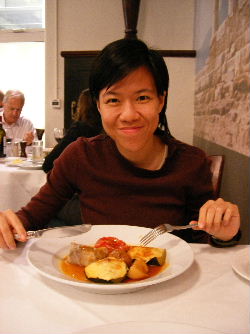 Introduction: When Tan May Lee asked me if I would be willing to interview Adeline Loh, I had just finished reading an interview published in the local newspaper about Adeline. I was more than happy to do this interview and I'm glad I made the effort. I'm sure you'll agree with me that Adeline is very funny as you read her story. Without further ado, I have great pleasure in introducing you to Adeline Loh ...
Aneeta: Adeline, thank you for agreeing to this interview.
Adeline: Thank you for your interest in my book, Aneeta. I’m delighted to participate in this interview.
Aneeta: Let’s start with something about you. Where were you born, where did you grow up, what do you do for a living and where do you live now?
Adeline: I was born and bred in Kuala Lumpur. I was the former magazine editor of etc, Juice, The Professional and Architecture Malaysia. Currently I’m doing some freelance writing with some sporadic travelling in between. I’m now in Kuala Lumpur until my next radical endeavour takes off.
Aneeta: I understand from an interview you gave that before that wonderful adventure (which we will come to in a while) you had, you found your job mundane. What did you do that had become so mundane?
Adeline: Like I mentioned above, I was a full-time magazine editor. I can almost hear people ask, “But how can that be mundane?” Well, if you strip away the perks and perceived glamour of the job, what you are basically left with is no different from any other: endless maddening deadlines, ridiculously long hours and no personal time. After coming home at 11pm almost every night, I started to realize how absurd my life had become. I was experiencing burnout and knew I had to do something radical fast. So I quit my job without hesitation and ran away to Zambia.
Aneeta: When I read that interview, the sentence which stands out is this: The worst thing is the fear and doubt that creeps in after you’re all packed and ready to go. My question, therefore, is this: how did you deal with the fear?
Adeline: Distract yourself with happy thoughts. There really is no way to get rid of the fear. But then again, I haven’t read too many self-help books.
Aneeta: O.K.. Let’s talk about the big adventure. Tell me all about it, please.

Adeline: The big adventure! Yes, so after I ceremoniously resigned from my respectable job, I dragged my paranoid vegetarian companion Chan along with me to lion-infested Zambia in southern Africa. I picked Zambia because it seemed like a totally alien environment to be in. Perfect for a quasi-gruelling, character-building adventure, I thought.
Upon arrival in Zambia, I soon realized that nothing from the Animal Planet documentaries had prepared us for survival in the savannah. With hippos and buffaloes conspiring to kill us, we rattled along crater-pocked tracks, canoed through crocodile-filled Zambezi River, flew over panties-soaking Victoria Falls, stalked incestuous rhinos and peed amid deflowering shrubbery.
Aneeta: I understand that you’ve got this wonderful book out, Peeing in the Bush. And, it's published by MPH. Well, do describe it for me, please.
Adeline: Peeing in the Bush is a funny, offbeat and engaging account of my big Zambian adventure. I think readers will find it quite refreshing to read a travel narrative that is written from a uniquely Asian perspective, as opposed to the barrage of books out there by Western writers.
Aneeta: Did you have any problems writing/publishing this story. If so, how did you overcome it?
Adeline: Most of the problems I encountered had to do with myself. I was a deadline-oriented person in publishing. I thrived on set deadlines to finish a good piece of writing. With a book, there was nobody to set deadlines for me. I could work on the book forever if I wanted. And so I became an extreme perfectionist because I was never happy with what I wrote. Every time I read it, I would want to make it better and better, until rewriting became a never-ending task. It wasn’t until two and a half years had passed that I finally put a stop to myself and sent the manuscript out to publishers to see if they liked it. From then on, it was smooth sailing. I had no problems getting it published as the first publisher I sent it to accepted it!
Aneeta: As you know, this website caters for storytellers. What advice would you give those who would like to venture into storytelling?
Adeline: Get out, smell the fresh air and find inspiration from things around you. You can’t tell a good story if you don’t live life. Don’t expect to become a good writer just by reading 10,000 books a month.
Aneeta: Adeline, this is all I have to ask. Is there anything you’d like to add?
Adeline: Yes, I strongly prescribe Peeing in the Bush for those who are lonely and depressed because they will laugh their heads off and forget all their problems. It provides quicker relief than calling the Befrienders. The book is also a fantastic reference for those who have always longed to travel to an exotic destination.
Aneeta: Adeline, thank you.
Adeline: Thank you for the interview, Aneeta.
This piece may NOT be freely reprinted. Please contact editor @ howtotellagreatstory.com for reprint rights.
Click here to return to the index of interviews on 'Blow Your Own Trumpet!'
 Introduction: I received an email about a week ago from Bob inviting me to participate in his project. I hopped over to his website and found such a wealth of information that I just had to ask Bob if he'd agree to be interviewed. He did. Without further ado, I have great pleasure in introducing you to Bob Grant ...
Thank you for the invitation for this interview – something about me includes the fact that I am 63 - been married for 41 years - been a school teacher, in the Army duringViet Nam, a corporate flunky, and a small business owner. I am not a writer by profession or any other criteria so I am not in a position to provide advice for writers - in fact, I was a Physical Education major in college who went to school to major in football. However, I have grown to enjoy reading very much and I have tremendous respect for the written word and for people who can intelligently put their thoughts into written form.
The name of this Online Magazine - http://www.SpeakWithoutInterruption .com - came to me while watching the Pundits, and other TV personalities, continually talk over one another to a point whereby I could not understand any of the conversation or exchange of ideas. Originally, I sent out invitations to Pundits - and associated parties - inviting them to finish their conversations on our new blog. Unfortunately, and not surprisingly, I received no replies. I then thought - if it were not for writers - these Pundits, and personalities, probably would not have much to say? Therefore, I began a campaign to invite writers to participate in our blog. At this writing I am humbled by the fact that so many talented individuals have decided to become contributors to our blog - some contribute daily, some contribute occasionally, and some have yet to submit a post.
My immediate goal for this Online Magazine is to increase the number of quality writers who want to participate. I hope this Online Magazine becomes a place where quality writers – from around the world - can both share their thoughts with their fellow writers and also with those who will be visiting our site to read what has been written and posted. I recently had a request, from a prospective new contributor fromMexico, to post his articles in Spanish. I welcomed this idea enthusiastically – and depending on how this is received – would entertain postings in other languages from other parts of the world.
This is different from anything I have ever done but I enjoy it very much. I have enjoyed seeing it grow, over the last few months, and am amazed by the number of talented - and quality - writers who have taken a chance on a complete stranger. I believe – in just the three months that we have been operational – that we have filled a niche that has not been approached before to any degree. Hopefully, our site will continue to grow and expand in both its contributors and its viewers.
I would be remiss if I did not tell you that I have visited your wonderful country. In a previous business – I brought a customer to Malaysia to look for possible sources for products they wanted to purchase. We stayed in Kuala Lumpur close to the Twin Towers. We then went out – during the day – to various factories within a day’s drive of Kuala Lumpur. I found your country – and city – to be a very pleasant place to visit. I still remember the lush countryside and was amazed by the rubber plantations with the rubber trees all in very systematic rows.
Again, thank you for this opportunity - we can also be followed on Twitter http://twitter.com/SpeakWithout
This piece may NOT be freely reprinted. Please contact editor @ howtotellagreatstory.com for reprint rights.
Click here to return to the index of interviews on 'Blow Your Own Trumpet!'
 Introduction Tan May Lee recommended I contact Frediriko and ask him if he'd like to be interviewed. When I looked at his website, I was keen to know his story and I contacted him. He agreed to the interview and without further ado, have great pleasure in introducing you to Frederiko Aguilar ...
Aneeta: Thank you, Frederiko, for agreeing to this interview.
Frederiko: Thank you, Aneeta. Isn’t the internet great? We can communicate with one another while we are separated with half the world between us.
Aneeta: Let’s start with something about you: where were you born and where did you grow up? What was your youth like? Where do you live now and what do you do for a living?
Frederiko: I was born in Los Angeles, California, USA. When I was six years old, my father and mother bought their first house in a suburb of Los Angeles. Norwalk, California was a community for growing families. I was part of a phenomenon called “The Baby Boomers”. We are children of post war parents. After WW II and the Korean War, a majority of the surviving generation created families and thus began a new era of house building, modern house appliances, and great automobiles. The first friends I met in Norwalk are still my close friends today. That was 55 years ago. I began grammar school in a parochial school. St John of God Catholic School was filled with new friends of all cultures. We didn’t know what being a bigot was or just plain prejudice. We were children who played together which included all sporting events in school, or in some cases, had to physically use our fist to make a point. But it was never over race. To this day, our class of 1962 will get together for a small party reunion. I now live in Las Vegas, Nevada. It’s considered the entertainment capital of the world. It’s my lifestyle. Many “Baby Boomer” entertainers of the old Las Vegas days (1960’s and ’70’s) are still performing. Thanks to this town and environment I was able to come up with a novel. As an actor, I’ve always written small scripts for cable TV or did theatre. But this is my first novel and I am working on the sequel.
Aneeta: On your website, http://www.thedeserthasnoking.com, it is stated that you once produced and starred in your own comedy show. What was this all about?
Frederiko: When cable TV started taking off in America, it was a regulation that the cable company had to provide public programming for the city they broadcasted from. They provided broadcasting classes. I graduated as a producer. That was a great opportunity to expose my writing, directing, and acting talent for television. I also cast other hidden talented people from the community. There is a lot of talent out there. I wrote comedy, so we had comedy skits in the studio and on location in the city of Norwalk. But my special was writing parodies on movies and old television shows. My show was the first comedy show for local cable.
Aneeta: I understand that you’ve written a novel, The Desert Has No King. Can you tell me what this novel is about.
Frederiko: This is a story of a young man growing up in the suburbs of East Los Angeles, California. A story of what all young gamblers dream of and few will experience— and perhaps, survive. Frankie Santos started learning the games of poker and horse racing at the age of 10 years. He gambled for money playing marbles and pitching pennies. At 12 he shared his new devotion with his fellow classmates by getting them involved in poker games on the school grounds. In high school, he continued to live in the environment of trying to make a fast dollar by betting racehorses. As a young man in his 20's, he enters into a journey of big money, greed, drugs, and becoming the target of the Mexican Mafia. He is on the run and while in hiding, he discovers another hard fast paced journey. By nature, he is a compassionate man and a protector of good decent people that may be in harm’s way… especially family. From the age of innocence to manhood and the commencement of rise to power, Frankie Santos did not know what was in his destiny.
Aneeta: What, would you say is the most challenging part about writing a novel?
Frederiko: That you are able to tell the world a story and have their attention. You are free to say whatever you want. You are controlling the life of the characters. And yet, some escape from the trail you have them on. At the end of a paragraph, you sit back and say, “What happened?” You surprise yourself that your character is going on another journey, but still related to your original story.
Aneeta: I see that you attended the London Book Fair in 2007. Why did you go and what was this experience like? What did you learn from this Book Fair?
Frederiko: It was the most fantastic experience. I was in the greatest atmosphere of my peers. I went to my first book convention. I wanted to meet and network with people from all over the publishing world. I met many Authors and Literary Agents from different countries. I went to many seminars that gave the best information about publishing. I made a new friend who was from another country. She was also new to the business. Now we’re book friends forever. The education was priceless, and in the future, I will attend more book fairs around the world.
Aneeta: There is also a sequel to your novel, I understand. Would you care to explain what this sequel is all about?
Frederiko: ‘The Scorpio Vengeance’ is the sequel to ‘The Desert has no King’. The circa is late 1970’s. There is a lot of story to tell in the genre I chose. The first book gives you the characters journey and the story of organized crime who wanted him dead. In the sequel he must find the people who tried to kill him and his family. You will learn the inside of a casino operation. The Mafia World seems to create a lot of interest, especially when it has to deal with Las Vegas, Nevada. Don’t forget the body rush of ‘Gambling’.
Aneeta: As you know, this website caters for storytellers. What advice would you give to those people who would like to venture into storytelling?
Frederiko: We all have a book in us whether it’s fiction or non-fiction. The first thing you have to do is set a schedule to write, even if it’s for one hour. The first line is the hardest.
Remember, we all have told a story to someone or a group. By nature, you exaggerated the tale. It’s the same thing. Pretend you’re telling a story to a group, but put it on paper. Just remember, is there a reason someone would be interested in your story besides you?
Aneeta: Frederiko, this is all I have to ask. Is there anything you’d like to add?
Frederiko: Yes... I am blessed that I was able to complete something I’ve always had a passion for. I’ve had an adventurous life with family and friends. The novel is my gift to our family’s future children. If anyone really has a desire to write, then write.
Aneeta: Thank you, Frederiko.
Frederiko: Thank you, Aneeta. I hope your journey will continue to be happy and adventurous. Hey... Write a book.
This piece may NOT be freely reprinted. Please contact editor @ howtotellagreatstory.com for reprint rights.
Click here to return to the index of interviews on 'Blow Your Own Trumpet!'
 Introduction
Frank wrote to me soon after the last newsletter was published. He asked to be interviewed and I agreed. I hope that, like me, you'll find his story interesting. Without further ado, have great pleasure in introducing you to Frank Landrey ...
Aneeta: Frank, thank you for writing to me last week.
Frank: First...Aneeta..Let me give you a Big AWAGA Thank You...for this interview time today. It is always a privilege to speak to a person who understands the business of writing books and telling of stories. These are stories which must be told either as non-fiction or as fiction so that the brushfires in our minds can run wild. My two books are written to entertain and inform.
Aneeta: Let’s start with some information about you. Where were you born? Where did you grow up? What do you do for a living? And where do you live now?
Frank: I was born in Vincennes, Indiana...which is located in Knox County. Good Samaritan Hospital was my first home so to speak. It was not an easy entrance for me. Breech Birth means that your bottom/rump comes out first then feet and finally the head. It hurts...At least my mother always told me that having me put a big hurting on her. I’ve had a bad back all my life. Vincennes became my home for the next 41 years.
Vincennes is the home town of Red Skelton. It was the first city in Indiana and a lot more history too. I played five sports at LincolnHigh School. My wife and I have a 6’ tomb stone up there waiting for us.
What do you do for a living? At the moment I am an author promoting my new fictional book. The title of it is Sheeple Secrets. But my life has been one of many occupations: First, by working for others I learned about humility and never being paid enough for what I was worth. Next, I became a business owner. That was when I learned that nobody earned their pay but me. I’ve closed three enterprises in my life and started or should I say jump started one that was eventually a success... I=2 0 then spent $25,000 to find out how best to sell my one good business. However, I’ve also been the head golf coach for 12 years at a university. I’m also a speaker.
My wife and our four daughters relocated to the Lynchburg, Virginia area in 1981. We moved there to follow our oldest daughter when she entered Liberty University as a freshman.
Aneeta: I understand, from your website www.coachlandrey.com, that you’ve already had a book published before: True Tales of College Golf. That is, I must say, a very interesting title. Please tell me all about this book.
Frank: Thank YOU... I lost a lot of sleep over that title. My wife liked Meet Me at the Chain. That title became my book’s subtitle. The book’s front cover shows a school logo golf bag sitting next to a chain that hangs across a small road. It leads back to a set of dorms where players lived.
True Tales of College Golf is a non-fiction story about a hot head coach and his unruly players. They eventually get on the same page and reach an athletic dream of an NCAA post season trip. Insightful human stories are revealed about my life and that of my players, divine intervention. Doctor Jerry Falwell is exposed as a real-life-person who has an agenda for his college coaches. While the story unfolds, the reader will be in the pep sessions, golf lessons and life lessons experienced along the way. Eventually, we all have a wonderful trip together. MeetMeAtTheChain.com.
Aneeta: On the Amazon.com site dedicated to this book, it is stated that your motto is this: Sock It To Them Always With A Godly Attitude. Please explain what this means to my readers.
Frank: During our push for a Division 1 - Mid Atlantic Region pick to enter the East Regional, one of my freshmen took to heart my comment about our need to put it to St. Johns the next day. Our guys did that very thing beating them by over 25 strokes in that day’s round. While entering the Club House, he yelled hey coach We Really Stuck it to St. Johns today! Their coach was standing nearby, turned around red faced, and expressed verbally his displeasure of the comment.
Soon, the words “Sock It To Them With A Godly Attitude” came to my mind and it was later shortened to SITTAWAGA. This way we could start a charge during a round without offending anyone. Actually, I decided to put AWAGA1 on my licence plate to remind me of an obligation. “Always With A Godly Attitude” The “1” means “Job 1” Some days I do better than others.
Aneeta: What was the most memorable part of the experience of getting your book published?
Frank: I would have to say that the Self Publishing Experience was by far the most memorable. That was another $25,000 lesson for me. From a Seminar for Authors in Pennsylvania, to a publisher in Lynchburg, to building a web site for the book, to a $2,500.00 program on how to sell truck loads through Email Blasts, I spent the money hands over fists. We published and sold 3,000 books but lost some money in the process. However, it has been worth every penny to me.
Aneeta: I understand you have another book which is due for publication: Sheeple Secrets. Please explain what this is about and when is it going to be on sale.
Frank: Sheeple Secrets is a fictional book that takes readers into the world of Money Moguls. Frank Lindy meets Fred Creasy in a Boise, Idaho Public Park through unusual circumstances. Their unlikely conversation turns Frank onto a world of high finance that wants to take America into a One World Socialist Government. America is about to be taken over by Money Changers. Fred decides to tell Frank all he knows about Sheeple, how he knows, and when he knew it. Unsuspecting turns and twists occur during the book’s four hour conversation. Before the reader finishes the book, they not only know what a Sheeple is and the Secrets that need revealed.
Fred shares what an insider knows about what Money Moguls know. Fred also has answers about how to stop the plans and plot against America’s Sheeple. Moguls Talk exposes lingo of pawns, conspiratorial politicians. Sheeple Secrets will be ready to publish by October 10th. I am looking for a publisher.
Aneeta: As you know, this website caters for storytellers. What advice would you have for those who would like to venture into storytelling?
Frank: You can always tell your own story through others like I’ve done in Sheeple Secrets. However, in my first book, True Tales of College Golf, I’ve told others' stories along with mine.
Nevertheless, in each book whether non-fiction or fiction, telling your stories brings you closure.
Our lives are unique and each life has a story to tell. Everyone gains by reading your stories. However, it is my belief that when we write we must implement AWAGA to help others most.
Aneeta: Frank, this is all I have to ask you. Is there anything you’d like to add?
Frank: I’ve always told my daughters, “If you don’t know what you want your children to believe, your children will believe what someone else wants them to know.” My books reflect this motto. I have a story to tell that has a predetermined ending. Sure, some parts surprise me. As for today, I sincerely hope that your listeners have learned something that I wanted them to know. My books do this too. My prayer is that it all helps someone.
Aneeta: Frank, thank you.
Frank: Again, Aneeta....Thank YOU! It is my privilege to speak today on a subject that makes our lives worth living...Telling Our Stories for Others to Hear/Read and Benefit From...
This piece may NOT be freely reprinted. Please contact editor @ howtotellagreatstory.com for reprint rights.
Click here to return to the index of interviews on 'Blow Your Own Trumpet!'
Page 15 of 22