
Transform ordinary stories into extraordinary ones with our proven 7-step method. Join thousands of storytellers on their journey to mastery.

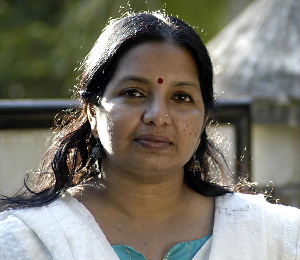 Introduction I was looking at Suneetha's 'Wall' on Facebook and found it quite interesting reading. I asked her if she'd like to be interviewed and she agreed. Without further ado, I have great pleasure in introducing to you, Suneetha Balakrishnan ...
Aneeta: Suneetha, thank you for agreeing to this interview. Suneetha: The pleasure is indeed mine, Aneeta. Aneeta: Let’s start with something about you. Please tell me a little about your history – where were you born, where did you grow up, what do you do for a living and where do you live now? Suneetha: I was born and grew up in Trivandrum, a coastal town at the southern tip of India. This is my hometown and where I live right now. I write for a living and ‘write’ involves various facets of writing including training/teaching. I am a freelance journalist who usually writes for the web and occasionally for the print media. I translate into two languages and train people in Creative Writing and Communication Skills too. I prepare modules for training courses as well. I work generally from home, except for the training assignments. Let me tell you how it all came about. I had always been interested in writing and reading right from childhood. I was one of those kids who would always have her nose buried in a book, day and night. Later, I found that I had a way with words; the writer in me grew and in college I started writing poetry in Malayalam my native tongue. I guess I was a fairly successful campus writer who took part and won competitions. But that does NOT make a writer. I waited to take up languages in my graduation but again middle-class compulsions snatched away that dream. I had to opt for Physics as my major and graduated in that. A job followed and then marriage and family. 21 years passed in the midst of all this routine. I continued reading but didn’t write. I guess the last poem I wrote was the one to my fiancé, when we got engaged to be married. When the forties set in, I had the classic itches of a creative person trapped in mediocrity. I started to feel like a square peg in a round hole and became totally frustrated with work and life. There was no way I could continue in status quo, and fortunately I had become aware of the content jobs which my writing skills were very suited to. In 2006 September, I took the plunge and stormed out of the corporate cabin to join the world of words which had been beckoning me for some time. Aneeta: Your facebook page states this: I am a journalist/writer/bilingual translator and trainer rolled into one. Suneetha: Aneeta, I agree that it is a lot of work, but it is a lot of fun too. As I got out of a regular steady job, I needed to not just write as in write but write as work too. The content writer jobs were the first ones that kept me afloat. Soon I graduated to writing journalistic features, since non-fiction was a strong point with me. I was on the panel of Chillibreeze, a content writing firm, which gave me exposure to all sorts of writing including travel, preparing academic modules and even ghost writing fiction. I was also working for a US company MOKA, which created sms content out of spiritual books, and we worked online on a salary. I also started coordinating writing projects for Chillibreeze. All these were learning experiences. The variety of jobs I did took all the boredom out of my life. Then I took to translating because I am a bilingual writer and that too clicked. My fiction started appearing on the web, so it was generally enterprise, enthusiasm and hard work that made me take up all these roles. The Creative Writing Trainer thing happened accidentally and now I enjoy it so much that I have taken training under the British Council for this. I hope to do more of that in future. Aneeta: I think I’m right in guessing that your interest is in both fiction and non-fiction. If so, please describe three books that you enjoy reading and why? Suneetha: Yes, I read and write both genres. Maybe I have a slight tilt towards fiction. My favourite writers are Daphne du Maurier and Jane Austen and they will remain my favourites. But the choice book-wise would be Rebecca, Pride and Prejudice and To Kill a Mocking Bird. Jane Austen’s writing prowess always takes me by surprise even when I re-read her for the umpteenth time. In fact Pride and Prejudice is a permanent resident beneath my pillow. To think that she was a person who had barely any exposure to the bad, bad, world but ended up writing on such worldly subjects is something beyond my comprehension. Daphne du Maurier amazes me by her economy of prose and her musical quality of words. Her imagery is astounding and really takes you places. Rebecca’s ambience is unforgettable and haunts you through the read. To think that the book was written almost a century ago! To Kill a Mocking Bird is the most sensitive book I have ever read. The ‘tactile brilliance’ is unique and the book is so utterly visual, so visual it makes me jealous. I hope I can write something someday that comes near it. Aneeta: Clearly, as you write, I imagine that you have been exposed to a multitude of topics. What is the most interesting topic you’ve ever had the chance to work on and why? Suneetha: I love writing on cyber issues. I observe web stuff very closely and write on it whenever I can because these are things that the people who aren’t web-savvy ignore in real life but should definitely know. I once wrote on www.thehoot.org on how a craigslist ad on a US website took Indian journos on a ride. I had almost been a part of the ‘sting operation’ by the employees of the website to prove their point against outsourcing, but opted out due to lack of time. It got me a lot of readers. Aneeta: I imagine that storytelling plays a big role in your work. Suneetha: Yes, story telling is a part of the Indian tradition. I use that a lot on my writing whether fiction or non-fiction. Aneeta: As you know, this website caters for storytellers. What advice would you give those who would like to venture into storytelling? Suneetha: : I don’t really think I am big enough to give advice but I would like to share one view. Writing cannot happen without reading, and reading means what was written and loved before us. I would go on reading, books from the past and current, whatever appeals to you, not what is mentioned as should-reads. Aneeta: Suneetha, this is all I have to ask. Is there anything you’d like to add? Suneetha: Nothing, I think, except that I hope you will read my book when it comes out and write to me with your comments. Aneeta: I certainly will, Suneetha. Thank you. Suneetha: Thank you Aneeta, it’s been lovely talking to you.
This piece may NOT be freely reprinted. Please contact editor @ howtotellagreatstory.com for reprint rights. Click here to return to the index of interviews on 'Blow Your Own Trumpet!'
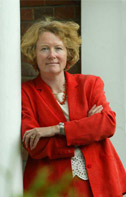 Introduction: Bill Keeth a columnist on this website, was telling me about his dealings with Alison. I looked at her website and was impressed with what she had to say. I contacted her and asked if she would like to be interviewed. She agreed and, therefore, without further ado, I have great pleasure in introducing to you, Alison Baverstock ...
Aneeta: Alison, welcome and thank you very much for agreeing to this interview.
Alison: It's a pleasure and an interesting thought that right now, from a conference on marketing in Coventry, I can be communicating with writers throughout the world.
Aneeta: Let me start by asking you to share something about your life – where were you born, where did you grow up, what do you do for a living and where do you live now?
Alison: I was born in Suffolk in the UK, close to the sea, which has always been an inspiration for me. My father was a career civil servant so we moved around a fair bit, and I went to university in Scotland (St Andrews, again by the sea). After university I worked in publishing, in educational and academic jobs before going freelance and working on all kinds of campaigns. I then used the lead up to the birth of my first child to write a book about how to market books - this had been my job within the industry and there was no manual to tell you what to do. So I wrote one, carried on writing about the industry and then information for writers. My first books were all tied into pregnancy, so after four children (and four books) my husband and I decided that we needed to find a new source of deadlines!
Aneeta: On your website (http://www.alisonbaverstock.com), it is stated that you are a ‘hugely experienced publisher, trainer and writer on all aspects of publishing, marketing and reading.’ Based on your experience, can you please comment on the concept of ‘self-publishing’? What is the foremost challenge an author today will face when wanting to self-publish?
Alison: Self-publishing is becoming respectable at last. There now exist the options and services that mean an author who wants swift access to a finished format (rather than waiting for external investors) can proceed. It does however require immense care - all the aspects of text management and production that are normally considered by the publisher become yours to think about. Probably the most important is the decision to recruit an effective editor. You really cannot edit your own work over book-length so ensure you get the services of someone motivated and qualified - and pay them! Done as a favour it may never get done at all - or done less well than you might have hoped. There is nothing more disappointing than opening up a new book and spotting a typographical error.
Aneeta: Your book, ‘How to Market Books’ has been described as ‘the bible of book marketing’. Can you please tell me a little more about this book?
Alison: This was my first book, now in its fourth version and translated into 15 other languages. I wrote it because as a new marketing person working for a publisher I was not sure what I was supposed to be doing - and I am so pleased that it continues to meet a need.
I then started writing for authors - firstly about how to market themselves and their work (Marketing Your Book: An Author's Guide), and then about what mental resources and experience help you on the path to publication (Is There a Book In You?). Having experienced both sides of the publishing fence, as publisher and author, I hope I can be objective about the process as a whole and offer good advice.
Aneeta: What skills can authors today develop to ensure that their books are an all-round success?
Alison: It's always awkward for an author to have to promote their own book so my best advice is to think of it as the work of someone else - and then consider how it might best meet its market. Make a list of websites, newsletters and key individuals who might be interested - and then send them copy that is relevant for each location. Journalists will always be more interested in featuring information that seems tailored to their publication. It's really helpful for a writer to have supportive and good-natured friends who help with this.
Aneeta: I understand that you’ve written a memoir as well. Can you please tell me a little more about this?
Alison: I have written about my adolescence - which still seems very fresh to me - and my relationship with my father, which I suddenly saw with more clarity when my eldest son left home for university. My father never went to college and always seemed to resent the ease with which my brother and I progressed there; never having had the opportunity himself. It made me feel a whole new empathy for him - even though he has been dead for over twenty years. I have not published it - it just helped me feel that at last I understood him.
Aneeta: I’m sure that there are elements of storytelling in your work. If so, which elements are most important to you and why?
Alison: I think all work needs a narrative, a sense of interest to keep the reader going. That is as true of financial reports in the Financial Times as romantic novels. If we don't want to know what happens next we stop reading.
Aneeta: As you know, this website caters for storytellers. What advice would you give those who would like to venture into storytelling?
Alison: Daydream as much as possible and think a story through in all its dimensions. The more real it feels to you, the more it is likely to convince your readers. If a reader starts to think 'he really would not do that/talk like that' the risk is that they give up completely on your work, and it's very hard to win back a reader who has decided they do not enjoy your writing.
Aneeta: Alison, this is all I have to ask. Is there anything you’d like to add?
Alison: Try to write for the pure pleasure of making it as good as you can be, and to separate this from the desire to get published. If you are trying to do the two things at the same time, it somehow impedes you producing your best work. Then once the writing is as good as you can make it, start trying to describe it to potential investors. Marketing your work is not a substitute for writing really well; work worth marketing has to be worth investing in.
Aneeta: Alison, thank you.
Alison: Many thanks to you. Your questions were interesting and really made me think. Good luck to your readers,
This piece may NOT be freely reprinted. Please contact editor @ howtotellagreatstory.com for reprint rights.
Click here to return to the index of interviews on 'Blow Your Own Trumpet!'
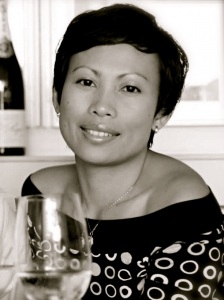 Introduction Brenda James, a columnist on this website, suggested I ask David and Jessica Nathan if they were interested in the interview. Though eager, I was wondering how their story (which is essentially a story about a catering business) would fit in here. Still, I persevered and I'm really pleased with the answers Jessica provided. Therefore, without further ado, I have great pleasure in introducing to you, Jessica Nathan ...
Aneeta: Jessica, thank you for agreeing to this interview.
Jessica: No, thank you for this opportunity Aneeta, I really appreciate it. And apologies for the delayed response.
Aneeta: Let’s start with a little about you. Please tell me, where were you born, where did you grow up, where do you live now and what do you do for a living?
Jessica: OK, I was born in Kuching, lived there most of my schooling life and then moved to Peninsular Malaysia after my SPM. I had initially intended to further my education to Korea as a taekwondo instructor (I had completed my black belt and was competing regularly then), however my family felt this was not a suitable career choice for a female member of the family. I left for Semenanjung shortly after that.
I started working in Holiday Villa Subang, which was my first foray into the world of hospitality, food & beverage.
I currently live in the Ampang area in KL with my husband David, our 5 year old son Jamie and our labarador-doberman cross Zoe.
I think I have been blessed to say that I get to do for a living the thing that I have grown as a brand and a company that is . I oversee the cuisine development at Aubergine and am also quite keen on exploring photography. I know its very amateur quality, but I still like to shoot as much of the images posted on our facebook or blog – if it isn’t we will always credit the photographer.
Aneeta: I know about your work from both my association with Brenda and also from your facebook entries. For my readers’ benefit, please tell me a little more about Aubergine Catering. What is its history and what’s special about it?
Jessica: It started back when both David and I were working in the hospitality and nightlife industry in KL. We were keen to start a family and wanted to take a little break from the strenuously long hours of the industry, so I moved out of the equation first, but still not quite knowing what it is I wanted to do. I am again blessed that my husband is very supportive of any venture that I may have had some draw towards, however his bottom line statement always remained, “be passionate about it and love it, the rest will follow”.
So without much experience and financial backing we started Aubergine back in 2001-2002. The early days were filled with so much uncertainty especially with manpower and resources for our events and it's remained a constant struggle for us throughout the years.
I guess what is special is special about Aubergine is that it is something we built from scratch and hope to grow the brand into one that is associated with premium quality cuisine and service without the hefty price tags. We have tried not to compromise in terms of quality and also in being able to innovate constantly with cuisine and on-going global, regional and local trends. Our custom-made approach to clients, each time, every time is not appreciated by all, as most Malaysians want immediate or instant gratification, same with proposals. We decided when we started that we will not have any set menus or courses to choose from, although this makes plenty of sense from a cost-control and inventory measure, we found it that if finance ruled Aubergine’s philosophy, then the creativity will be greatly stifled. We wanted to go with the custom-made approach to creating menus and experiences to our clients as we felt that this meant we get to know the client’s objectives and use that information to create the concept, as opposed to a concept that has been pre-designed and pre-budgeted for no one in particular, just a general concept.
Aneeta: Of all the events you’ve done, which three stand out and why?
Jessica: Oh wow, they are all special. But I guess if I had to choose 3, it would be a combination of nostalgia, beauty and memorable. I would say our absolute very first event, all those years back, still is fresh in my memory as we were so fresh and new and had simply no idea about portioning. The client was Standard Chartered – it was a staff appreciation gathering at a KTV lounge in Bangsar! The event itself went with relative smoothness, we had close friends who came as well-wishers for our 1st event and became part of the crew! We over budgeted the food quantity, not wanting to run out of food on the 1st event, we ended up eating the food for the rest of the week thanks to freezer and microwave technology. We weren’t the only ones eating, our friends who lived nearby came to eat and then da bao as well!
The other would be a wedding we did for one of our earliest clients who back then celebrated her 30th birthday and then came back to us after her caterer had pulled out last minute. We had minimal web presence for a while and tracking us seemed a bit tricky from what feedback we for from her. So it was a nice twist of fate that she supported us during the early days and we ended up doing her wedding in Tanarimba, Janda Baik. It was a beautiful ceremony followed by a cocktail reception with their family and closest friends some who had travelled great distances to be there.
 Lastly I would say was our recent Heineken Green Space event. When we heard of the concept we loved what they stood for and knew we had to get in on the action. So we proposed a global cuisine pairing with beer idea and Heineken accepted it and we implemented it on 19th June this year. The sweetener for the event was as it went as well as we could have anticipated or planned, we also had very close friends whom normally we would have wished been there, but this time they were in town by chance, so it was a bit surreal in a good way.
Aneeta: Clearly, there is a creative element in what you do. My question, though odd as it may seem, is this: is there any form of storytelling in how you prepare for a particular event.
Jessica: Well I suppose there is. We made a decision when we started that we will take a custom-made-approach-to-our-clients, each time, every time. which meant no fixed menus and even for a simple kid’s birthday party or a corporate luncheon. We took this stance as we wanted to have something extra to offer our prospective clients. We didn’t want to go down the discount path as it would mean we would potentially need to compromise on quality of the cuisine served, which is something we promised ourselves we will never do, regardless of the client’s budget. So we decided and ventured forward.
We were very fortunate in our early days as we had a few very special people who believed in us, even more than I’d say we believed in ourselves. They were encouraging and gave us jobs that we won’t have normally acquired given our relative inexperience in the field, at the time. So in that sense I find that we have been blessed with knowing great, positive, forward-thinking people.
Our story is about telling the client’s story, through cuisine. We take our time to put things together as we want, whenever possible, to find out more about the client’s needs and wants, try to balance it out and ensure that their guests are satisfied and maybe even a little impressed with the cuisine, although that is never our primary objective.
The custom-made approach has also proven to have its downsides, in terms of lead-time. clients who are in a rush, simply can’t get a menu out of us as quickly as we do spend time getting to know the client, understand their audience, how they behave and what makes them tick and turns them on. It’s a bit like courtship, its kind of tricky in the beginning but you are glad you invested the initial time spent together!
We would just like to be able to impart to all our clients that whatever we do, it will be made with love, over what makes sense. Love trumps practicality!
Aneeta: Jessica, this is all I have to ask. Is there anything you’d like to add?
Jessica: Well I guess I have said quite a bit, just to everyone to take a bit of time, relax a little and savour what’s around us, slow down that pace, just a bit, for a short little while and soak it all in!
Aneeta: Jessica, thank you.
Jessica: Aneeta, thank you very much for this opportunity.
This piece may NOT be freely reprinted. Please contact editor @ howtotellagreatstory.com for reprint rights.
Click here to return to the index of interviews on 'Blow Your Own Trumpet!'
 Introduction A few months ago, Lesley wrote to me to ask if I'd interview her. I hopped over to her website and had a look. I was intrigued and agreed to interview her. Therefore, without further ado, I have great pleasure in introducing to you, Lesley Witt ...
Aneeta: Lesley, thank you for writing to me and welcome to the site. Please tell me a little about yourself – where were you born, where did you grow up, what do you do for a living and where do you live now?
Lesley: Hi Aneeta, I was born in Bulawayo, Zimbabwe which is where I grew up and I now and have lived in Johannesburg for many years. I specialise in the neurosciences, Hypnotherapy, coaching and training and much of my training is based in storytelling.
Aneeta: I have read the material on your website, www.coachapproach.co.za. However, for the benefit of my subscribers, can you please explain the kind of work you do?
Lesley: I deal in my private practice with self-esteem issues, depression.eat/sleep disorders, phobias etc and in my corporate practice I am a Business Coach which enables people to get from their present position to their true potential. I also design and write workshops for teams and I do many storytelling workshops where Daniel, my son participates. Diagnosed with brain cancer at age1, Daniel was given 48 hours to live. He is now 26, tiny in stature, compassionate, very present and a joyful person. He does no read or write but sings in all our official languages like a little bird. People are touched by him and his singing and then I tell his story or rather act it out and I facilitate a workshop where people open up to their stories.
Aneeta: Over the years, I’ve come to know a little about NLP and self-help work. I would like to know, what makes your work special? How does what you do stand out from the many others practitioners out there?
Lesley: I started off with a low self esteem and through this work I have come to value myself. I believe that everything starts with how we talk to and treat ourselves even at CEO level.
My work caters to self first and I have devised along with the NLP, some amazing techniques.
Aneeta: In your email to me, you mentioned a book called ‘Meet Daniel’. Please describe this book for me.
Lesley: This book is written but not as yet published. It is Daniel’s amazing story of survival, his everyday stories and the book moves on to people and their stories.
Aneeta: Needless to say, your work must involve storytelling. What part of storytelling do you use most in your work and what advice would you give those who would like to venture into storytelling?
Lesley: Storytelling is such a powerful tool. Every one of us has a story. I love that what weaves the psyche of person, is so different as to what weaves the psyche of another. And yet with all our stories we are all human and require to love and be loved.
For anyone venturing into the storytelling arena – it is exciting but you need to become upskilled in order to deal with people and the emotions and thoughts.
Aneeta: Lesley, thank you.
This piece may NOT be freely reprinted. Please contact editor @ howtotellagreatstory.com for reprint rights.
Click here to return to the index of interviews on 'Blow Your Own Trumpet!'
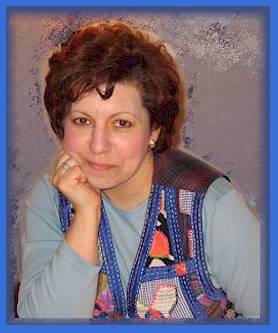 Introduction Some time ago, Carol purchased my eBook and, thereafter, contacted me. She told me a little about her work and directed me to her website. I had a look and was fascianted with her work. I hope that you, too, will be as interested in Carol's story as I am. Therefore, without further ado, I have great pleasure in introducing to you, Carol Zimny ...
Aneeta: Carol, thank you for sending me information about your work and also for agreeing to this interview.
Carol: It is my pleasure to be able to participate by ‘telling’ my own story. Thank you for this opportunity.
Aneeta: Let’s start with something about you. Tell me where you were born, where did you grow up, what you do for a living and where you live now.
Carol: I was born in Brooklyn, N.Y. I grew up in Brooklyn, Queens and Long Island. These were three very separate and distinct experiences that have made deep impressions on me. Brooklyn is a borough of NYC with bustling masses of various cultures, Queens is a more laid back part of NYC and Long Island is a backyard suburban place. Presently, I live on Long Island but hope some day to go back to the colorful culture of the City. In terms of what I do for a living, I have recently started to work with women’s groups, having them tell their own stories through words and collage, and of course I make collages.
Aneeta: From your website (http://www.carolzimnyartist.com), I note that you have something called ‘Life Story Art’. Please, do explain what this is all about.
Carol: I am a storytelling collage artist. ‘Life Story Art’ is a collage series depicting stories of the human condition that we all experience. It focuses on seeing people in their own environments, showing that humans have much in common – yet each of us is unique.
Each work is a custom made piece reflecting the life of a person by using details of that individual’s life - in essence creating a ‘personal portrait.’
Rich colors and numerous details pull viewers into the picture so they have a feeling of “visiting” for a while. I use candy colored combinations of fabric that evoke a sense of ‘flavor’. I also integrate optical effects that provide harmony or visual ‘pop’.
Aneeta: Again, from your website, I am intrigued by this statement: She inspired me to want to tell stories in my own way. For the benefit of my readers, please explain who the ‘she’ is in this comment and also what is your way of telling a story.
Carol: “She inspired me to tell stories in my own way” ‘She’ refers to my grandmother, Jeanette, She was a spellbinding raconteur, who since my early childhood, regularly came to dinner. Listeners would gather around the table, lean in and savor every word. Her verbal images were vivid and captivating. She was a great communicator who was able to connect with many people through her tales.
‘Telling stories in my own’ way means that I take the essence of a person – physical coloring, personal taste, pastimes, hobbies, etc. and I create a visual narrative. By packing a picture filled with details, it engages the viewer to spend some time drinking in the qualities of the subject. The viewer comes near and leans in, spending time to learn about the person who is illustrated. On my website www.carolzimnyartist.com the collages shown have accompanying narratives next to them for viewers to understand the symbolism in the collages. As the saying goes “A picture is worth a thousand words” which could imply that each picture is open to many different interpretations however, I included text so that these visual stories could be read with perfect understanding of what I mean. Pictures and words together create powerful specific messages.
Aneeta: I like the gallery that you’ve created. Can you choose 3 items from there and explain the significance of each one, please?
Carol: I am always interested in the human condition. What is universal to us all is fascinating to me and what I find especially compelling is that each of us is unique. We all have personal stories to tell. I focus on telling one person’s story at a time.
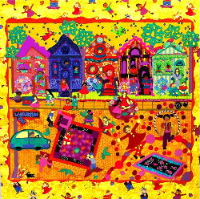 Collage #1: The collage ‘Queens Childhood’ is about my own childhood. How wonderful it was! Everyday was filled with friends and play. We played hopscotch, jump rope, and kickball all day long. There were scores of kids that lived on my street. We connected! It was not only the children but, the adults too that felt the camaraderie. We knew that we all belonged to a community. It would be nourishing and powerful for each of us as human beings to have the sense of belonging just as I did in my good old Queens neighborhood.
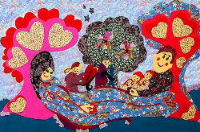 Collage#2: ‘Bella’s Heart,’ is about mother love. The pure and strong affect of a mother’s love can make a home and family a warm loving cocoon. Love and support is shown in the nurturing this woman does for her family. Each family figure is comprised of one or more hearts as are the trees that surround them. This shows that love begets more love and creates a place that is safe, warm and happy.
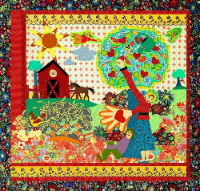 Collage#3: ‘The Giving Tree’ is about a special loving person. She is remarkable. She is a great support to friends and giving to strangers as well. She can be so giving because she nourishes herself with eating healthy food, meditation and spirituality. She is at home in nature but also draws great strength from the metaphysical. The significance of this piece is to show how extraordinarily giving a person that is balanced can be, because she is nourished in body, mind and spirit.
Aneeta: What elements of storytelling do you have to focus on the most in your work?
Carol: The three collage works that I have chosen to talk about are ‘Queens Childhood’, ‘Bella’s Heart’ and ‘The Giving Tree’. I chose them because they represent universal themes that are very much needed in all of our lives – a sense of community, having a nurturing family and connecting with friends and others in a giving way. These art pieces are all about being connected to others in a meaningful way. To me, I have come to realize that having a network of people we care about and that we are connected to is the key to a happy life.
Aneeta: Carol, this is all I have to ask. Is there anything you’d like to add?
Carol: Yes. I just wanted to say that my creative process grew originally from my training as a jeweler. I was trained as a jeweler at F.I.T. in N.Y.C. I enjoyed manipulating metal and working with my hands. I worked in the trade for 8 years. A jeweler must have a torch to solder metal. After I left the jewelry trade, I did not own a torch. I took some figure drawing classes and ended up using my hands and imagination to create colorful scenes. I was looking for inspiration for subject matter and that is how I settled upon depicting stories from various people’s lives. It is an endless source of inspiration.
My prints are available on my website www.carolzimnyartist.com or if you would like to reach me, email me at
Aneeta: Carol, thank you.
Carol: Aneeta, thank you for this opportunity.
This piece may NOT be freely reprinted. Please contact editor @ howtotellagreatstory.com for reprint rights.
Click here to return to the index of interviews on 'Blow Your Own Trumpet!'
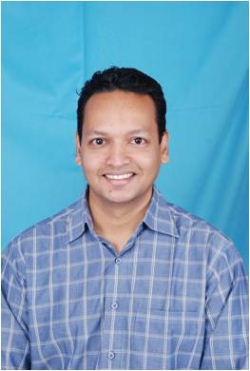 Introduction About a month or so ago, one of my columnists, Suneetha, suggested I contact Prashant to ask if he'd be interested in an interview. I hopped over to his website and, in very simple terms, he's extremely dynamic! To say more at this stage would be to give away too much. Therefore, without without further ado, I have great pleasure in introducing to you, Prashanat Karhade ...
Aneeta: Prashant, thank you for agreeing to this interview.
Prashant: And thank you so much for interviewing me.
Aneeta: Let’s start with a little about you. Please tell me about yourself, your family, your background and your education and interests?
Prashant: I was born in Pune, it being my mom’s home town. But I grew up in Mumbai. I went to school at St. Johns High School in Goregaon. I went to D. G. Ruparel college (the best college at the time) for 11th and 12th. Then I did my engineering from IIT Powai. After that I went to the US, did my Masters, worked at Intel and other companies for about 6 years, and came back to India for good in 2003. After coming back, I worked for a small company called BitMapper and then worked at Wipro for more than 3.5 years. I quit my full-time job in Jan 2009 and since then I have been on my own. I manage APK Publishers and am also partner in a web development company called WebXcel. At WebXcel, we do website design and web marketing for our clients.
As far as my family is concerned, I come from middle-class Maharashtrian family which values education, knowledge, and living a clean and honest life more than anything else. My father is an Electrical Engineer and still works today as a consultant despite being past the retirement age. My mom was a secondary school teacher. She turned a writer a decade ago and has 2 Marathi books and 100+ articles in newspapers/magazines to her credit. My younger brother has a PhD in business and is a professor in Hong KongUniversity of Science & Technology.
As far as my interests are concerned, there is nothing in this world that doesn’t interest me. I play 4 different instruments myself: tabla, drums, rhythm guitar, and a little bit of bass guitar. You will find me listening Indian Classical, Western Classical, Jazz, and classic rock music most of the times, but I do listen to Bollywood music (I am a big fan of Shankar-Ehsaan-Loy) and any “good” music in general. I am a huge fan of sports and follow more than 10 different sports regularly. I am also interested in cooking international cuisines (dishes that I feel like eating but don’t get here in India), hiking, investing in stock markets.
Currently I live with my wife and two daughters in Pune.
Aneeta: So you seem to be a hardcore techie. How did you get into writing and publishing?
Prashant: Unlike most writers, I wasn’t a writer since childhood. And in fact, I wasn’t one of those book worms (one who perpetually reads books) either. But the writing bug bit me in 2003 after my elder daughter was born. It was almost as if my right brain came out of hibernation and started firing on all cylinders. I am convinced that my elder daughter’s birth – the most inspirational event in my life and equalled only by the birth of my younger daughter – was the cause of my metamorphosis. It was those moments of inspiration that gave me the idea of Memory Remains, my first novel, and a few more novels. Then came the ‘Haiku phase’, where more than a dozen Haikus ‘came to me’ in a span of 2-3 weeks. It was followed by the ‘paintings’ phase, where ideas for almost 30 paintings came to me; I will have to get them painted by a decent painter because I can’t even draw and paint a cat! J I even came up with a couple of movie scripts that I just might write some day. And getting them made into films seems a lot more possible now that I have so many connections in the film world. One of the contributing writers to Ripples, Irene, is a film editor. Her brother is Onir, screenwriter-director-producer. So it just might happen, and if it does, it would be just awesome!
And talking of films, I have also started co-writing a book on film-making with a guy named Vivekanand Ahuja. I know nothing about films; Vivek is going to handle that part of it. I am helping him as a writer and editor. We are going to interview the top Bollywood film producers for the book including Aamir Khan, Vidhu Vinod Chopra, Aditya Chopra, Suraj Barjatya, Ronnie Screwala, among others. So it’s an exciting project and I am really forward to meeting these big-shots. And it gives me even more reason to believe that I just might get my ideas turned into real films one day.
Anyway, I am digressing. So yes, writing is definitely an accident, although it is one of the best things to have happened to me. I wrote my debut fiction novel Memory Remains in 2006. Writing Memory Remains was a very cathartic and liberating experience. The thrill of finishing your first novel is out of this world. However, trying to get it published wasn’t all that thrilling. I have to admit that. I contacted the big publishers some of whom didn’t respond. The ones who did asked huge amounts of money to get my book published which I wasn’t very keen on giving. I finally found a small publisher in Mumbai but they did such a horrible job with the production that I was 100% sure that I would do 100 times better than them even if I did it while I was drunk or half-asleep. So that’s when I decided to start APK Publishers and that’s how I got into publishing. One of the biggest virtues that a writer needs to have is patience and I have very little of it. When I want something, I want it right now!
Aneeta: So how many books have you published so far?
Prashant: Memory Remains was the first book published by APK Publishers. After that I wrote and published a non-fiction book on entrepreneurship titled Making It On My Own (MIOMO). I wanted to try my hand at non-fiction. That was one of the reasons why I wrote MIOMO. But I was almost sure at that point that the time to quit my full-time job at Wipro and be on my own had come. So MIOMO was also an effort to understand the nuances of entrepreneurship and I learnt a lot talking to 10 real-life entrepreneurs, most of whom were first-generation entrepreneurs. And it was also an exercise in networking as much as the above two reasons. So in that sense, the book was a big success on all three counts, and I sold quite a bit of copies of it as well.
So the first two books of APK Publishers were written by me. But I didn’t start APK Publishers just to publish my own books. I was very much open to publish books by other writers as well; in fact, I wanted to do that. So I first published Salmons of Narmada, the English translation of a Marathi book titled Swadesh, which contains real-life stories of 27 NRIs who stayed outside India for extended periods of time but then decided to come back.
Then I published In Their Shoes by Dipen Ambalia, a first-time writer. We The Bachelors by Satyajit Deshmukh and USA Visitor’s Guide by Dr. Sundeep Dronawat followed after that. Then I published a 4-book series of children’s story books for kids aged 3-7 years. They were based on stories that I made for my own daughters but then decided to turn into real books. The illustrations are done by Milind Deshpande, a Pune based artist and he has done a fabulous job of it.
And Ripples is the latest book.
Aneeta: Tell us a little bit more about Ripples. It has been in the news lately and is being talked about quite a bit
. 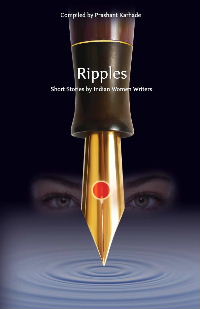
Prashant: Ripples is an anthology of short fiction stories compiled by me. It has 48 stories from 26 different and exceptionally talented Indian women writers. It has turned out very well and in fact exceeded all my expectations. It was launched in October. We launched it in 4 cities: 15th October in Mumbai, 16th October in Pune, 23rd October in Bangalore, and 24th October in Chennai. We were to launch in Delhi on 29th October but I fell sick. I guess the stress of the previous 2-3 weeks, the running around like crazy, and the hectic travel schedule took their toll on me.
All the launches were great successes! I had already befriended 26 terrific fiction writers and that is important because what good is a publishing house without good/great writers? And as part of the launches, I met and befriended many other celebrities and writers as well: screenwriter-director-producer Onir, screenwriter-photogapher Sooni Taraporevala, actor-producer Sanjay Suri, fantasy writer Sonja Chandrachud who is dubbed as the ‘desi J. K. Rowling’, writer-editor Usha K. R., writer Shinie Antony, actress-director Revathy, and RJ-singer-writer Suchitra Karthik Kumar who is popularly called Suchi. That’s quite a list and it will do me only good in my future endeavours.
So in that sense, Ripples is a big step in the right direction. And since all the contributing writers to Ripples were active bloggers on Sulekha, wordpress.com, and other websites, word about Ripples and APK Publishers has spread far and wide. I have been contacted by almost 100 writers and received proposals for 15 books since the launch of Ripples! That’s just terrific!
So expect APK Publishers to launch many books in 2011. Follow-up to Ripples with different themes, individual books by the writers featured in Ripples, and books based on many “creative” ideas that I have and which I will get written by all my writer friends. I am in love with the idea of writing a book ‘collectively’ like we did for Ripples, and will use it in my future books as well.
Aneeta: Of all the works you’ve published (both yours and others), can you name three works that are special to you and why?
Prashant: Memory Remains will always be special to me because that is what got all this started. It is my debut fiction novel and very close to my heart. It is loosely based on events from my own life, and I am thrilled to bits that my elder daughter, who is only 7 years old, has already started reading it! J It is far more gratifying than words can express.
I am also very proud of my children’s story books. They are based on stories that I made for my own daughters and over time they became quite good, which is when I decided to turn them into real books. I am especially proud of them because I was quite bad at making stories for kids. And so to have written and published 4 children’s story books is quite an achievement. And getting them illustrated was also a terrific experience. Milind has done a fabulous job of it. We have sold many sets already and still continue to do so to this very day.
And the third book is Ripples. It is truly a world-class book in my opinion, both in terms of its content and production quality. I am really proud of it. It was also a big success in many other ways.
Aneeta: So you would like budding writers to contact you if they want their books published right?
Prashant: Yes, of course! I am here to publish good books by budding writers. In fact, that is one of our missions: to help first-time and budding writers. And our tagline – By Writers, For Writers – says just that. I am looking primarily for fiction books. But in general, I will publish any book that I feel is good and deserves to be published.
That being said, it doesn’t mean that I will finance the cost of production of every book that I publish. Publishing books takes money and it takes a lot of time to recover the money because this is such a slow-moving industry. So I definitely have my constraints. But if I ask the writers to finance the cost of production of the book, then they take most of the profit as well. So it is quite fair.
Aneeta: What do you think is the USP of APK Publishers?
Prashant: I think our USP is in the way we treat writers. Although I have become a publisher now, I am a writer at heart and will always be that way. So I don’t look at writers as objects to be pawned for profit. I treat them with respect because I genuinely appreciate and respect what they do.
And I try to do everything in my power to make the experience fun and memorable for them. I remember the feeling that I got when an article of mine first got published in a book titled Life Is; Death Is Not alongside eminent writers like Khushwant Singh and Amrita Pritam. I had written the article and read it many times before sending it to the editor of that book, but it felt so much different, not to mention better, reading it in print from a real book! I couldn’t wipe the smile off my face for two full days! J I try not to forget that and give that same feeling to other writers. And it is very gratifying every time I do it.
And I do all that because my experience publishing my debut novel was horrible, frustrating, and totally forgettable. Towards the end, I just wanted to get it over with. That is definitely not how it should be. And therefore, whatever I am doing is my small way of making life better for other first-time and budding writers. I also try to make the book publishing a collaborative experience as opposed to me just dictating all the terms. That makes it an enriching experience for me as well as the writers, because when you do anything from start to finish you are bound to get that feeling. All the writers who have worked with APK Publishers have expressed these things explicitly to me, and I am extremely proud of that.
Aneeta: What are you plans for the immediate and the distant future?
Prashant: I launched Ripples just about a month back. So there is a lot of hard work to be done to sell it and ensure that it reaches its full potential. So that is my first priority. We have another novel that will be published in a month. And 3-4 other exciting projects are in the pipeline already. And then there are books that I talked about earlier.
One thing that I decided was to bring a focus to the subjects on which I publish books. Select a particular genre and go after it because it helps create a consistent reader base which is crucial to success, especially for new publishing houses. I have decided to focus on English fiction. Short stories are also something I might focus on as I feel that it is “right” for today’s age of busy people. There will be sequels of Ripples with different themes are definitely in the offing, say two per year or maybe even more, which gives voice to new writers and thus retains that quality of freshness.
About 3 months back, I also realized that in order to survive as a publishing house, I had no choice but to publish truly world class books, which can hold their own against any book by say Penguin or Harper. So, while I haven’t gone away from my original aim of helping first-time writers, my aim now is to publish world-class books. That is what Ripples and all future books of APK Publishers will be I hope.
It is scary if you think that your competitors are Penguin and Harper, but I don’t think like that. I just focus on my job, which is to publish world-class books. If I am able to deliver on my promises, then I will be successful because people do give a chance to new writers and publishers. There’s always room in everybody’s bookshelf for a good new book. That’s what I am counting on. And there are many avenues today to reach passionate readers and I am planning to exploit all of them. Social networking is one of them. APK Publishers and Ripples have a Facebook page, which actively engages its readers.
Ripples by APK Publishers Facebook page URL: http://www.facebook.com/pages/Ripples-by-APK-Publishers/105591689505110
Aneeta: Clearly, a lot of your work involves storytelling. Which element of storytelling, then, do you think is the most important and why?
Prashant: The main aim of storytelling is to entertain, and that is the most important element I feel. Most people in this world are living routine, uninteresting, and boring lives. I think the charm of fiction books is that it takes them to a different, distant, and (hopefully) a far more interesting world at least while they are reading a fiction book. No fiction writer should forget that.
Aneeta: What advice would you give those who would like to venture into storytelling?
Prashant: I don’t think I am big and important enough to give advice to first-time and budding writers. But I will share my thoughts, things that I have realized in the last 4-5 years, in the spirit of a friend sharing his experiences rather than giving advice.
The most important thing I think is to think big. Try to make your canvas as big as possible. But you can’t do that unless you live life to the fullest, and breadth and depth in your own life experiences, and depth of thought. So trying to write books that have a big canvas has many pleasant side-effects in itself.
One very important to understand as a first-time writer is that people don’t give a damn about you. It is really true! People are terribly busy in their own worlds and don’t give a damn about first-time writers or anything that isn’t core to their existence. It is a completely different matter that once you become famous, people will want to know what colour underwear you wear. J But it is a very hard thing getting to that point, and most people can’t achieve it. I haven’t been able to achieve it either, but I hope that one day it will happen. So you have to do something out of the ordinary to get people’s attention. And in fact, that’s what the game is.
And all you have is the title of your book, the cover page, and the text on the back (synopsis) to do it! That is what will make or break your book. So you have to do a really good job of it. But in order for the title, cover page, and the synopsis of your book to be catchy, attractive, intriguing, inviting, interesting, the crux of the book should be all those things and should be captured aptly in the title, cover, and synopsis. And that is why the plot of the book is very important. Study the title, cover, and synopsis of the books that are doing well today. It will be a good exercise for you.
Once you have succeeded in making the reader the pick your book, you have to grab their attention in the first few pages. I would recommend giving yourself only 1 page to catch their attention. Yes. 1 page is all you have got! And the way to do it open your book with a sequence that will catch the reader’s attention and hook them right away or by picking out the most interesting part of your novel and make it the prologue of your book. That way the readers know that the story is going to get there at some point in time, and then they will be more willing to go along with a slower pace if your book indeed proceeds at a slower pace in the beginning. But if general, your book should be as quick-paced as possible. Why bore the readers when you can keep them interested and entertain them?
Chetan Bhagat started a trend of sorts and a spate of books that aren’t really fiction. You can call them pseudo-fiction at best, and Memory Remains very much falls in that category. They are based on real events that happened in the lives of the writers. While there is nothing wrong in that, I think it has been overdone of late. Almost every Tom, Dick, and Harry believes that he has a story to tell. Sadly, that’s not true. Most of these books are shoddy. And it’s definitely overdone. I hardly take a look at such books myself, let alone buying and reading them. I think it’s time to get back to ‘real fiction’, and as the Founder & CEO of APK Publishers, I definitely encourage that in every way I can.
Aneeta: Prashant, this is all I have to ask. Is there anything you’d like to add?
Prashant: I think I have said enough. But one last thing that I would like to say is that APK Publishers is going places and you are welcome to join the joyride if you like! And if you work with us, it will be a fun and memorable experience, one that you will remember for the rest of your life. I can definitely guarantee you that!
Aneeta: Prashant, thank you.
Prashant: Aneeta thank you so much for interviewing me. It was great talking to you, and I hope to do it in the future as well. And good luck with your website which is a great initiative I might add. Kudos to you and keep doing what you are doing!
This piece may NOT be freely reprinted. Please contact editor @ howtotellagreatstory.com for reprint rights.
Click here to return to the index of interviews on 'Blow Your Own Trumpet!'
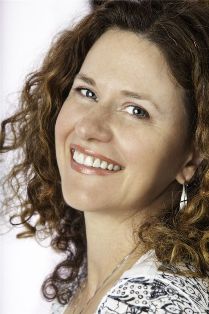 Introduction I was introduced to Karen and her work by a friend-of-a-freind-of-a-friend. At the time, she was about to launch her new book (see below). I decided not to rush the interview and waited until now to interview Karen. I'm glad I did and I hope you enjoy reading her story as well. Therefore, without without further ado, I have great pleasure in introducing to you, Karen McGregor ...
Aneeta: Hello, Karen. Thank you for agreeing to this interview.
Karen: My pleasure. Thank you for having me.
Aneeta: I would like to begin with something about you. Please tell me where were you born, where did you grow up, what do you do for a living and where do you live now?
Karen: I was born in small town Northern Alberta, Canada. I am an international speaker, women’s circle and workshop facilitator, and professional intuitive. I also am the creator and owner of www.DivineYou.ca, a spiritual events company in Vancouver, BC, Canada. I currently live there with my two sons.
Aneeta: Before we go into your recently-launched book, The Madonna Code, please tell me, what prompted you to want to write this book?
Karen: This book was born from Divine Chaos: in the period of 6 weeks my husband and I separated, I lost my 2 business partners, and my son broke his leg, spending many months in and out of hospital. The journey into the Code came as a result of losing my former identity and experiencing my heart opening after coming close to completely shutting down mentally and emotionally. Mary, Mother of Christ, appeared to me in my lowest hour and helped guide me to the power of a radiant heart. The second reason I wrote the book was because I realized that I and many of my friends were trained in corporate jobs that required us to be guarded and participate in the patriarchal structure that kept hearts closed. As I entered into the Divine Feminine and witnessed my heart and the hearts of other women bloom, I had a great desire to share that experience and practical processes with many women; this I believed was best accomplished by writing the book and offering women the opportunity to be in circle.
Aneeta: O.K. let’s discuss the book itself. Please provide a description of this book for my readers.
Karen: This is the description provided in opening pages of the book:
The Madonna Code invites you to enter a state in which love flourishes without fear of loss or rejection.
As a result of a three-year journey journey through the disintegration of her marriage, loss of her business partners and family illness, Karen McGregor gained profound wisdom and insights into the radiant power of an open heart. In The Madonna Code, she guides you through tools and processes to unveil the Code and open to your deepest purpose and highest calling so you can…
The Madonna Code invites you to enter a state The Madonna Code illuminates the four hearts of Mary that magnify the love we yearn for; a love that calls forth the unification of partners, communities, and nations. The non-judgmental Virgin Heart, the compassionate, surrendering Mother Heart, the powerful, confident Goddess Heart and the conscious leadership of the Queen Heart unite our body and spirit, feminine and masculine, sex and the sacred, earth and heaven.
Aneeta: Although I have yet to read your book, I am pretty sure that you have included some stories in your book. Can you please share a story here?
Karen: Sure, one of the stories that I tell is my introduction to Mary: I had never known true desperation until that summer (when Divine Chaos struck). In the not-knowing, in the mystery, I saw images of Mary in my mind and felt her warmth in my heart. I began to pray and discover what unconditional love feels like in my body. I continued to reach out to Mary, as woman and Goddess, because something deep within me wanted her help. Help to leave Earth, if only for a while, and be with her, wherever that was. I threw myself, arms and legs splayed, onto my bed, begging to be released from the nightmare I had created.
I must admit that I expected nothing to change. But on one particularly trying day, I heard Mary say, “Focus on your heart.” As I did this, my heart warmed and was followed by an intense heat that within minutes felt like a burning fire. I felt weightless, as if I was part of the air around me, and a warm white light bathed me in love. I did nothing except be a part of this heaven; I did not think, act, or move. I simply was one with the All.
When I returned back on the gentle direction of Mary, I knew that I had experienced the very heart of the Sacred Feminine. The very thing I tried to stuff out of existence in an effort to protect myself was the saving grace of my life.
Aneeta: What has been the response to your book, thus far
Karen: On opening day The Madonna Code became an instant bestseller on Amazon.com and Amazon.ca and was in the top 3 hot selling books on Amazon.ca. Many people have shared with me how touched they are by the raw honesty and the practical processes that they are using to make a difference in their connection to the Divine Feminine within and around them. They love how it’s helping their relationships to become more joyful; to experience Sacred Love, intimacy, and the transformative power of an open heart.
Aneeta: Clearly, your work will involve some elements of storytelling. Which one did you find most useful when writing your book?
Karen: Telling the truth without sugar coating the events or my perception of the events, and within that process, illuminating the wisdom, compassion and peace for myself and others. Story for me is the most powerful part of my book because in its honesty, I have given the reader a chance to say “I see myself; I see another; and both are okay as they are.”
Aneeta: What advice would you give to those who would like to start telling their own stories?
Karen: Do the inner work on yourself to discover what your fears are around writing, around stories, around how others will perceive your stories. So often our most heart-opening stories never get told due to fears. When we release and accept the fear, the stories tumble onto the page and speak to us with the wisdom of an old sage.
Aneeta: Karen, this is all I have to ask. Is there anything you’d like to add?
Karen: I am grateful to share with other writers and readers a glimpse into my writing and the transformative power of an open heart.
Aneeta: Karen, thank you, once again.
Karen: Thank you Aneeta.
This piece may NOT be freely reprinted. Please contact editor @ howtotellagreatstory.com for reprint rights.
Click here to return to the index of interviews on 'Blow Your Own Trumpet!'
Nancy is the bestselling author of the four Bella and Britt Series books for children: One Pelican at a Time (eighteen weeks on Amazon Bestselling List), Sea Turtle Summer, Bella Saves the Beach and Mystery at Manatee Key. All are published by Guardian Angel Publishing.
She and One Pelican at a Time and were featured in the PBS Tampa (WEDU) special, GulfWatch. Pelican was nominated for a Global eBook Award and has won the Literary Classics Seal of Approval.
Nancy’s travels take her extensively throughout the world, most particularly Africa. She is US chair of a charity in Lamu, Kenya, that places girls in intermediate schools to allow them to further their education. She and her husband live in Tampa and St. Louis.
I understand you were a university professor teaching classes about children’s and young adult literature before you started writing. How did the leap from teacher to author come about?
I thought fleetingly about writing for children through my years as an academic, but it never seemed the right time. After teaching children’s and young adult literature, though, the idea crystallized. The day after my granddaughter, Leah, was born, I wrote my first children’s book, I Held You on the Day You Were Born. Since then I’ve never looked back, and those pent-up books flow faster than I would ever have expected. So, in a real way, Leah (who is now five) is the true catalyst behind my writing.
What makes you passionate about writing for children?
My entire academic career has been about children, from teaching young kids to teaching pre-service teachers. It was, I think, a natural segue to begin writing for them. The combination of my love of all things books and the real joy I feel about children and their growing awareness of new ideas led me to this passion.
Congratulations on the publication of your latest children’s picture book, Sea Turtle Summer. What was your inspiration for this story?
My morning walks on Clearwater Beach provide me with so many ideas, particularly for the Bella and Britt Series. With Sea Turtle Summer, I walked by a cordoned off area of the beach that contained a sea turtle nest. The orange tape and the affixed state seal warning about the serious consequences of tampering began the process in my mind.
Clearwater Beach, always voted one of the three best beaches in the world, is a sea turtle’s nightmare if she happens to lay her eggs there. There is so very much activity—from sun worshiping, to volleyball games, to kids’ digging sandcastles (hatchlings cannot get over them), the problem became defined. The tension was set up. All we needed was a sea turtle laying her eggs in an unfortunate place, and Bella and Britt were back on the job!
Tell us something about your protagonist, Bella. What kind of girl is she and why do you think young readers will love her?
Bella is a go-to girl. She thinks on her feet, is self-assured and makes things happen. Bella sees a problem and spares no time in trying to solve it. She, in fact, will not take no for an answer. This attitude can be tricky and fraught for a child dealing with an adult world, but Bella perseveres. She is an empowered kid and as such, I hope she’s a model for other kids who need that assurance.
What is the message of your book? Why do you think parents and educators should buy it for their children/students?
The message is two-fold. It is, of course, an ecology book for children. It will, I hope, help make children aware of the natural world and the responsibility they have for it. It also, as I mentioned above, is a book about empowerment. There are times when children do have the best answers, and navigating an adult milieu can be a sensitive issue. I hope that giving children permission to empower themselves will not stop with ecology but will help them stay safe and make good choices.
I understand you get up at dawn everyday and by 6am are already pounding away at your keyboard on the balcony of your beautiful, gulf-view Clearwater apartment. Tell us more about your writing schedule and writing process, especially for Sea Turtle Summer.
It is true that I’m at my computer around six each morning and has become a joke with friends who always look at the time I send or answer emails! I do find that time to be more productive for me than any other.
I’ve learned to parcel my days into bunches of hours, each bunch dealing with one area. For instance, my best creative writing is early in the morning. About mid-morning, I turn to marketing and do that several hours. Later in the day, I go back to writing, many times on a different manuscript. I tend to finish about 5 PM, but my computer is sometimes on my lap in the evening as well.
My blog does take some time almost daily. I publish new posts three times a week. I try to write them in groups and usually have seven or eight ready to go. I enjoy blogging and find writing for adults helps keep my mind focused in a different way. In that regard, it’s a worthwhile exercise.
What do you do when the words ‘just won’t come out’? Do you stay and force it until something begins happening on the page?
Free Association is the name of that game for me. I don’t fight writer’s block anymore. Rather, exercise or running errands or doing anything not related to writing helps greatly. When I’m disengaged from writing is usually when engagement happens. An idea, a notion, a nugget of a thought will pop into my consciousness and, as if by magic, the block is finished.
Do you have any tips for aspiring children’s authors?
Yes! Don’t write in a vacuum! Join a writer’s group—immediately. It is the best thing you can do for yourself. The Society of Children’s Book Writers and Illustrators (SCBWI) is beyond valuable for the new writer, and local groups are everywhere.
Realize you have to promote your own book, and you must do it constantly. The days of sitting back and letting your publishing house do it are over! I have a friend whose name you’d recognize here. She’s had thirty two books children’s books published. Recently she told me that she still gives one day a month to marketing.
Is there anything else you’d like to share with my readers?
I’d be delighted to share my web and blog addresses and tell them where my books can be purchased.
Web site: http://www.nancystewartbooks.com
Blog site: http://www.nancystewartbooks.blogspot.com
The books are sold at: Guardian Angel Publishing, amazon.com, barnes & noble.com, Fictionwise and my web and blog sites, where you can obtain a personalized, autographed copy.
Thank you, Nancy!
Thank you so much, Mayra, for hosting me. I enjoyed being with you and your guests.
Listen to an audio interview with Nancy: http://www.blogtalkradio.com/across-the-pond.
This piece may NOT be freely reprinted. Please contact editor @ howtotellagreatstory.com for reprint rights.
Click here to return to the index of interviews on 'Blow Your Own Trumpet!'
 Yesterday morning, I received an email from Harry. He introduced himself and his work. He was also willing to be interviewed. When I looked at his website, I had no hesitation in agreeing to interview him. What I did not expect was how fast he would respond with his answers. Therefore, without further ado, I have great pleasure in introducing to you, Harry Bingham ...
Aneeta: Harry, thank you for joining us.
Harry: It’s my pleasure!
Aneeta: Let’s start with a little about you. Tell me, please, where were you born, where did you grow up, what do you do for a living and where do you live now?
Harry: Born and bred in England – and still here now. That’s the boring bit. The interesting part is that I’m pretty much a full time writer. When I’m not writing, I run an outfit called The Writers’ Workshop.
Aneeta: On your website, it is stated that you’re a best-selling novelist and non-fiction writer. Furthermore, Amazon.co.uk lists your publications. I would like you to tell me about your work.
Harry: Gosh, well, I wrote five novels for HarperCollins a few years back. Old-fashioned adventure stories really, with an epic sweep. They were fun to write but very time-consuming. I then moved on to a couple of non-fiction projects, of which my favourite was This Little Britain, a book about British history, and specifically what marks us out as different from Germany, Italy, France, Spain and so on. I loved that book!
Aneeta: One of the publications that intrigued me was this: The Writers' and Artists' Yearbook Guide to Getting Published: The Essential Guide for Authors. What is this book all about
Harry: It’s exactly what it sounds like. The Writers’ & Artists’ Yearbook is an old, famous publication for writers, but they’ve never really had a comprehensive guide to getting published: the whole journey from completing a manuscript right through to getting an agent and the whole publication process. I think lots of writers think that once they have an agent, it’s all plain sailing – and the truth is the difficult journey is only just beginning. What’s more, there’s a lot of it that agents and publishers don’t much want you to know, so it felt like the book was quite important for writers. That book is Getting Published, and is available from Amazon.
Aneeta: As you write both fiction and non-fiction, do you find that storytelling plays a big part in your work? If so, how and what is the most important element of storytelling you use
Harry: Story-telling is the heart of everything. My most recent project is a series of crime novels that will be launching next year. In those, I use:
Obviously it can be hard combining all those elements successfully, but I do think that the very best stories have elements of both suspense and mystery.
Aneeta: Please explain what your website (http://www.writersworkshop.co.uk), ‘The Writer’s Workshop’ offers to your readers.
Harry: The Writers’ Workshop is an attempt to get professional authors like myself helping new writers. So the main things we do are:
Aneeta: What advice would you give people who would like to venture into the world of storytelling and publishing?
Harry: Phew! Storytelling, I think, is the raw energy. Anyone who tells people stories, or self-publishes their work and gets it out there, has that energy in fine working order. I don’t think getting published is for everyone. That process requires you to write for the market and not everyone will want to do that. But if you do want to do that, then I’d say that getting professional help from book and novel editors, such as ours, is probably your first best step. You will also need a literary agent, so you need an outfit that can help you there too.
Aneeta: Harry, this is all I have to ask. Is there anything you’d like to add?
Harry: Just this – best of luck to all your site users. The world needs storytellers, and it’s not an easy thing to do well! So best of luck.
Aneeta: Thank you, once again, Harry.
Harry: And thank you!
This piece may NOT be freely reprinted. Please contact editor @ howtotellagreatstory.com for reprint rights. Click here to return to the index of interviews on 'Blow Your Own Trumpet!'
Page 19 of 22