
Transform ordinary stories into extraordinary ones with our proven 7-step method. Join thousands of storytellers on their journey to mastery.

 Introduction
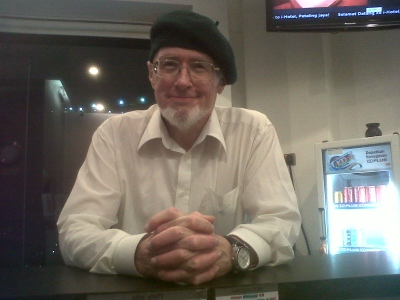
In the last edition of my newsletter, I asked if people wanted to be interviewed for this column. Nadine Laman very kindly directed Glyn Pope my way. As such, without further ado, I have great pleasure in introducing to you, Glyn Pope ...
Aneeta: Glyn, welcome and thank you for agreeing to this interview.
Glyn: It is seriously, my pleasure.
Aneeta: Let’s start with a little about you. Where were you born, where did you grow up, what do you do for a living and where do you live now?
Glyn: I was born in Leicester. Actually where my novel, The Doctor, The Plutocrat and The Mendacious Minister, is set. It is a piece of fiction though, none of the characters exist, nor any of the events happened. I grew up on a council estate in Leicester. I lived in Northampton for a time and then Devon before finally moving to France in 2007 to take up full time writing.
Aneeta: Before we talk about your books, I am intrigued by the fact that you studied theology at university. Why theology?
Glyn: A rather obvious flippant answer is why not. I’m intrigued by the fact that my son-in-law studied liquid engineering for his degree. Er, what is liquid engineering? No, seriously, religion is at the core of our lives. There are those who are fervent in their religious beliefs, but those who aren’t have to state the fact by saying they are atheist or agnostic. There isn’t a term for saying I don’t believe in liquid engineering. Aneeta it’s a whole different interview, why theology, religion; it can’t be simply answered. There is much beauty in religion, just as sadly it can produce so much hatred. So much fine language has been created in the name of religion. A book I love most in the world is The Gospel According To St. Luke. If you want to pin a religious term on me then I am a Christian/Buddhist. I certainly don’t believe in God or the afterlife. When we are dead, that is it, final. There’s a reason why me must make the most of our lives.
Aneeta: Has studying theology affected your writing in any way?
Glyn: That’s a difficult one, because you take influences from everywhere in your life. I have yet to write a theological novel, in the likeness of Chaim Potok, if that’s what you mean.
Aneeta: So, let’s get to your writing career. Please tell me what you’ve had published so far?
Glyn: I have had short stories published in five different collections. I self published a book, which I have now withdrawn. I published To The End Of Love with a company called Turner Maxwell. That was a sort of breakthrough, but the company didn’t edit or proofread. I’ve withdrawn that novel. My first ‘proper’ novel, edited and proofread is The Doctor, The Plutocrat, and The Mendacious Minister.
Aneeta: I know that your latest book is called The Doctor, The Plutocrat and The Mendacious Minister. Please describe it for me.
Glyn: The main character Doctor Latymer arrives on a council estate in Leicester, England, full of hope after dreadful experiences of the war. He happily settles into life on the estate trying to forget the nightmare images in his memory. The young doctor quickly becomes the local miracle worker when he cures the attention seeking hypochondriac Reginald, and takes the time to befriend a sad little boy who has lost his Mother. However, when food poisoning strikes the estate residents, Doctor Latymer sets out to right injustices that he doesn't fully understand. He tangles with Sir Brian Britley, the Plutocrat, and Sir Henry Norrington, the Mendacious Minister for the British Government. In the process, he unravels the delicate balance between rich and poor, and the struggling economy still reliant on rationing and the black market. Doctor Latymer's story is written in authentic British English, adding to the richness that brings the local characters to life as the reader is whisked back to 1948 post-war Britain.
Aneeta: Clearly, storytelling will feature in your work. What aspect, therefore, of storytelling, do you feel is most important for a storyteller to master?
Glyn: The best novels are those that are worth reading more than once. I’ve read Lukes’s gospel, The Stranger by Camus and Solzynitsyn’s Ivan Denisovich many many times. The Doctor The Plutocrat and The Mendacious Minister, whilst I don’t compare it to these classics, I have attempted to write on more than one level. There is the obvious AJ Cronin tale of a new doctor working on a council estate in Leicester in 1948; there is the political plot and corruptness; and the greater story of young versus the old. Where really does experience lie. Not all readers see this, and that’s fine by me. Take the tale at its simplest or look a little more into the depths. I could have only attempted something like this though by reading quality books and learning abut writing. There are too many people around who feel that because they can write a shopping list and have a laptop that qualifies them to be a writer. Musicians, artists have to practise daily. I write every day 365 days a year for at least three hours. I read quality literature and think about what I am reading. Harsh facts but if a person isn’t prepared to that then don’t bother to be a writer.
Aneeta: What advice would you give those who would like to venture into storytelling?
Glyn: Don’t self publish, or if you do then pay for a professional edit and proofread.
Aneeta: Glyn, this is all I have to ask. Is there anything you’d like to add?
Glyn: The novel The Doctor, the Plutocrat, and The Mendacious Minister is available for download in all formats at around 4dollars/sterling/euros.
Worldwide as a signed paperback from
And in the United States from http://www.cactusrainpublishing.com/
Aneeta: Glyn, thank you.
Glyn: Thank you Aneeta, for giving me your time and space on your web page. It has been a pleasure.
This piece may NOT be freely reprinted. Please contact editor @ howtotellagreatstory.com for reprint rights.
Click here to return to the index of interviews on 'Blow Your Own Trumpet!'
 Introduction
I have been corresponding with David for a long while. Just like the last person I interviewed, from this interview, I realised there's more to David than I thought. So, without further ado, I have great pleasure in introducing to you, David Ritchie ...
Aneeta: David, thank you for agreeing to this interview.
David: It's wonderful to have this opportunity.
Aneeta: David, let’s start with something about you. Tell me, please, where were you born, where did you grow up, what do you do for a living and where do you live now?
David: Born in Newport News, Virginia, I grew up in the Hampton Roads area, a great seaport. Until let go recently because of my employer's downsizing, I worked for 11 years as researcher, editor, and writer at a publisher of ESL materials in Korea. At the moment, I'm performing an international job search and working on a new series of books for young readers, in English, for Darakwon Press in Seoul.
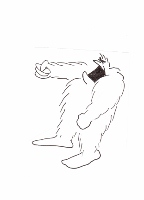 These are action stories with Bigfoot, the legendary North American giant ape, as the protagonist -- a larger-than-life figure indeed. His adventures are set in an imaginary America, but one enough like reality to make the stories meaningful to young readers.
Writing animal tales of this kind requires the writer to make some difficult judgments. For instance, how p.c. should a Bigfoot be? And on which should he rely more: his wits, or his size and strength? Resolving questions like those will leave you with a complex, sympathetic, yet intriguingly nonhuman character.
Aneeta: How did you begin writing/storytelling/getting involved in the publishing industry?
David: An eager reader of fiction from a very early age, I began writing around age 10 and made journalism and publishing my career after college. Only after coming to Korea, however, did I acquire the skills needed to produce fiction for young readers. For one thing, you must write for a young audience without writing down to them. That's a hard skill to develop. One can learn much about it from authors such as Walter Brooks (who invented Mr. Ed, the talking horse) and E.B. White, author of Stuart Little and Charlotte's Web.
Aneeta: Please tell me a little about what you’ve written and published.
David: Under my own name, I have some 20 published books of nonfiction, mostly science and history. To my surprise, one of them -- a whimsical look at everyday life in Seoul -- appeared on a Korean bestseller list in 2002. Now I'm moving into both fiction and electronic publishing. It's about time for a switch to e-books, too, as traditional trade book publishing appears moribund, at least in the US.
Aneeta: I understand you’re preparing to write a book ‘linking the current destruction of the American middle class to the genocidal wars against Natives.’ Can you please explain a little more about this, especially the part about the destruction of the American middle class?
David: For years, I've been making notes for such a book, under the working title Justice Delayed. Excerpts have been posted online at the S&C Community on Facebook. Its thesis is that the ongoing downfall of the American middle class represents justice, in a sense, for European-Americans' conquest of Native American peoples, and for the seizure of their lands -- meaning, essentially, all of the United States.
The American middle class, my people, derived great benefit from that takeover and did much to accomplish it. Now, as if to illustrate how one may inherit responsibility for -- and consequences of -- the crimes of one's ancestors, the middle class finds itself plummeting toward the woeful status of Natives on reservations. Look at unemployment figures. Already, some Native reservations are doing better than America as a whole.
Moreover, the agents of the middle class's devastation are largely the same as those used against America's aboriginal peoples, such as economic warfare, cultural destruction, ecocide, and drugs.
Consider that last one for a moment. Alcohol destroyed Native American societies. Now, narcotics and mood-altering pharmaceuticals are having a comparable effect on Middle America. I wish there were space here to include some scary figures on drug abuse. They help to illustrate how much of the American population is too impaired to function adequately. In place of the stereotypical "drunken Indian," we now have a chronically stoned American middle class.
So history is recurring ... only this time, the aggressor is getting payback. The process just took a while. Hence the title, Justice Delayed.
In that context, the "justice" involved might be likened to wave reflection. What you send out bounces back at you. So, as the American middle class committed great wrongs around Native Americans, now it's Middle America's turn. The wave is rebounding at last. This argument is not original with me, to be sure, but I'm supporting it with fresh information to show how large numbers of once-prosperous American cities are descending toward the impoverished "rez" level.
In short, the similarities between middle-class downfall today and the 19th-century Indian wars are very close and numerous. That is because deeds really do have their recompense. What we did to the Natives, we're now getting back, with interest.
To use still another metaphor, you reap what you sow. Long ago, Europeans and their descendants sowed something horrible in the Americas. Now the reaping has arrived -- or the Reaper, if you prefer.
Having Cherokee ancestry, traceable to one Charlotte Little Paw (1820-1900), gives me a dual perspective on the North American genocide. That perspective has led to an odd schism within me. It's unsettling to know that the white part of my ancestry tried to exterminate the Native part, and came very close to succeeding. In other words, I belong to a culture of genocide. Once that knowledge hits you, your thinking is never quite the same again.
The perspective of this work does not mean that I claim to speak for Native Americans. That is something I may not presume to do. But Cherokee descent has helped me to see something most Americans either have never been told or would rather ignore: the fact that their country and culture ("civilization" doesn't sound right) are founded on ethnic cleansing and a monumental land grab, about which generations of American children have been taught an equally colossal set of untruths.
Aneeta: That is fascinating. Clearly, your work involves elements of storytelling. Can you please tell me what you consider to be the most important element in this craft and why?
David: Keep the story moving as fast and forcefully as you can.
Aneeta: David, this is all I have to ask. Is there anything you’d like to add?
David: Studies of Native American myth and legend helped with the conception and writing of this new series of Bigfoot stories. In Bigfoot and the Hungry Hill, for example, Bigfoot must find a way to rescue two men whom the earth literally has swallowed up. In the original legend, "Rabbit and the Devouring Hill," the rescuer is a very clever rabbit. But Bigfoot made a much more impressive protagonist, and so the legend -- modified in the retelling -- supplied a great vehicle for him. Bigfoot makes a splendid authority figure: powerful but not brutal, and very cautious about how he uses his tremendous strength.
Writing these stories has involved inventing a whole forest community, including an owl obsessed with air power; a warlike bear and his army; and a worried ferret who serves as the local postman. Considerable thought went into inventing a Bigfoot family, too. They turn out to be much like other families ... only bigger. And their culture has some amusing quirks which, I hope, will interest children.
Aneeta: David, thank you.
David: Thanks for this invitation, Aneeta. I'm most grateful. Book info:
| Bigfoot and the Hungry Hill. The earth has literally swallowed up two men, and Bigfoot must find a way to rescue them without getting trapped himself. | Bigfoot and the Bear Invasion. How will Bigfoot deal with a whole army of invading bears? |
Published by Darakwon Press.
This piece may NOT be freely reprinted. Please contact editor @ howtotellagreatstory.com for reprint rights.
Click here to return to the index of interviews on 'Blow Your Own Trumpet!'
 Introduction
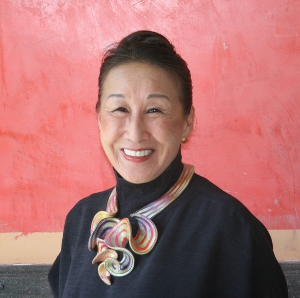
About 2 weeks ago, I received an email from Cathy telling me about her book and stories. I visited her website and was intrigued by her story. I asked if she wanted to be interviewed and she agreed. I'm sure you'll enjoy reading her story as much as I did. So, without further ado, I have great pleasure in introducing to you, Cathy Bao Bean ...
Aneeta: Cathy, thank you for writing to me. I’m so glad to have this chance to ‘talk’ with you.
Cathy: And thank you for creating a website that supports authors!
Aneeta: Let’s start with something about you. Please tell me, where were you born, where did you grow up, what do you do for a living and where do you live now?
Cathy: Some of the “facts” of my cultural journey as chronicled in my book describes my immigration to America and my emigration from “banana-hood”—yellow on the outside and white on the inside for growing up in a town where we were the only Asians! Please keep in mind that the facts may be hard but the brain doesn’t have to be.
I was born in China as Bao Kwei-yee, a native of Ningpo by virtue of my father's ancestry, in the Year of the Water Horse, during the 77th or 78th Cycle (depending on which book you consult).
Four years later, my parents, older sister, Bette, and I arrived in Brooklyn. As a result, I became "Cathy Bao," born about 800 miles southwest of those same forefathers, on August 27, 1942, in Kweilin/Kuei-lin/Guilin (depending on which atlas you consult). In the process, I also became a Virgo and Dodgers fan.
One day later, Bette and I were enrolled in Public School #8. I spoke no English. Bette could say "Lucky Strike" and "Shut up." The Principal let her skip 2 grades and made me do kindergarten twice.
In 1949, we moved New Jersey. I started to think in English and forget in Chinese.
In 1953, I went to summer camp and got “scalped."
Four years later, I was in 10th grade and got “scalped” again.
In 1958, I received my first birthday cake.
The next year, I received the Junior Citizen of the Month Award. The following night I was summoned to court.
In 1960, I went to college where I majored in History, Government and screaming. The screaming didn't get me the lead role in The Diary of Anne Frank because the Director didn’t think a Chinese could play a Jew from Amsterdam but it did get me on the Tufts cheer leading squad and, from there, onto a full page of Sports Illustrated…clothed.
In 1962, I heard Malcolm X tell my roommate she was no longer a Negro, she was a Black Woman.
In 1964, I went to graduate school in California and learned how to Philosophize and be a Matchmaker.
One month later, I met Bennett Bean, a Caucasian male who didn't wear socks and wanted to make art. He thought I was Japanese.
Two days after he found out I wasn't, he was declared psychologically unfit to serve in the army.
Two weeks later, he proposed. I accepted.
In 1965, I enrolled at the University of California in Berkeley. There I met several of Bennett's friends. Mostlythey lived in communes and nudist colonies. I became a Democrat.
The next year, Bennett started teaching at a college that expected him to wear a suit in the ceramics studio. After he shaved his beard with the best double-edge razor blades and cut his hair, we got married. My mother said the word "sex" to me for the first time.
In 1967, the Whitney Museum bought Bennett's sculpture even though it was upside-down, and I was accused of being a prostitute by the concierge in a big hotel (probably because I escaped a third scalping by the Bag Lady on the Staten Island Ferry and he didn’t know women with long Chinese hair might use their brains for a living).
The next year, I started teaching at a state college for less money than I made as a waitress and helped start the Black Studies Program.
One year later, we were both fired. The students protested and we were both re-hired. Soon thereafter, I developed my Menopausal Theory of Cooking.
In 1970, we met Billie Burke. Once the Good Witch Glinda in The Wizard of Oz, she had since become a Real Estate agent. She pointed us toward the eastern equivalent of Kansas, northwestern New Jersey, where we bought an old farmhouse. The neighbors thought I was the maid.
One year later, I got tenure. When the Chairperson asked me to make curtains for the office, I resigned and became a feminist before I knew I was a “Chinese-American.”
In 1973, I became a US citizen - that's when the mayor asked me to be a Lenape Indian in the town's Bicentennial Parade and I gained 70 pounds.
In early 1974, our son, William, was born. He weighed only 7 pounds, 14 ounces. 24 hours later, I decided Santa Claus and the Tooth Fairy didn't exist, Cinderella was a wimp, and Pinocchio had extraordinarily poor taste in friends. As it turned out, I was developing the Not the “Tiger Mom” method of parenting!
The next year, Bennett got fired again.
In 1977, William took off his diaper and I started teaching at another state college.
In 1986, William turned 12 and had his first birthday party. I turned 44 and didn't stop smoking because the hypnotist couldn't find my subconscious. So I incorporated and opened up an aerobics studio. Around this time, my college roommate became an African-American.
In 1990, William got his first tattoo.
One year after that, I slept next to some of my teeth and started to write my memoir. William got a second tattoo.
In 1993, Bennett was invited to the White House. He wore pink socks, sandals and a $1600 suit.
In 2002, once again the Year of the Water Horse, after 59 years of constructing a home and a wedding, I began the second cycle of my life by urging the newlyweds, William and Lisa, to make another life and, thereby, me a grandparent. After 35 anniversaries, Bennett continues to have too many lives.
Since then, after publishing two books: The Chopsticks-Fork Principle, A Memoir and Manual [please see below for description] and The Chopsticks-Fork Principle x 2, A Bilingual Reader (in which my stories are written in English and interpreted into Chinese by Dongdong Chen - available in interactive format at www.GoWell.com in both the GoEnglish and GoChinese form depending on which language one is trying to learn, I have been giving talks at universities, schools, libraries, and prisons in the US and China about being at least bicultural and, please, having some fun doing it!
Aneeta: That’s quite a life. On your website, http://www.cathybaobean.com, you make this statement: she has been learning how to make the "foreign" more familiar and the ordinary and extraordinary into each other. Can you please explain what this means?
Cathy: The Chopsticks-Fork Principle is about looking at ordinary events—birthday parties, first day at school, dining, toilet training, etc.—and seeing the culturally extraordinary. For example,
During the month of Aquarius, two years before the American Bicentennial, William Bao Bean was born—clueless at 7 pounds, 14 ounces.
“The one with the blindfold. Under the Bili Light. That’s your grandson, Mr. Bao.”
Watching my father, the nurse explained, “He’s under the ultraviolet because of the jaundice. Nothing serious. A lot of babies are born with the condition. It’s temporary. It doesn’t hurt; it just makes the skin appear yellow.”
With a totally straight face, my father responded, “He looks perfectly normal to me.”
The nurse started to explain again. And then stopped abruptly as my father’s words penetrated. Veteran of a thousand maternity ward introductions, nothing had prepared this woman from a small New Jersey town for the playful man from Ningpo. Her “Yes, but the yellow isn’t…” sounded almost impolite, under the circumstances.
My father smiled her to an understanding that the jest was intended though her discomfort was not. She returned it with one that gradually warmed to the situation. He had exposed her to a different way of looking and she had let it flash quickly on her embarrassment before letting its illumination reveal a larger stage.
Aneeta: Please tell me a little more about your book, The Chopsticks-Fork Principle, A Memoir and Manual. Can you please describe this book for me?
Cathy: Celia Morris, author of Fanny Wright: Rebel in America, put it very nicely, “Zany, moving, hilarious, and deep—not infrequently all at once. Cathy Bao Bean gives us a rollicking tour of the Bean method of merging work and play while negotiating cultural and generational divides to create a daily life far richer than its original constituent parts. As Cathy the Chinese Confucian philosophy professor declares war on mice, Bennett the Caucasian artist from mid-America announces “his increasing respect for all sentient beings.” As he discovers more of his Buddhist nature, she becomes “more and more like Shiva, ‘The Destroyer.’” Bennett designs a kitchen, Cathy notices that he’s neglected to include a stove, leaving their son William to rebel against his hippie parents by dressing like his father only on Halloween. Cathy Bao Bean has written a tart, feisty, whimsical, and penetrating saga of the family that invented the Chopsticks-Fork Principle and then proceeded to live by it.”
This book is available in e-book form on Amazon, iBookstore, & Barnes and Noble @ $8.99.
Aneeta: I am sure that your story has elements of storytelling in it. Therefore, can you please explain which elements you used most in your book and why?
Cathy: There are three basic elements in the (non-fiction) stories I write. First, they are all “true” in the sense that an event happened (hence a “memoir). However, the details I remembered and thought were important weren’t necessarily what others remembered or thought. Second, my stories are not just “personal,” they have ideas, even “lessons,” that are relevant to anyone who isn’t a hermit (hence a “manual”). And, lastly, they assume that you cannot understand a culture unless you understand its humor so, if you don’t have a sense of humor, pretend!! For example,
Via e-mail from Taipei, May, 1995: Hi Mom, went out with a Taiwanese girl a couple of times….not a word of English but a bit aggressive especially for a Chinese girl….times are definitely changing out here. I don’t think this one is a really good idea and I know you wouldn’t approve…her highlights include blue tinted contact lenses and nice legs but didn’t go to college and aspires to sell cars...well that is putting her in a bad light but it doesn’t get too much better. This one happens to be pretty unintellectual...I’ll see.
Biting my internet lip, I wrote: Dear William, What do you mean “a bit aggressive for a Chinese girl”? Are you being politically incorrect again? What I wanted to do was rehash the Facts of Life speech I delivered before our twenty-one year old college grad went to live and work in Taipei. Not only had our son arrived in Taiwan when impressionable girls were already transforming every young American male into a knight in denim armor, a.k.a. Keanu Reeves, but William had the added benefit of being photographed in every style of Levi’s and being so displayed in department stores and World Screen magazines all over Asia.
“Mom, some lady stopped me in the street and asked if I wanted to model blue jeans. What do you think? Should I do it?”
“Sure, William. But just get very ve-ry suspicious if they ask you to take off all your clothes.”
Happily, he got paid a month’s rent and wasn’t tempted by the possibility of a new career—“It was boring.” On the other hand, tinted contacts over nice legs drove me to warn him again about not getting carried away by naïve female adoration. It was their fantasy; it shouldn’t be his. (Translation: Virgins are off limits and, DON’T GET PREGNANT!!)
He wrote back: …oh by the way, Mom, I don’t know whether this was clear in the last e-mail but the way these girls operate is they get “face” because they have a foreigner for a boyfriend. You’ll love this—I told her that I didn’t want a relationship/girlfriend at the moment and she asked whether it would be okay if we just “acted” like we were. “Acted” is the closest translation I can find to xiang. But anyway, that’s what I mean by “aggressive”…girl does not take no for an answer.
I put my cyberspace foot down. Dear William, It’s been two weeks. Enough is enough. For her sake and yours, get out of this one.
He submitted, maybe. Hi Mom, Nothing else new except that the girl who worked at the clothing store and has blue contact lenses got hit by a car while on her scooter and has been in the hospital for the last two weeks—fractured skull as far as I can figure out but it could just be some internal damage...her brain is okay though. I went and visited her yesterday. She didn’t look too happy. She was getting out of the hospital as I showed up so I guess it is good that I went when I did.
After that, neither of us wrote about her again. Intellectually, my silence was honoring the right to privacy that his silence was developing. Emotionally, my fears wanted to hide him under a very dark blue umbrella. Practically, I asked, “Why ruin a good story?”
Aneeta: As you know, this website is for storytellers. What advice would you give to those who would like to venture into storytelling?
Cathy: In addition to the three elements I mentioned, practice your stories. If the only people who find them interesting are people who “must” know you well, then reformulate them so that people who don’t have to like you can still relate to the stories.
Aneeta: Cathy, this is all I have to ask. Is there anything you’d like to add?
Cathy: Yes, learn to enjoy yourself in different ways. For example,
With a EuroPass in one hand and a list of youth hostels in the other, he spent the summer touring places I had only read about.
“How was France, William? Did you get to Chartres? To Notre Dame?”
“No, but I saw a lot of good cheeses in Paris.”
Aneeta: Cathy, thank you.
Cathy: And thank you for this chance to “spread my word.”
This piece may NOT be freely reprinted. Please contact editor @ howtotellagreatstory.com for reprint rights.
Click here to return to the index of interviews on 'Blow Your Own Trumpet!'
 Introduction
Kai Strand is a middle grade and young adult author. She lives in Central Oregon with her husband and children. They love to hike and geocache. She reads every story she writes to them. They are amazingly patient and remain appropriately enthusiastic. Kai has had several short stories published online and in print magazines. You can find links to some on her website. To learn more about Kai and her writing, visit http://www.kaistrand.com
About the book: In the town of The Tales, people communicate through stories. They call themselves word weavers. Mary Wordsmith is the daughter of the most revered word weaver of them all, yet she suffers through her third year of Novice Word Weaving. Mary thinks her troubles are over when she meets a gnome-elf who grants her a wish. But instead of weaving a better story, she's weaving strange yarn charms to accompany her still pathetic tales.
The Weaver is a lyrical tale with a little magic and a lot of storytelling. It is a finalist in the EPIC eBook Awards. Written for children 9 - 12 years old, but enjoyed by people of all ages.
I understand you wrote short fiction for magazines before you started writing full-length novels. How did the transition come about? Were these short stories for children?
Actually, I did start with novels, or rather a novel. My first novel came out of me and into the computer in an unusually fast pace. In fewer than two months, I created an epic middle grade fantasy of 85,000 words. I realized that might be a bit too long, but cutting all those clever words of mine proved difficult. I turned to short stories
Most of my writing is for children, though it used to be personal. For years I created poems or short prose for friends, coworkers or my husband as gifts. I’d print them on pretty paper, frame them and wrap them up fancy. Personalized and handmade gifts are so much fun to create (and receive).
What makes you passionate about writing for children and when did this passion begin?
Writing for children happened because I have four of my own. I don’t think I was very good at being a kid, myself, so when my children came along and showed me how much fun it could be, I learned to appreciate everything “kid.” Then when they started to read, it sort of unlocked my memories of how books helped steer my growth and maturity. I guess I hadn’t realized how important what you read is to your decision making abilities until I started seeing children’s books through my adult eyes. Suddenly I hungered to provide examples of how to have fun, how to play, how to be good at being a kid.
My ultimate goal with my writing is to provide a child an escape hatch from their reality. I want them to climb into someone else’s life where they don’t feel pressured to act nice or choose right from wrong. I want them to just piggyback the main character and imagine what it would be like to experience new and different things.
Congratulations on the publication of your middle-grade novel, The Weaver. What inspired you to write it?
Thank you. The Weaver was inspired by the name of my online critique group, Silver Web. I was sitting in front of my computer one day, casting around inside the cobwebs of my mind for a story idea. I had the main page of my critique group on my screen and we have this awesome web graphic. I thought, “Spiders weave webs like we weave stories. We’re word weavers.” That thought grew into me imagining living in a town where people speak in story.
Tell us something about your protagonist, Mary. What kind of girl is she and why do you think young readers will love her?
Poor Mary is suffering through her third year of Novice Word Weaving. At eleven years old, she stands head and shoulders taller than her eight year old classmates. To make matters worse, her mother is the most revered word weaver in town. When Mary meets a strange little creature that grants her a wish, she thinks her troubles are over. Except instead of weaving a better tale, she is weaving odd little yarn charms to accompany her still pathetic tales.
I wanted to create a character that wasn’t really different from her friends, but felt like she was nonetheless. I suspect that “not fitting in” is one of the number one worries of children (and many adults) so I think they will relate to poor Mary who worries that being an inept storyteller makes her stand out like a sore thumb. And they should really feel her plight when she is suddenly knitting strange yarn charms, which really do make her different.
What about the antagonist?
I want to continue to describe Mary here, but that wouldn’t be right, would it? However, there isn’t a direct antagonist in the story. Mary has two loving parents and very supportive and loyal friends. Even the odd little gnome-elf, Unwanted, tries to help her. She really is her own worst enemy.
Do you have a writing routine or any quirks, such as meditating, listening to music or some other thing?
I suppose I have several ways to circumvent monotony. If I have writer’s block, I read a book on the writing craft, which ALWAYS unsticks me. If I’m struggling with a pathetic lack of creativity, I change my location; tryout a new coffee shop, write at the library or a park if the weather is nice. Sometimes I listen to music, but it has to be instrumental only and preferably something I’m not too familiar with, otherwise I end up losing myself to the notes, the chords, the harmonies, the dissonance. I really love music.
I’d love to hear about the writing process for this novel. How long did it take you to write it? How many times did you edit it, etc.?
Please note that I am blushing while typing this. I can’t answer those questions. I don’t remember when I started this book. I wrote about ¾ of it and then got side tracked. I wrote a whole other novel before coming back to this one. It sat around for maybe a year. Anyway, the irony behind this story is that I stepped away from it when I couldn’t figure out how to bridge from the middle to the end. Eventually, I scolded myself because I had this perfectly good manuscript collecting dust on my hard drive. I told myself, “Just sit down and do the hard work.” In the end, that was the bridge my character needed in her story arc. She needed to sit down and do the hard work.
I don’t even remember how many passes I made during the editing process, but I know it is a very different book from its original form. I don’t use an outline so often my stories will head in a different direction than I originally intended. During editing I decide which I like better and rewrite accordingly.
Do you have any tips for aspiring children’s authors?
Love what you do and remember why you love it. Becoming a published author is difficult and discouraging, but don’t get caught up in that.
Read a lot of books written for the age group you want to write for. Immerse yourself in the text. Read so much you start talking like that or you dream it.
Writing a lot is important, but without good, objective feedback you probably won’t improve much. Find a critique group or partners that understand the genre and age you are writing for and that will point out the good and the bad and make suggestions on how to fix it. Then return the favor. You learn so much when you critique someone else’s work.
Is there anything else you’d like to share with my readers?
I’m thrilled to announce the sale of my middle grade novel, Save the Lemmings! to Featherweight Press. When Natalie’s Texty-Talky invention makes her an overnight sensation, the media digs until they find a way to smear her goody-goody image.
Look for publication in 2012.
Please visit my website and like my author page for more writing related news. Thanks for reading!
This piece may NOT be freely reprinted. Please contact editor @ howtotellagreatstory.com for reprint rights.
Click here to return to the index of interviews on 'Blow Your Own Trumpet!'
Introduction
I was introduced to Sarah's work by Tom Evans. I looked at Sarah's site and was impressed. Her work is something new and I asked if she's like to be interviewed. She agreed and, without further ado, I have great pleasure in introducing to you, Sarah Lamb ...
Please welcome my special guest, D.L. Reynolds. Reynolds is the author of the YA Christian fantasy, Darla Jade and the Balance of the Universe, the first book in this his new series for fans of fantasy and adventure fiction. I had the pleasure of reviewing his book last week. You can read my review here. I hope you'll enjoy the interview!
About the book: Darla Jade and the Balance of the Universe is the first book in the Guardian series. The main characters are a group of teenage Guardian Angels, well, Guardian Angels “in training” led by Darla Jade a feisty thirteen year-old girl. They go on a fantastic journey to retrieve the Sacred Light and the Staff of Calling in order to bring Striker back and stop the evil army being created by Johnny and his Demons intent on destroying all that is good.
Congratulations on the publication of your young adult novel, Darla Jade and the Balance of the Universe. What makes you passionate about writing for children?
The media has swayed too far from good values and moral ethics. Most popular stories today forsake solid values and instead emphasize bad messages and poor choices by dressing them up to look like fun.
In part, the Christian market has brought some of this on themselves by not supplying the stories that kids want to read. Unless we capture their interest, they won’t read our books.
I hope to bridge that gap with the Guardians, by supplying the same type of darkness and fantastic adventures in my stories that are popular today. Then I sprinkle it with the light and goodness as a message that we need to hear.
Let’s work together to bring back good values that our children can carry with them for the rest of their life.
We can make a difference!
Are you a fantasy author or do you also dabble in other genres?
I’m a Jack of all Trades…
Tell us something about your protagonist, Darla Jade. What kind of girl is she and why do you think young readers will love her?
Darla is a typical teenager. Even though she’s in Heaven, she’s still the same person she was before. Darla struggles with the same issues every teenage girl faces and feels, like boys and onward. However, in Heaven she doesn’t get away with it, Demerits! She has to accept her sins and make them right or suffer the consequences. This is the get out of jail free card that we all can use. Make things right by doing goodness and facing up to your wrong doing. Then the slate is clean again!
Even though things may seem too scary or un-doable at times, Darla Jade has tenacity and faith in herself, her friends and God. Darla Jade and the Guardians are a group of underdogs, who’s capabilities fall substantially short of their needs. But they stick together “no matter what”. The reader will see themselves in this adventure as a Guardian, a personal member of the team. They will face insurmountable obstacles along with the Guardians. In doing so, they will see that the challenges in life can be overcome though hard work, goodness and having faith. Face the challenge with your fellow Guardians, and the mountain becomes a pebble on your path toward victory!
Tell us about the bad guys, too!
There’s some interesting twists on the Bad Guys in this adventure and the upcoming novels. Can you say… I didn’t see that coming!
Johnny was pulled from the grave the same night as Darla Jade and he’s the mastermind behind taking over the Balance of the Universe. As you well know, most Demons are not too smart, but Johnny has brains. He sets up alliances with some very powerful, and some not so powerful Demons and his plan is launched by a team of evil that clashes with the Guardians every chance they get.
What is the most challenging aspect of writing fantasy?
For me the most challenging part is staying focused on finishing a single adventure. I have so many ideas that it’s hard to work on “only one”. However, that has its advantages, 4 of the series novels have been completely outlined. This is important, because it allows me to foreshadow significant plots and twists in future books, while still wrapping up an adventure per novel. There are foreshadows in book one that will play out in the final novel, Darla Jade and the Prophet.
I also have issues finding the time to write and deciding when it’s “good enough” to quit editing.
How long did it take you to write the novel?
About a year, the first draft was 130,000 words. After focus group readings, feedback, and my editing, I ended up with about 85,000 words. Yeah… it was tough to cut a full novel out, but I’d rather have a good story. It’s important to test your work outside your family, and listen to what people suggest.
My novel was stalled for two-years waiting on an editor at Simon and Schuster to publish it. They never came through, so I took it back and went elsewhere. That means this novel has been in the works for nearly four-years.
Do you do school visits? Do you have any events coming up?
My book is hot off the press (Nov 11th), so I’m still setting up a lot of stuff. I will be speaking at schools, churches and other venues. I will be conducting book signings and stocking the book in many bookstores. I also have several friends across the globe, who are going to launch the book in their countries and start word of mouth advertising.
What is your writing schedule like? Are you disciplined?
My schedule is tough. I spend 8 -12 hours a day on a computer for my job and then write after I get off work. This is hard on my eyes… and tiring. However, I work through weekends (when not doing movies), and use vacations to write. In fact, I am on vacation now writing a new novel. However, I could be more disciplined.
What do you do when the words ‘just won’t come out’? Do you stay and force it until something begins happening on the page?
No, I draft outlines and several supporting documents in parallel when I write. I always go back and forth between them and the story, as I write. It’s pretty unusual for me to not find the words. On the rare occasion when that happens, I drop back and edit earlier writing, and then I’m back on track with the story. I am more likely to want to start a new story… and then the old one goes on the back shelf!
Do you have any tips for aspiring children’s authors?
Yes, do your first run through as a draft and resist the urge to edit until you’re done. Stick to your story’s “core concept,” but test it with non-family readers. If several say the same thing, listen to them. I didn’t do everything they suggested, but I did pay more attention, and when several readers said the same thing, then in many cases implemented their suggestions.
Do you have a website and/or blog where readers can learn more about you and your work?
www.darlajadeandthebalanceoftheuniverse.com
www.theguardians.co www.dlreynolds.co
Is there anything else you’d like to share with my readers?
This isn’t going to be easy, but you can see your book published. More than anything “don’t quit”. You must push hard “at every step in the process”, nobody else is going to do it for you. Don’t accept anything but the best from yourself and everyone who participates in the process. Some points to remember:
Every writer starts with a first word.
Every writer thinks their writing isn’t good enough.
Every writer thinks the task is too big.
The published writer takes it one word at a time.
Then next thing you know… people are reading your book, and liking it!
This piece may NOT be freely reprinted. Please contact editor @ howtotellagreatstory.com for reprint rights.
Click here to return to the index of interviews on 'Blow Your Own Trumpet!'
 Introduction
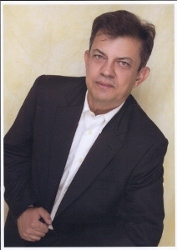
A few years ago, Roger told me about a manuscript he was working on and asked if I'd look at it. I was so impressed with the story that I insisted he not give up on the project. Since then, I've observed how hard he has worked on the book and how willing he was to accept constructive criticism. He has now published his book and I am immensely proud of his effort. As such, without further delay, let me introduce you to Roger Koch ...
Aneeta: Welcome, Roger. Thank you for agreeing to this interview.
Roger: Thanks Aneeta for the opportunity to expose my views on your very informative and helpful site – I hope your reader will find mine a great story!
Aneeta: Let’s start with something about you. Where were you born, where did you grow up, what do you do for a living and where do you live now?
Roger: I was born in what was then Ceylon and now Sri Lanka, into a Dutch Burgher family – remnants of the old Dutch East India Company from the 18th century. But after Sri Lanka’s independence, my family migrated to Sydney, Australia when I was about nine and I was thus educated and grew up there, going to UNSW.
I had no real desire to travel or any specific background in hospitality (my degree was in Business/Commerce). But I did the proverbial year-long backpacking trip through Asia, Middle East (I was in Afghanistan just weeks before the Russians invaded) and Europe. Soon after I was given an opportunity of a mid management role in a resort in The New Hebrides (Now Vanuatu) and from there I worked my way through the hotel ranks in various locations from remote Palau and Pattaya to San Francisco, Singapore and Bangkok – now having lived in 14 cities around the world. After consolidating and opening the Sutera Harbour Resort in Kota Kinabalu, where I was also the Special Advisor to the Minister of Tourism/Chief Minister of Sabah, I moved to Kuala Lumpur where I now live.
In addition to writing I engage myself in various roles mainly related to the hospitality and tourist business and recently am engaged in helping set up a new hotel management company.
Aneeta: I know that you’ve been in the hotel industry for a long time and I’m sure you’ve got loads of stories to tell. What are your three most memorable stories from being in this industry?
Roger: I guess rather than focus on the numerous events, I should talk about the interesting people.
The first icon I really ever met was James Michener who came as the official U.S. representative to witness the handover of the New Hebrides ‘condominium’ - jointly owned and run by the British and French – of the new Republic of Vanuatu in 1981. It was quite bizarre how the two European nations, at loggerheads until then, ran the little island group with two entirely separate languages, governments, education systems, hospitals, police forces and entire public service sectors. For example, if I was attacked beside say, a French policeman, he would be unable to assist me as I, an Australian, fell under the British jurisdiction. In fact, the decision as to which side of the road to drive on was argued for hours by the two opposing governors at the central Hotel Rossi in Port Vila. They finally agreed that the nationality of the person passing by in a vehicle would determine the outcome. It turned out to be a Frenchman on a bicycle!
I was intrigued by Michener’s charm and humility – he was a rather smallish man and it was clear his wife ran his affairs. It may have planted the seed for my much later writing aspirations. Anyway, due to the Cold War I had to isolate him in the hotel well away from the Russian Ambassador who could only address questions and receive responses through his assistant. The P.A’s simultaneous translation ability was fascinating and I figured it was the only reason this non- literate (in English) ambassador could perform his diplomatic functions. However, after a thorough grilling of all the affairs of Vanuatu along the way to his villa in the sprawling resort, the Ambassador finally shook my hand and said: “Thank you for a most enlightening and delightful stroll through your marvellous property.” In a perfect Oxford accent!
Doris Duke, the extremely reclusive Rothmans heiress and at the time, the richest woman in the world (She was subsequently the subject of two movies – including “The Loneliest Woman in the World” with Farrah Fawcett) was enigmatic and very Joan Crawford like in her bearing and manner. Having flown her private jet to the resort I managed in Palau, she had invited me to join her for dinner in the company of her butler (Played by Richard Chamberlain in both movies) - apparently her subsequent murderer, along with Hugh Hefner’s daughter and a then well known actor, Jim Nabors. I wasn’t quite sure who she was at the time but I guess the private jet and the company she kept as well as their stay in the Presidential Suites should have alerted me.
Rather disappointed by the facilities on the island, she asked me if I could recommend another restaurant beyond the fine one in our hotel. I was happy to suggest a seafood restaurant popular with the locals, but I perhaps should have stopped to think before adding: “But it’s rather expensive, you know”. The gaping expression of disgust on each of their faces remains indelibly planted in my memory.
The next character I also met at the Palau Pacific Resort where I was General Manager. I had been notified to be on the lookout to assist a well-known photographer who was to be staying with us. Upon returning from an outing on my day off, I was concerned to be notified that she had checked in and had demanded that I contact her. Upon calling her room, I realised from her voice that I had just woken her from her 36-hour journey from L.A. But she brushed aside my apology and offer to call back, insisting to see me immediately. She was thankful for my offer to visit her in her room.
My first impression of Leni Rifenstahl was with the vivacity of this very elderly woman, who led me in and proceeded to introduce her amazing credentials. I sat wonderstruck by her photos and evidence of her very close relationship with Adolf Hitler and the senior staff of the Third Reich, although she was Jewish. I learned that she was the producer and director filming 1936 Olympics wherein she invented the ‘moving track camera’ process to film the great Jesse Owens, and the subsequent adulation from the likes of George Lucas and Steven Spielberg and Woody Allen, who bowed to her invention and talent.
I was fascinate to learn that, thrown out of Germany after the war, she took refuge in the Sudan where she took most of the pictures I fully recognised from my childhood of the stark and spectacular images of Africa in Life, National Geographic, and Time magazines. She then went on to tell me how she lied about her age to her diving instructors, who would have prohibited her at that age of 73 (8 years earlier), from gaining her PADI certification to pursue her latest career in underwater photography, for which she had by now built a considerable reputation.
Dumbstruck and heady from the hours of learning of her incredible achievements I nevertheless gathered my wits to ask her why she wished to see me so urgently. I was brought back to earth by her reply: “Your room rates are too high. Can I get a discount?”
Aneeta: Let’s now talk about your book, ‘The Underlying Hand’. Although I know all about it, for the benefit of my readers, please give us a description of your novel.
Roger: The seed came from a story called “The Epic of Gilgamesh” The oldest piece of writing known to man - even older than Moses’ ‘Genesis’. Yet the Gilgamesh story tells almost the same story about the The Great Flood of Noah. So, I got to thinking about how the Bible and mythology worldwide all tend to agree - but only with different interpretations.
The Underlying Hand thus takes a “What If” perspective. It’s a story first of all, full of characters and events, but underlying it all is a plausible interpretation of such things as how and why mankind came to be – indeed how and why do we believe what we do. What happened in Eden? What is this Tree of Knowledge? Who were/are the gods of mythology? Who were the ‘sons of god’ and ‘the sons of man’? What caused the Great Flood? Where are those ‘immortal’ gods now? Who is really the Underlying Hand?
Book One explains who, how and why, but the following books in the trilogy will go into what happened from there and how human history evolved from there. Essentially it is a very human drama, but naturally includes superhuman involvement. Modern advances in medicine and science helps to explain a lot. Moreover, it has put us on the theoretical threshold of immortality and the story explores some of the dilemmas that can cause.
The story is essentially told from the perspective of Nin - the daughter of the king of the Marduks. The king’s multiple marriages causes a rift amongst her step siblings that have profound effects on their race, which actually lead to the development of mankind. The siblings’ disagreements ultimately lead to taking advantage of a cataclysm caused by the Marduks themselves that results in the decision to annihilate mankind, except for some last minute intervention. To catch the whole story will require reading the book and many are looking forward to the natural continuation, which will appear in Book Two – The Gilgamesh Chronicles.
Aneeta: You chose to self-publish. Why? Has it been a good experience?
Roger: Initially I was reluctant and skeptical but overall it’s a much speedier process. Moreover, the author has much better control of the outcome. However, that requires also staying on top of the process and maintaining quality control, as independent publishers tend to follow a formulaic approach, so you really need to know what you want. Even the editing process needs to be monitored by the author and I’m glad I therefore had your help in that aspect.
If the author is clear on what should be the final outcome, then they can be guided accordingly and you will get a good product. After that, although publishers have good networks, you still have to do your own marketing in addition. Overall, and particularly with e-books and print-on-demand approaches by many publishers nowadays, it’s a good methodology – better if the author has already developed a following.
Aneeta: Obviously, there are elements of storytelling in your work. Which element have you used most and why?
Roger: Actually, following your suggestion, I read and I tried to adopt the James Scott-Bell simple set of principles - the ‘LOCK’ system. (LOCK stands for Lead, Objective, Confrontation and Knockout Ending). Those are primary necessities. But internally also, each scene must end with a ‘grip’ to entice the reader to read onto the next one. I tried to employ that process as much as possible, often breaking scenes to achieve the objective.
Aneeta: As you know, this website is for storytellers. What advice would you give to those who would like to tell their stories?
Roger: Well, you can’t beat the old cliché: “Just write!...and write…and write… The fact is that what starts as an interesting story, turns out invariably to be a vague outline and upon re-reading you will find so many errors and anomalies. But that’s how it should be. Because the reality is there is no escaping the rewrites. Just correcting those errors and anomalies leads you onto new paths and often the final story will likely only have the bare skeleton of your original idea - with a completely different flesh covering, skin tone and a whole new set of clothes! But also, as one reaches a certain point when the right structure is created, the story tends to wrap itself around it as if it’s the only one that belongs. I guess that’s when you can say you have a great story.
Aneeta: Roger, this is all I have to ask. Is there anything else you’d like to add?
Roger: Only that I’m looking forward to continuing the story and am anticipating the third book in the intended trilogy – The Divine Chronicles, which will lead to the present and future.
Aneeta: Roger, thank you.
Roger: Thanks for the opportunity. Just the interview has been a learning and useful experience.
This piece may NOT be freely reprinted. Please contact editor @ howtotellagreatstory.com for reprint rights.
Click here to return to the index of interviews on 'Blow Your Own Trumpet!'
 Introduction
In December 2011, I received an email from Prashant Karhade informing me about a new book and debut author. I read the email with much interest and wrote back to ask if the author would like to be interviewed. He agreed and without further delay, let me introduce you to Armaan Farid ...
Aneeta: Armaan, thank you for agreeing to this interview.
Armaan: Thank you so very much for taking out the time to have me here. It’s an absolute pleasure.
Aneeta: Let’s start with something about you. Please tell me where you were born, where did you grow up, what do you do for a living and where do you live now?
Armaan: I was born and raised in the beautiful city of Hyderabad. Blessed to say that it was a typical childhood, with the perfect mixture of mischief and discipline. As for what I do for a living, well I recently graduated with a Bachelors degree in Commerce. I work part time in my family’s restaurant, but for the most part, I try my best to write good stories. I still reside in Hyderabad, and can think of no better place to call home.
Aneeta: From the note I received from Prashant Karhade, I understand that you’ve written a book. Before we go into the book, proper, tell me about writing. Have you always wanted to be a writer? Why?
Armaan: Truth be told, I’ve had quite a few dreams that I have chased, but the love of writing has been ever-present in my heart since my childhood. I suppose the reason why I love this field so much is because I have always had a deep rooted passion for the English language. I was mesmerized by the power of words, either to inspire, move or shock people. Couple that with my desire to make a mark in this world, and the thought of becoming an Author became my heart’s greatest desire.
Aneeta: Let’s talk about your book. What is it called and please describe it for me.
Armaan: The title of the book is “Stories From The Heart Of A Dreamer”. It’s an anthology of seven different stories. The book covers a variety of genres, ranging from Romance, Mystery, Crime/Thriller and journeys of a human life. Each story is independent of the other, with its own plot, and narrative style.
Aneeta: Naturally, your work will involve many elements of storytelling. Which element have you used most in your work?
Armaan: I think although the book contains different stories and the narration is done in a manner befitting the genre of the tale being told, I have a very set style of writing. A good plot is used as the strong foundation on which the story is told. Attention to detail is paid great importance, because I would like my readers to be able to clearly visualize the events occurring in the book within the eye of their minds. Dialogues are personal, and done in a manner that suits not only the nature of the characters involved, but also the nature of the relationship between the characters in question.
Aneeta: What advice would you give those who would like to venture into storytelling?
Armaan: It is impossible to give any specific advice to those who come into this field. It’s a very personal field, and you have to find your own path. The only advice that I can give to the brave who are willing to follow the road less travelled is, if you genuinely believe in yourself then follow your dreams. For only those bold enough to chase their dreams are the ones who catch them.
Aneeta: Armaan, this is all I have to ask. Is there anything you’d like to add?
Armaan: To everyone who has already picked up a copy of the book, I hope you enjoyed it, and I am extremely grateful for the support shown. For anyone who may now believe that I am worth taking a chance on, and are willing to read my work, again, Thank you for the support, and I sincerely hope that you enjoy the book.
Aneeta: Thank you, Armaan.
Armaan: Thank you so much for your time and patience.
This piece may NOT be freely reprinted. Please contact editor @ howtotellagreatstory.com for reprint rights.
Click here to return to the index of interviews on 'Blow Your Own Trumpet!'
Introduction
A board-certified internist, Dr. Allen Malnak served as chief of medicine at Fort Sill, OK, and was medical director of a number of organizations, including the Emergency Department of Chicago’s Mount Sinai Hospital. During his long medical career in the Chicago area, he was also a clinical investigator in liver disease as well as an assistant clinical professor at the Stritch School of Medicine, and a practicing internist. Following retirement, he and his wife Patricia moved to Bonita Springs, Florida. His interest in the Holocaust was sparked by the fact that all the men, women and children of his father’s large Lithuanian family were sent to a death camp by the Nazis and murdered.
Thanks for this interview and congratulations on the release of your suspense thriller, Hitler’s Silver Box. What compelled you to write this story?
When my father came to America in 1906 at age 16, he had only one distant relative in this country. He left behind in Kovno, Lithuania a large family, including his parents, eight brothers and sisters, cousins, aunts and uncles. They ranged in age from the elderly to babies.
Dad died of natural causes during the Second World War and immediately following the war, my late brother Lewis and I began to try to track down our father’s European family. I was just 16 when the war ended. We wrote letters to everyone we could think of and after about a year received a detailed reply from the International Red Cross. Nazi records as well as witness reports indicated that all members of dad’s family had been murdered either in or near Kovno or after transfer to a death camp. Every man, woman and child!
So, one entire side of my family was destroyed by the Nazis. Of course, I became interested in the Holocaust and began reading articles about it even during my high school and college years. During my internship at Chicago’s Cook County Hospital, I read a short book, Doctors of Infamy, which covered many horrendous medical experiments performed on concentration camp prisoners by Nazi physicians. The book was so disturbing that after reading it, I tossed it into a garbage can. My next book on the subject was Elie Weisel’s NIGHT. I then became occupied with my professional career as well as with my growing family for many years. When I reached the age of forty, I decided I owed it to my dead family members to engage in a real study of that terrible time. I then spent perhaps two or three years of my limited free time reading every book I could find on the Holocaust.
Years later, I retired from the practice and teaching of internal medicine, and my wife and I moved to Bonita Springs Florida. I noticed in the Naples Daily News an article describing a course in writing fiction being held at the Naples Philharmonic. The teacher was Hollis Alpert a well known novelist, biographer, short story editor as well as a movie critic.
I took classes with Hollis for a couple of years. He would give us assignments, often listing several subjects that we should use as the basis of a short story. He would critique each story and at the next weekly session read some of them to the class.
One topic I picked was titled “A Silver Box.” For some reason, I decided to write it about a concentration camp prisoner at the Theresienstadt Concentration Camp who was forced by a Nazi colonel to make a silver box which would be a present for Adolph Hitler.
After reading the story in class, afterwards, Hollis suggested that this story could be expanded into a novel, and that started the process that eventually lead to Hitler's Silver Box.
What parts of the novel are actual historical facts?
While Hitler’s Silver Box—A Novel is a work of fiction, it’s loosely based on the fact that during the Second World War, Nazi scientists worked up to the war’s end on a multitude of secret weapons on which Hitler pinned his hopes for a last ditch victory.
These weapon systems ranged from very long range rockets that could be fired from underground bases to alternative physics, robotic warriors, new energy sources, radical germ warfare and of course, nuclear weapons.
In the novel, the facts were modified to suggest that many objects which were later called UFOs were also developed by Nazi scientists in concealed locations, and various secret laboratories were set up around the world including in areas of both Arctic and Antarctic wastes where explorers had never trekked.
What was your writing process like while working on this novel? Did you have a disciplined schedule?
Because of various acute and chronic illnesses, I could not keep to a writing schedule. I followed the mantra of “write—rewrite—get it right.” Unlike many expert suggestions, I constantly re-edited my previous work, then edited it again and again.
From conception to typing ‘The End,’ how long did it take you?
About ten years.
The story takes the reader from Chicago to Paris to the Czech Republic. Did you travel to Europe as part of the research?
I have visited many countries in Europe and Paris is my favorite city in the world. I had many plans to visit the Czech Republic, but like Max in the book, health problems kept canceling the plans.
What was the hardest part of writing Hitler’s Silver Box?
Dialogue and careful descriptions were difficult crafts to understand and learn, but the hardest part was describing the conditions that Max went through in the concentration camp using the “particular” silver, the provenance of which nearly drove him and me mad. The dramatic ER scenes were easier because they were based on my personal experiences. Since like Bruce in the novel, I also have claustrophobia in tunnels, writing that scene caused me some discomfort.
What’s in the horizon for Allen Malnak?
If my health holds up, I just might write a sequel to Hitler’s Silver Box. If the Spielberg types come sniffin; around to make the novel into a movie, well I just might be forced to interview Charlize Theron to see if she’s “hot” enough to play Sari.
Any last words to my readers? The incidents that pushed me to finish Hitler’s Silver Box were linked to the website of one of our local newspapers. Two anonymous neo-Nazis constantly spewed their racist, ant-Semitic slurs, bragging about their continued worship of Adolph Hitler and the murderous Waffen SS, while denying every aspect of the Holocaust.
I’ll close with a quote from a novelist, Jerry Ahern, who reviewed my book for “Gun World Magazine.”
“Future generations have serious responsibilities, chief among these not to repeat past mistakes. Sadly, these days, there are still those who, out of ignorance or foul intentions, somehow revere the scourge that was National Socialism. That’s why, it’s good for the rest of us to get reminded from time to time, at least, how truly despicable the Nazis were.”
Read more about the author and Hitler’s Silver Box:
http://naples.floridaweekly.com/news/2012-01-12/PDF/Page_081.pdf
http://naples.floridaweekly.com/news/2012-01-12/PDF/Page_081.pdf
Website: www.hitlerssilverbox.com
This piece may NOT be freely reprinted. Please contact editor @ howtotellagreatstory.com for reprint rights.
Click here to return to the index of interviews on 'Blow Your Own Trumpet!'
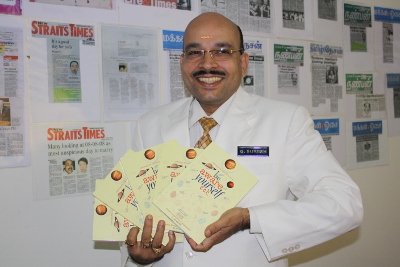 Introduction
I first met G. Suresh in August last year. Since then, I've observed how enthusiastic and knowledgeable he is about his vocation. I asked him if he'd like to be interviewed. Without batting an eyelid, he agreed. So, I hope that you'll enjoy reading his tale as much as I did. Without further ado, let me introduce you to G. Suresh ...
Aneeta: Suresh, thank you for agreeing to this interview.
Suresh: It’s my pleasure in sharing my life experience with an author like you Aneeta.
Aneeta: Let’s start with something about you. Please tell me where you were born, where did you grow up, what do you do for a living and where do you live now?
Suresh: I was born and brought up in the state of Kerala which is in southwest India. I grew up in a village called Chambakulam which is today world renowned for its backwaters.
I am a professional astrologer practicing and living in Kuala Lumpur, Malaysia, for the past 20 years.
Aneeta: Can you tell me how did you come to follow this vocation and why?
Suresh: I grew up in a household where my grandmother used to talk about planetary influences (or astrology) in everything that we do. As a child I was curious about that subject and took an interest in that subject matter but I did not believe in it. I believed in modern science which required evidence and proof.
I never thought of becoming a professional astrologer in my early days. As a young adult I was an active sportsman (Bronze medallist, swimming, in the 1989 Asian Games) and was also involved in cultural and arts activities. I joined the civil service for a short while before venturing I into my own business and I was successful in whatever I did.
However, I began to notice a certain pattern emerging in whatever business I did. I was unable to sustain that business for longer periods. I was puzzled which set me thinking and that’s when I began to probe for answers. Since I had some background knowledge about astrology (thanks to my grandmother) I decided to use that knowledge to understand my own life and to chart my life course. Delving deep into the subject, I realised that certain planetary positions and patterns of energy can bring a blessing know as “Raja Guru Yoga” (An advisor or teacher to the King). Upon reading and understanding the facts of my life, I began to seriously practice astrology for the public.
Readings for all my clients are strictly confidential. My clients are from all walks of life -- -- some are royalties, presidents of certain countries, Cabinet Ministers (local and foreign) as well as those in the film industry (local and foreign), those in the legal and medical profession and others.
Aneeta: Let’s talk about your book – Be Aware of Yourself CCC. Please describe it for me.
Suresh: Be Aware of Yourself CCC is a book that provides information about you and the universe, how each and every individual or being is connected with planetary movements, what makes you go through the different experiences during your life time, what causes or influence the various changes in your life.
Aneeta: Naturally, your work will involve many elements of storytelling. Which element have you used most in your work?
Suresh: Astrology is NOT Fiction. It is a Science. Basically all five elements are involved in Astrological understanding such as Earth, Sky, Water, Wind and Fire and it is being said based on the FACTS of energy movements & patterns.
Aneeta: May I just add here that not all storytelling is fiction. There's lots of storytelling in non-fiction as well. What advice would you give those who would like to venture into storytelling?
Suresh: First and foremost the author has to know the subject/topic/theme well. Fiction and non-fiction works need some degree of research work. Once the theme or subject has been identified, the author has to look into the peripherals, all of which must be related to the main theme. We can draw a parallel between a flower and writing a book or novel. You will notice that in a flower all the petals, no matter how many layers, are all connected to the centre, the focal point.
Aneeta: Suresh, this is all I have to ask. Is there anything you’d like to add?
Suresh: Most people are under the impression that astrology is “mumbo-jumbo”/ nonsense/ superstition or the stuff of science fiction. Astrology, from what I have seen and experienced, is a science and it is based on facts as there are evidences to support this. Basically, the entire Universe or Multiverse is manifested and mobilised with two forms of energy which we identify as Visible and Invisible energy. These two energies exist in very forms of life and non-life and elements. The interaction of these two energies influences all life forms. The universe, the planets and us -- we are all related and all the elements exert an influence in our day to day life.
Naturally, to know more about the subject matter, please read “Be Aware of Yourself CCC” or check out cheap psychics. You can also visit my websites:
http://www.beawareofyourselfccc.com
Aneeta: Thank you, Suresh.
Suresh: Thank you for your time Aneeta.
This piece may NOT be freely reprinted. Please contact editor @ howtotellagreatstory.com for reprint rights.
Click here to return to the index of interviews on 'Blow Your Own Trumpet!'
Page 20 of 22