
Transform ordinary stories into extraordinary ones with our proven 7-step method. Join thousands of storytellers on their journey to mastery.

 Introduction
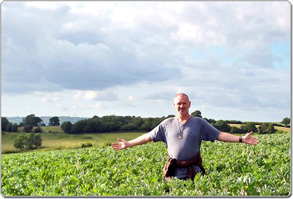
Terry wrote to me a few weeks ago telling me a little about his work. This interview shares with us his story and information about his book. Without further ado, let me introduce you to Terry Elston ...
Aneeta: Terry, thank you for agreeing to this interview. Please tell me a little about your early life – where were you born, where did you grow up, what you do for a living and where do you live now?
Terry: Hi Aneeta. I was born in Northwood in a police station of all places! My father was in the police at the time, so we had a flat there and I was born at home. I now live in Brighton.
Aneeta: Before I discuss your books, tell me why NLP? What attracted you this kind of work?
Terry: I was already setting up as a coach when, on holiday, I witnessed my flat mates having an allergy for cats removed. I wondered where the manual for that was? It certainly wasn’t in a coaching manual. I knew the person that did that was an NLP Practitioner. Later on, when I was blocked and not motivated, I thought I’d try her out. It worked perfectly and I was hooked!
Aneeta: Tell me about your books. What are they about?
Terry: The book I’m most proud about is called The ABC of Abundant Living. I’ve written three other books on NLP and two other books, yet this is my favourite. It’s everything I’ve ever learned about life and the secrets it holds. I’ve had a colourful life with many experiences and many good teachers. The esoteric part of my life has been nurtured and I’ve been privileged to have been given many ‘secrets’ to share.
Aneeta: Does your work involve any elements of storytelling? If so, how?
Terry: Everything is a story to me: It just depends which way you’d like to tell the story. My stories usually have a web woven in the matrix of life with many players coming to act as resources in this magical world. I also weave in many quotes from others and myself to bring the pages to life.
Aneeta: As you know, this website caters for storytellers. What advice would you give those who would like to start storytelling?
Terry: Start with your ability to use metaphor. You can say that a ‘tree is over the hill’ – or “the dew settled nicely onto the map of dampened grass, while the tallest of trees beckoned to the others to be as big and proud to challenge even the hills around”.
Aneeta: This is all I have to ask. Is there anything you’d like to add?
Terry: I’d like to share one secret to anyone who is listening. There are many lives you can lead and voices you can listen to. And there is one that calls you and shows you paths to follow that will nurture all the seeds you want to plant. Listen carefully to that voice.
Aneeta: Terry, thank you.
Terry: Thank you Aneeta.
This piece may NOT be freely reprinted. Please contact editor @ howtotellagreatstory.com for reprint rights.
Click here to return to the index of interviews on 'Blow Your Own Trumpet!'
 Introduction
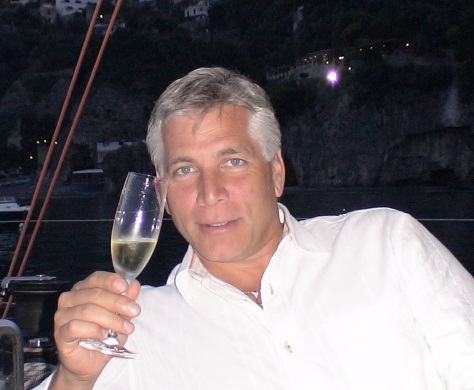
Mayra Calvani wrote to me a few days ago. She was introducing an author who has just had his book published and is about to have it released. I was taken by the subject matter of his book and offered to interview him immediately. I'm so glad I did because the story Rudy tells is very interesting. Without further ado, let me introduce you to Rudy Mazzocchi ...
Aneeta: Hello Rudy. Thank you for agreeing to this interview.
Rudy: I appreciate the opportunity to introduce myself to your audience.
Aneeta: Let’s start with something about you. Please tell me where were you born, where did you grow up, what do you do for a living and where do you live now?
Rudy: I was born in Pittsburgh, Pennsylvania (went to the University of Pittsburgh as a pre-med student), then on to Los Angeles for graduate studies at UCLA (in biophysics), started my first company in Minneapolis where I lived for nearly 10 years, then moved to Florida where I now reside and work as a CEO of an early-stage Ophthalmology Device company that is developing an electronic, autofocusing implantable lens for inside the eye.
Aneeta: One of the things I was intrigued about, from reading the stuff on your website (http://www.rudymazzocchi.com) is that you’ve been involved in authoring patents. What has this kind of work involved?
Rudy: Early in my career, I developed a curiosity for understanding medical procedures and the challenges and risks behind them (mainly in the fields of paediatrics, cardiology and vascular disease). I learned that physicians and surgeons love to teach, and if you’re sincere and ask good questions, they’ll tell you more than they know… you just have to listen. I then developed a knack for coming up with solutions and communicating them to engineers. This allowed me to file dozens of patent applications for novel devices, methods and processes… probably too detailed to describe here. However, writing a patent is another “storytelling” process. My first submission to the patent attorney (or directly to the patent office) is in the form of a synopsis that tells the story of what the “discovery” is all about and why I think it’s so unique compared to what is “known in the art” today.
Aneeta: Is there anything new in the embryonic stem-cell world?
Rudy: Good question—tough answer. I co-founded one of the first U.S. embryonic stem cell companies in 1999, just about the same time the Catholic Church declared this type of research as “unethical”. Ironically, the company was one of the 10-12 research entities that received conditional approval from President Bush to pursue such activities, but continued ethical and political pressures made it difficult to finance the company beyond a handful of dedicated private angel investors. The company was eventually acquired by a publicly-traded company in Australia. I am unaware of many “clinical” advancements here in the U.S. but know that international activities continue in several foreign countries.
Aneeta: So, from what I can understand, you’ve used all these experiences to come up with a novel. Please describe this novel in detail for me.
Rudy: Well, I don’t want to give too much away, but I can tell you that the Prologue is a factual reproduction of my experiences in a human genetic engineering laboratory when I was an undergraduate student. This was a time when we (and other researchers) were pioneering the extraction and culturing of fetal organs. The story then fast-forwards to current time when the junior research associate (yours truly) has grown into a successful entrepreneur-turned-venture-capitalist who agrees to fund a new start-up company that has designed a new “mobile” therapy unit intended to enhance one of the oldest and most prevalent medical procedures – abortion. Unbeknownst to the investors and employees, the extracted fetuses are contained in special chambers and solutions that are then shipped to a high-tech private facility in India where their organs are harvested and grown like hydroponic vegetables until they are large enough to be sold into the black market for human organ transplants. The story’s characters were hand-selected by an unknown, faceless evil syndicate, over the course of many years, to be manipulated into servicing this end-game. Their lives become a roller-coaster of emotions as the story unfolds to reveal a dark world of abortion, rape, human-trafficking, assassination and murder.
Aneeta: Before starting on this novel, did you attend any courses/classes on writing?
Rudy: None, zip, zero….
Aneeta: Naturally, your work will involve storytelling. What aspect of storytelling did you use most and why?
Rudy: My day-job as a start-up CEO involves a LOT of storytelling. The story needs to resonant with the physicians, researchers, investors and eventually new employees. Just like in writing a good novel, you always need to emphasize the human element. In the case of starting a medical technology company, I always start with describing the “unmet need” and how this new company is going to improve the quality of life of people. The company’s Mission Statement sets the theme for a story that cannot afford any loose-ends, mis-steps, or unknown conclusions.
Aneeta: As you know, this website caters for storytellers. What advice would you give those who would like to venture into storytelling?
Rudy: I believe the best stories are those in which you instil yourself, in which you put yourself in a position to be physically or emotionally “vested”. Once you do, the story because real and alive. Your passion, commitment, persistence, and intensity will then blur the lines between fiction and reality. In my opinion, these are the BEST stories!
Aneeta: Rudy, this is all I have to ask. Is there anything you’d like to add?
Rudy: This is a new industry for me that I’ve only started to “learn” about 18 months ago. It’s fascinating and enjoyable. I’ve made writing my new hobby and pastime… (although I really do need to get back to the gym)!
Aneeta: Well, Rudy, welcome to the publishing industry! Thank you for giving us your time, here.
Rudy: It’s been a pleasure!
Rudy's interview with Mayra Calvani
Congratulations on the release of your medical thriller, Equity of Evil! Tell us, what’s inside the mind of a medical thriller author?
I believe most (if not all) authors of medical thrillers have a direct connection to the medical or healthcare industry, either as a physician, researcher, caregiver or industry expert. A medical thriller author needs to capture all the necessary literary components of a successful novel, in addition to those of a suspenseful thriller, AND also include the correct medical terminology and technology description in such a way that the layman can seamlessly understand. The compelling thing about writing medical thrillers is that we have an opportunity to educate readers about real technologies that potentially impact each and every one of us. It’s a theme that every reader could potentially relate to.
Equity of Evil deals with the controversial subjects of abortion and genetic engineering. During the creation of this novel, were you worried about what the general reader’s response might be?
It is important for readers to understand that I made a substantial effort to not take either a Pro-Life or Pro-Choice position when using the abortion theme as a backdrop of this story. Neutrality on such a controversial topic is very difficult, but I believe that regardless of your political or moral position, the reader will find support in the words and actions of the book’s characters for whatever perspective they might have. However, sometimes a novel comes along that forces us to face the brutal reality of our world. If Equity of Evil produces a response from readers on these topics whom otherwise may have never given any thought about them, then I’ll consider myself a successful writer no matter how many books are sold!
Tell us about your protagonist, Roman Citrano. Share with us something about him that readers won’t be able to resist.
Roman is one of those rare individuals who we may all know… successful, charismatic, willing to take risks that only others talk about, but one that has also experienced as many failures as successes. Divorced many times, but always dating the woman who seems unapproachable, he gives the impression of a womanizer, but shows his embarrassment of being a man when he realizes that his new business venture has placed many of them in harm’s way. As many of us often do, he starts out with the best intentions, only to become a victim of his own ambition and self-determination. He’s human… very human.
It isn’t fair to leave the villain behind. Tell us something about Professor Marcus Levine that readers will love to hate.
Although they share a common desire to be successful, Professor Levine is just the opposite of Roman Citrano. He believes he’s untouchable, with an ego and insatiable desire for wealth that grows with each incremental step of his conniving plan. He’s a manipulative, lying, inhumane scientist who treats women as he does the animals in his research laboratory. Readers will find it easy to hate him!
Who is your favorite character in the book? Why?
Although I can personally relate to Roman, my main character, I favour Andrea who is not only dedicated to the field of medicine, but very passionate about providing care for her young patients. She’s a strong, independent woman who becomes an unfortunate victim, whose fight for survival turns into a search for justice and revenge.
Several scenes in your story are particularly violent against women. Were these scenes difficult to write?
Yes, there are several violent scenes in the story that were difficult to write, but this was not designed to focus on the atrocities against women, but the atrocities of our society. Many of these scenes were taken from reported incidences, in real environments, that unfortunately occur with real people all too often. Yes, they’re difficult to write about, but even more difficult to accept that they are a part of the dark side of our world.
What did you find most challenging, the scientific details of the story or the technical aspects of novel writing? Did you stumble along the way?
I’ve been living the scientific details of this story for a long time, so this is an easy one. I had to learn the basics of writing as I wrote this original manuscript. My first editor (Gerry Mills) had to school me on the fundamentals of point-of-view (POV), transitions, some basic grammar, and as I hate to admit it, often times… punctuation. I frequently stumbled, tripped, and fell along the way.
How long did it take you to write the novel and how did you find the time to?
It took approximately a year to research and write the initial manuscript. I became obsessed with writing during every flight (including long trans-Pacific and trans-Atlantic flights), during long evenings in hundreds of hotel rooms, and during early morning and late nights over the weekend. Don’t all writers do this?
What do you want readers to get from Equity of Evil?
There are several new scientific innovations and breakthroughs that will impact our lives in the near future, and many more that will affect the next generation. We will have no choice about their existence… they’ll be here if we like it or not. Therefore, we all need to be aware of them and start to think about how society is going to accept and manage them. Equity of Evil touches on many of these medical and scientific innovations that are on the cusp of shaking up public and political views in the major nations of the world. I’m hopeful that this novel (and those underway) will help open up people’s willingness to process such new revelations that will surely disrupt our current moral and ethical opinions.
I hear you’re working on a second medical thriller. When will that one come out?
My second manuscript is well underway in hopes of releasing it near the end of the year. My goal is to make this the second of a trilogy that we might refer to as “The EQUITY Series”. It will carry a similar theme, but focus on a technology (which currently exists) that can allow us to re-wire the brain… a process known as “neuroplasticity”. Can you imagine a world in which we can eliminate fear, restore memories, create artificial desires and dislikes, or even eliminate pain?
Is there anything else you’d like to share with my readers?
I just sincerely hope that my readers take away something positive from this story, while learning a little more about the advancement of medical technologies that many others don’t want to admit even could exist.
Read an excerpt of Equity of Evil: http://twilighttimesbooks.com/EquityofEvil_ch1.html
Also on Amazon Kindle
This piece may NOT be freely reprinted. Please contact editor @ howtotellagreatstory.com for reprint rights.
Click here to return to the index of interviews on 'Blow Your Own Trumpet!'
 Introduction
Rolland wrote to me some time ago with a new resource he has developed for storytellers. I asked if he would like to be interviewed and he agreed. Without further ado, let me introduce you to Rolland Love ...
Aneeta: Rolland, thank you for agreeing to this interview.
Rolland: Your welcome, Aneeta.
Aneeta: Let’s start with something about you. Please tell me where you were born, where did you grow up, what do you do for a living and where do you live now?
Rolland: I was born in Summersville, Missouri and grew up in the Ozark Mountains. Currently I live in Overland Park, Kansas.
What I do for a living now is teach writing, storytelling, journaling and Lewis and Clark workshops for Kids. I also created a workshop to motivate Senior Adults too write their life story.
My partner Mark Andersen, who is a software developer and Artic Explorer have expanded that into a website that includes children writing the life stories of their parents and grandparents. The result is increased communications between youth and seniors, something which has been lost with the advent of texting and the Internet. My last class had (120) – 3rd grade students. There are (40) million seniors over the age of (65) in the United States most of whom have recorded nothing about their history. As Mark Twain once said, “There has never yet been an uninteresting life.”
I have made presentations to Boy Scouts, Cub Scouts, Camp Fire USA, Schools, Libraries, Retirement and Assisted Living Facilities, Churches, Business and Civic Groups … ✎ I have had stage and film roles as a villain and a monk, I played John Calvin McCoy, founder of Westport Missouri and in 2004 during the Lewis and Clark bicentennial I was Silas Goodrich, Expert Fisherman. I play a standardized patient at Kansas and Missouri University Medical Schools. I was a doctor on Discovery Channels - Mystery Diagnosis and played the role of Major John Neelly in a stage production about the death of Meriwether Lewis. I also co-founded an educational software company and I have published (3) novels, (40) award winning short stories, a best selling computer book and I co-authored an award-winning cookbook. I was the Director of Respiratory Care at Barnes Hospital in St. Louis, a 1,400 bed teaching institution affiliated with Washing University.
Aneeta: Let’s talk about your website – http://imastory.com. How does it work?
Rolland: Imastory is a free, easy to use website that prompts users to write their life story. Here is a typical response we received from a parent about using the program with young children.
“Dear Imastory publishers, I watched the Imastory tutorial and I LOVE your idea! My son is in grade 2 and he is really enjoying writing and would really like what you all have created. It would be great to get some of our family heritage in writing. I'd like to also see if my sons school will use your program. Thanks for sharing!” Hilda
“Response to Hilda. One way to work with your son on Imastory is, you log into the program, create a story and use the writer’s block and helpful hints as aids. If need be you can type in whatever you son tells you and strike up some interesting conversation. Here’s something you might consider as a school project. Get other parents working with their children entering stories into the Imastory data base and set it up so those you select can be co-authors, sharing their knowledge and wisdom which is an interesting and powerful educational tool. We have created a number of safety aspects into imaStory, in addition to a “story flagging” feature the content can be monitored and everything edited or deleted at anytime. All that needs to be learned to use Imastory can be done in about 30 minutes and the stories used for many years.
Aneeta: There is something on your website called ‘story mapping’. Can you please explain what you mean by this?
Rolland: Story mapping is a method to link stories, authors and places together.
Aneeta: Naturally, your work will involve many elements of storytelling. Which element would you like to see most in the stories uploaded?
Rolland: Debra from France says it best in her testimonial. Your site is a great, valuable idea and I wish you enormous success with it! I perused some of the stories, and it's refreshing to read "ordinary" people talking about their extra-ordinary lives. So many details of who we are as human beings are lost because no one gives an ear to people who are not writers. Imastory.com is a tremendous service to humanity. All the best, Debra, Linkedin Member – France
Aneeta: What advice would you give those who would like to venture into storytelling?
Rolland: If you’re just breaking into storytelling speaking in front of strangers think of these simple things. Tell a story about something, which you are familiar. Maybe something you have told a version of before and got a good response. People liked what you had to say, smiled and laughed and clapped afterwards. And for goodness sakes don't speak too quickly-- don't worry about a long pause. When you're the one speaking/performing a pause of ten seconds can feel like an hour, but it's not really, during that time smile, maybe nod you head at someone in the audience who seems to like what you’ve got to say ...
One of the most important things is take a deep breath periodically and relax.
Aneeta: Rolland, this is all I have to ask. Is there anything you’d like to add?
Rolland: And you as well, Aneeta. Here is a final word about http://imastory.com If every school in the world would take advantage of this free and simple to use website Mark and I have created that prompts children to interview their parents and grandparents the communication gap between young and old would be much less and more wisdom would be shared. If you try IMASTORY and it doesn’t work exactly the way we have described, we’ll refund your money.
I'm also working on my project to get more children to interview and write the life stories of their parents and grandparents. If you are aware of any teachers who might want to help, please pass along the idea. Imastory is fun, free, easy to use and has a Lesson Plan for educators and a question guideline for students. The program provides a tool for schools, churches, not-for-profits and other organizations for creating not only life stories but also a friendlier and more productive community environment. The stories created can be printed and the books sold to friends and families as fundraisers.
Aneeta: Thank you, Rolland.
Rolland: And you as well, Aneeta. I appreciate your time and giving Mark and I the exposure.
This piece may NOT be freely reprinted. Please contact editor @ howtotellagreatstory.com for reprint rights.
Click here to return to the index of interviews on 'Blow Your Own Trumpet!'
 Introduction
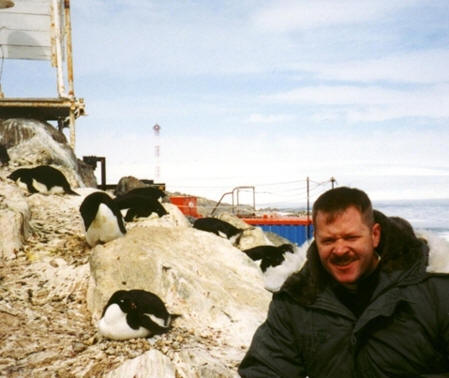
Bill Swears calls himself a service brat. He was born in Great Falls, Montana. He’s lived in England, Iran, Germany, and nine states. Bill flew military helicopters for twenty-two years, seven in the Army and fifteen in the Coast Guard. He sold his first short story while he was a Coast Guard rescue helicopter pilot, and immediately began writing a book. He finished that manuscript ten years later, after retiring from active duty.
On November 15, 2003, Bill broke his back while ditching a homebuilt experimental airplane 100 NM out to sea from Maui, Hawaii. He retired from the USCG in 2004, after spinal fusion surgery and rehabilitation. He says that there is an upside to that, because he shows up on Google searches:http://starbulletin.com/2003/11/18/news/index4.html.
Although he does show up on Google searches, Dark Phantom suggests that there are better ways to do that and Bill agrees.
Bill met his wife Teri in high school in 1978. They married in 1982, but didn’t get around to having children for seventeen more years. They have two kids, thirteen year old Alexa and eight year old Michael, and will celebrate their thirtieth wedding anniversary in July. Bill claims that they lost track of time.
The Swears family lives in a beat-up old log home on a ridge line in Peter’s Creek, Alaska with a brace of rare breed Eurasier dogs and a pair of cats. Bill earned his MA in English and graduated on Groundhog Day 2010, the year he turned fifty. He works as a technical writer and editor for a little known federal bureau. He has a spanking new webresidence and blog at www.BillSwears.com, and blogs at http://wswears.livejournal.com/.
About the book, Zook Country:
Metamorphic plague has swept the globe over the last five years. Victims become rabid non-sentient zooks, immensely strong and so fast that a normal person can’t see them move. A third of humanity has died, but people are fighting back, balanced on the razor’s edge between survival and apocalypse. Jake Chestnut and Gary Landon, both ex-army, are partners in Seraglio, an independent Kent, Washington based zook hunting firm. Both lost their families to plague and are part of the less than one percent of humanity with the innate ability, ESP, reflexes, and willingness to shoot where the zook will be next that are necessary to combat feral zooks. Zook-hunters are charged with hunting down and killing plague victims. These battle scarred men and women have been on the front line with no reprieve for five years, and the survivors have developed an esprit de corps similar to that of a WWI Aerosquadron.
Killing zooks for a living is tough, but the alternative is worse; eight months after infection, zooks metamorphose into non-corporeal ghasten, who live in collectives, herd zooks, kill with energy discharges, and create rifts in the fabric of reality that have swallowed cities. While working a contract to clear a first of its kind community/safe enclave for the elite, somebody tries to kill Jake, Gary, and their crew. With Gary badly injured, Jake must untangle a web of conspiracy to complete Seraglio’s contract and seek vengeance. What he discovers may lead to civil war.
From Coast Guard rescue helicopter pilot to apocalyptic science-fiction adventure writer. How did that come about?
I was reading science fiction in grade school. A lot of it. I read through all of the science fiction in the city library nearest my house when I was eleven, and in every school library from the time I left fourth grade until I graduated from high school. I couldn’t be forced to study my school-work, but that science fiction stuff my mother so disapproved of? I never really stopped. Before I joined the military I wrote a couple of science fiction short stories – really bad stories, but with a core of humor that my friends (and other people I was able to intimidate into reading my stuff) noticed. So I guess the question is more, “How did a budding young writer end up flying Coast Guard helicopters?” Now that was a long road. I knew I wanted to write, I knew I wanted to be a pilot, and I knew I wanted to be the world’s first independent cargo dirigible captain. But I really wasn’t ready to write in my early twenties, and I banged my head against that, until one day Teri pointed at one of the then popular commercials that said “The Army; the only service that will take you straight from high school to flight school.”
She still claims that she was joking, but nine months later, with an impressive battery of tests behind me, I was swearing into the Army for rotary-wing flight school. I thought initially that I’d like to follow in Dad’s footsteps, join the Air Force and become a jet pilot, but after I’d flown helicopters for a few years I realized that I was just having too much fun to give up the rotary-wing lifestyle. Flying seems like a young man’s career, and I stayed with that for my first career, moving to the Coast Guard when I realized that saving lives fit me better than taking them (training to take them. I’ve never been in combat). So, it seems like I’m breaking into a whole new gig, writing fiction, but really, I’m taking time to do something I’ve always loved. And now, I have a bunch of sea stories that I can weave into my writing!
What was your inspiration for Zook Country and how did you come up with the concept of ‘Zook’.
Believe it or not, I started writing about Jake and Gary while I was talking about using voice in dialogue at rec.arts.sf.composition. I threw out a snippet that was very close to the opening you can read today. I liked the characters and started to write, not knowing where they’d go. I got about two chapters in before I began to feel the shape of the novel to come. That’s when I wrote a rough story-arc that I followed for the rest of the draft.
As I originally wrote it, the story was mostly contemporary dark fantasy, with zooks being part of an attack on the human race by evil dragons. A good dragon had found his way to earth as well, and became a major character in my earlier draft. I was picked up by an agent almost immediately, but he convinced me to take out the fey/magical aspects and give it a more down to earth explanation. I miss Thomas the dragon even today, but the novel that came out was much tighter and easily visualized. The agent? He left the publishing industry entirely, though we’re still friends.
I remember when I first started to develop the zooks that I was thinking about vampires, and that I wanted to write a guy version of urban fantasy. At the time I was thinking that I wanted a new monster because I didn’t want to be stuck in somebody else’s pigeonhole, but that I also wanted to borrow from known monster archetypes so that readers wouldn’t be completely alienated. It seemed like burning up in contact with silver and being able to heal almost instantly would be recognizable as monster traits. Becoming non-sentient and apelike came from my prejudices about what happens to rabies victims in the later stages of the disease. After that, I just let the story flow and Ghasten came along as if that’s what is supposed to happen to hyperspeed feral apes.
I came up with the name zook as an integral part of the world I was imagining (and beginning to dream about). At first I didn’t know where the name came from – I finally posted a longer section with RASFC and asked my friends there to comment about zooks, especially the name, which worried me a little. Ric Locke (Temporary Duty: available on Amazon and Barnes and Noble) said that it was clearly a mashup of Zombie and Gook, and that made complete sense to me. Soldiers find ways to dehumanize their enemies so that they can get on with the business of killing them. I don’t really think of zooks as being zombies, but the parallels are obvious, so maybe my hind-brain was already making the connection.
Interview with Bill Sewers by Mayra Calvani (30 March 2012)
I understand you first self-published the novel before it was picked up by Twilight Times Books. I love success stories like that. Can you share with my readers how that happened?
I’m proud of my writing, but promotionally, I’m a real neophyte. After five full years in one publisher’s recommended pile (I checked in with her every few months and was always reassured that it was in her pile, and that she’d eventually get around to looking at it), while gaining and losing two agents from a rather famous F&SF centric literary agency, I gave up on waiting for the industry to get around to looking at me. I spent some months prepping the book for self-publication, setting up ISBNs, buying cover art, getting a copy/line edit from somebody I trusted, and running the whole book through several members of my writers group. Then I put it up on Amazon Kindle and nothing much happened. Apparently Amazon is releasing so many e-books that their market is glutted with new titles (or, just maybe, I’ve been lost in a sea of voices shouting “Buy me! Buy me!” and if I can get the right attention, some few people will want to face a new monster in their darker nights). While I thought about whether to expand my markets to other e-book providers or join Kindle Select, I sent promotional messages to each of my Facebook friends, and everybody I ever traded e-mail with, asking for reviews. Stephanie Osborne suggested that I friend Lida Quillen and offer the book to Twilight Times Books.
Sending individual messages to each of your Facebook friends is terribly labor intensive, but it netted me a few promises of reviews, and the name of a promising publisher. Here was this small but growing press with authors that I recognized, and here I was, starting to get a really good notion of just how time intensive and pricey it was to promote myself, so the idea really had a shiny glow. I queried Lida, she read the book and liked it, and then suddenly I was barreling down a road I thought was closed to me.
The road has been bumpy, but I went from 2007 to 2012 with the book in a big publishing house but no action at all, then was picked up and published in 11 days. I couldn’t decide whether ecstasy or head-desk was the correct response. I settled on muted excitement with a sense that the other boot would soon drop.
I understand Zook Country wasn’t the original title?
I originally wrote the book under the title Seraglio, because Jake and Gary named their company that, and because it has an uncomfortable resonance with something the bad-guys have done. Nobody at all liked that title, so I was casting around for a better one when my German publisher told me that he’d publish the book only if I renamed it Zookland. I like Zookland quite a lot, but thought that here in the US it came too close to the names Zombieland andZoolander. In fact, for the longest time, if I Googled Zookland I got the Ben Stiller movie.
Anyway, Zook Country as a term is reminiscent (to me!) of Injun Country, which I hoped would have meaning to some part of the US crowd.
The novel was also published in Germany. Is it still available there and was it published there in German?
Yes it is, yes it was. Zookland was translated to German by my friend Dirk Van Den Boom, and is available in hardback or trade paperback at http://www.atlantis-verlag.de/, or in trade paper or kindle from Amazon.com here in the U.S. – for anybody who speaks German. Really, anybody who speaks German should buy both books and compare them. Yeah, that’s the ticket.
Tell us a bit about your writing process. Are you a morning bird or a night owl? How long does it usually take you to finish a book?
I’m a morning bird by ingrained habit, but a night owl by inclination. Before joining the military, Teri and I thought nothing about watching the sunrise before going to bed. Now, I’m awake between 4:30 and 5:00 am whether I like it or not, and whether I’ve been asleep for three hours or seven. I’m probably most productive in the mornings, and on my days off from work, which is why it was so useful to be able to take this interview at such an early hour here in Alaska.
I’m not an outliner exactly. I usually start with a group of characters and a situation, then write a few chapters and decide who and what I like. Then I write what I call a chapterboard, which is sort of like an outline. I write a brief description of what I think will happen in each of twelve chapters. That description is sometimes a sentence, and sometimes two or three paragraphs about what I have in mind. The length of the description and the length of the chapters have absolutely no relationship, as far as I can tell. In one chapterboard from another book, “Tanos and Carolyn get married” was the description of three long chapters that involved an assassination plot and a vastly overcomplex royal wedding. The twelve chapters I write my chapterboard around have never come out in fact. Zook Country had a twelve chapter board, and came out to 33 chapters and an epilogue. Sometimes my characters disapprove of a planned action and go off to raise their own Cain. I do, generally, get to nudge them back toward my preferred ending.
I don’t know that I have a “usually” when it comes to finishing books. My first book took almost a year to write. Zook Country took less than three months in its original form. Now I have a high demand day job, so things are taking longer.
What is your favorite scene in the book?
Chapter 17, when Jake smells apples and tastes mocha. Anything more would be a spoiler, IMO.
Seriously though, having “favorite” scenes in a book that shivers between dark and light is difficult. I like the moment toward the end when Donna ends up out of bullets with her men dead or dying around her, defending herself with nothing but a stiff silver wire and mad martial arts skills. Donna is way cool and a far better character than I ever deserved to dream up – and like some of the best characters, she wasn’t intended to be there. She created her own space in my head and broke out onto the page without the least regard for my feelings.
At the other extreme, there is a scene when Jake and Gary take down a two year old zook that hurts every time I read it, and that cost me a lot of sleep when I first wrote it. In a way, I guess you could call that a favorite.
What did you find most challenging while working on Zook Country?
During the first draft? Getting to sleep at night. Zook Country came off my fingers almost as quickly as I could type. I woke up ready to write and had itchy keyboarding fingers all day. Of course I had to do other things, like eat, and chase people down in the street to get them to read snippets, so that wasn’t mindlessly easy. But then, I found a couple good first readers, and they kept hounding me for more chapters, so I could focus more on getting the next thing written.
I thought that writing the book would be the hardest part. When I got a call a few weeks later from an agent, I thought my authoring world was made. But when that agent friend asked me to reimagine the book without fey elements? That moment comes in a close second on the challenge scale. I felt so challenged that I wanted to fly to New York and have a loud chest to chest discussion with this fellow I’d never met. Then he arranged for his boss to visit me in Anchorage during BoucherCon 2007, to tell me that I had no idea what I was doing with dragons. I didn’t really believe the agency’s advice until I’d finished and smoothed the sans magic version, and even then I was pretty mad. I was really “challenged” when the agent I’d started with up and left the industry just as I was turning in Zook Opus mark deux. More challenged yet when the boss that hadn’t liked my dragon also turned out not to like my monsters, metamorphic plague, or anything except the characters, which he thought should be in an infantry based space opera out in the Zagravian sector. We dinked around for another two years before realizing that without the first interested agent, the boss was never going to be satisfied with an Earth based adventure.
What’s on the horizon for Bill Swears?
I’ve promised to write Rogue Country, a sequel to Zook Country next. It’s set in the Oregon wine country near the River of the Rogue. I’ve got two other novels in progress. One is a straight up space opera that I’m calling Mutiny on Hellespont, and the other is high fantasy, or maybe swords and sorcery, and an immediate sequel to my first (so far unpublished) book, Split Affinity. The sequel, which is currently at 80K words, will be called Growing Affinity, and is part two of three. I can’t let myself finish it until I’ve fulfilled my promise to Dirk Van Den Boom, who wants to exhaust himself translating the next zook story.
And, my day job. Ouch. Somebody find me a very wealthy zook enthusiast to pay my bills while I punch out the next book, please!
Author’s facebook: http://www.facebook.com/wswears
Link to excerpt: http://twilighttimesbooks.com/ZookCountry_ch1.html
Link to purchase page: http://twilighttimesbooks.com/ZookCountry_ch1.html. Buy it at the excerpt in any e-format, or link from there to Amazon (http://www.amazon.com), or Barnes and Noble (http://www.barnesandnoble.com/w/zook-country-bill-swears/1108892461).
This piece may NOT be freely reprinted. Please contact editor @ howtotellagreatstory.com for reprint rights. Click here to return to the index of interviews on 'Blow Your Own Trumpet!'
 Introduction
Mayra Calvani introduced me to an author who is about to have his book released. I offered to interview and I'm so glad he agreed. Without further ado, let me introduce you to Jack Whitsel ...
Aneeta: Jack, thank you for your email and for agreeing to this interview.
Jack: My pleasure, Aneeta! It’s so nice to visit.
Aneeta: Let’s start with something about you. Please tell me where you were born, where did you grow up, what do you do for a living and where do you live now?
Jack: I was born in Fremont, California. My dad was part of the big Intel migration that sent my family to Oregon during the early eighties. I have been an Oregonian ever since. I love the Pacific Northwest and couldn’t imagine writing anywhere else.
Aneeta: On your website, http://www.jackwhitsel.com/ you say that you hold a degree in finance, but study medieval history in your spare time. These are two very different disciplines. Can you please elaborate on this?
Jack: (Laughter). Yes...I definitely incorporate both sides of my brain. Though I always loved writing, during my college years, I decided to “play it safe” and take the more traditional role of obtaining a degree associated with Business. That’s not to say I dislike finance – as matter of fact, I enjoy investing and number crunching. But the geek in me is also there. It’s a “Gemini” thing I guess. Reading medieval history really taps my imaginative juices. I couldn’t imagine one discipline without the other.
Aneeta: I see that your first book, Shadow of Kings, has been published. Please describe this book for me.
Jack: Shadows of Kings is the first book in the Dragon Rising Series. In this book, a group of Principalities called the Hugue is trying to thwart an incursion by a savage race called the Harhn. During the invasion, the book primarily follows the actions of Lord Baudouin and Lady Lucia - A Dragon Maiden of the Order. During their adventures they endure battles, monsters, and the decadent Darkfey. And in the end … well … you will just have to wait and see.
Aneeta: Naturally, your work will involve many elements of storytelling. Which element do you use most and why?
Jack: If I must pick one...it would have to be The Voice. I’ve been told by multiple readers that I have a bardic-style of storytelling. That is such a wonderful compliment, since I really consider myself a storyteller rather than a writer. As long as I keep my voice consistent – pace and story take care of themselves.
Aneeta: What advice would you give those who would like to venture into storytelling?
Jack: Embrace the child in you. I mean really get a hold of it! For me, it’s easy. I have two little boys with incredible imaginations. How can any writer and father not be inspired? As far as mechanics go…buggers to it all. Grammar, punctuation – the hell with them. Just sit down and write with your heart. The technical junk will fix itself in time.
Aneeta: Jack, this is all I have to ask. Is there anything you’d like to add?
Jack: Prepare for an exciting ride. I’m going to give you knights, magic and mayhem until you can’t take it anymore. I’m not here to impress you…but to entertain you. Shadows of Kings is the perfect blend of medieval grit and High Fantasy – and I’m thrilled to share it with you.
Thank you, Aneeta for having me. It’s so nice to visit your site. And for those taking a peak at this interview today, please feel free to fire off any questions. I’ll be floating around the site for the majority of the day.
Aneeta: Thank you, Jack.
Jack: The pleasure was all mine. Oceans of love to everyone!
This piece may NOT be freely reprinted. Please contact editor @ howtotellagreatstory.com for reprint rights.
Click here to return to the index of interviews on 'Blow Your Own Trumpet!'
 Introduction
John H. Byk (pen name, Conrad Johnson) was born and raised on the gritty streets of Detroit, Michigan. After surviving high school, he joined the Coast Guard and then went back to school to earn his Masters of Art in English. Still aching to see more of the world, he worked as a Merchant Seaman and then taught English in Japan and Thailand before returning to Detroit to teach high school. Having had enough, he retired early and now spends his time writing and interviewing contemporary authors on his podcast blog, 2012writersALIVE, from his home in Michigan's beautiful Upper Peninsula. When not chained to the computer, he spends his free time hunting, fishing, hiking, sailing and enjoying nature with his best friend Judy and his adoring canine, Sarah.
To promote his trilogy, the John Oxman Voyages, the author is offering the prequel, Detroit Daze free on Smashwords and Barnes and Noble.
About the book: Detroit Daze is a novel about guts, glory and gangs set in the Mad Motor City of Detroit, Michigan. Not for the faint of heart. Not for the nostalgic minded reader. Not for suckers but for survivors only.
What was your inspiration for Detroit Daze?
I wrote my first novel, Till the Moon Falls, in 2010. When I finished it, a sequel came to mind so I went right to work on that. It's called, Xe-Nophobia. After finding an old high school friend on Facebook, he suggested that I should write a novel about those wild and crazy days so I did, figuring that a trilogy was better than a duology. The book is a prequel that completes The John Oxman Voyages series.
How long did it take you to complete Detroit Daze?
Once I finished my first novel I couldn't stop writing. I finished all three books in a year and then a fourth one and now I'm working on my fifth. I've also written non fiction, chapbooks along the way. If there's a day that goes by that I'm not writing, then I'm thinking about writing.
What do you find most challenging about writing crime fiction?
Avoiding sensationalism. Blood and violence for its own sake does not a good story make. There has to be a compelling narrative to justify it all.
What is your favorite scene in the book?
To be honest, I hated the entire manuscript when I was done with it. But then I shared it with Rebecca Forster, indie author of the best selling Witness Series and she nearly flipped out because she loved it so much. She answers this question best when she posted a review on Amazon that says, "Every word, every plot turn, every scene was so graphically presented that the reader prays the main character will be able to escape his circumstances. You will never forget Heavy, Berwyn and the rich cast of characters portrayed in this novel."
What do you love most about being an author?
The freedom to dream, explore, create, share and to have an excuse for eating fudge brownies for a sugar buzz while working.
What does an author need to do to be a guest on your radio show, 2012writersALIVE?
First of all, they have to have a book that's on the market and ready to be purchased with a click. Secondly, I prefer authors that have experience related to the work they are promoting and/or credentials more substantial than just being a blogger. I screen potential guests carefully to keep my show classy and relevant (I hope!). Thirdly, and perhaps most importantly, they need a telephone or Skype connection, especially if they live outside of the USA.
What’s on the near horizon?
Warmer weather and lots of fishing trips. Seriously. I can hardly believe how much I've written in the past two years and all the interviews that I've done. I feel it's time to slow down a bit, catch my breath and cast a few flies for trout as I still continue working on my next project and soliciting guests for my podcast blog at a much more relaxed pace than before.
Is there anything else you’d like to tell my readers?
If you're a writer, write from your own social milieu. If you're a reader (as all good writers should be), always have at least two books on your nightstand (or on your electronic device) that you're working your way through. Scan and sift through everything that you come across in print. Also, watch a goofy comedy film every now and then. Besides that, make sure you wear sunscreen on the beach.
Connect with John H. Byk:
Twitter: johnhbyk
Facebook: http://www.facebook.com/john.h.byk
Link to excerpt: https://www.smashwords.com/books/view/79687
Link to purchase page: http://johnbyk.blogspot.com
Link to book trailer: http://youtu.be/pPV9ID3QAHE
Don’t forget to download your free copy of Detroit Daze from Smashwords or Barnes and Noble:
https://www.smashwords.com/books/view/79687
http://www.barnesandnoble.com/w/detroit-daze-john-conrad-johnson-byk/1110197586?ean=2940011537363
This piece may NOT be freely reprinted. Please contact editor @ howtotellagreatstory.com for reprint rights.
Click here to return to the index of interviews on 'Blow Your Own Trumpet!'
 Introduction
Every so often, I receive a request from people asking to be interviewed for this column and I am so happy when this happens because these people tell me stories that are fascinating. Still, like many, I, too, have my favourites. And I am very sure that Violet's story is one I'll remember for a long while. Without further ado, let me introduce you to Violet Niggl aka Violeta Barrett ...
Aneeta: Violet, thank you for agreeing to this interview.
Violet: Thank you, Aneeta for giving me the opportunity to present myself and my love story to your readers.
Aneeta: Let's start with something about you: where were you born, where did you grow up, what do you do for a living and where do you live now?
Violet: I was born in Brooklyn, N.Y., of Italian ancestry. Until my mid-thirties, I lived there up to the time I met and married a Canadian and moved to Canada where I lived for 37 years. After my husband's death in 1993, I moved to Ft. Myers, Florida where I reside today. Currently, I am a retiree after a forty-two year career in both the public and private sectors where I held executive positions in both sectors. But since I don't believe that upon retirement, one should retire from life, I am now an aspiring author.
Aneeta: Through Mayra, I know that you've written a book called FIRST LOVE. Please describe it.
Violet: FIRST LOVE is the embodiment of a dream which I had two years ago. It is a memoir of a first real love that I had in 1956. So vividly did the details return to me that it felt as though I were in a time machine. I had met Jorge while on a trip to Mexico, where I had gone to escape and recover from a painful, failed marriage. Jorge was my tour guide and we fell in love. A forever love. When our tour ended and I returned to N.Y. we wrote to each other. I saved all his letters ... 76 of them and it was through those letters that we kept our love alive. Friends asked why I would have kept the letters. They were too beautiful to destroy, and ultimately, as life has shown us many times, there was a reason for keeping them, for without them I could not have written my book.
FIRST LOVE is a compelling memoir, a nostalgic and emotional journey where principles, love and obligations collide and force unexpected decisions. Energized by the Mexican culture and Jorge's charm, I was soon caught up in the joy of being loved. But before long, I had to return to my obligations, leaving Jorge behind. For the next few years, we shared a forbidden passion-until the forces of morality prevailed.
Nearly fifty years ago, Jorge and I fell in love, changing our lives forever. Our heartfelt story, relived through a dream, proved to me that "true love never dies." It is not affected by time. It is ageless. It is eternal.
Before my English version of the book was completed, I was encouraged to translate my book into Spanish in the hope that if Jorge was still alive, he might see it. The Spanish title is PRIMER AMOR. That was when I decided to add the sub title Just Once in a Lifetime which in Spanish is: Solamente Una Vez en la Vida. This was partially the title of our love song, (Solamente Una Vez) and the addition of "en la vida," which was an inscription I put in a cigarette case I gave Jorge for his birthday.
Aneeta: Why did you use a penname?
Violet: My first name is actually Violeta. Jorge spelled it with one ''t'' and so I wanted it written that way. At first I wanted to hide behind a pen name because I had always been a very private person ... until now. So I chose the surname of my favorite woman poet, Elizabeth Barrett Browning. Now I just believe it fits well with the title, with the cover, with the story.
Aneeta: How did you go about publishing this book?
Violet: Initially, it was a short story. I had no plans other than to have two copies made; one for me and one for Jorge, if I could find him. But when I sent it to an editor to review and proofread it, he said, "This is the best thing I've read all year. You must make this into a book and publish it." With that kind of unexpected comment, I began to rethink my idea. By adding the love letters, it became a book. I searched the internet for a publisher and as they say, the rest is history.
Aneeta: I'm sure that there are elements of storytelling in your book. As you know, this website caters to storytellers. So, what aspects of storytelling did you focus on when writing your book?
Violet: The oral tradition was alive and well in my family. My dad was a great storyteller and did improvise and embellish his stories of his travels around the world. If FIRST LOVE were a work of fiction, I would have probably done the same. But this story is a true memoir, exactly as it happened (plus I have the letters to prove it.) So the elements of storytelling could possibly be my descriptions of the sensory effects Mexico had on me, the charming Mexican images I used from Jorge's letters that I believe enhance the book, and the occasional use of Spanish words that hopefully embellish the writing.
Aneeta: Violet, this is all I have to ask. Is there anything you'd like to add?
Violet: Storytelling eventually advanced to films and TV movies. That is my dream for FIRST LOVE. To be able to tell my story not only in writing but on the silver screen. Our world needs love more than ever before. My message is clear: there is nothing more important in life but to love and to be loved. All else are "things."
Furthermore, it is my belief that to write a good story...a great story, one must be inspired. Jorge's letters were my inspiration. Only now do I fully understand how deeply I was loved and how that love enabled me to open my heart.
Aneeta: Violet, thank you very much, once again.
Violet: Thank you, Aneeta for giving me the chance to express my thoughts and feelings in such an unbiased fashion to your readers. I truly appreciate it.
This piece may NOT be freely reprinted. Please contact editor @ howtotellagreatstory.com for reprint rights.
Click here to return to the index of interviews on 'Blow Your Own Trumpet!'
 Introduction
Mar Preston is the author of two mystery novels set in Santa Monica, California, featuring Detective Dave Mason of the Santa Monica Police Department. His girlfriend is a community activist, liberal in bent, which clashes with Mason’s traditional cop views. A third novel, set in a California mountain village features a County Sheriff’s Detective and an injured former Detective working as a patrol officer.
Thanks for this interview, Mar! When did your passion for crime and detective fiction begin?
Not until my forties until life settled down−and mostly importantly, after I wrote four unpublished literary fiction novels. I thought, well, mysteries can’t be as hard as literary fiction. Silly me.
When did you decide you wanted to become an author?
When I felt comfortable that I could think up and tell a good story.
Tell us about your latest novel,Rip-Off.
High-tech burglary and murder are bad for business in the upscale, tourist-destination beach city of Santa Monica with its leftist politics, rich homeowners, its entertainment mega-businesses, and huge homeless population. Bad for Detective Dave Mason of the Santa Monica Police Department. A deadbeat burglar is found in the beach condo of a playboy studio exec. The dead body must link up with a string of high-tech burglaries, and the Chechens Mason keeps meeting must link up with each other somehow, but how? The investigation involves Mason in the dark world of embezzlement and an explosion that almost kills him. The stakes rise when the investigation leads him to the Hollywood Russian community and he ignores a warning by the FBI and Homeland Security.
How long does it usually take you to write a novel?
Years.
Are you disciplined?
No, life is too interesting. Maybe that’s why it takes me years.
Describe a typical writing day for you.
One cup of coffee playing Spider Solitaire to warm up. Long sigh, then get at it. The first draft is agony. I love rewriting and making the story better.
I hear you’re quite inventive when marketing your books. Can you tell us about your latest marketing event?
Sell, pawn, mortgage all your possessions and hire a publicist. Few writers are good self-promoters. I comment on interesting blogs, praise and review other writers, search for opportunities to guest blog, publish short stories, support Sisters-in-Crime, arrange house readings, and spend a limited time on Facebook and Twitter. I wish I had a clone.
What are the three main ingredients of a good mystery?
An absorbing plot that keeps you turning pages, engaging characters, and a twist on the usual rules of crime fiction.
What is the most difficult part of writing crime fiction?
The reason why it’s so hard to get a cop to read a mystery is clichéd plots and characters. Authors really need to work to make a story realistic and founded in fact. Cops consider CSI a comedy show.
What is the most rewarding aspect of being an author?
Holding a book that you’re proud of in your hand. Then it’s like childbirth. You forget all the agony that went into making that book and you foolishly start another.
What advice would you give to aspiring authors?
Write in whatever genre people are willing to read while you get the craft of writing polished to a high lustre.
What’s on the horizon for Mar Preston?
A New Adventure. I’m moving home to Canada after a 30-year vacation in California.
Connect with Mar Preston:
Author's website: http://marpreston.com/
Facebook: https://www.facebook.com/pages/Mra-Preston/13629939777273
Twitter: https://twitter.com/#!/YesMarPreston
This piece may NOT be freely reprinted. Please contact editor @ howtotellagreatstory.com for reprint rights.
Click here to return to the index of interviews on 'Blow Your Own Trumpet!'
 Introduction
Chris Karslen was born and raised in Chicago. Her father was a history professor and her mother was, and is, a voracious reader. She grew up with a love of history and books. Her parents also loved travelling, a passion they passed onto her. Karslen wanted to see the place she read about, see the landand monuments from the time periods that fascinated her. She’s had the good fortune to travel extensively throughout Europe, the Near East, and North Africa.
She’s now a retired police detective who spent twenty-five years in law enforcement with two different agencies. Her desire to write came in her early teens. After she retired, she decided to pursue that dream. She currently lives in the Pacific Northwest with her husband, four rescue dogs and a rescue horse.
Thanks for this interview, Chris! When did your passion for thrillers and action/adventure fiction begin?
I don’t know if I could put a specific timeframe to my interest. I can’t remember a time it wasn’t there. As a child, I loved the old horror movies where folks were chasing or running from the Mummy or Dracula etc. and the thrillers like North by Northwest, The Man Who Knew Too Much, and Manchurian Candidate. When I got into my teens, James Bond became popular. I loved the movies and devoured Ian Fleming’s books. Along that same vein, I enjoyed The Jackal, and Three Days of the Condor. Who didn’t love Indiana Jones? Now, I can’t wait to see movies like The Avengers, Iron Man, The Bourne Identity and still love the Bond movies.
When did you decide you wanted to become an author?
I wanted to write since I was a teenager. But by the time I was ready for college I lacked the confidence to try so I went with the “safe” route and became a business major. Once I retired, I was ready to take a risk and live my dream.
Tell us about your latest novel, Golden Chariot.
The heroine, Charlotte Dashiell, is a nautical archaeologist. She’s working on her Doctorate in that field. Her thesis is very controversial and approval by the Doctoral Committee for her thesis is at risk if she doesn’t find evidence to support it. A shipwreck found off the coast of Turkey may hold her proof. She manages to obtain a position on the recovery team. En route, the Turkish government agent assigned to the wreck is murdered and she is on the scene at the time it occurred. Her close presence at the time of the crime coupled with a loose connection to a private collector of black market artifacts makes her a person of interest to the Turkish authorities. Atakan Vadim, the hero, is the Turkish agent sent to investigate her further. He becomes her dive partner. As the story progresses, he discovers smugglers plan to steal certain high value relics from the wreck and frame Charlotte for the theft. He also learns the thieves plan to murder her in the process. For her own safety, he presses her to leave the recovery team. She refuses. If she leaves, she loses all hope of finding proof of her thesis. Together, he and Charlotte work to find out who is behind the smuggling operation. During the course of the story, the relationship between the two turns from one of wariness and distrust to friendship, trust and love.
What made you decide to set it in Turkey?
I love Turkey. I’ve visited several times. I knew after the first time, I would set a story there. It’s such a fascinating country. In Istanbul, the exotic Ottoman architecture mixed with the modern immediately captures your interest. There’s the hustle and bustle of the bazaars, which I enjoy, especially the Spice Market. It’s a colourful place. You can’t throw a rock in Turkey and not hit something historical. Their history goes back to the Bronze Age. Turkey’s been part of the Hittite Empire, the Roman Empire, the Byzantine Empire, the Ottoman Empire and a secular, independent modern nation. The people are nice. The food is excellent. The landscape is remarkable in its variance. There’s the beautiful coastal area along the Aegean Sea and the Eastern Mediterranean and the starkly different coastline on the Black Sea. The region of Cappadocia with its fairy chimneys and underground cities is other worldly in appearance. To the east are mountains and grassy plains.
Did you have to do a lot of research about police procedural there?
Not police procedural per se. Atakan is actually a representative of the Turkish Ministry of Culture and Tourism. I was fortunate enough to have a contact/advisor who is an archaeological diver and Turkish. He told me that all legitimate archaeological sites in Turkey have a representative of the Ministry present to watch over the safety of the site and relics. I took some dramatic license and gave Atakan more police authority than he’d have in real life. For the SWAT operation, I did research weapons used by the Turkish authorities and how they would interact with our military stationed at Incirlik Air Force Base in Turkey to obtain intelligence information needed. Again, I was lucky. I have a friend who headed up a SWAT team for a major US city and who was a Marine reserve who served in Iraq and trained our soldiers in urban-crisis entries. My friend was familiar with how the flow of intelligence gathering is handled. He also advised me on some of the SWAT tactics.
There are a lot of Turkish words in the story. Do you speak Turkish?
No. I’d like to learn. I do have the Rosetta Stone program for Turkish but it is an extremely difficult language. It uses the Latin alphabet that we are familiar with but the conjugation and pronunciation is not what you’d expect. My Turkish diver friend helped with the translation as did another Turkish friend who’s a tour guide. I cannot understand it when spoken to me (rarely anyway). I am better at reading it and then I really only know some basic words and phrases.
I found the myth about Troy fascinating. To this day, do they know for a fact that Troy existed?
Yes, Troy definitely existed. There have been archaeologists working the site for many decades. When we speak of Troy, it usually the kingdom associated with the Trojan War. At the time the war was supposed to have taken place, the kingdom was known as Wilusa and part of the Hittite Empire. Excavation at the site is ongoing and they have made some incredible discoveries in the last couple of decades. *I should mention that not all archaeologist/historians agree that the war occurred. Personally, I tend to believe those who do think it happened.
There are many underwater scenes in the story. Do you scuba dive?
No, I don’t dive. I had the benefit of an archaeological diver to advise me. I also did a lot of research on the subject and had books that documented many shipwreck recovery projects. The books had pages of pictures showing the divers working a wreck. I had pictures of the entire process from building the camp to cleaning the relics. Twice I’ve been to INA (Institute of Nautical Archaeology) in Bodrum, Turkey. I was given a tour of the facility and shown some of their photos, the conservation lab, the desalination tanks and the hard work and time involved in the piecing together of artifacts.
How long did it take you to write Golden Chariot?
Two and a half years, mainly because of the research. While I worked on one of my paranormal romances, I began the research for Golden Chariot. I’d done eighteen months of research before I wrote a single word. Then, I did several drafts over the next year before I was happy with the result.
Are you disciplined?
Yes, for the most part. I have to admit that I do have days when the smallest shiny object can distract me I do try to get some writing in at least 6 if not 7 days a week. I don’t always get the number of pages done I want. Some days I consider it a success if I get a few paragraphs finished but I try to make an effort.
Describe a typical writing day for you.
I try hard to get all my errands and appointments done in the morning. Then, I take a break and have a bite to eat. I am usually at my desk by 12:00 or 12:30. I work on promotion, answer emails and try to read at least a few chapters of stories from writer friends for review purposes. After that, I pull up my work in progress. I read the last few pages I wrote to get my head in the same place again. I spend the next 4 or 5 hours writing or rewriting as needed. That’s a typical “good” day. Like I said, there are those days I spend hours writing, deleting... sighing...writing, deleting and again...sighing.
What is the most rewarding aspect of being an author?
When a reader tells you how you’ve moved them or which character or scene they loved. It’s so wonderful to have a reader say “I felt like I was there.” What advice would you give to aspiring authors? Writing is hard work. You’ll have days that are pure frustration, days that you can’t seem to get three lines right. Keep at it. Keep studying the craft. Every workshop I attend, I take something useful away. If you’re stuck on how to approach a scene, one thing I find that helps is to read a similar scene by an author you like. Analyze what you like about it and how they handled the scene and see if you can recreate the feel in your story with your spin.
What’s on the horizon for Chris Karslen?
I am currently working on book three of my Knights in Time series. The first two are: Heroes Live Forever and Journey in Time. This is a paranormal romance series. I hope to have my current story, Knight Blindness, done and ready for release later this year. I’ve also finished the draft of the sequel to Golden Chariot. I hope to have the final finished and ready to publish early next year.
This piece may NOT be freely reprinted. Please contact editor @ howtotellagreatstory.com for reprint rights.
Click here to return to the index of interviews on 'Blow Your Own Trumpet!'
Page 21 of 22